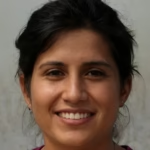
Philippa grew up in Wiltshire within cycling distance of Avebury, which meant she spent a significant portion of her childhood clambering around standing stones while her parents attempted to read Ordnance Survey maps in a strong wind. She considers this formative.
She studied history at Leicester — the university, not the castle, though she has views on both — and spent a decade working in museums and heritage education before deciding she'd rather write about history for people who don't already work in museums. The academic version of the past, she felt, had a habit of leaving out the bits that made it interesting: the arguments, the accidents, the ordinary people who had no idea they were living through something historians would argue about for centuries.
Her writing focuses on the history you can still touch — sites, buildings, landscapes and objects that connect the present to the past in ways that feel immediate rather than preserved. She's particularly drawn to medieval Britain, the industrial north, and the kind of local history that only exists in county archives and the memories of people over seventy.
Philippa now lives in Derbyshire, visits far too many churches for someone with no strong religious convictions, and maintains that the best history writing should make you want to go somewhere rather than just read about it.