
I came late to early medieval England. At school, 1066 was treated like the franchise reboot: everything before it a muddle of “Angles and Saxons and maybe some Vikings”. It wasn’t until I started doing Norman Conquest history travel for work — tramping round churches and earthworks for museum projects — that I realised something quietly unsettling. By the time William landed at Pevensey, the ground in England had been prepared for him for generations. Not by scheming Normans, but by English kings, churchmen and warlords trying to solve their own problems.
Once you start visiting the places where those pre-1066 choices were made, the invasion feels less like a sudden blow and more like the final chapter of a story the English had been writing for themselves.
The neat version many of us absorb goes like this: before 1066 there was a sort of cosy “Anglo-Saxon England”, a bit rough round the edges but basically homely and independent, then William storms in, builds castles everywhere and French-ises the whole thing. I used to half-believe that too, until I read David Carpenter’s work on the eleventh century and then walked Hadrian’s Wall in the rain, thinking about how far back foreign rule actually went.
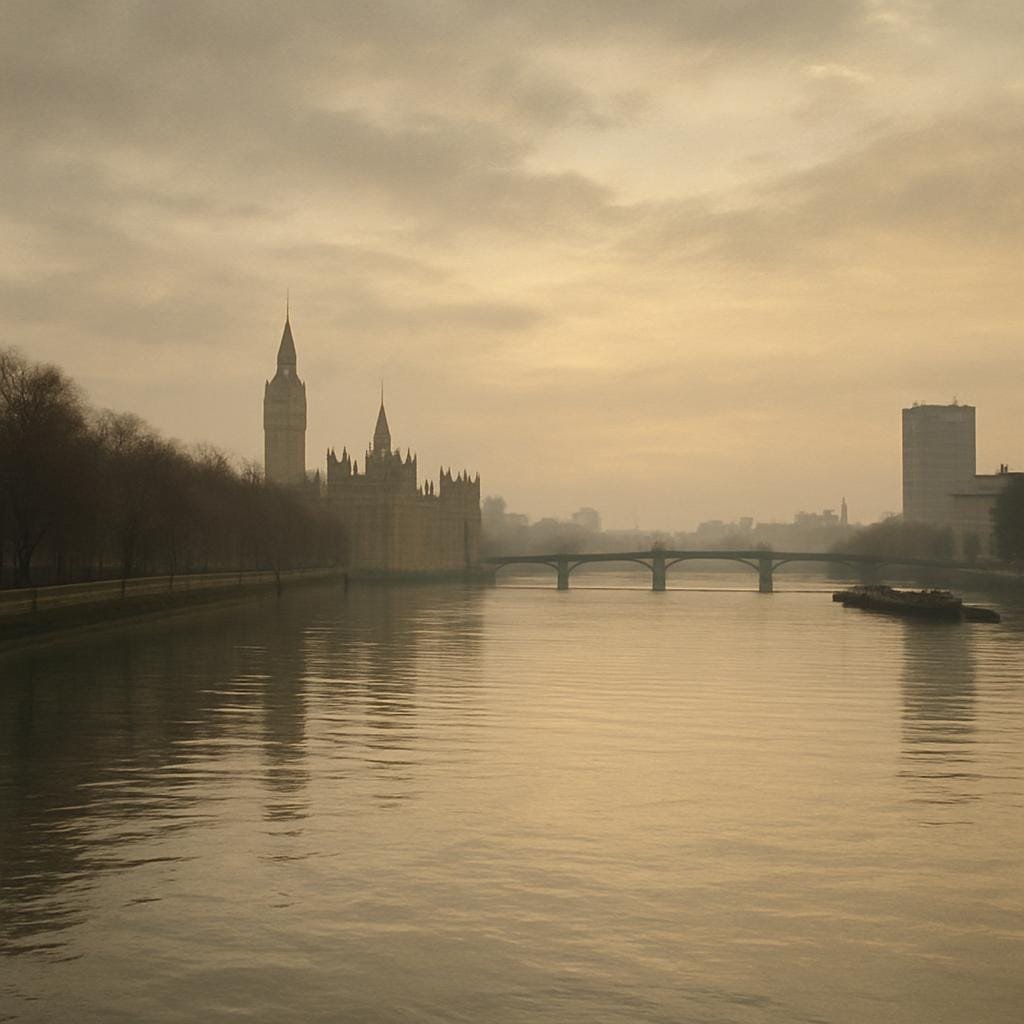
By Edward the Confessor’s reign (1042–66), England had already been ruled by Romans, Anglo-Saxons and Danes. Cnut, the Danish king who supposedly told the tide to stop, governed an empire that stretched from England to Norway in the 1020s. Londoners paid taxes in Scandinavian-style silver hoards. York had strong ties to Dublin. French was already spoken at some courts — Queen Emma of Normandy, married first to Æthelred and then to Cnut, brought a Norman entourage with her in the early 11th century.
So when we talk about “before 1066”, we aren’t looking at a sealed-off English Eden. We’re looking at a place already used to outside rulers, heavy taxation, and kings who spent as much time abroad or fighting each other as they did caring about the villagers hoeing their strips of land.
The ordinary people in this “lost England” were not timeless peasants in wool tunics who then suddenly woke up under Normans. A tenant in an Oxfordshire village in 1050 had already lived through at least one regime change in their lifetime, and possibly two. Their life was structured by obligations to a lord, to a king they’d never meet, and to a church that was starting to standardise everything from how they buried their dead to what they were supposed to believe about marriage.
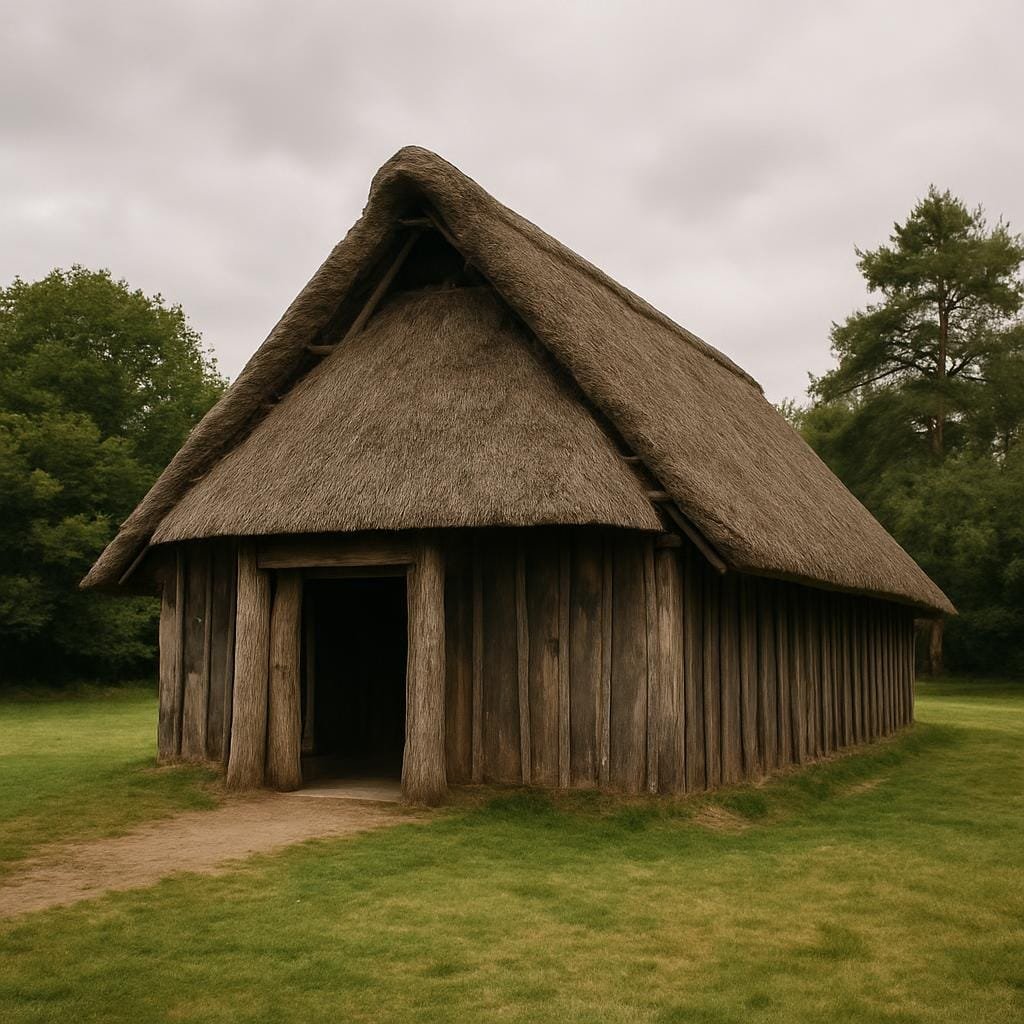
If you want to feel how long English rulers had been drawing boundaries and claiming space, Offa’s Dyke is hard to beat. It runs for about 150 miles along the Welsh border, a huge earthwork built in the late 8th century by King Offa of Mercia. On a drizzly day a few years ago I walked a short stretch near Knighton, and what struck me was how physical the statement still feels — a raised bank on the English side, a deeper ditch on the Welsh.
This wasn’t just an anti-Welsh wall; it was Mercia saying, “this is my side, that’s yours”. It shows a kingdom thinking in terms of fixed frontiers, long before the Normans. That matters for 1066 because once kings get used to drawing firm lines on maps (even mental ones), they care more about who controls those lines. England was already becoming a prize with defined edges. William didn’t invent that; he walked into it.
For ordinary people living near Offa’s Dyke in, say, 800, this wasn’t an abstract political gesture. A boundary that sharp affects grazing rights, trading routes, and who you owe taxes to. A farmer moving a flock of sheep from what is now Shropshire into what is now Powys could find themselves paying tolls twice, or pulled into a local feud made lethal by the presence of a massive militarised ditch.
Fast forward a century or so and we hit another of those “before 1066” developments that quietly set the stage. In the late 9th century, King Alfred of Wessex and his successors set up a network of fortified towns, or burhs, to resist Viking raids. You can still trace some of their walls: the circuit in Winchester, for example, runs under modern streets, and the grid of lanes in places like Wallingford and Wareham follows Alfred’s careful planning.
The fortifications were military, but they had other effects. Once you wall in a place, people bring goods there for safety. Markets develop. Craftsmen settle. By the 10th and 11th centuries, these burhs have grown into what we’d recognise as towns. The English kingdom gains something very valuable — wealth concentrated in specific, taxable spots.
That’s good for kings who want armies and churches who want stone buildings. It’s less good for the residents when royal ambitions grow. Take a weaver in late 10th-century Winchester. They benefit from a steady stream of customers — royal officials, church clerics, merchants from across the Channel. But with that comes coinage reforms (meaning old money suddenly counts for less), tolls at the town gates, and the permanent sense that your home has become someone else’s cash machine.
By the time William is thinking about invasion, England is full of these semi-urban hubs: Norwich, York, Lincoln, London. The Anglo-Saxon Chronicle and Domesday later show us how dense the royal grip on them had become. That density made England look very tempting from Normandy. A kingdom where the king can squeeze tax from towns, and where those towns are linked by roads and rivers you can march an army along, is much easier to conquer and then exploit than a loosely stitched patchwork. Norman Conquest history travel, if you actually go to some of these places, becomes a study in how pre-Conquest kings accidentally wrote William’s playbook for him.
One of the big myths I had to unlearn is that the Normans brought in a shiny new church, throwing out a backwards English one. That version is still hanging around, helped by Victorian historians who didn’t rate Anglo-Saxon religion very highly.
In reality, the English church had already been reforming along continental lines, especially in the later 10th and early 11th centuries. Figures like Dunstan of Canterbury, Æthelwold of Winchester and Oswald of Worcester pushed for stricter monastic rules, clerical celibacy, and closer ties with reforming movements in places like Fleury and Ghent. Rebuilt stone churches from this period – at Brixworth in Northamptonshire or Stow Minster in Lincolnshire – stand as very solid evidence that English patrons weren’t slouches.
By Edward the Confessor’s time, you also have Norman influence woven into the church hierarchy. Edward himself had grown up at the Norman court. He brought in Norman churchmen: Robert of Jumièges as Archbishop of Canterbury is the best known, appointed in 1051. If you read the Vita Ædwardi Regis, a biography of Edward written in the 1060s, the writer is oddly comfortable with the idea that English bishoprics might go to Normans.
What does this mean on the ground? Take an 11th-century parish somewhere like Suffolk. The locals probably still hear Mass in Latin and sermons in English, but the bishop above their priest may well write letters in French-influenced Latin and correspond with abbots in Normandy. When Norman abbots and bishops flood in after 1066, they’re slotting into a church that already thinks in cross-Channel terms.
The flip side is that priests and monks in England were increasingly living on endowments granted by lay lords. By 1066, huge tracts of land, down to individual mills and fisheries, were “given to God and St X” — but managed by actual humans who liked rent. An English peasant could find that a field their grandparents held from a local thegn was now part of a monastic estate founded by some pious earl, and that the rent had quietly gone up. After 1066, William and his followers inherit those networks. They don’t need to invent them.
Another thing textbook history flattens is how unstable England looked before William ever set sail. Harold Godwineson didn’t inherit a calm, united country. He became king in January 1066 after the death of Edward the Confessor, in a political environment already distorted by decades of rival claims and outside interests.
Edward himself may have promised the English throne to William at some point in the 1050s. Norman sources like William of Poitiers are absolutely sure he did; English sources are more coy. Either way, the fact that Edward had that latitude — to dangle the crown in front of a foreign duke — tells you something about how kingship was already drifting away from a purely “English” succession. Add in Edgar the Ætheling with his impeccable royal blood but no power base, and Harald Hardrada of Norway claiming the English crown by agreement with the Danish line, and you have a messy, overlapping set of rights.
A prosperous Yorkshire farmer in 1065 didn’t care about these niceties until they turned up as marching armies. That year there was a grim little warning of what was to come: the revolt at York and the deliberate devastation of parts of Northumbria by Earl Tostig, Harold’s own brother. Tostig’s heavy taxation and habit of executing opponents sparked a local uprising. Harold sided with the rebels, Tostig was ousted, and Northumbria got a new earl. It’s a reminder that English earls were already using terror against “their own” people.
I remember standing in modern York, reading Symeon of Durham’s account of Northumbrians slaughtering Tostig’s men at a feast in 1065, and realising how close the city was to becoming a battlefield even before the Normans. When William later harried the north in 1069–70, burning crops and villages, he was using methods that English rulers and earls had already normalised on a smaller scale.
One tangible change after 1066 does stick out: castles. The English elite had fortified strongholds before — Alfred’s burhs, hillforts re-used, timber palisades around royal estates. But the compact, private, lordly castle in the motte-and-bailey style was a Norman import.
But here’s the twist. The need those castles answered wasn’t new. Pre-Conquest England was already battling three headaches:
Earthwork mounds like the one at Richard’s Castle on the Herefordshire–Shropshire border (probably begun just before 1066 by a Norman named Richard fitz Scrob, who’d been given land by Edward the Confessor) show that Edward was already experimenting with “Norman” responses. Getting a foreign noble to secure a frontier with a castle was one way to solve the problem of pushy English earls.
For ordinary villagers living in the shadow of these early castles, the change would have felt immediate. A motte-and-bailey meant:
After 1066, this kind of intrusion spread rapidly. But the deeper issue — a king needing fixed points of control in a country whose leading men kept acting like semi-independent princes — was already baked into English politics.
Another underplayed part of the story is money. By the early 11th century, England had one of the most sophisticated coinage systems in Europe. Kings regularly recalled and reissued coin types, taking a small slice (a kind of early demurrage tax) each time. The hoards in the British Museum give you an idea of the scale — thousands of silver pennies, neatly stamped.
This was partly defensive. You can’t assemble an army quickly if you’re haggling in kind. But it had side effects. Town-dwellers, merchants and even better-off peasants became used to regular, centralised demands in cash. A reeve turning up at a Cambridgeshire village in 1050 to collect geld (land tax) was part of life. He might have a small escort, but behind him loomed the whole machinery that minted, measured and spent that money.
When William took over, he didn’t need to create that machinery. He changed who benefited from it. Domesday Book, compiled in 1086, only twenty years after the conquest, is essentially a spidery, Latin audit of that pre-existing system. It lists churches that were there before the Normans, markets already operating, mills grinding away. If you read the entries for somewhere like Derby — my own county town — you see phrases like “in the time of King Edward there were X burgesses, now Y”. Continuity underneath the change.
For people living through the transition, this had a very sharp edge. Imagine a free peasant in Hampshire in 1060, paying geld like everyone else but holding their own small plot outright. By 1086, Domesday may list them as having become unfree, tied to a new Norman lord. The tax demand is familiar. The fact that you’ve slipped a rung on the ladder is not.
The more Norman Conquest history travel I’ve done — from the Bayeux Tapestry in Normandy to small English churches with fragments of earlier stonework half-buried in their walls — the less the conquest looks like a sharp break, and the more it feels like a violent acceleration of long-standing trends.
A few threads come together:
The conquest was still a shock. People were killed, dispossessed, dumped from their land. English became a second-class language in royal circles for generations. But it landed on soil already churned by centuries of outside rule and internal power struggles.
When you next stand on Senlac Hill or stare up at the keep of the Tower of London, it’s tempting to think of 1066 as “where it all begins”. I’ve found it more honest — and frankly more human — to think of it as a moment when a set of existing pressures finally cracked the structure that English rulers had built for themselves.
And somewhere in all this, there’s the anonymous ploughman in 1050, who doesn’t know he’s living in “pre-Conquest England”. He just knows that this year the geld is higher, there are rumours of new building at the local minster, and his lord is grumbling about trouble with the earl. Twenty years later, his children might be recorded in Domesday under a French lord’s name. The deep structures of their lives — the fields, the church, the tax demands — look horribly familiar. The names at the top of the parchment are the bit that changed.
That, to me, is what makes going to these places before you read about 1066 so powerful. You see how much of William’s “new” England was already there, waiting for him.