
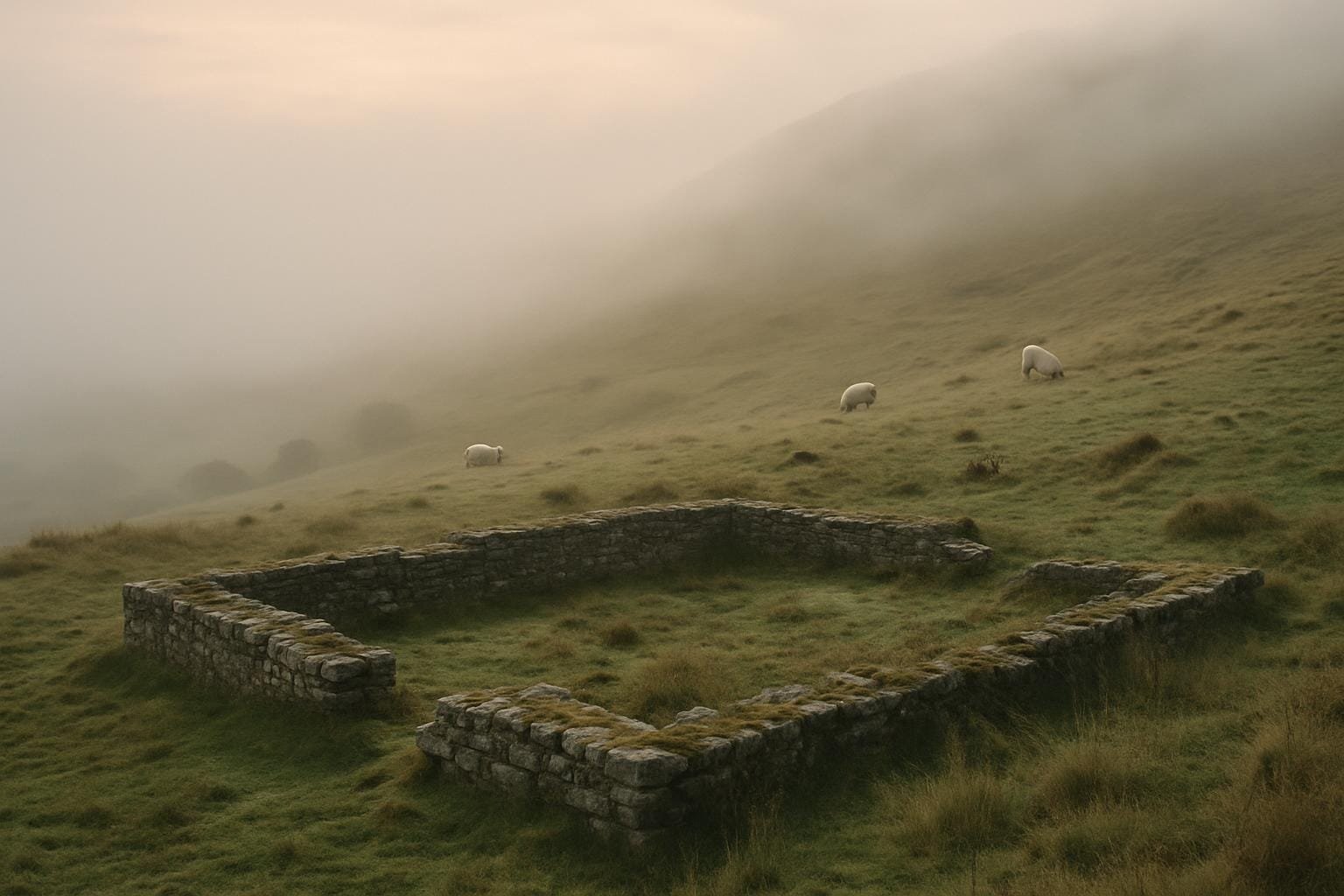
When people ask me about “post-Roman Britain travel”, they usually mean mosaics, legions and Hadrian’s Wall tea rooms. What they rarely mean is the bit afterwards – the two or three centuries where the textbooks go hazy, the dates get approximate, and school charts jump from “Romans leave” to “Anglo-Saxons arrive” as if someone politely handed over the keys. That gap, the so-called “Dark Ages”, is where I got hooked.
I say “so-called” because the more I’ve read – and the more time I’ve spent standing in cold fields staring at almost nothing – the less I think “dark” is a helpful word. Confusing, yes. Patchy, absolutely. But not empty.
My first introduction to this period was the classic version: Romans march away in AD 410, civilisation collapses, everyone forgets how to use a bath and spends 200 years fighting in the mud. The end. If you did GCSE history before about 2010, you probably got something similar.
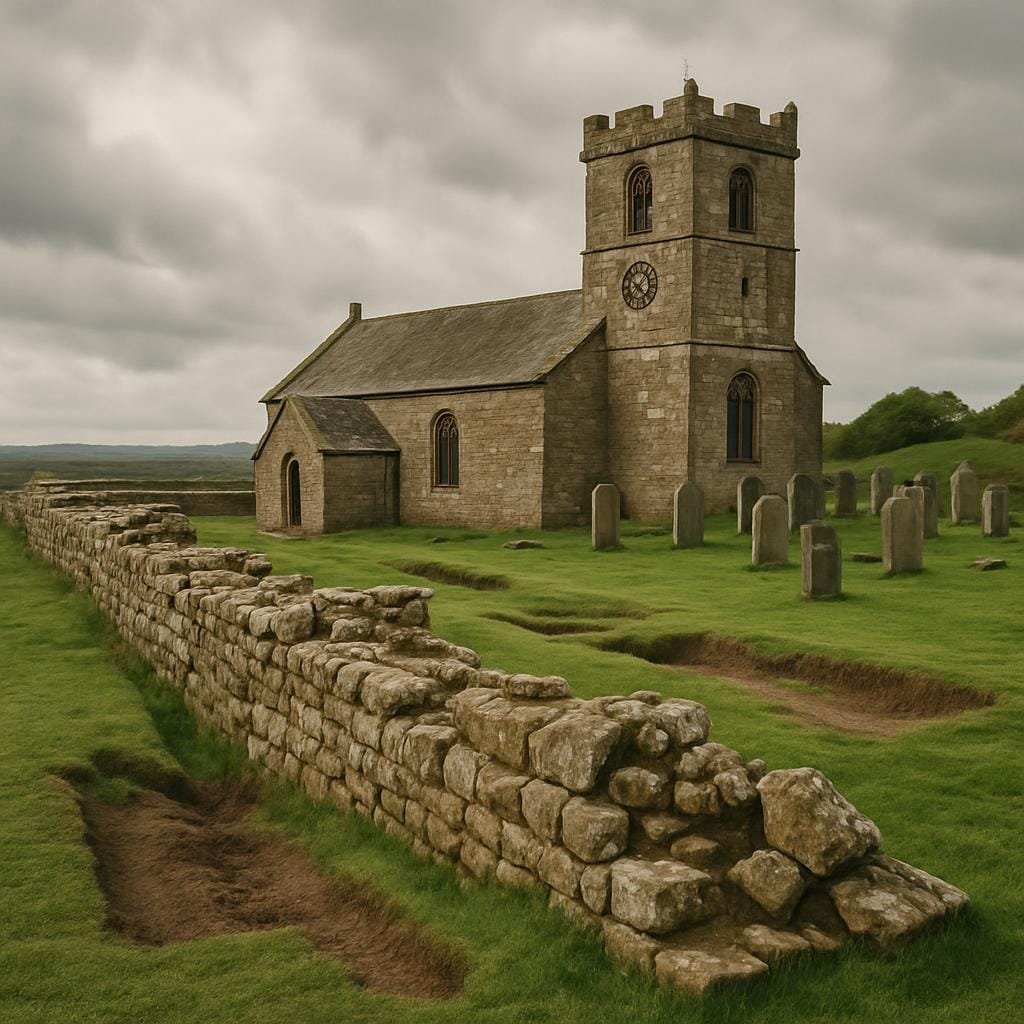
The trouble is, the evidence doesn’t play along. The letter from the Emperor Honorius in 410 – the one where he allegedly tells the British cities to “look to their own defence” – is a messy text, probably referring to southern Italy as well as Britain. Coins trickle in after the “end” date. Villas don’t all burn on cue. Urban life thins out, but Colchester and Cirencester show activity into the 5th century. A few ceramic imports keep arriving into the 6th. It’s like watching a town centre after closing time: lights going off one by one, but the kebab shop is still open and there’s someone arguing outside the taxi rank.
Where this gets human is at the level we almost never talk about: the tenant farmer at a villa near modern Gloucester, say, in 420. His rent used to be paid to an estate manager tied into a whole imperial machine: taxes, law courts, supply chains stretching from North Africa to the Severn. By his grandson’s time, the big house roof has fallen in, the mosaics are under nettles and that rent is going to a local strongman with his own war band. Same fields, different paperwork, more swords.
The label “Dark Ages” hides that sort of slow, uneven sagging. It likes sharp breaks; the archaeology gives us long, messy unravellings.
I used to picture this as a single downward slide: Romans at the top, then 5th-century chaos, then Anglo-Saxons raising everything to the ground. Then I visited Wroxeter in Shropshire on a wet March day and stood in the shell of the Roman bath complex, shivering, staring at a line of timber post-holes cut into the old stone floor. Someone in the 5th or 6th century had built a huge wooden hall inside the ruined baths. The English Heritage board shows a reconstruction: big hall, thatched roof, Roman masonry framing the whole thing like a stage set.
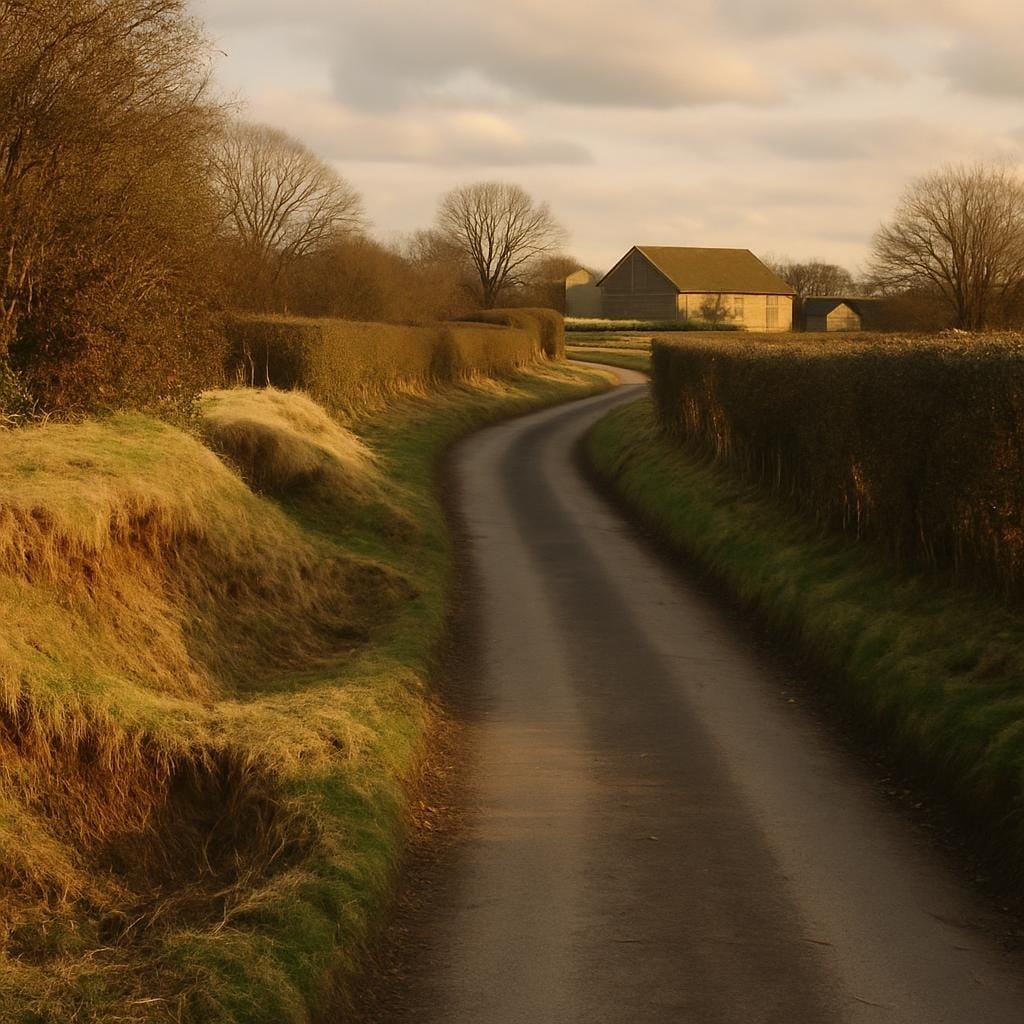
That building, reconstructed from excavations by Philip Barker in the 1960s–70s, seems to have been in use long after Roman central government disappeared. It might have been the residence of a local king or chief, or an elite household running the old town as a much smaller, semi-rural centre. You’re standing in a literal mash-up: Roman engineering as the skeleton, post-Roman timber as the flesh. To label that “collapse” misses the weird creativity of it.
And someone had to sweep those new floors. Someone cooked in that hall, probably with smoke stinging their eyes because no one was maintaining the old hypocaust flues anymore. Children would have climbed along the broken edges of the bath walls and been shouted down. “Get off that, you’ll kill yourself.” Same tone as any parent at a retail park playground, different hazards.
If you’re thinking about post-Roman Britain travel as a way to “see the Dark Ages”, Wroxeter is one of the few places where the archaeology genuinely forces you to rethink that Rome–to–ruin storyline.
One of the oddest modern habits is how we treat ruins as fixed memorials. We step carefully round them, read the plaque, take a photo, go home. People in the 5th and 6th centuries treated Roman ruins like a B&Q with ideas.
At Birdoswald on Hadrian’s Wall, late Roman and post-Roman timber halls were built inside the old fort. At some point, stone from Roman barracks, gates and granaries was prised out and re-used in new structures. You can see similar patterns at Richborough in Kent, where a late Roman shore fort later became a handy quarry for medieval builders.
That re-use wasn’t just practical. It tells you about how people thought about the past. Imagine growing up in what’s now Northumberland in, say, AD 500. Your grandparents still use Latin words for some things; you live in a settlement half-inside a gigantic stone wall built by people whose language you may only know from scraps. The fort is already old, but it’s part of your normal. The fact the stones are square and neatly cut is just “how proper stone looks”. Roman-ness isn’t ancient history yet; it’s the thing your uncle complains about when he points at a cracked arch: “They used to look after this, in my day.”
The textbooks tell you “Roman civilisation ended”. The ground says: no, it was cannibalised, remodelled, inhabited. Civilisation, in the sense of “ways of doing things”, limped along in greasy cooking pots and re-used roof tiles.
One of the few things traditional narratives get roughly right is that urban life shrank dramatically. Places like Verulamium (near modern St Albans) and Corinium (Cirencester) show large areas being abandoned or turned into fields and small paddocks in the 5th century. Archaeologists talk about “de-urbanisation”, which sounds like a policy from a 1970s planning document. In reality, it meant very basic changes for ordinary people.
Take rubbish. In late Roman towns, rubbish went into organised pits and dumps. There were people whose daily job was to cart other people’s waste around. By the 5th century in many places, those pits stop being dug. You get informal dumping in abandoned buildings instead. If you lived in one of those half-occupied towns, your nostrils would notice the change before your head did.
Then there’s repair work. In 4th-century Londinium, inscriptions tell us about bridge repairs and public works. By the mid-5th century, written records have gone silent and the little archaeology we do have suggests parts of the city were simply abandoned. If you were a potter or a metalworker whose trade depended on a busy riverfront, the “fall of Rome” might have shown up in something as un-romantic as fewer orders, collapsing wages, and then one season where the traders never came back.
This is where the phrase “Dark Ages” annoys me most: it lets us skip over the lived experience of running out of options. Darkness implies mystery; often it’s just scarcity.
The Western emperor is gone by 476, but people in fifth- and sixth-century Britain were still making deals, granting land, arguing about inheritance. The problem is that almost none of their paperwork survived. Instead, we get the story backwards: later documents that preserve faint echoes.
Take the 8th-century Tribal Hidage, a list of peoples and their assessed land units, probably compiled in Mercia. It mentions groups like the Wreocensae and the Pecsæte. The names almost certainly go back much earlier; they’re a fossil of how land and power had been carved up after Rome, long before anyone in Tamworth was writing it down.
When you walk through central England now – and this Ordnance Survey habit dies hard with me – you can still see those old divisions in parish boundaries that snake strangely across hills, and in fields that line up with Roman roads long after the villas have gone. A 6th-century farmer near what’s now Towcester might know nothing of emperors, yet still plough in straight lines that mirror a surveying decision taken by a Roman official 300 years earlier.
For him and his neighbours, the big post-Roman shift was who claimed the right to take a cut of his harvest and summon him to fight. First, a local Romano-British magnate. Later, perhaps, an Anglo-Saxon warlord with a very different name but the same basic expectation: “My protection, your service.”
Any discussion of Britain’s “Dark Age” ruins crashes sooner or later into the question of the Anglo-Saxons: did they arrive in a catastrophic wave, wipe everyone out and start again, or trickle in and slowly take over?
I used to picture the Venerable Bede’s version: Jutes, Saxons and Angles summoned as mercenaries around the mid-5th century, then turning on the locals and carving out kingdoms. But genetics, burial patterns and pottery types now hint at much more regional variation. Some eastern areas, like parts of Lincolnshire and Norfolk, do show strong signs of migrant communities from the Continent. Others, especially in the west and north, look more like a cultural remix: new styles over older populations.
The line that sticks with me is from Gildas, a British monk writing in the 6th century, who talks about the “groans of the Britons” as Saxon forces ravaged the land. He’s furious, moralising and more interested in sinful kings than accurate geography, but you can pull one solid human point out of the rhetoric: some people saw what was happening as utter catastrophe.
For an ordinary family in eastern Britain around, say, AD 550, what did that actually mean? Imagine your settlement somewhere near present-day Cambridge. Your grandparents grew up speaking a Celtic language, with some Latin and military jargon sprinkled in. As a child you hear more and more Old English around the farm. The local strongman has a new name – Wuffa instead of Cuneglas – and wears different brooches, but when his men come riding to collect your food renders, the system feels grimly familiar.
Over a couple of generations, burial customs shift. Cremation gives way to inhumation, or vice versa, depending on local fashion. Grave goods change: new brooch designs, new weapon styles. Your granddaughter’s name sounds “Anglo-Saxon” to a modern ear. But the plough still bites into the same clay, and the Roman ditch still fills with your household rubbish.
Calling this period a “Dark Age” makes it easy to imagine Britain as emptied and refilled. The archaeology – and the continued use of many Roman sites – looks more like a slow repainting of the same room while people are still living in it.
I live in Derbyshire, which means I spend a fair amount of time tripping over old stones. At Carsington, a Roman lead-mining site, the remains are low and scrappy. The official signs talk about 2nd- and 3rd-century extraction. What they don’t spell out is that the lead didn’t suddenly stop being valuable in 410. Mining probably carried on in some form, feeding local power bases instead of distant emperors.
A few years ago, I stood on a windswept ridge near Buxton looking at a scheduled Roman site which, to the eye, is a few bumps and a line of stone in the grass. Somewhere under my boots, someone in the 5th century made a choice: patch the roof again, or move downhill and build in timber? They picked timber. The Roman wall began its slow collapse, helped along by later farmers nicking stone for sheepfolds.
That’s another bit the heritage panels often skip: the long afterlife of ruination. A milecastle on Hadrian’s Wall isn’t a single event; it’s a process. Roman garrison, then underused outpost, then opportunistic shelter for a local family, then robbed-out shell, then 18th-century quarry for a farmhouse, then 19th-century curiosity, then National Trail photo backdrop. “From Rome to ruin and rebirth” isn’t just about one fall and one recovery; it’s a repeated cycle of use, decay, and re-use.
If you’re planning post-Roman Britain travel with these questions in mind, that’s the shift that matters: look for what happened after the phase on the signboard, not only during it.
When we call something a Dark Age, we usually mean “we don’t have many written sources and we can’t be bothered to explain the complexities of the archaeology”. It lets textbook writers jump cleanly from empire to kingdoms, missing all the untidy interim realities.
A few of the casualties of that shortcut:
Once you start looking for those details, the period becomes less “dark” and more under-lit: the torch is flickering, but you can still pick out furniture.
I said at the start this wasn’t a travel piece, but I do think how we think about post-Roman Britain shapes the way many people approach post-Roman Britain travel. If you go hunting only for mosaics and marching camps, you end up reinforcing the idea that the story stops in 410 and restarts with Sutton Hoo. You look past all the half-hidden evidence that people kept going in between.
For me, the real pull of this “lost” era is the sense of people improvising in the ruins of something bigger than themselves. A Roman villa turned into a courtyard farm; a bath-house turned into a timber hall; a derelict city corner turned into a grazing patch. We’re used to thinking about collapse in grand, cinematic terms. The 5th and 6th centuries in Britain suggest another version: muddling through among half-fallen walls, making do with old stone and fading memories.
The next time you’re walking past a stretch of Roman wall or a gatehouse in a country town, try pivoting your mental timeline. Don’t stop at “What was this like at its height?” Push on to, “Who was still using this in 450, or 550? Who sat under that arch when half the tiles had already gone?” It’s the same trick that turns post-Roman Britain travel from a hunt for ruins into a way of thinking about how people live with change.
This is one of those topics where the longer I’ve lived with it, the less certain I am about the big stories and the more attached I get to the small ones. A board of oak laid across a Roman threshold. A reused altar stone in a church wall. The ghost of a house in post-holes cut into older floors. None of those things explains the “fall of Rome”. But they do something better: they show you that for the people actually walking through those spaces, history wasn’t a clean break between light and dark. It was a long, awkward twilight, and they still had to get up in the morning and milk the cows.
And that, perhaps, is the only honest thing to say about Britain’s “Dark Age” ruins: they’re not markers of emptiness, but traces of lives that carried on when the official story had already rolled its credits.