
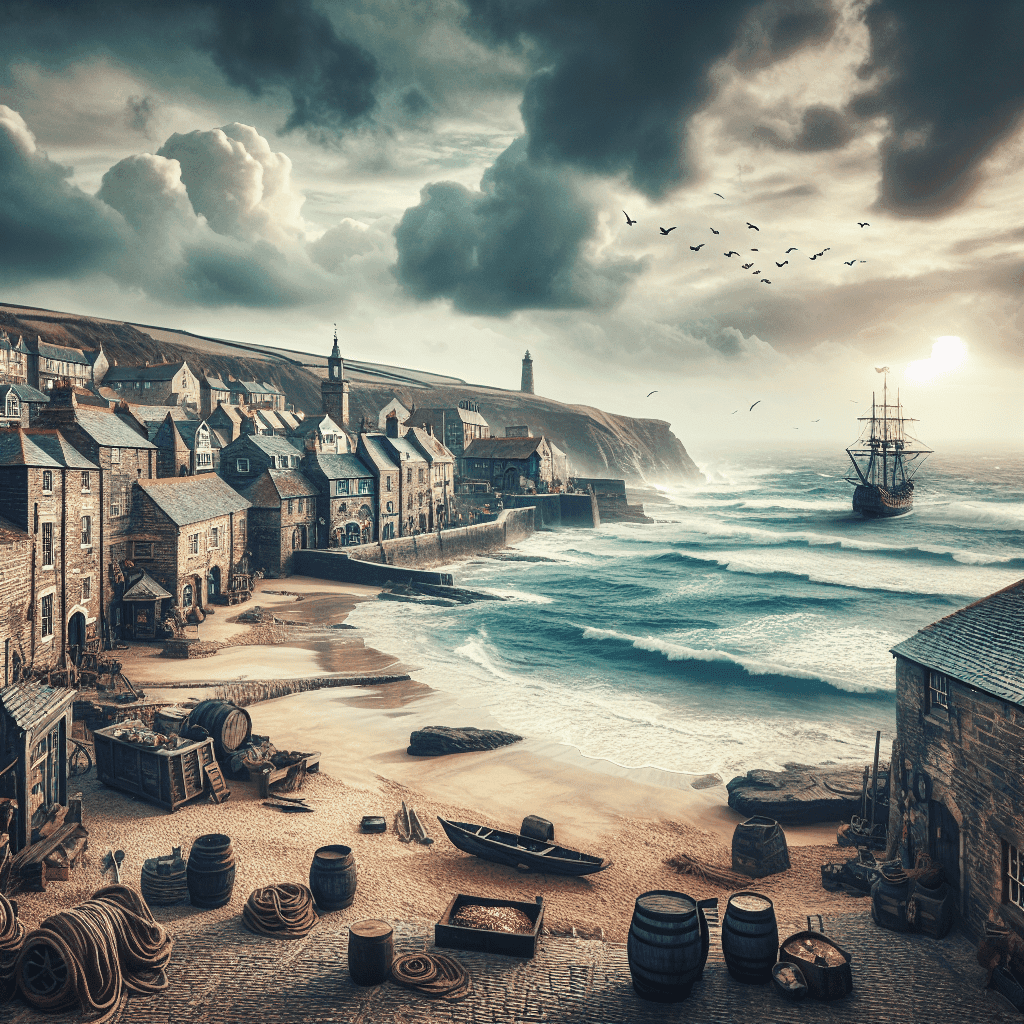
Alright, matey! Grab your eye patch and set sail as we explore the swashbuckling stories of pirate legends that have left their mark on some of the UK’s most iconic coastal towns. If you think the grand old British seaboard is all about quaint cottages and crumbling castles, think again! Each town has tales that are just waiting to be told.
Let’s get started with a rather notorious character: Blackbeard. Now, I always thought Blackbeard was just a fanciful figure in pirate lore, but did you know he made quite a splash (pun intended!) off the coast of Devon? Wandering the winding streets of Bideford, you won’t miss the town’s connection to this fearsome rogue. You see, he was said to have recruited men from the Devonshire coast before heading out to wreak havoc in the Caribbean.
While wandering around Bideford, you’ll find the Little White Town, a quirky collection of narrow streets that could almost make you hear the sea’s whisper. I popped into a little café—the name escapes me now (probably due to that questionable cup of tea). But the scone? Spot on. You might just bump into the ghost of a sea-faring buccaneer, or at least have a laugh with the barista who claims to have seen his long-lost treasure map, which he later discovered to be a crusty old takeaway menu.
Coastal towns weren’t just party spots for rogues. They were vibrant hubs of trade and smuggling due to their easy access to the sea. Without these ports, you wouldn’t have your classic tales of piracy and treasure. Imagine the thrill of knowing hidden treasures are buried somewhere close by—like a real-life game of Pirate Monopoly!
Next on our stop is Falmouth, a town that came alive during the age of sails. It boasts a rich maritime history, and if you’re lucky, you might catch the annual Falmouth Regatta. But what caught my attention was the story of Captain Henry Morgan, not to be confused with your average bloke with a parrot. Morgan was based in the Caribbean but made frequent visits to the southern coasts of England.
In Falmouth, check out the National Maritime Museum, where pirates aren’t just a dusty chapter in a history book but a living, breathing part of the local culture. The museum provides an upbeat way to explore maritime exploits while keeping things interactive for any young’uns in tow. My recommendation? Try to avoid the “Sailor’s Tale” exhibit just after lunch unless you want to hear your stomach growl louder than the museum’s sound decibels.
Now, let’s saunter towards Portsmouth, famed for its naval heritage. Ever been to the Historic Dockyard? You better believe I threw a few cheeky pirate quotes while walking around the HMS Victory! The connection to piracy here is a bit more on the legal side—think of licensed pirates like Sir Francis Drake—but it’s all connected.
Drake would raid Spanish ships with the Queen’s blessing, making him something of a respectable rogue. Wandering past those warships, you can almost picture the battles fought in the name of glory, or maybe just a good cuppa tea. Speaking of which, be careful when ordering your tea at the café; there’s no stronger brew than a sailor’s necessity!
Now, what’s a pirate tale without a ghost or two? In Whitby, it’s said that the ghost of Captain James Cook haunts the cliffs. You’d think he was sailing the high seas instead of lurking about for a nice spot of fish and chips! This coastal gem is also connected to the Gothic lore of Bram Stoker’s Dracula. I found myself looking over the sea at sunset, and frankly, I was half expecting Mr. Cook to pop up and hand me a glass of blood-red wine. Spoiler: he didn’t.
Oh, and if you’re around Whitby, don’t miss the Whitby Goth Weekend—yes, you heard that right! It’s where goths take over the ancient port, and though there aren’t any pirates to be seen, the spirit of adventure and mischief certainly lingers in the air. Nothing says welcome aboard like a pirate-themed goth party!
Let’s not forget the artistic vibe of St. Ives, where you would least expect tales of piracy. But wait! During the 17th century, the town served as a refuge for pirates seeking shelter after a long day’s pillaging.
And here’s a cheeky little fact: if you stroll down South Pier, keep your eyes peeled for Boatman’s Table, a local eatery where I once had the best fish chowder. Just be careful of the seagulls; they’re the real pirates around here! I swear one of them might’ve tried to swindle my lunch right from my hands.
Here’s something to ponder: each coastal town I visited had distinct flavours of folklore and pirate legend, giving them unique character. Whether it was an old pub serving the best ale, or a local shopkeeper animatedly spinning a yarn about hidden treasures, it was all part of a living history.
If you fancy a giggle or two, check out local events like the Pirate Festival in Penzance or the Bideford Pirate Festival. Jogging through the streets in full pirate regalia might get you a few odd looks, but it’s all in good fun!
So, there you have it—a delightful look at how pirate legends shaped the coastal towns of the UK. From Bideford’s historical ties to Blackbeard to Falmouth’s maritime celebrations, these places are steeped in lore, and every street corner seems to whisper a secret.
As you think of your next trip, consider hopping from one seaside town to another, all while imagining the life of rogue sailors and their hidden treasures.
Tell me, what’s your favourite pirate story? Have you had any wacky adventures along the coast? Share your tales in the comments below!