
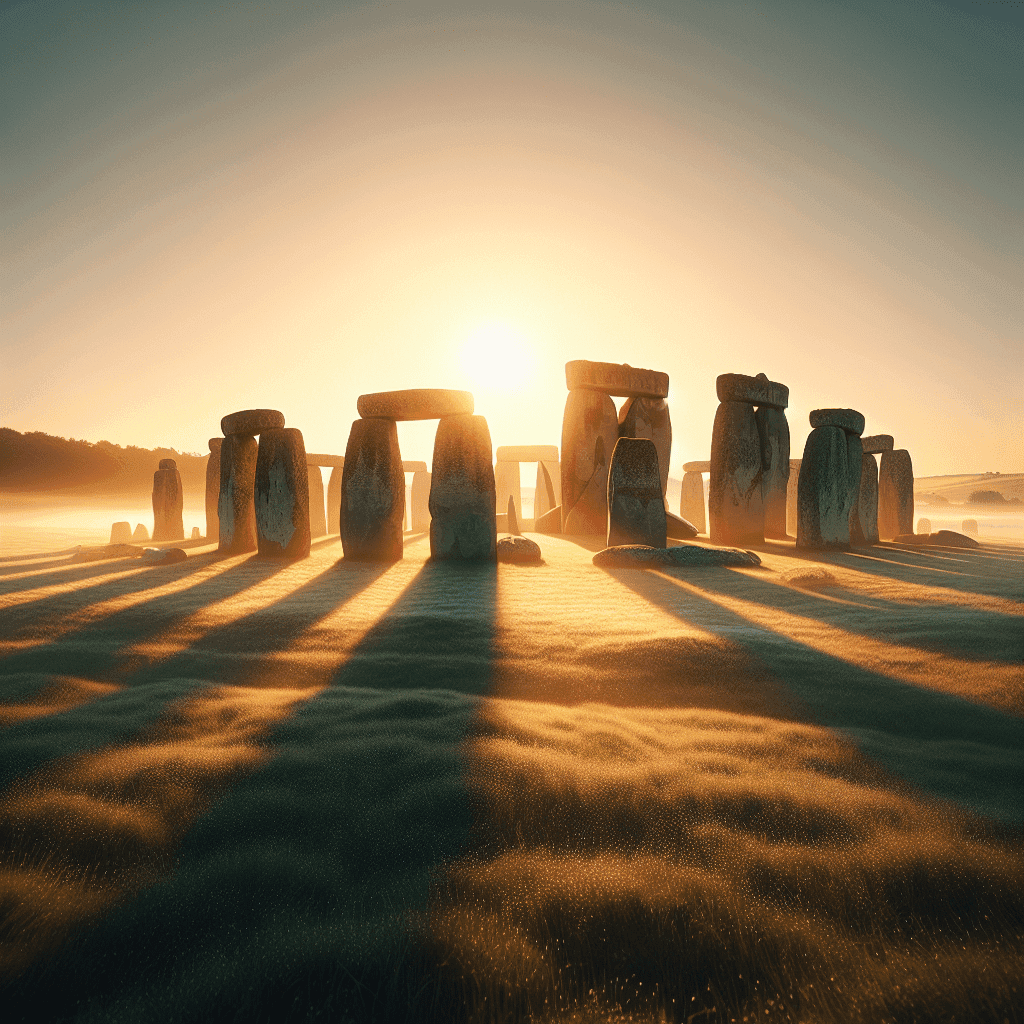
Alright, mate. Pull up a chair, and let’s have a natter about Stonehenge. I took a trip there recently—yes, the iconic stones you see plastered all over Instagram. Honestly, it was like visiting a friend’s house who has a slightly odd taste in decor but has a fascinating backstory.
Stonehenge isn’t just a pretty face; it’s a bit of a mystery and holds the key to our ancestors’ ingenuity. The big question on my mind, as I stood there, was—how on Earth did they manage to construct this thing? So many stones! So much history! And what’s that awful tea I had at the visitor centre? Let’s get to it.
First up, let’s chat about how Stonehenge was built. Scholars have swung wildly between ideas like a pendulum on a particularly windy day. The general consensus is that it was built in several phases over about 1,500 years, starting from around 3000 BC. That’s a serious commitment, isn’t it? Imagine someone saying they’re going to revamp their living room and still being at it a millennium later!
Here’s the kicker—those enormous stones, the sarsens and bluestones, weren’t just lying around waiting to be picked up. The sarsens are mainly local, found in the nearby Marlborough Downs. But the bluestones? Oh, they took a wee trip from the Preseli Hills in Wales—nearly 200 miles away! Can you imagine dragging stones that far without Google Maps? “Sorry, did you say left at that big oak tree or the one by the sheep?”
Now, how they moved all that rock is where things get intriguingly fuzzy. Some theories suggest they rolled the stones on logs, while others reckon they dragged them over the ground. The folks back then must’ve had some serious muscle. I could hardly drag my shopping back from Tesco without feeling like I’d run a marathon!
You may also hear about the clever use of waterlogged ground—they would dig a trench, fill it with water, and float the stones. Genius, right? Still, it sounds like a bit of primitive harm, doesn’t it? Chilly Welsh stone and muddy shoes come to mind.
Here’s a quick rundown of some techniques theorists suggest:
Log Rollers: Rolling stones across logs sounds romantic but wouldn’t want to be the one at the back when it slips off.
Sledging: Pulling the stones using sledges, maybe with some ancient winches.
Water Transport: If the river was handy, they might’ve put the stones on rafts.
To this day, many are puzzled how they did it so precisely. The engineering skills of our ancestors weren’t to be trifled with. It’s impressive when you think about it; we often underestimate them. Speaking of underestimating, the cup of tea by the visitor centre was dreadful! Strong as a rock but as tasteless as cardboard.
So, what was the point of all this stone-lifting and mapping? That’s still up for debate. Was it a burial site? A temple? An astronomical observatory? The stones align with the solstices. Picture standing there at dawn on the longest day—pure magic! Except, if you’re anything like me, you’ll probably wake up late and miss it, then end up stuck in traffic with the sunrise in your rear-view mirror.
Experts propose that people gathered there for rituals. Perhaps they wanted to commemorate the dead, or celebrate the changing seasons. Whatever the reason, it was a site of social significance. Picture a big festival: there would have been feasting, sounds of celebration, and—dare I say?—probably some questionable dance moves!
While I was wandering around, I gazed at these giant stones, and you know what? I realised each one has its own character! One was a bit crooked, almost like it was trying to look cool and edgy. Then there was another that looked like it had been on the wrong side of the weather.
Have you ever noticed those little tags on the stones? Some of them had numbers painted on them. I can only assume this was some ancient form of "take a number" or “don’t touch the fragile monument” signs. I’d be lying if I said I wasn’t tempted to give the cheeky ones a light tap.
And by the way, keep an eye out for the sheep. They’ve got more right-of-way than you, and they seem to reckon they own the place. Honestly, if you’re driving near Stonehenge, they come out seemingly from nowhere, and you’ll find yourself hopping over fences just to get a decent picture.
Just last week, I stumbled upon a local news story—there’s a new exhibition about ancient British rituals down in Salisbury. Did you know they’ve recently discovered a trove of ancient artefacts near the stones? Apparently, new sites pop up near Stonehenge more frequently than a bad reality show on telly. Honestly, every time I turn around, there’s something new to keep us guessing.
So, there you have it—how Stonehenge was built is still cloaked in mystery, but one thing is for sure: it’s a remarkable feat of human ingenuity. Each visit reveals a little more, making you feel intertwined with history and slightly baffled by how clever our ancestors were.
Next time you find yourself there, let the stones do the talking. Take a moment to ponder over their buggered-up construction while snacking on a mediocre pasty. And don’t forget to grab that obligatory photo, sheep willingly photobombing in the background!
What do you think? Do you reckon the mysteries of Stonehenge will ever be fully solved? Drop your thoughts below—I’d love to hear from you!