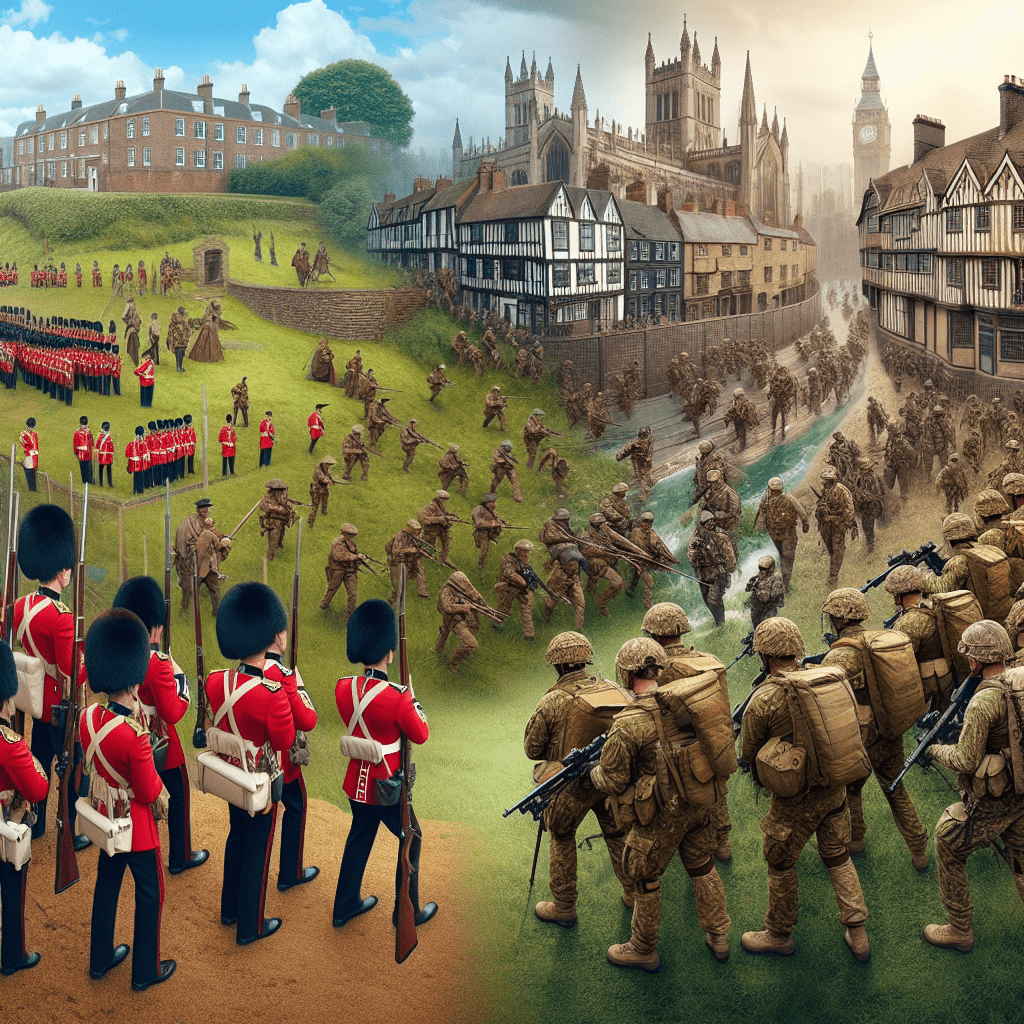
So, here’s the thing, my dear friend. Every time I stroll past the spiffy uniforms in London, I can’t help but think about how the British Armed Forces have transformed from those iconic Redcoats we associate with colonial tales to the sleek modern warriors we see today. Want to join me on this not-so-ordinary stroll through time? Grab a cuppa, and let’s have a chat about it.
First off, let’s start with the Redcoats. You remember those chaps from our history lessons, right? Those bright red uniforms were not just for flashy parades; they were designed for battle during the 18th century. Red stood out against a lush green backdrop—great for the ceremonial stuff, but imagine trying to blend in behind a tree! Talk about handy for the enemy.
I visited the National Army Museum in Chelsea recently. It’s a treasure trove of military history. Let me tell you, there’s nothing like standing in front of an actual Redcoat uniform, a little museum plaque saying it belonged to someone named “William” or “James.” I couldn’t help but wonder what these fellas were thinking, all geared up for a battle but probably dreaming of a nice pot of tea instead.
Fast forward a bit to the Napoleonic Wars. These were wild times! The British forces faced off against Napoleon’s French troops. You can practically feel the tension in the air! The defeat at Waterloo in 1815 was a turning point, showcasing British tenacity. Picture this: a muddy battlefield, soldiers shouting, horses whinnying—sounds like the kind of chaos you wouldn’t want to find yourself stuck in, right?
Visiting The British Library has some fascinating maps and illustrations of the battle. I spent ages soaking in the details; did you know they even had a killer ‘total war’ strategy? That means they targeted not just the soldiers but everything that supported the war effort, from farms to factories. It makes you think—did they have any idea about the long-term effects of all that chaos?
Now let’s skip to the Victorian era. This was when things started getting a bit fancy. The British military expanded globally, with the Empire making its mark across continents. Have you noticed that soldiers in the Victorian period had quite a flair for mustaches? Seriously! I thought about growing one myself, but then I remembered I can barely keep up with shaving!
After visiting the Regimental Museum of The Royal Welsh, I learned about the significance of these mustaches—they weren’t just for show. They were part of military tradition that symbolised masculinity, discipline, and a readiness to fight. No joke! Imagine being judged on the bushiness of your ‘stache; talk about a hairy situation!
And now, drumroll, if you please, the two World Wars! This is where the British Armed Forces really got their feet wet—no, wait, that’s an understatement. We’re talking about trench warfare and all sorts of madness. I found myself wandering around The Imperial War Museum in London, watching footage from the 1940s where soldiers stormed beaches. Chilling doesn’t even begin to cut it.
One of my favourite exhibits was all about the women who joined the forces during both wars. Yup, ladies in uniform! They were nurses, mechanics, and even pilots. I got a bit teary-eyed reading about their sacrifices and resilience. The world may have painted them as “the weaker sex,” but they sure proved that notion wrong.
Now, let’s swing into the post-war period. The British Armed Forces didn’t exactly have a chill moment. The Cold War kept everyone on their toes. I find it amusing how people used to think of military life as a volunteering vacation! I mean, it can’t be all tea and biscuits every day.
Visiting military memorials is a heart-wrenching yet enlightening experience. I went to the Tower of London recently. The Beefeaters, with their cheeky banter, give you a splendid welcome. They’re guardians of history, and they’re well aware of the heavy lifting their ancestors did in battles long ago. One of them was telling a group about how dull it sometimes gets watching over the place, and I thought, “How do you keep a straight face when you see a bunch of tourists trying to imitate your uniform?”
And here we are, the modern warriors! More connected with technology and less with muskets. Drones, cyber warfare… have you seen these high-tech gadgets? The armed forces have adapted to this new way of thinking. I mean, who needs hand-to-hand combat when you’ve got a joystick that could probably beat me at Call of Duty?
Just the other day, I caught a fascinating new exhibition at The RAF Museum. They featured advanced aircraft and the role of technology in modern warfare. It’s mind-boggling! There I was, completely awestruck, yet slightly wishing there was a virtual reality setup so I could pretend to be flying one of these bad boys.
But it’s not just about war anymore; the armed forces are involved in humanitarian missions and climate change efforts. I was surprised to learn that more soldiers are deployed in global peacekeeping than in combat scenarios nowadays.
They’ve even teamed up with some NGOs for crisis response. I was volunteering in my local community after a storm, and guess who popped by? Yep, some servicemen come to help clean up. It sends a tingle down your spine knowing that these warriors can break out of the “fighting” box and lend a hand.
So, as I reflect on this whirlwind tour from Redcoats to modern warriors, I can’t help but appreciate the adaptability of the British Armed Forces. From those brave lads in red to today’s high-tech champions, they’ve evolved with the times while still honouring their history.
But here’s what’s really got me thinking: with all the changes happening in military traditions and technologies, what do you think will happen next?
Please, share your thoughts! What are the quirkiest aspects of military history you’ve come across? What are your theories on the future of the armed forces? Drop a comment below; I’d love to have a natter about it!