
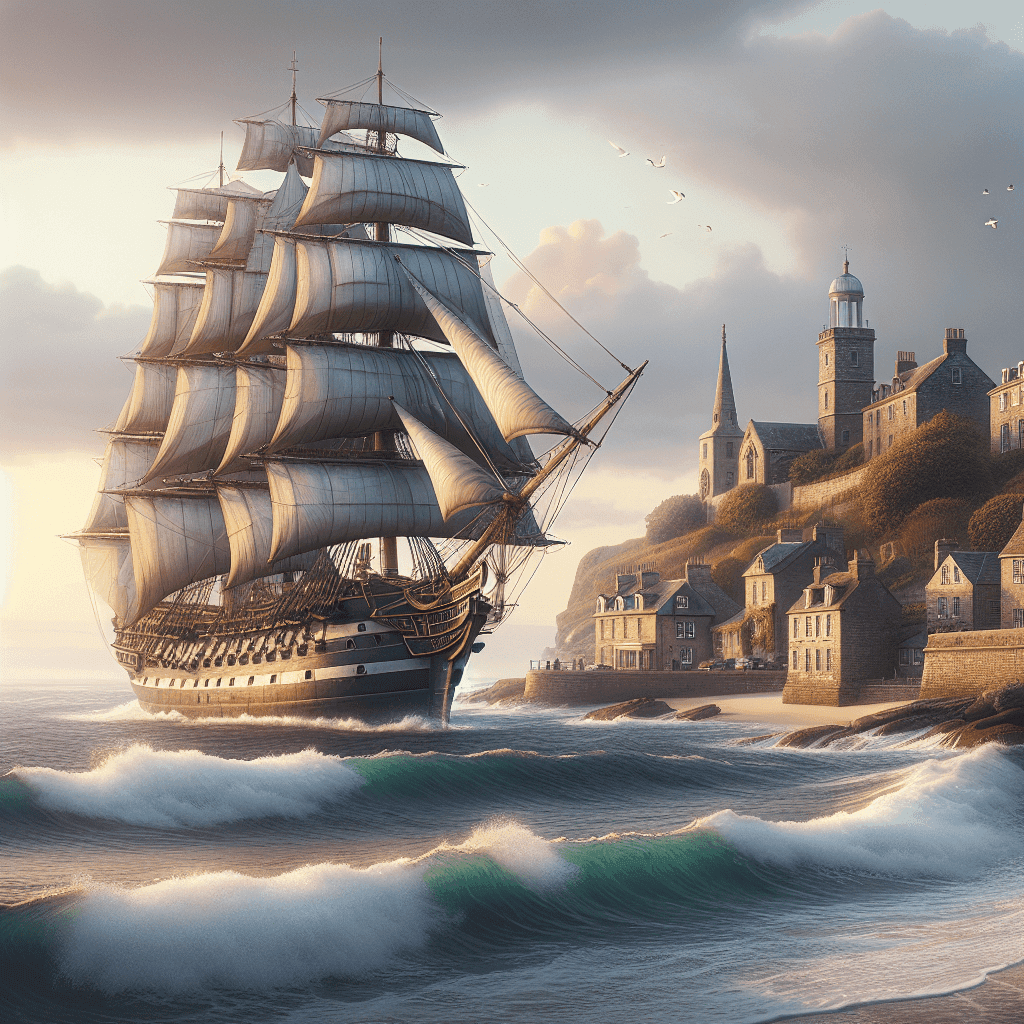
Ahoy there, matey! Let’s talk about something rather close to the heart of this fair isle—our coastal towns and their charming, sometimes cheeky histories intertwined with the British Merchant Navy. Now, if you’ve strolled down to any seaside town in the UK, you might’ve spotted some heavy-duty ships floating about, but have you thought about how these vessels shaped the very streets you tread? If not, buckle up for a ride through time, sprinkled with a few of my own misadventures along the way!
First off, let’s get to the point. The British Merchant Navy isn’t just about ships and sailors in dapper hats. Oh no. It’s a key player in the UK’s economic and cultural history. Picture this: during the 19th century, the Merchant Navy operated thousands of ships, moving everything from spices to coal. These vessels weren’t just moving cargo; they were launching a nation into global trade and connecting coastal towns in ways you wouldn’t believe.
Speaking of coal, did I ever tell you about the time I mistakenly ended up in a coal mine tour instead of a ship tour in Swansea? Honestly, I expected to learn about ships, not to listen to someone explain how to avoid black lung while ensuring I showed no interest in the actual coal. Lesson learned, I suppose!
Let’s drop anchor in a few towns that have felt the winds of the Merchant Navy:
Liverpool: A bustling port city that played a massive role in maritime trade. The Royal Albert Dock now gleams like a shiny new penny, but step inside and you’ll find stories of those who came before. Recently, I wandered through the Tate Liverpool and noticed an exhibit showcasing maritime history. I must admit, being amidst modern art while drowning in a sea of nostalgia was like trying to mix tea and coffee. Don’t do it!
Bristol: Known for its rich seafaring past, Bristol’s harbour is like a history book come to life. I wandered through the SS Great Britain—a ship that’s basically a superstar of the Victorian era. Did you know it was the first iron steamer to cross the Atlantic? When I hopped aboard, the first thing I noticed was the faint smell of salt hanging in the air. Or that might’ve been the fish and chips from the stall nearby. Either way, my taste buds were doing the happy jig.
Southampton: You know, the city where the Titanic set sail? Just a hop and skip away from London, it’s got a fascinating maritime museum, and I found myself getting lost amongst the exhibits. Little tip: if you’re ever there, do grab a cup of tea from the café next door. Just be ready for a mediocre brew. I swear they brewed it with a bit of disappointment!
The Merchant Navy has crafted a lot of the cultural backstory for these areas. From local dialects to cuisine, the influence is all around. Ever hear a local talk about a dish you’ve never heard of? Well, that’s probably due to sailors bringing back unusual recipes. Take the famous “Bristol Cream” for instance, a fortified wine that had locals raising their eyebrows when it first hit the markets. Now it’s a staple!
Here are a few little nuggets:
Seafarers’ Festivals: Many coastal towns host events celebrating their maritime history. I stumbled upon a brilliant one in Whitstable, with seafood stalls and sea shanty singing. Honestly, nothing like a bit of hearty singing to warm the cockles of your heart!
Fast forward to today, and you’ll find the Merchant Navy as essential as ever but evolving to meet new challenges. From renewables to contemporary shipping, maritime industries continue to boost local economies. I mean, just walk along any coast, and you’ll see businesses thriving thanks to these seafaring connections.
Most recently, in Brighton, there’s been chatter about how the local economy is adapting post-pandemic, with an emphasis on green shipping practices. If you swing by the beach, you might even catch a few eco-friendly ferries gliding along. Not that I’m bitter about how I once mistook a ferry for a party boat and jumped on, thinking there’d be free booze. Red-faced, I left as quickly as I entered!
Each visit to a coastal town feels like peeling back layers of stories left by sailors and merchants. Every cobblestone, every quirk, like the utterly comical statue of the “Fisherman of Folkestone,” tells tales of the past.
Next time you’re wandering down by the coast, take a moment to breathe it all in. Let the salty air remind you of all those who came before and all the paths they paved. And if you spot a random fishmonger trying to sell you fish tales instead of the actual fish, give them a grin and step along—no need to go down that humorous rabbit hole!
So there you go! The British Merchant Navy has left a mark on our coastal towns that’s both rich and diverse. Whether it’s through trade, culture, or the sheer spirit of adventure, each visit offers a glimpse into a world we often overlook. As you’re sipping your next (possibly dodgy) cup of tea in a coastal café, pause a moment. Think of the bustling life that thrived here before you.
Now, what’s your favourite coastal spot that has a backstory worth telling? Got any cheeky fishing tales of your own? I’d love to hear all about it!