
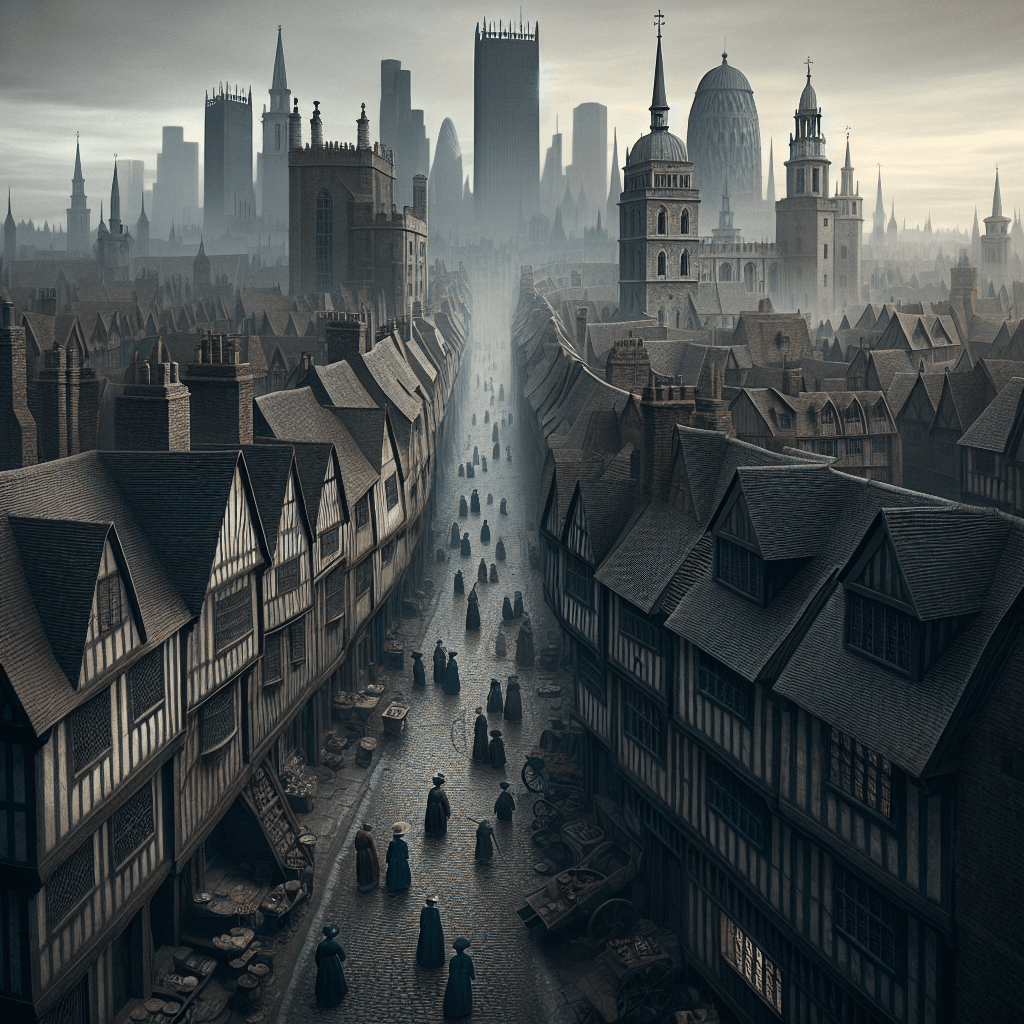
You wouldn’t think a pandemic from the 14th century could have much relevance to your Sunday stroll in Central London, but oh, how wrong you’d be! The Black Death, that infamous visitor of 1348, left many echoes in the city’s streets. While we can happily stroll about sipping overpriced lattes, our ancestors had a different kettle of fish to deal with. So, let’s take a cheeky jaunt through time to see how that dark chapter still haunts London today. Grab a cuppa — if it’s decent, that is!
First off, let’s paint a quick picture: London in the 14th century was bustling, way busier than my local bakery on a Saturday morning! It was a hub of trade, filled with narrow alleyways, crowded marketplaces, and ye olde pubs, many of which still stand today. But, oh boy, weren’t things very sweaty and smelly? One could only wonder how they didn’t get faint from the combined scent of unwashed bodies, hay, and… let’s not even go there!
The Black Death hit the city like a rogue wave, claiming tens of thousands of lives and turning streets into eerie, silent alleys. Surprisingly, this sad story gives us plenty of clues about where to look for history today.
When you walk along the River Thames, you’re literally treading on centuries of history. Ever stop to think that the same breeze you feel might have whispered sweet nothings (or, let’s be honest, tragedies) to folks centuries ago? Yeah, mind-boggling, that. If you’re in the mood for a quick jaunt, swing by River Thames Guides for river cruises that touch on the history while you float along.
While I was there, one delightful tour guide, with a voice that could make a cat purr (ever met those people?), pointed out places affected by the plague. Imagine standing where people once lived in dread, all because of outdated medical practices. If you’ve ever heard of the “miasma theory” — you know, the idea that bad air caused diseases — you’d laugh and cry at the same time. Thank goodness for modern medicine, eh?
Fast forward to the 1665 outbreak of the Great Plague, which was basically the sequel to the Black Death. Can you imagine? As if one round wasn’t enough! If you’re keen on grim tales, make your way to the Museum of London. They’ve got exhibits that’ll chill your spine, featuring the plague’s impact on Londoners. I nearly dropped my scone when I saw the “plague doctor” masks —looking like a mix between a bird and a goth at a fancy dress party.
But here’s a cheery thought amid the gloom! The city persevered. So, while I was munching on what could only be described as the worst cup of tea I’d ever had (it tasted suspiciously like burnt cardboard), I realised that London isn’t just about the bad times. It’s about resilience! The city’s streets have seen it all.
Let’s chat about how London rebuilt itself. Yes, it nearly toppled over in hardship, but the streets that endured became part of a greater story. One standout place is the St. Paul’s Cathedral, created after the Great Fire of London in 1666. Now, that was some serious rebuilding after all the calamities! When you step inside, the light filtering through the stained glass is a reminder that life does indeed go on.
As I stood there, letting the beauty wash over me, I thought about how our ancestors would marvel at this cathedral, filled with hope and faith after so much despair. The juxtaposition really hits home. And trust me, that thought nested in my head longer than the scone I mentioned earlier, which still felt like it was lodged there.
But let’s not linger too long in the past; the city has new challenges. As I meandered through the quaint markets of Borough Market, I couldn’t help but think of the lessons from yore. The current pandemic has prompted reflections about community and health that echo the fears of the Black Death. It’s almost poetic, if you think about it.
Here’s a cheeky story: I accidentally bought artisanal cheese instead of normal cheddar, assuming “stinky” meant strong! Did I realise I had a mini cheese explosion in my mouth? It had me gasping like a plague doctor trying to save a patient! But the laughter from my friends made it all worthwhile, bonding over our culinary blunders like Londoners of old, uniting in the face of a crisis — albeit a much less frightening one.
As you strut through London, here are a few spots where echoes of the Black Death still call out:
Smithfield Market: A grim place during the plague, this is where bodies were dumped. Today, it’s buzzing with life! A visit brings a shiver and a thrill, especially if you can catch the old pubs nearby.
St. Bartholomew the Great: This stunning church dates back to the 12th century. Standing there, you realise you’re among the remnants of a community that survived. The peacefulness seems to hush all past horrors.
Before I wrap this up, I must make a cheeky mention of London’s current scene. The city is buzzing with local events and exhibitions that engage with its past, simply check out Time Out London. Some art installations even focus on the impacts of pandemics, connecting visitors from past and present. It’s actually more uplifting than you’d think!
In reflecting back on my exploration, I can’t help but marvel at London’s spirit. The ghosts of the past linger, but they’ve been woven into the vibrant fabric this city has become. It’s buried beneath the modernity yet feels palpable, echoing stories of survival and community. And the speck of dread? Well, it just gives you a little spice as you sip that next cup of tea.
So, if you find yourself wandering through the streets of London, remember to glance back now and then. There’s way more than meets the eye. The Black Death and its echoes remind us of resilience, and I must say, it adds a bit of fodder for laughter when you mess up with a cheese purchase!
What’s your favorite history nugget from your travels? Did you ever step into a place so rich with stories it left you speechless? Share below!