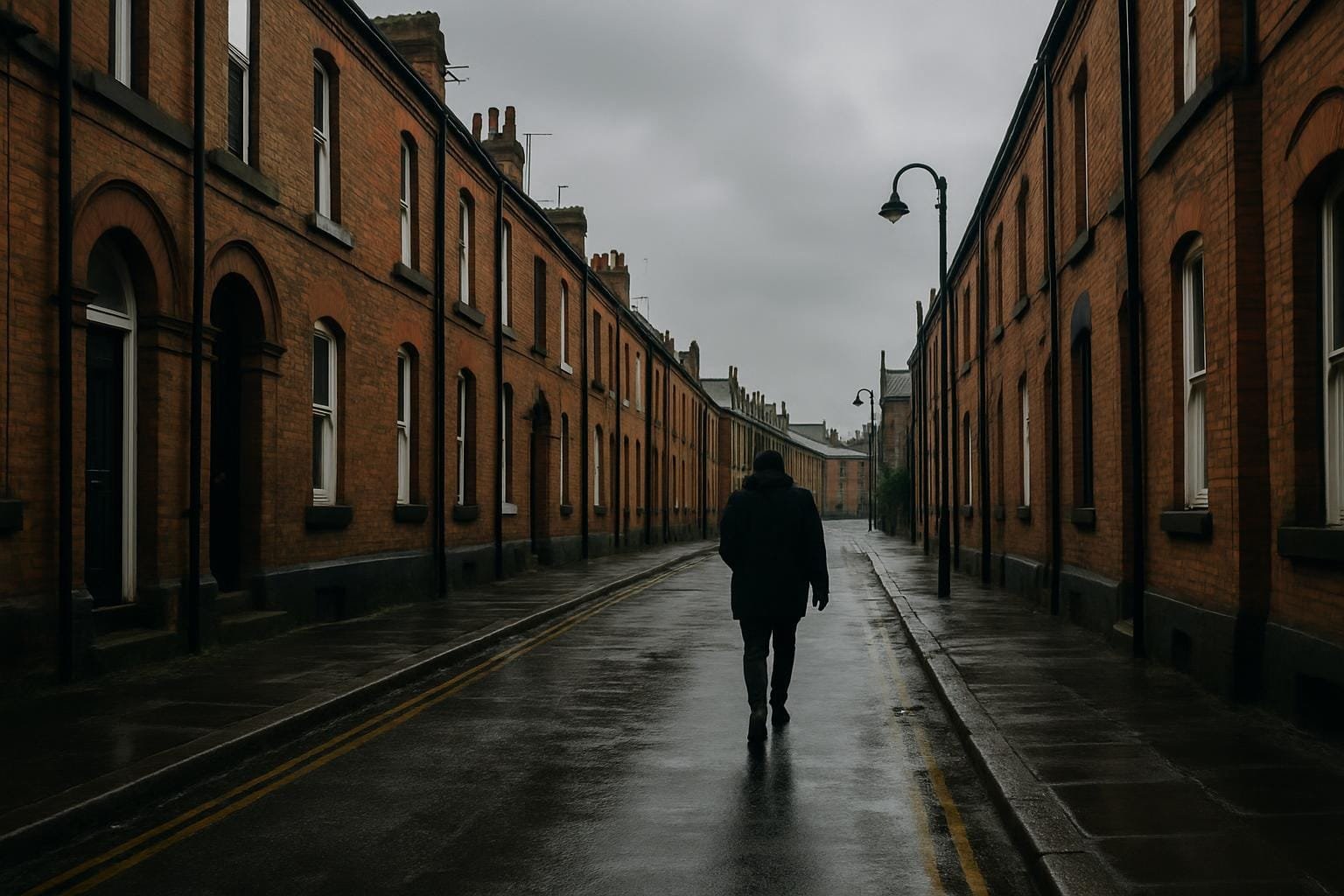
I’ve lost count of the number of people who’ve asked me about “The Smiths Manchester walking tour” as if you can tick a band off the way you tick off brunch spots. You can, if you like, traipse from Salford Lads Club to the old Free Trade Hall and pretend you’re on the sleeve of The Queen Is Dead. But every time I’ve done any version of that, the bits that’ve stayed with me weren’t the postcard places. It’s the corners of the city where their songs still feel slightly too big for the street they came from – bits of Hulme, the walk up to the Arndale, the wet bus stops that sound like the intro to “How Soon Is Now?” if you stand there long enough.
I was fourteen when I first heard The Smiths. A scratched copy of Hatful of Hollow “borrowed” from my cousin in Wallsend, played on a plastic Argos hi‑fi that made everything sound like it’d been recorded in a biscuit tin. It was the BBC sessions version of “What Difference Does It Make?” – thinner than the album cut, hungrier too. At that age Manchester might as well have been Mars, but I remember staring at the inlay notes and thinking: why does this music sound like the weather I’m living in?
When I finally moved within cheap train distance of the city, in my mid‑twenties, I did what you probably did: walked past Salford Lads Club, stood around Ancoats, lurked near the Ritz on Whitworth Street and felt faintly ridiculous trying to map lyrics onto kerbs. It felt wrong treating it like a checklist. The truth is, The Smiths never wrote about “Manchester” in the big neon sense anyway. They wrote about bus routes and bedsits, chip shops and the horrible quiet on a Tuesday afternoon.
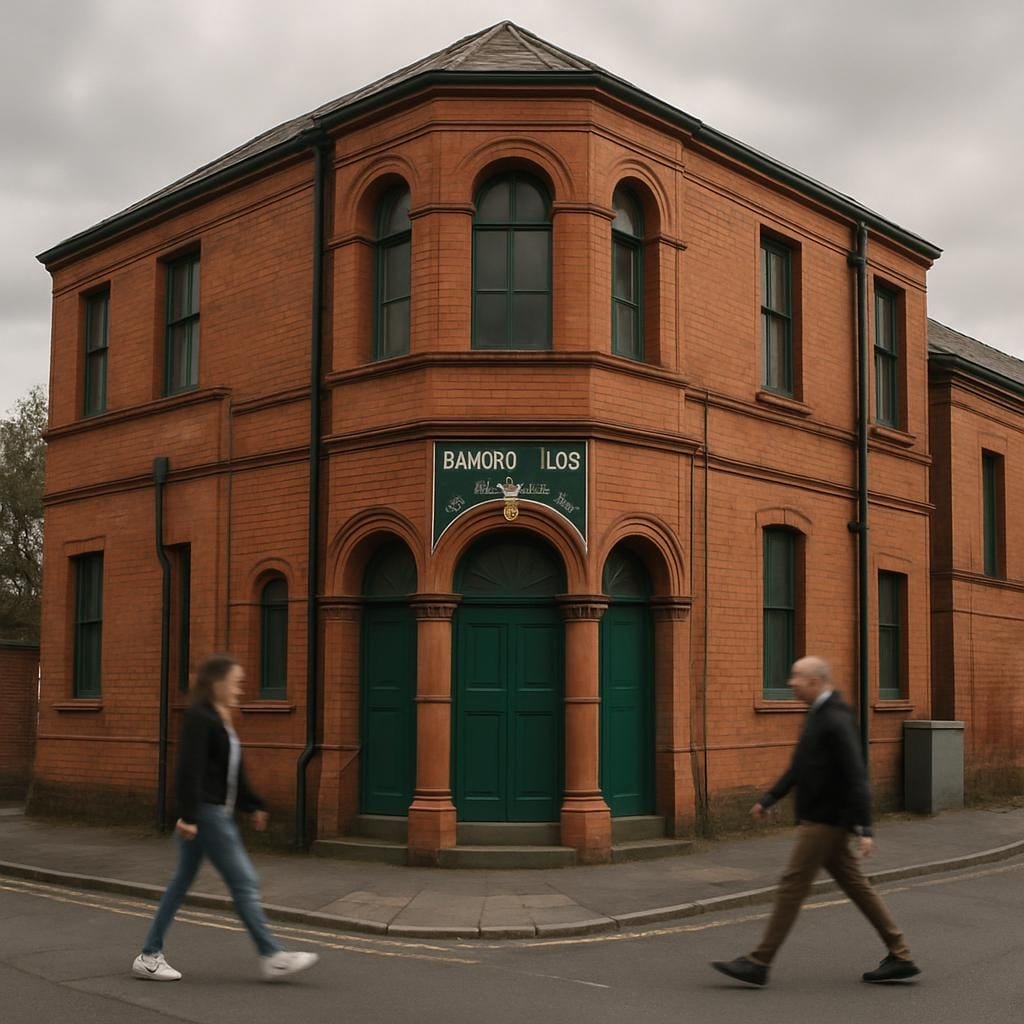
I remember one wet Monday in about 2012, heading from Piccadilly up towards the Northern Quarter, hungover and in a sulk because I’d missed out on tickets for some hyped band at the Apollo. “I Know It’s Over” came on my headphones just as I cut behind the back of the old Afflecks building. The alley smelt of stale chips and wet cardboard. That’s the real “The Smiths Manchester walking tour”, if you ask me: walking through bits of the city that don’t care you’re there, while a man moans poetically in your ears about being unloved.
The argument I’ll happily have in any pub is this: Manchester shaped Marr’s guitar more than it shaped Morrissey’s lyrics. People treat Morrissey’s whole catalogue like a big northern novel. Fair enough, there’s Deansgate, Hulme, the Arndale bombing shadowing “The Headmaster Ritual” if you squint. But the actual geography of the place – the way streets twist, the distance between terraces and ring road – that seeps into the sound, not the words.
Think about “Still Ill”. That chiming riff has the bounce of walking too fast along Oxford Road, dodging students and buses, slightly off the beat but always forward. Or “Back To The Old House”, which has the feel of those red‑brick terraces in Whalley Range where you’re never quite sure if you’re welcome or about to be told to move on. Marr once said he wrote a lot of those early songs holed up in a flat in Bowdon, but the pulse of the city centre is in them: bright bits of guitar cutting through a grey backdrop.
Then there’s the brutal thud of “The Queen Is Dead”. Every time that drum intro comes in, I see the concrete underpass near Hulme that I walked through one late December, wind knifing sideways, fluorescent strip light buzzing like it might explode. I wasn’t “on” a The Smiths Manchester walking tour; I was just trying to get to a gig at Sound Control. But that song turned the walk into something else – funny, angry, a bit theatrical. Manchester does that. It takes your sulks seriously but never stops taking the mick.
There’s another thing I should put out there. I genuinely think The Smiths are a better band if you mentally cut Morrissey’s solo career away from them. I know that’s controversial. If you’re the sort of person who still buys every 7‑inch he releases, you’re probably already scowling. But hear me out.
When I finally made it to the MEN Arena (before it was rebranded like a mobile contract) to see Morrissey in 2006, there was a weird tension in the room. He opened with “The Queen Is Dead”, rattled through “First of the Gang to Die”, and the first real roar of the night was for “How Soon Is Now?”. Fair enough. But by the time he did “Everyday Is Like Sunday”, half the crowd had their phones out filming, and the air in the place felt flatter than it should for a song that good. It was like watching a man trying to pretend history is something you do every night rather than something that happened once.
Go back to live Smiths recordings – the 1985 Oxford gig or the Kilburn show from ’86 – and they sound wired. There’s a version of “Panic” where Marr’s guitar is so sharp it practically shaves the venue. When I listen to that and then remember the 2006 arena show with the giant backdrop of himself and the merch stands doing brisk trade, it’s clear: the band only really made sense inside the scruffy mid‑80s Manchester that shaped them. Strip out all the later drama and they’re a tighter, less compromised proposition.
One of the least glamorous parts of my own private The Smiths Manchester walking tour is the run from Shudehill to the Arndale. Fluorescent light, chain shops, the escalators where the rubber handrails always feel slightly sticky. No heritage plaque, but it’s there in the mood of things like “Heaven Knows I’m Miserable Now” – that sense of being surrounded by people and still feeling like nothing quite fits.
“Shoplifters of the World Unite” sounds like the sort of tune that comes to you after you’ve been followed around a shop by a bored security guard for looking too poor to buy anything. I heard it properly once while walking through the rebranded Corn Exchange (all tapas and chain pizza by then). It hit me that the 1987 single, with its half‑sneering slogan, has more bite than most of the supposedly radical guitar stuff that followed in the early 90s. Oasis might have shouted louder, but “Shoplifters” had more class anger tucked into its sing‑along than “Cigarettes & Alcohol” ever managed.
It’s odd, going through those very sanitised, glassy spaces with a band in your ears who wrote so much about the boredom of cheap shops and grim jobs. The modern city is trying to iron out the sort of corners they were singing from. Which is part of why I think the received wisdom about Manchester as this eternal music factory needs a bit of a shake.
There’s this lazy idea that Manchester just constantly produces great bands by breathing. As if The Smiths happen, then the Roses, then Oasis, then Elbow, then whatever next, all on this unbroken line of greatness. Spending more time there, you realise how selective that story is. For every band that makes it into a BBC4 retrospective, there were ten who did Wednesday nights at the Boardwalk or the Roadhouse and never got past the demo stage.
The Smiths came out of a very specific boredom: early‑80s unemployment, decaying city centre, the hopelessness Morrissey turned into dark jokes and Marr turned into these ridiculously melodic riffs. That doesn’t repeat cleanly. By the time I was killing time in the late‑night kebab places near Piccadilly boom years later, the problems were different. Rents were rising, and the kids queuing up outside Night & Day Café were more likely to be students from Surrey than local lads who’d just clocked off at some horrible factory.
I’m not interested in the kind of The Smiths Manchester walking tour you could sell through a hotel concierge. What I am interested in is the way you can still feel their version of the city sneaking through the gaps. Like the alley near the old Hacienda site where, at two in the morning, “There Is a Light That Never Goes Out” makes as much sense as it ever did to two drunk people trying to flag a taxi that’s never coming.
I measure some Manchester streets in albums. The stretch from Piccadilly to the Apollo is Strangeways, Here We Come for me, because I made that walk on a freezing 2013 night with “Stop Me If You Think You’ve Heard This One Before” on repeat. The Gmex (now Manchester Central) will always taste of undercooked chips and sound like “Bigmouth Strikes Again”, thanks to a 2005 indie all‑dayer where every third band owed far too much to The Smiths and none of them could quite manage the humour.
Humour is the bit a lot of imitators missed. For all the misery tag, The Smiths were funny. Listen to “Frankly, Mr Shankly” or the throwaway drama in “Vicar in a Tutu”. That sarcasm is pure northern – the same energy as an old bloke in a Rusholme curry house giving the waiter grief about the price of poppadoms. The sadness is never straight; there’s always a wink, a twist of the knife in the punchline. You hear it in the way Marr undercuts Morrissey’s moaning with something sparkling and upbeat.
One grey afternoon, walking past the Manchester Art Gallery, I had “Cemetry Gates” on. I’d always thought of it as one of their lighter songs, but that day the bit poking fun at literary snobbery landed differently. I’d just come from a food writers’ event full of people saying “curate” as a verb and treating street food like they’d discovered it personally. Morrissey’s sneer at people claiming ownership of “serious culture” felt bang on. Different field, same nonsense.
Here’s another argument‑starter: I think Joy Division get talked up as Manchester’s serious band because they look better in black and white, but in terms of writing about the actual grind of living in a northern city, The Smiths did it with more bite and more tunes.
Joy Division have the tragedy, of course. Ian Curtis, the myth, the Factory Records lore. You can build exhibitions in museums around that stuff. But when you stick “Hand In Glove” or “Reel Around The Fountain” next to “She’s Lost Control”, the former songs feel like someone who’s caught the bus with you, while the latter feels like something pinned to a gallery wall. I love both bands, but only one of them makes sense when you’re sat outside Piccadilly with a cold Greggs sausage roll wondering what you’re doing with your life.
That’s why, for me, the most faithful The Smiths Manchester walking tour is the one where you’ve got your headphones on, some minor life crisis rolling quietly in the back of your head, and the city doing what it always does: carrying on, disinterested. The music doesn’t sum up the place so much as argue with it, sigh at it, flirt with it.
Because I write about food most of the time, I can’t think about The Smiths in Manchester without thinking about the places that soak up fans after gigs. Late‑night chips on Portland Street, veggie breakfasts near Oxford Road, those slightly sticky tables that look like they’ve hosted every subculture since 1983.
There’s a café on Oldham Street – no need to name it, you’ll know it by the mix of tote bags and questionable haircuts – where I once watched a kid in a Smiths T‑shirt trying to impress a date by insisting that “Meat Is Murder” is the greatest protest album ever made. I wanted to butt in and say: it’s a great record, but as someone who’s done years in hospitality, I’d rather eat at a small‑town café serving ethically sourced bacon than listen to another person quote Morrissey at me over wilting salad.
That tension – between the lyrics on the page and the actual graft of feeding people – runs all the way through how I hear them now. “Barbarism Begins At Home” feels different when you’ve closed up a kitchen at midnight after a ten‑hour shift, asking yourself why you’re still doing it, versus hearing it as a sixth‑former who thinks “work” is a part‑time job in HMV. The city’s hospitality scene, from curry houses on Wilmslow Road to the bars under the arches near Deansgate, is part of that same low‑wage churn they were writing about, even if the décor and menu fonts have changed.
Manchester changes faster than the documentaries make out. Venues close, flats appear, every abandoned unit threatens to become another mini‑chain with Edison bulbs and “small plates”. But the songs stick. It doesn’t matter if the precise corner from that old photograph has been turned into student apartments; the feeling of walking there in the rain, skint and a bit dramatic, will always be a short intro and a drum fill away.
I don’t think you need to go hunting every last address to feel closer to The Smiths. If you’re in the city and your feet happen to take you past somewhere you’ve seen on a record sleeve, fine. Have your moment, take your photo, mentally tick “The Smiths Manchester walking tour” off your list if you really want. But the better way, I think, is to let the songs ambush you in unglamorous places: in the queue for a pasty at the station, under the leaky bit of roof at Victoria, halfway up Market Street as the rain does that sideways thing it does.
The band were never about grand monuments anyway. They were about what happens between them: the bus rides, the bad dates, the miserable commutes, the jokes you make to get through it. That’s still there, humming underneath the changing city, waiting for some teenager with cheap headphones to press play and realise that someone, at some point in the 80s, managed to put their exact sulk into song.
And if, later, that teenager finds themselves years on, walking the same streets with a different sort of tiredness in their bones and “Please, Please, Please, Let Me Get What I Want” ticking away in the background, they’ll understand what I’ve come to think: the finest The Smiths Manchester walking tour isn’t about historic sites. It’s about the way those songs sit in your pockets as you move through a city that never asked for an anthem but got one anyway.