
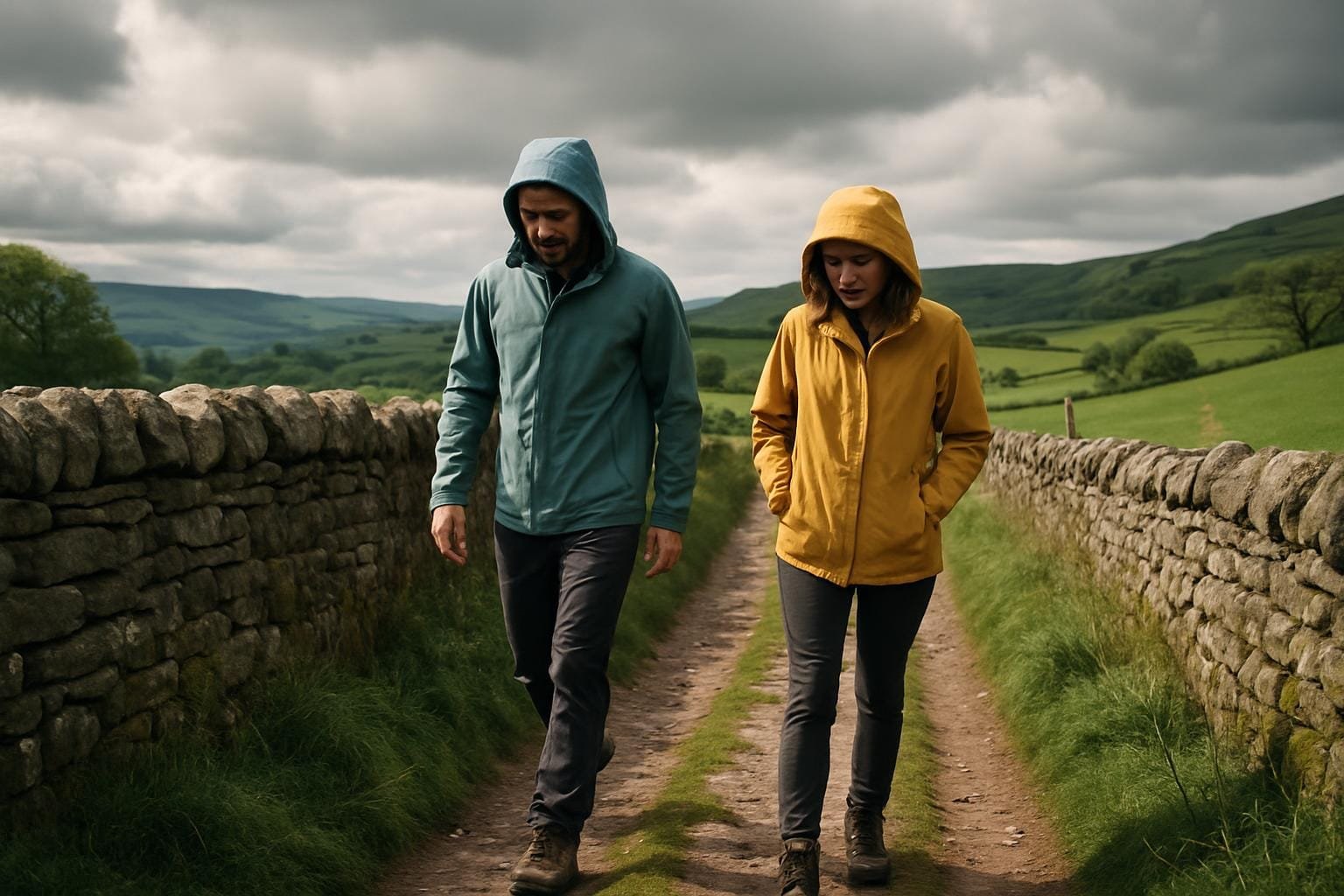
Working out what to wear for walking in the UK is a bit like trying to dress for three different countries at once. One minute you’re leaning on a pub garden fence, pint in hand, the next you’re being sandblasted on a Derbyshire edge, wondering why your “waterproof” is behaving like kitchen roll. Over the years, from soggy Shropshire bridleways to wind-whipped gritstone in the Peak District, I’ve learned (badly, then slowly better) how to dress for whatever the footpath throws at you.
This isn’t a gear-nerd guide. It’s the practical stuff I’ve picked up on real walks, with real mud, real rain and the occasional real sulk when my socks failed me.
Let’s start simple. The classic “pub to somewhere vaguely scenic and back in time for lunch” route. Think places like the Mytton & Mermaid by Atcham bridge near Shrewsbury, where you can stroll along the Severn Way, or the Strait Inn at Broughton near Kettering with the Jurassic Way heading out across the fields behind it.
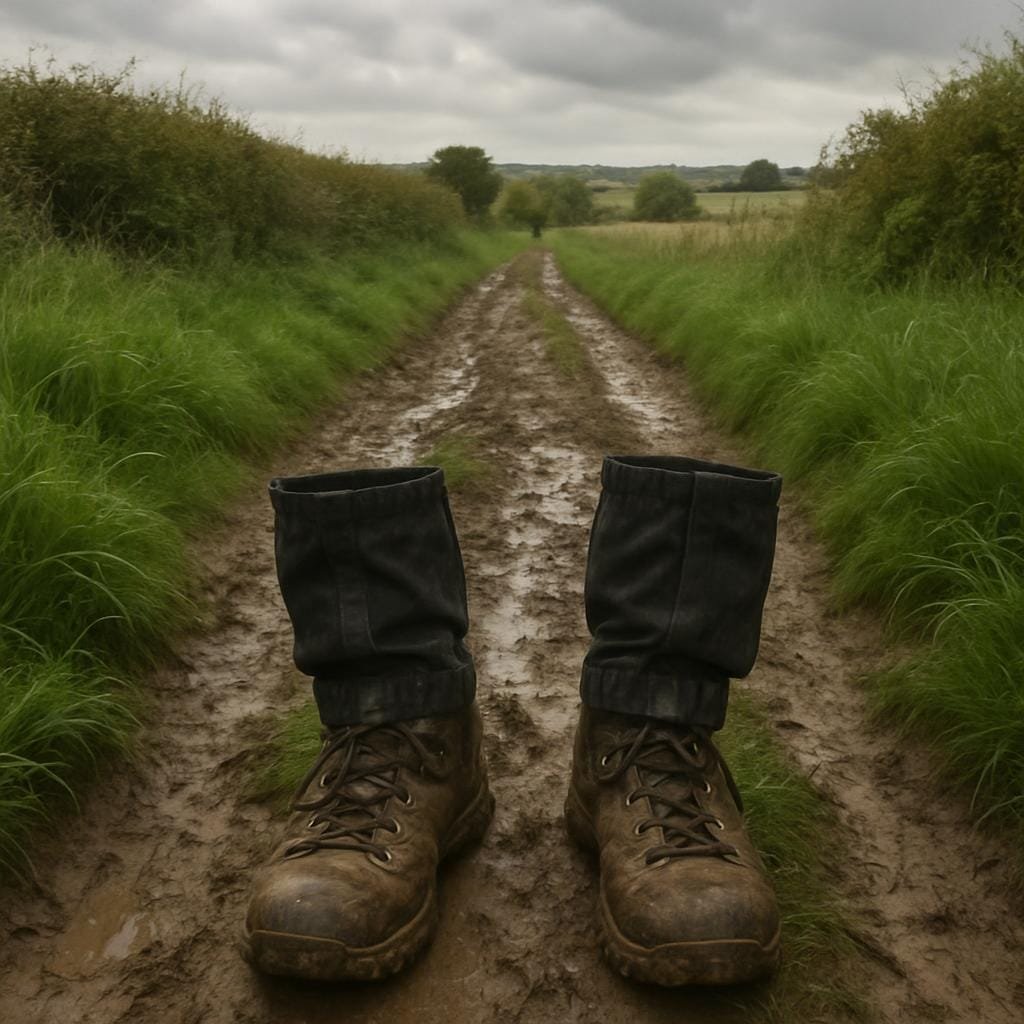
The temptation is to dress like you’re just popping to Tesco. Trainers, jeans, nice jumper. Don’t. UK pub paths have three main characteristics:
For these walks, my go-to outfit looks deceptively boring:
I learned this the hard way on a “short” loop from the Mytton & Mermaid a few years back. By the third flooded stile my jeans weighed about the same as a Border Terrier and I ended up drying them under the hand dryer in the gents while my mate ordered food. The bar staff were remarkably polite about the smell.
These are usually free, obviously, apart from parking. A lot of rural pubs still let you park for nothing if you’re a customer, but some now charge around £3–£5 via apps like RingGo or their own machine. Always check the board in the car park before you lock up and set off.
Best time to walk these is shoulder seasons – April/May and September/October – when the ground has a fighting chance of being firm, and you’re less likely to be dodging wasps around the beer garden. One thing most visitors miss: check the OS map or an app like OS Maps before you set off. That tempting mown path behind the pub often leads to a fishing peg or a private garden, not the right of way.
Canal walks feel easy. Flat, firm, lots of ducks. I used to think I could get away with office shoes for a quick stretch along the Shropshire Union Canal near Market Drayton, or the Birmingham & Fazeley around Curdworth. Then I met my first genuinely slick towpath.
In winter, the mud along quieter stretches can be like walking on greased teflon. In summer, nettles crowd the edges. You don’t need full mountain kit, but you do need a bit of thought.
What to wear for walking in the UK on towpaths, from my trial-and-error:
On the Shropshire Union around Market Drayton, I like to start near the Hippodrome cinema car park (about £2–£3 for a few hours, machines take cards) and drop down onto the towpath by the aqueduct. You can reward yourself later with a bacon bap at the Orchard Café just off Cheshire Street – formica tables, solid tea, and always at least one pensioner cheerfully reading the racing pages.
Walking is free, but canals cross road systems that weren’t built with pedestrians in mind. Getting to stretches like the Tixall Wide on the Staffordshire & Worcestershire Canal is easiest by car; parking near the Shugborough Estate car park costs around £5 for the day, then you walk down. Trains to nearby Stafford or Rugeley Trent Valley will get you within a bus or taxi ride.
Best time is early morning or late afternoon on dry days – towpaths after a night of heavy rain can be more puddle than path. Thing most people miss: carry a tiny head torch in autumn and winter. Canals get surprisingly gloomy under trees and bridges long before sunset, and some of the tunnel sections (like Chirk, if you wander that far) are black as coal bunkers.
If pub paths and canals lull you into thinking you’ve cracked what to wear for walking in the UK, a day on the Eastern Edges of the Peak District will set you straight. The first time I walked up from Grindleford station to Burbage Edge on a “sturdy showers, sunny spells” type forecast, I thought my usual softshell and walking shoes would be fine.
They weren’t. The rain came in sideways across the open moor above Padley Gorge, the wind picked up, and my shoes hit that special level of saturation where you can actually squelch your toes. I ended up eating a pasty in the shelter of a boulder, watching people stride past in sensible gear and trying not to die of clothing envy.
On these edges – Stanage, Froggatt, Curbar, Burbage – the kit list upgrades slightly:
For a classic edges day, I like the loop from Longshaw Estate (National Trust parking around £6 for the day if you’re not a member) across to Burbage Rocks, then back via Higger Tor. Longshaw’s Tea Room does decent coffee and reassuringly heavy flapjack; on busy weekends you’ll queue, but it’s still better than trying to eat a soggy sandwich in a gale.
One tiny thing that makes a big difference: decent socks. On a wet day up by Stanage Edge I wore thin “everyday” socks because I’d forgotten my walking ones at home. Two hours later my feet looked like pickled tomatoes. Since then, I’ve stuck with midweight walking socks – Bridgedale or similar – even on modest walks.
Public transport around the Eastern Edges is better than people think. Trains to Grindleford or Hathersage from Sheffield or Manchester put you within a mile or two of good paths via public rights of way. Buses from Sheffield go to Fox House, right by Longshaw.
Most car parks along the edges – Surprise View, Curbar Gap – cost around £3–£6 for a few hours, often via Peak District National Park pay-and-display. Best time to visit is early on a weekday outside school holidays; on sunny Saturdays after 10am it can feel like a motorway service station with gritstone.
Thing most visitors miss: the wind chill. The forecast might say 8–10°C but on Stanage with a crosswind it can feel close to freezing, especially if you stop to watch the climbers. Pack an extra layer “for standing around” – a lightweight down or synthetic jacket you can pull on over everything.
Head a bit higher – Kinder Scout, Bleaklow, the tops above Edale – and dressing well stops being about comfort and starts edging towards safety. I don’t mean to sound dramatic, but I’ve watched cloud drop on Kinder so fast it felt like someone had closed a lid on the hill.
On my first properly planned Kinder circuit from Edale, going up via Grindsbrook and round the plateau, I thought I’d finally cracked what to wear for walking in the UK: decent boots, waterproofs, layers, hat, gloves. Then I stepped in my first proper peat bog. It swallowed my leg up to the knee and very nearly my dignity. That’s when gaiters went from “overkill” to “minimum standard”.
For moorland days, my basic outfit:
Food and warm drinks become part of your “clothing system” up here, in my book. I usually stick a small flask of tea or coffee in the bag. Last time I was up on Kinder plateau in late autumn, that flask was the difference between “this is bracing” and “I can no longer feel my soul”.
Starting from Edale, the main car park by the Moorland Centre is around £6 for a full day; it fills early on bright weekends. The local Ramblers groups often meet there for group walks, which is worth considering if you’re new to the area or nervous about route-finding.
Trains to Edale from Manchester and Sheffield are fairly regular and your best bet if you don’t fancy ending a long day with a fight for a parking space. Walking is free, but budget for parking or a train ticket. Kinder can be brilliant in late spring and early autumn when the bogs are slightly less greedy and the heat isn’t oppressive.
Thing most people miss: a spare pair of socks and a thin pair of gloves in a dry bag. If you’ve never experienced the joy of changing into dry socks after a bog-related incident, you’ve got something to look forward to.
I’ll be straight with you – I didn’t really “get” coastal walking until I’d done a few miles of the South West Coast Path around Bude and a blowy stretch of the Wales Coast Path near Porthgain. Before that, I thought it was just cliffs, tea rooms and the odd gull. Turns out, dressing for the coast is its own specific flavour of puzzle.
The wind can be fierce, the sun reflects off the sea, and the paths can switch from firm to greasy clay in a few steps. I’ve seen more people in trouble from sun and heat on the coast than in the hills.
What to wear for walking in the UK on coastal paths, based on a fair bit of slightly toasted experience:
On the Wales Coast Path between Porthgain and Abereiddy, parking at Porthgain is free but tight on space in holiday season – get there before 10am or be ready to queue. The walk itself is up and down, with cracking views over the old quarry works and down to the Blue Lagoon. I once made the mistake of relying on a T-shirt and the odd dab of suncream. By the time I reached Abereiddy I looked like I’d lost an argument with a heat lamp and spent a good ten minutes loitering by the ice cream van pretending I was there for “the view”.
The ice cream kiosk at Porthgain does a very decent raspberry ripple, and the Shed Bistro is well known for its fish – mains are usually around £18–£25 and you’ll want to book in high season. You will also want to bring something warmer for the walk back if you eat late; that coastal chill drops rapidly.
Many coastal stretches are accessible by bus – the Poppit Rocket, Celtic Coaster, and other Pembrokeshire coastal buses are designed around walkers and usually run seasonally. Walking is free; parking ranges from free laybys to £5–£8 in popular National Trust bays.
Best time is spring and early autumn on overcast or partly cloudy days – in high summer, some sections can feel like walking through a fan oven. Thing most people miss: carry a light buff or neck gaiter. It keeps the sun off the back of your neck and stops wind whipping sand into your ears.
If there’s one general rule about what to wear for walking in the UK, it’s this: dress like the weather forecast has lied to you. Because it probably has, slightly.
Across all these kinds of paths, the same basic approach works:
It took me far too long to accept that the weather in the valley tells you nothing about what’s going on up on the edge or moor. Now, even for a modest Peak District half-day, I pack as though things might get interesting: decent shell, gloves, hat, dry bag for spare layers, and shoes that won’t have me skating down flagstones like Bambi.
None of this needs to be fancy or expensive. Some of my favourite bits are sale-rail finds from Go Outdoors and Decathlon, plus a pair of socks that cost more than is morally defensible but have outlived three pairs of boots.
Get the basics right and you stop thinking about your feet and start noticing the good stuff: the clank of boat hulls under a canal bridge, the sudden drop of quiet when you step out on a moor in low cloud, the smell of chips drifting up from a pub garden when you’re still a mile away. That’s really what all the faffing with jackets and boots is for – so you can enjoy the walk instead of counting the minutes till you’re dry again.