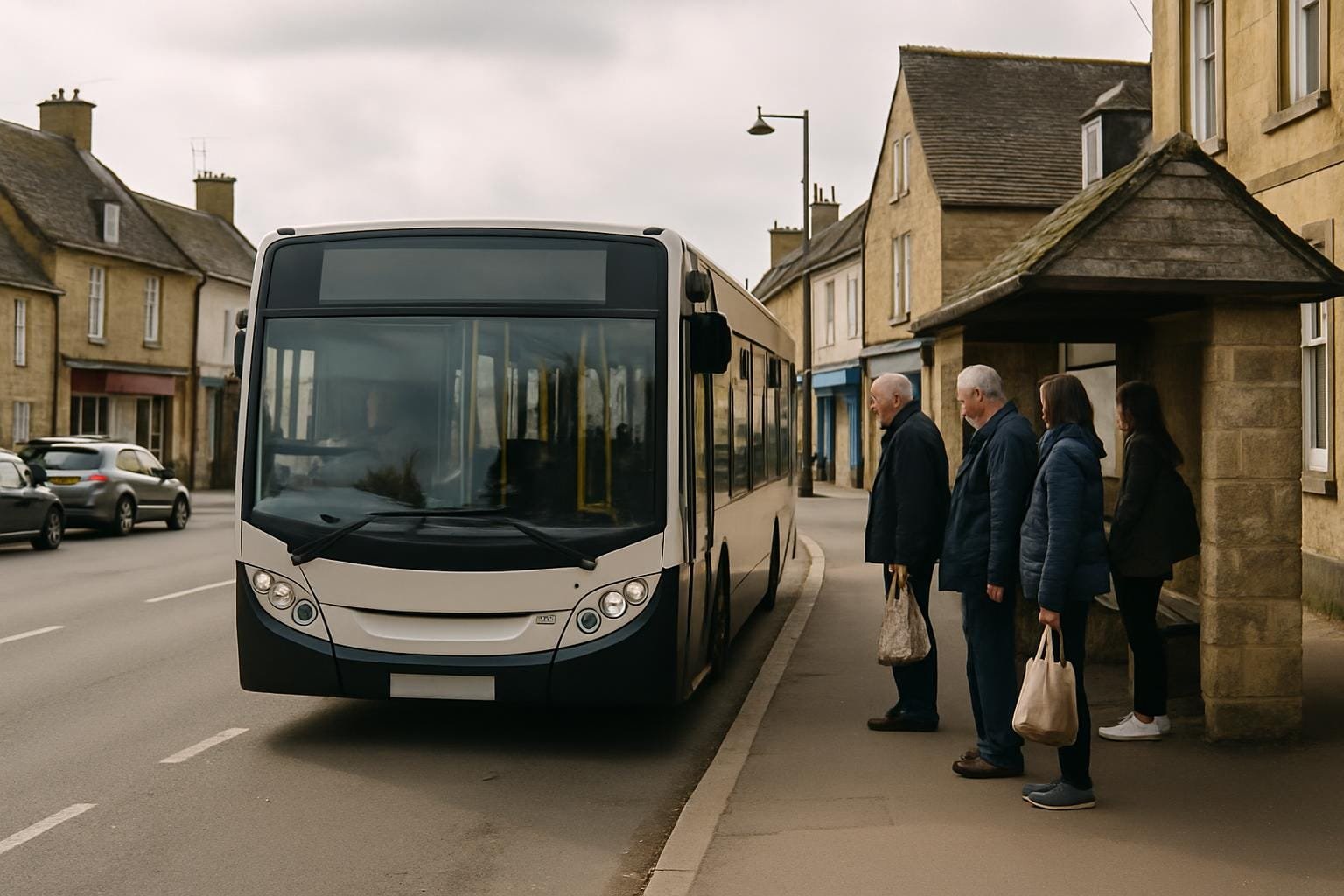
If you’ve only ever used Britain small town buses as something to stare at from a train window, you’re missing the good stuff. The big-city networks get all the glory – London’s tap-and-go smugness, Manchester’s trams, Edinburgh being… Edinburgh – but the real character lives in those hourly (if you’re lucky) buses that connect small towns, estates and places your sat nav thinks you’ve made up.
I grew up in Shropshire, and later worked in logistics, which basically meant I spent a decade timing lorries against bus timetables in places you’ll never see on Instagram. Somewhere in between a depot near Wrexham and a night shift in Taunton, I realised Britain small town buses are one of the best ways to understand a place – if you learn how to use them like a local rather than like a confused visitor with the wrong change.
Three reasons.
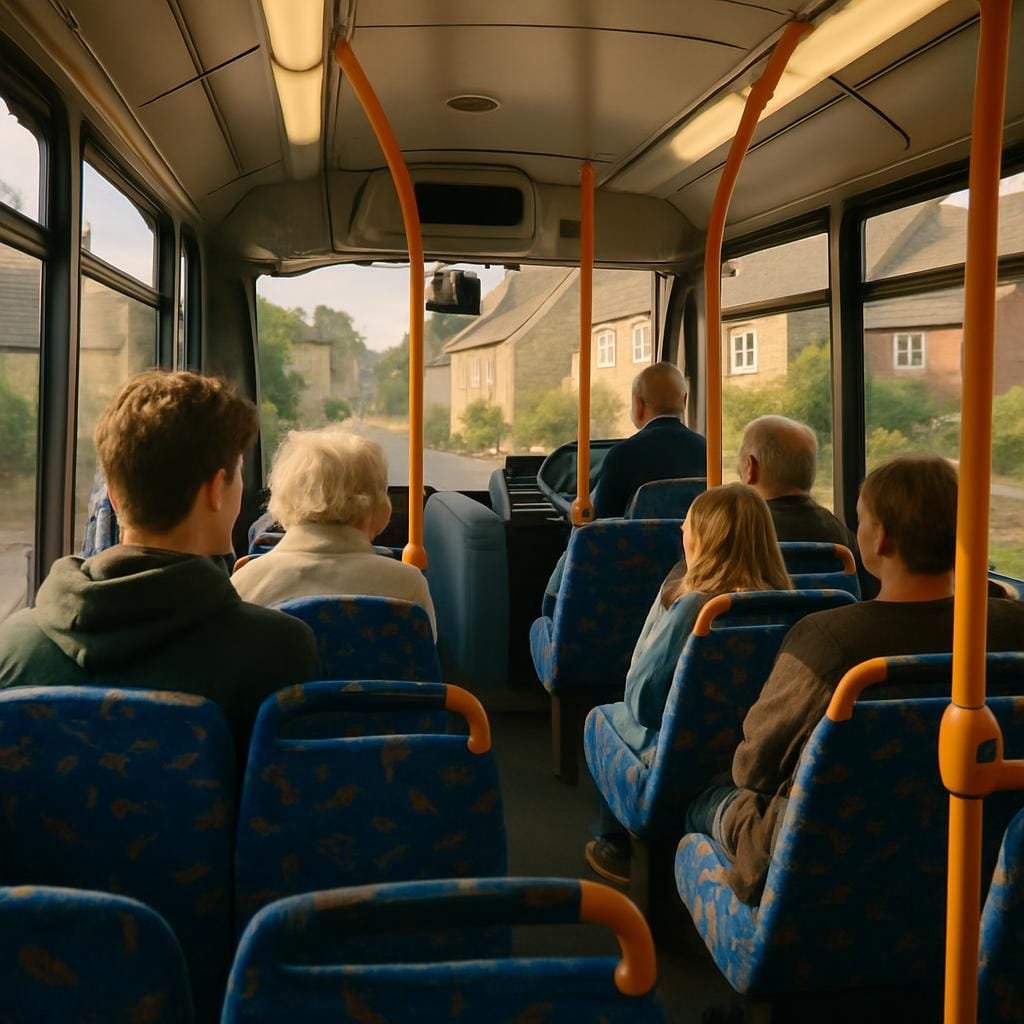
First, they go where trains don’t – the housing estates, hospital entrances and retail parks where life actually happens. Second, they’re cheap compared to a hire car, especially if you’re using day tickets or the English £2 fare cap (at the time I’m writing this, that’s still a thing on many routes). And third, you get people-watching on an Olympic level.
But they’re also confusing, late, early, diverted, or mysteriously cancelled for “operational reasons”. I’ve waited 50 minutes in drizzle outside an Asda in Telford because I didn’t read the timetable properly. So this isn’t some romantic hymn to rural transport. It’s how it really is – with some places to try it for yourself.
Let’s start at home. Shrewsbury’s not huge, but its bus system is surprisingly busy for a town that still has a proper market hall and a slightly chaotic one-way system. The main interchange is outside the railway station – a line of stands where Arriva, Minsterley Motors and the occasional school bus jostle for space.
The first time I tried to use the local service 1 to Monkmoor, I made the classic mistake: I assumed the route number meant one route. In fact, half the buses loop round one way, half the other. I got a full tour of a housing estate when all I needed was three stops. Locals timed their bell presses to perfection, rolling off outside the Spar or the little parade with the chip shop like it was choreographed.
One thing I do love: you can still grab a bus into town, walk up Pride Hill, and be in Shrewsbury Market Hall in five minutes. Up on the gallery level there’s Moli Tea House for dumplings and tea, and downstairs the veg stall that seems to sell every variety of potato known to man. It beats waiting for a connection at a retail park.
Worth knowing before you go – Shrewsbury buses
A few years back, when Ludlow’s food reputation was peaking, I made the mistake of assuming the buses would be just as polished. They’re not bad at all, but they’re very much designed for school kids and pensioners doing the big shop – not visitors who’ve lingered too long over lunch at CSONS at the Green Cafe by the weir.
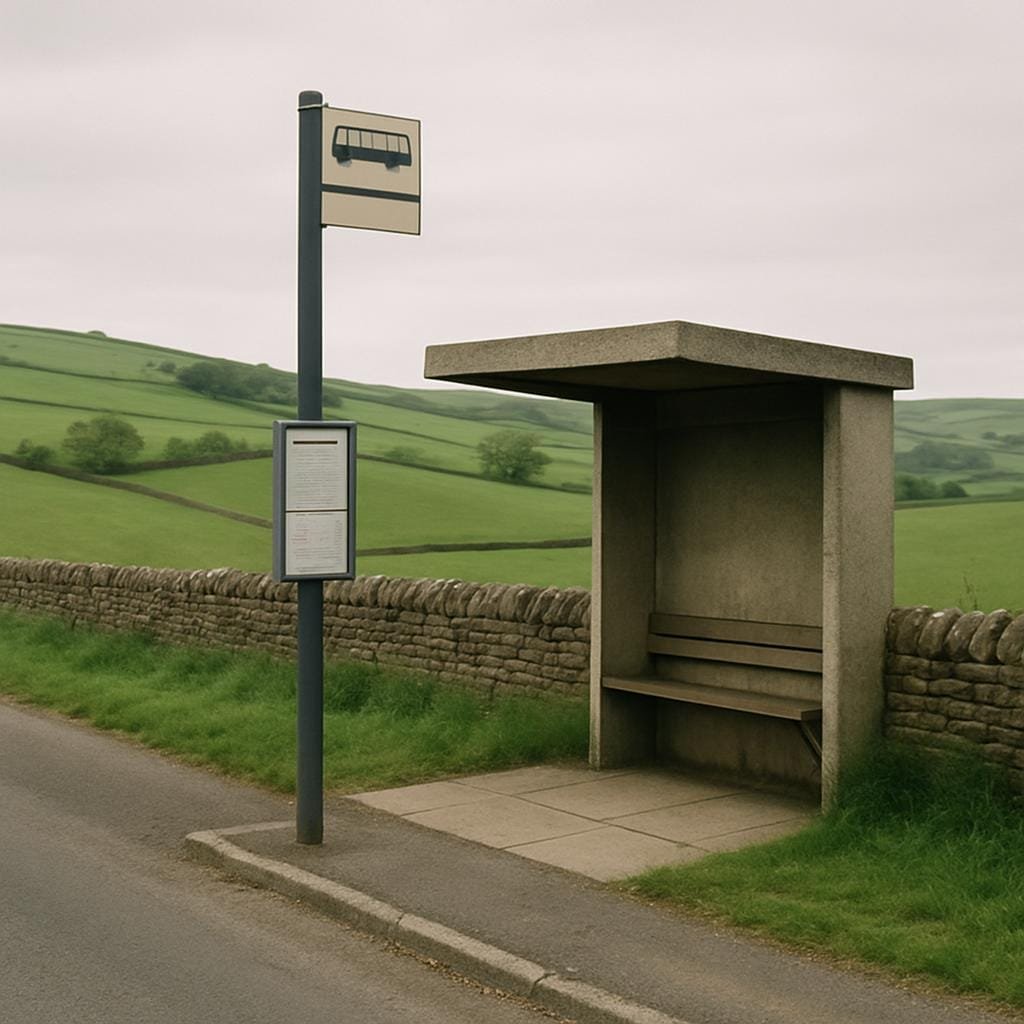
The stop outside Ludlow Castle is tiny, with a timetable board that always looks slightly sun-faded. It’s all small operators: Minsterley Motors, Lugg Valley, a couple of obscure ones. Buses wind out to villages like Orleton and Leintwardine, and if you’re used to London frequencies you’ll think you’ve read the timetable wrong. Every two hours really does mean every two hours.
I took the 740 to Knighton once, over the border into Powys, and the driver knew every single passenger by name. At the stop by Ludlow’s market square, a handwritten note had been taped to the timetable warning about a diversion because of the annual Ludlow Food Festival. The official website hadn’t mentioned the disruption at all. This is fairly typical: the noticeboard in the bus shelter will beat the internet nine times out of ten.
There’s a particular view, heading back into Ludlow from the north on a local bus, where the castle suddenly lines up behind the rooftops and you can see right down to the bend in the River Teme. Sit on the right-hand side for that. On a wet Tuesday it’s still impressive, which is helpful, because you will get wet Tuesdays.
Worth knowing before you go – Ludlow buses
One of the few places I actively enjoy waiting for the bus is Keswick. The little bus station off Main Street isn’t glamorous, but you can see Skiddaw looming in the background, and there’s a steady shuffle of hikers, dogs and people trying to work out if they’ve got time for another coffee from Java Coffee Shop before the 555 departs.
Buses are how you link up the Lake District without a car. From Keswick you can hop on the 555 down to Grasmere and Ambleside, the 78 towards Seatoller, or the seasonal 77/77A “Borrowdale Ramblers” that do a loop with views better than some train lines. I’m not exaggerating there – the run along Derwentwater, windows open, is better than half the tourist “sightseeing” operations I’ve seen.
The thing to understand is that these buses are used very seriously by walkers. There’s a whole ritual of checking the paper timetable, doing quick mental maths about how long your route over Catbells or up Helvellyn will take, then quietly shaving off an hour because the last bus back from the valley leaves earlier than your optimism can cope with. I’ve ended one walk jogging along the road from Rosthwaite, boots in hand, trying not to miss the 78 – which, naturally, was running five minutes late anyway.
In high season, especially during school holidays, the 555 between Keswick and Windermere can get so full that people are left at stops. It’s not the driver’s fault; they’re only allowed so many standees. If you’re travelling from Keswick, board at the bus station rather than flagging it down in town – you’re far more likely to get a seat upstairs at the front, with that glorious straight-down-the-windscreen view.
Worth knowing before you go – Keswick buses
The Yorkshire coast is made for buses. The trains take you as far as Scarborough or Whitby, then the proper exploring happens on wheels. The first time I took the East Yorkshire number 13 from Scarborough to Bridlington, I made the mistake of sitting downstairs near the back. You want upstairs, front row, unless you enjoy staring at seat backs while missing views over Cayton Bay.
Scarborough’s main bus stops cluster along Westborough and around the railway station. There’s a particular shelter outside the Brunswick Shopping Centre that always smells faintly of chips, thanks to a trail of people heading to and from The Famous Fish Pan and Mother Hubbard’s. Seagulls patrol the roofs with the kind of confidence that suggests they have a union.
The 13 trundles through Filey, past caravan parks and holiday villages with names like “Primrose Valley” that sound sunnier than the reality in April. In summer, it’s a rolling conversation about static caravan maintenance and which pub in Bridlington does the best carvery (for the record, I’ve had solid plates of food at The Telegraph, plus real ale that doesn’t taste like it’s been through a thousand festivals).
Service-wise, this is one of the better parts of Britain small town buses: half-hourly or hourly most of the day, contactless payments, big destination boards you can read from across the street. The trick is working out which stops are actually useful. If you’re aiming for Scarborough’s South Bay beach, get off near the Grand Hotel and walk down, or use one of the cliff lifts when they’re running. Trusting your sense of direction in Scarborough’s back streets is a quick route to appearing somewhere near Peasholm Park by mistake.
Worth knowing before you go – Scarborough & coast buses
Banbury isn’t high on many wish lists, but it’s a place where Britain small town buses quietly do a lot of heavy lifting. I ended up using them more than I’d planned when I was working nearby, mainly because I once misread the parking signs at Castle Quay and realised I’d spent about £15 leaving the car just long enough to buy a pasty.
The main bus stops line up along Bridge Street and outside Castle Quay Shopping Centre. On a weekday afternoon you get school kids from every direction, combined with people heading home from the giant Tesco Extra on Oxford Road with half their weekly shop balanced on a trolley. Local routes like the B5 and B9 zig-zag through estates like Bretch Hill and Hardwick, stopping right opposite corner shops and chip shops. If you want to see everyday life, this is it.
Then there’s the Stagecoach 500, which drifts off between Banbury and Brackley. It’s the sort of route you assume will be miserable – dual carriageway, warehouses, roundabouts – but every so often it brushes past villages like Kings Sutton, with its tall church spire, and you get a sudden, wide view over the Cherwell Valley. Not pretty in the sanitised sense, but quietly satisfying.
Banbury Market, held in Market Place, is worth pairing with a bus trip. Thursdays and Saturdays are busiest; you’ll find everything from cheap socks to a fruit and veg stall where the seller seems to price things by how generous he’s feeling that day. Grab a coffee from Lock29 by the canal – the narrowboat whiff of diesel and frying onions at the same time is oddly comforting – then wander up to the stops and let the next bus be your guide.
Worth knowing before you go – Banbury buses
The specific towns change, but the habits don’t. Locals have a sixth sense about buses, but most of it is just practice and a bit of pattern recognition. A few survival tactics:
Apps are improving, but in many areas they’re still half a step behind reality, especially during roadworks or local events. That A4 sheet in the bus shelter, with the corner peeling off, is often the most accurate thing you’ll see all day. If there’s a clash between what the app says and what’s blu-tacked to the window, side with the paper.
In plenty of smaller towns, market day still shapes the bus schedules. Extra services mid-morning, fewer later in the afternoon when everyone’s gone home with a bag of reduced veg and a phone case they didn’t need. In places like Ludlow or Banbury, services into town bulk up on those days – and school holidays can scramble everything again.
If you’re unsure where to get off, sit near older locals. They’ll press the bell at exactly the right place for the supermarket or the health centre. This sounds like stereotyping, but years of watching buses round Herefordshire have convinced me there’s always at least one unofficial route expert on board.
Just don’t do what I did once and get so engrossed in their gossip that you sail straight past your own stop – that was how I ended up an hour out of my way in rural Powys, buying a consolation sausage roll from a Spar with a view of absolutely nothing.
Small-town evenings are when many services evaporate. It’s incredibly common for the “last bus” to leave between 18:00 and 20:00, especially on Saturdays. Sunday services might not exist at all, or be limited to one or two runs. If you’re planning dinner and drinks, screenshot the timetable and have a backup plan (local taxi number, or a route that still runs part-way).
Seaside towns, National Parks and market towns can all have seasonal extras – summer-only buses, Christmas shopping shuttles, or reduced winter timetables. Keswick’s Borrowdale services thin out dramatically outside walking season; Scarborough’s coastal runs can change around half-term and Easter. A timetable from two months ago is already history sometimes.
I won’t pretend there’s anything glamorous about waiting for a delayed bus outside a B&M, with rain coming at you sideways and a carrier bag cutting into your fingers. But there’s also something quietly wonderful about seeing how these small-town networks stitch places together. You start to understand which village gravitates towards which town, which housing estate feeds into which school, how much life hinges on a single hourly service actually turning up.
On Britain small town buses you hear about the local cricket match that got rained off again, the neighbour who keeps putting their bin out on the wrong day, the endless saga of someone’s cousin trying to move to Leeds. You see the same faces, if you stick around long enough. When a driver gives you a nod because you’ve clearly graduated from “confused visitor” to “person who knows which side of the road to stand on”, it feels oddly satisfying.
So next time you’re in a place that barely gets a paragraph in the guidebooks, check the bus stop. Grab the paper timetable. Take the slow way round town. It might be slightly late, the seat might be a bit sticky, and you might overshoot your stop once or twice. That’s part of the story.