
I first came across the phrase “Peasants’ Revolt travel route” in a rather dry local guide from the 1980s, which made it sound like a sort of medieval coach tour with pitchforks. The more I read, and the more time I spent tracing bits of the 1381 rising on modern roads and footpaths, the more I realised that England’s first mass protest on the move looks oddly familiar. People organising across counties, messages moving faster than they logically should, and a political argument that begins with tax policy and ends with the whole structure of power on the table.
Textbooks tend to treat the revolt as a three‑act drama: peasants in Kent and Essex get cross about the poll tax, march on London under Wat Tyler, kill a few people, scare the king, then get put down. Curtain. The Peasants’ Revolt travel route is usually reduced to a straight line into London from the south‑east, like an angry school geography project.
The real route is messier, wider, and much more human. It runs through villages where collectors were beaten up in barns, through market towns whose records still quietly note fines for “ill‑spoken words”, and into London itself, where the protest turned into something closer to a rolling, murderous committee meeting. You can still follow a lot of that on today’s roads, but the line on the map is the least interesting bit.
Officially, 1381 kicks off with the third poll tax in four years. Parliament in 1377 tried a flat 4d per head on everyone over 14. Then again in 1379, tweaked but still annoying. By 1380 they’d pushed it to an average of 12d a head – about a week’s wages for a skilled labourer – and told local communities to make the numbers add up however they liked.
If you imagine a small Kentish village of perhaps 150 people, post‑Black Death, you can see the problem. The plague of 1348–9 had wiped out perhaps a third to a half of the population in some places. Fewer tenants meant fewer rents, but it also meant labourers could bargain for higher wages, which landlords resented. On top of that tension, you now had royal collectors marching in, with written authority, demanding cash from people who barely had coin in their daily lives.
One chronicler later described tax assessors prying into people’s “beds and chests”. That isn’t just colourful language. To make the numbers work, they had to squeeze households. So you get one of the most quoted spark moments in the revolt: the confrontation in Brentwood, Essex, in late May 1381, when a royal commissioner tried to enforce the tax and locals refused. A man called Thomas Baker is often named as ringleader. It ends with officials chased out and some locked up.
I used to think that sounded like a single village losing its temper. Then I read Paul Strohm’s work on the revolt, and it dawned on me that this was a tipping point on a very long slope. These people had been living with labour laws that tried to pin their wages back to pre‑plague rates; with landlords attempting to drag their adult children back into villeinage; with food shortages every time harvests failed. For a labourer in Brentwood in 1381, the tax men were simply the last in a long line of people trying to tell you that your body, your work and your children belonged to somebody else.
Once Brentwood blew up, the logic of the revolt shifted from local grumbling to movement. Villagers didn’t stay put and defend their patch; they started walking. This is one of the places where the Peasants’ Revolt travel route really matters, because the choice to move was political in itself.
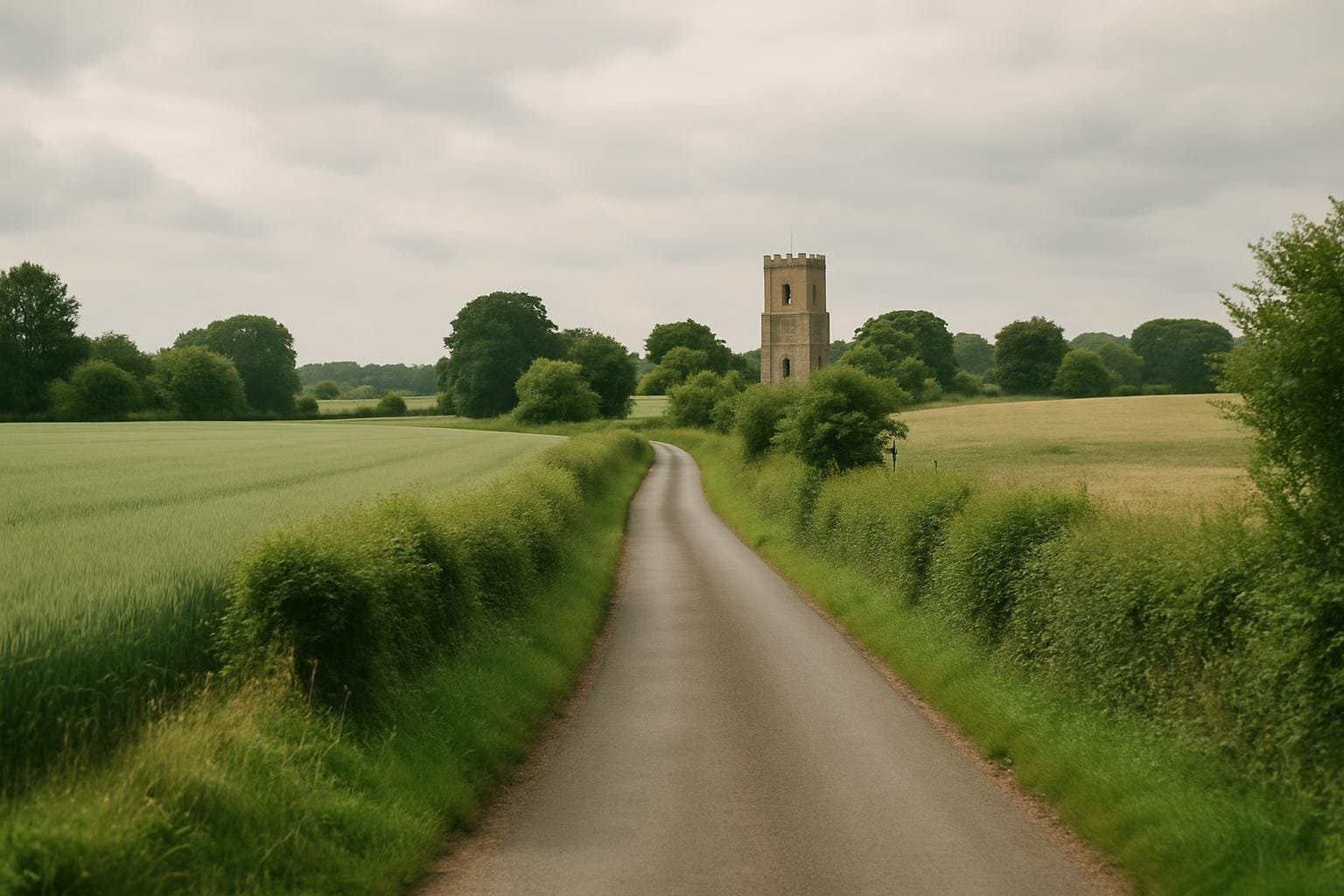
In Essex, men from villages along the Thames estuary headed first to market towns such as Chelmsford and Braintree. In Kent, a similar pattern: what begins in places like Faversham and Canterbury turns into a flow of people on the old roads towards London. The route you can trace now on an OS map follows medieval ridgeways and river crossings; it’s not romantic, just practical. People walked where carts already went and where food and ale could be had.
There’s a surviving royal letter from mid‑June 1381 in The National Archives collection, ordering sheriffs to stop “malefactors and disturbers of the peace” moving between counties. That wording already tells you officials understood the problem: this was protest that didn’t stay neatly in one jurisdiction.
Think about what that meant in terms of daily life. A smallholder in north‑Kent – someone tied to half a virgate of land, perhaps – suddenly had a choice that wasn’t really a choice at all. If his neighbours were heading for Rochester to “speak with the king”, and those neighbours had already broken open the manor’s strongbox for the hated court rolls, staying at home could be dangerous. Joining the crowd meant at least sharing in the decisions, and sharing the risk.
I’ve walked bits of the route around Gravesend and Dartford, and if you ignore the dual carriageways for a moment you can imagine groups peeling off from side lanes and farm tracks, folding into a crowd that got noisier and more confident as it moved. Not a marching army. More like a moving village council with very sharp tools.
The schoolbook version of the revolt gives us a handy pair of leaders: Wat Tyler, the Kentish captain, and John Ball, the radical priest. That neatness is suspicious. Medieval crowds make bureaucrats nervous, and nervous bureaucrats like to attach names to things.
Tyler does appear in the records – “Walter Tyler of Maidstone”, possibly a roof tiler by trade. By the time the Kentish rebels met the Essex groups at Blackheath around 12 June, he seems to have been acting as something like a spokesperson. Chroniclers from Thomas Walsingham onwards present him as a dangerous, insolent upstart, which usually means “someone we can’t easily control”.
John Ball is labelled a heretic even before 1381. He preached a pointed version of Christian equality, summed up in the surviving line: “When Adam delved and Eve span, who was then the gentleman?” It’s catchy, but the detail that hit me when I first read the longer sermon fragments is his focus on service and rest. He talks about those who “labour and sweat” and have nothing, while others feast. For people owed days of labour to their lord every week, and who could be fined for leaving the manor without permission, that was not abstract theology. That was a commentary on their aching backs.
The complication: neither of them “led” the revolt in the modern, top‑down sense. When you read the court records of later trials, like those edited in R.B. Dobson’s book on the revolt, you get lists of dozens of local captains: Thomas atte Wode of Rochester, for instance, or Geoffrey Cobbe of Bocking. Men who knew the lanes and the local grudges. The Peasants’ Revolt travel route wasn’t one line commanded by Tyler; it was a web of roads and tracks, each with its own small group of decision‑makers, intersecting where those roads met.
That matters, because it explains why the demands varied. One group might be obsessed with destroying manorial court rolls; another focused on getting a hated local official executed; another on access to royal justice. Ordinary people used the moving protest as a chance to sort very specific scores.
Eventually, all those routes bent towards London. By 13–14 June, thousands of rebels from Kent and Essex converged on the city. The Peasants’ Revolt travel route becomes a ring road, of sorts, around the walls, probing gates.
The city’s poorer residents did not stay politely behind their shutters. The gate at Aldgate, on the east side, was opened from within. That tiny practical fact – a porter’s decision, or perhaps a group forcing his hand – changed everything. Suddenly the protest was not simply rural folk confronting authority; it was also London apprentices settling their own grievances about wages and corrupt aldermen.
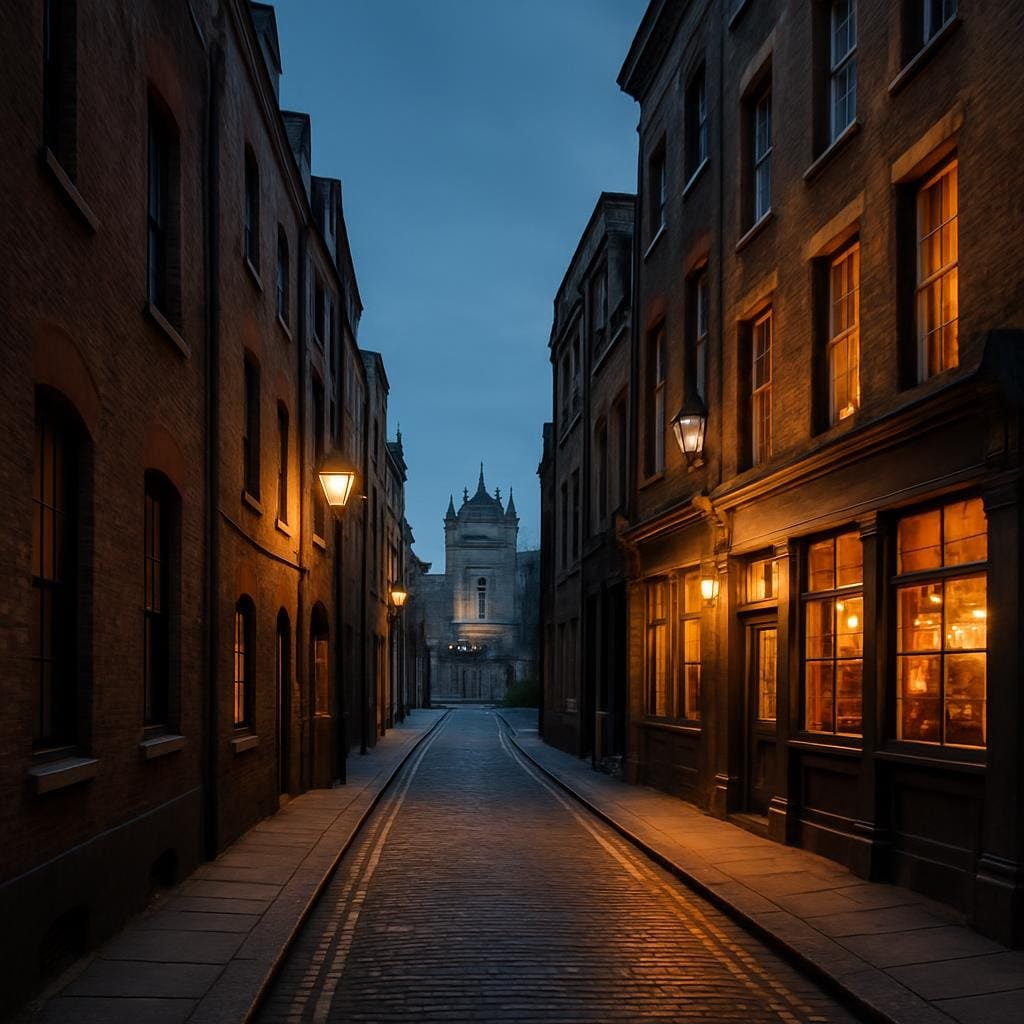
I remember the second time I stood in front of the modern Aldgate, with buses roaring past, trying to map fourteenth‑century streets onto glass and office blocks. Thinking about what “entering the city” meant in human terms helped. For a farm servant from Essex who’d never left his hundred before, walking through London’s gate with a pike on his shoulder must have been like walking onto another planet. The smells alone – tanners’ pits, open drains, fish markets – would have hit like a wall.
Once inside, the crowds moved with purpose. They targeted places that embodied hated authority:
This wasn’t mindless chaos. It was violent, yes, and some of it turned into grim score‑settling – like the lynching of Flemish merchants pulled out of London churches because they sounded “foreign” when made to pronounce “bread and cheese”. But when you follow the line of attacked buildings, you’re looking at a map of popular resentment. Each building stood for something in daily life: arbitrary justice, grinding debts, the sense that your case would never be heard because you had the wrong name.
One of the most unsettling parts of the story, for me, happens not in the city but on the road just outside it. On 14 June, Richard II – 14 years old – rode out to Mile End to meet some of the rebels. If you trace the Peasants’ Revolt travel route eastwards today, Mile End is deep inner London, but in 1381 it was open fields outside the walls.
The crowd that met the king there had concrete demands: the end of serfdom, fixed rents instead of labour services, free access to markets without tolls. In other words, the basic conditions for a rural family to have some say over their bodies and their time.
Richard more or less agreed. Royal clerks wrote charters on the spot, promising freedom. Men who had spent their whole lives as villeins – legally unfree, tied to their lord’s manor – suddenly had a piece of parchment telling them they were “quit and free from all bondage”. It is hard to overstate what that would have meant to someone whose daughter could be forced into marriage at the lord’s will.
There is a bitter little line in one chronicle about men “kissing the charters with tears in their eyes”. You can imagine taking that piece of parchment, folding it into your clothing, and starting the long walk home, already planning how to use your new freedom: hiring yourself for cash wages, maybe, or sending your son to work in a nearby town.
Of course, those charters were later revoked. But for a few days in June 1381, the very grammar of feudal obligation was suspended, and that suspension happened out on the road, with dust underfoot and sweat running down the backs of men who had spent days walking.
The famous climax comes the next day, 15 June, at Smithfield, just outside the city walls by St Bartholomew’s. I used to treat this as the tidy “end”: Wat Tyler behaves outrageously, the king’s men kill him, the spell breaks. That neatness turned out, again, to be misleading.
What we do know: Tyler rode forward to speak to the king. An argument broke out – accounts differ about why. One says Tyler asked for water and behaved insolently; another that he reached for his dagger. What all the narrative sources agree on is that William Walworth, the mayor of London, lunged forward and struck Tyler, and royal squires finished him off.
If you stand in modern Smithfield – and I realise this does now sound like a travel‑piece, but bear with me – what hits you is the flatness of the space. It’s still a kind of open ground. Imagine it packed with thousands of rebels, most of them on foot, craning to see what’s happening at the front. One of their captains is suddenly bleeding on the ground. Royal troops are nearby. It’s a moment that could easily have turned into a massacre.
Instead, the teenage king rode forward and allegedly called out, “Will you shoot your captain? I am your captain now. Follow me.” It’s a clever line – perhaps polished later by chroniclers – but it worked. The crowd followed him out to Clerkenwell, then began to disperse.
Here the Peasants’ Revolt travel route splits again, this time backwards. Men walked home to Essex, to Kent, to Hertfordshire and beyond, carrying those precious charters which, unknown to them, the royal council would soon declare null and void. Within weeks, commissions of oyer and terminer (essentially judicial hit squads) were touring the same roads in reverse, holding courts and sentencing ringleaders to hanging.
The physical roads had not changed, but their meaning had. A lane that had felt like the path to freedom in June could, by August, be the last walk a village reeve took before the sheriff’s men marched him off to the gallows.
Here is another bit the textbook version tends to rush: what happened to the ordinary people who joined in and then went home. Not the handful of prominent leaders, but the hundreds who showed up in local indictments, if they appear at all, as “he went with the commons”.
In the judicial records you find tiny glimpses:
For many, the revolt ended in a quiet recalibration of fear. You had seen that the king could be made to listen, that clerks could write different rules – but you had also seen how fast that could be rolled back, and how selectively punishment could fall. The memory would have crept into everyday calculations: whether to run away to town; whether to challenge the reeve about common land; whether to let your son go wandering in search of better terms.
Over the longer term, historians argue about how much 1381 “changed” anything. Serfdom in England does decline steadily in the fifteenth century, but that’s partly economics: labour was still scarce, landowners had to bargain. I’m sceptical of straight lines from the revolt to later freedom, but I do think you can say this: after 1381, ruling elites had a vivid memory of what happened when they tried to squeeze ordinary people very hard, very quickly, in the name of central government. Tax policy after that treads a little more carefully around the idea of flat per‑head charges.
So what does it mean to talk about a Peasants’ Revolt travel route in the present? You can, if you like, walk or drive parts of it. There are blue plaques and church information boards; there’s a solid overview at the Museum of London; various local history groups in Kent and Essex have mapped events in their parishes. I’ve stood in a field near Bocking trying to imagine burnt manor rolls, and in a quiet corner of Westminster Abbey where Richard II lies grandly entombed, thinking about the boy who faced down a crowd at Smithfield.
But the point of tracing the route isn’t to turn it into heritage tourism. Following it on the ground forces you to notice distances and bodies. To walk from Dartford to London, even on modern pavements, takes hours. Doing it in worn shoes, sleeping in hedges or barns, with the possibility of royal arrows somewhere ahead, is a different prospect. You start asking questions the neat version rarely raises: who looked after children left behind? How did women engage – as supporters, informants, absentees, or sometimes in the thick of it? Who stayed home because they couldn’t risk the walk?
The Peasants’ Revolt travel route, in the end, runs through a country where most people were tied to a few square miles – and yet, for a brief fortnight in June 1381, many of them chose, or were pulled, to move. They turned roads of rent and obligation into roads of protest. Following those roads today doesn’t grant you instant insight, but it does stop the revolt being a static picture of “peasants at the gates of London” and restores it as what it always was: people on the move, thinking with their feet as well as their words.
If the revolt has a lesson – and I’m wary of history as moral fable – it might be that once ordinary people start treating the road as a place to argue about power, the argument doesn’t really end. It just finds new routes.