
Hey there, mate! You’ve probably noticed the road signs whizzing past as you drive—or stumble through—your adventures across the UK. But have you ever thought about how these signs got to where they are today? Let’s take a funny stroll down memory lane, from horse tracks to highways, and see how these little bits of metal and paint came to rule our roads.
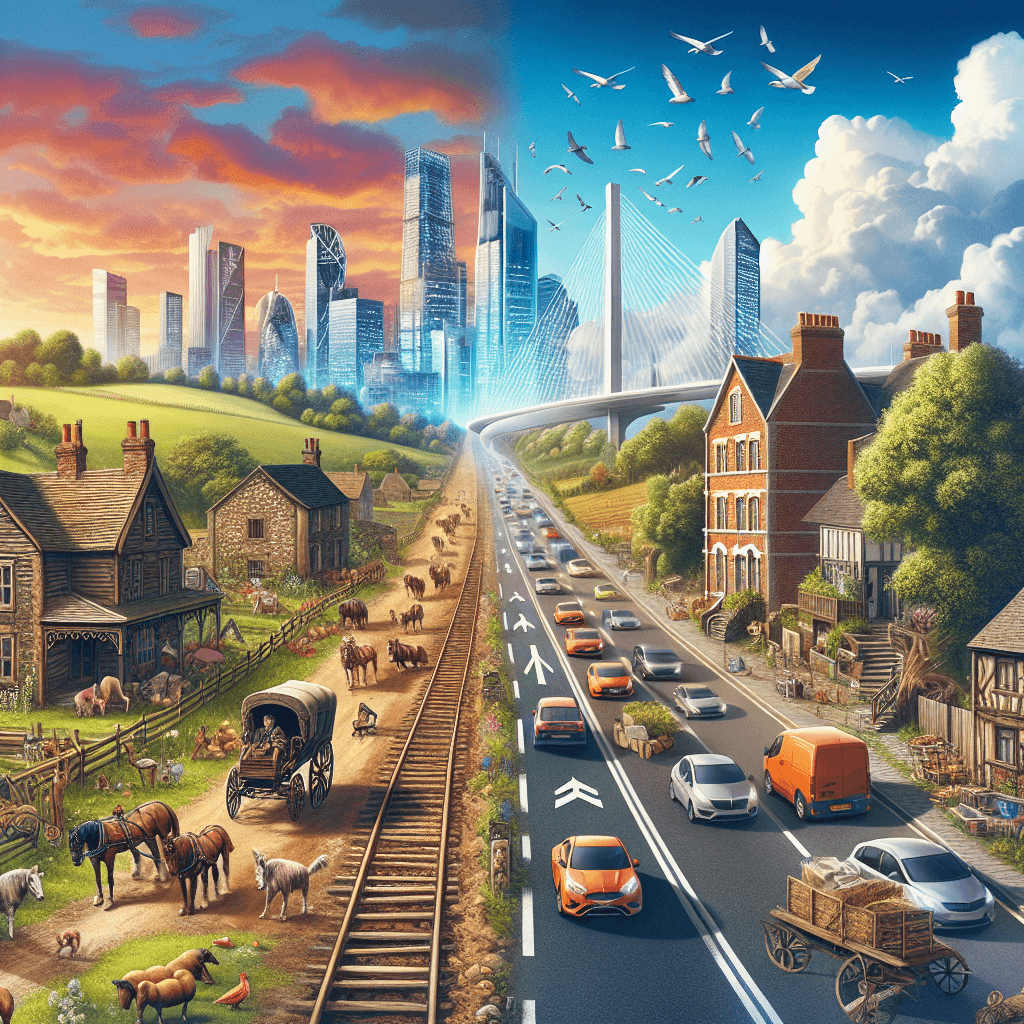
Back in the day, roads didn’t look anything like the tarmac wonders we have now. More often than not, they were just muddy paths used by horse-drawn carts. Picture this: horses plodding along, dodging the odd sheep, with a farmer yelling, “Get out of the way!” to any poor soul who decided to take a leisurely stroll. Road signs were practically non-existent. Can you imagine? Just a bunch of blokes trying to guess where they’re off to. No GPS, no Google Maps—just your intuition and a solid grasp of the local gossip.
Those early signs, when they did exist, were like scavenger hunts—idiosyncratic markers indicating who-knows-what. Often, a rock or a tree branch would help show the way. Pretty romantic back then, right? Except for the state of your shoes after a good walk in the mud.
Fast forward to the 18th century. Suddenly, with the Industrial Revolution kicking in, the roads were getting busy. The first real road signs appeared! They were simple, made from wood and painted. You might have spots along certain roads marked with quirky creatures or landmarks, like a dragon—yes, a dragon—pointing towards a pub. No kidding! (Though you’d be struck down for saying you saw one.)
These signs were hand-painted by locals who probably had a bit too much time on their hands. I mean, I love a good blend of comedy and function as much as the next person, but can you imagine pulling up at a sign that had a haphazardly painted cow trying to lead you to a farm? You’d be confused and possibly a bit concerned about that artist.
The early 1900s brought about some serious upgrades. The Motor Car Act of 1903 came into play, and things started to get a bit more official. Suddenly, we had traffic lights, speed limits, and for the first time, signs that looked like they meant something! In 1921, Britain introduced standardised road signs, so you wouldn’t end up following a sign for a non-existent festival. Can you picture getting all pumped for a “Festival of the Missing Sheep”?
Then came the beloved roundabout. The UK is practically a roundabout factory. Each time I approach one, I feel like I should be wearing a helmet and safety gear—besides the fact you’re constantly hoping that the driver next to you knows what they’re doing.
Oh, and do you remember my nightmarish encounter at the infamous Bromley roundabout? That was a right mess. I just wanted to go for a cup of tea, and the next thing I knew, I was halfway to Croydon. It’s madness how these things can spiral out of control, right?
Now, hold on to your hats, because in the 1930s, the design game changed forever. Sir Charles Reid and his team rolled out what we now know as the trusty triangular and circular road signs. Suddenly, it was clear which way to go. Red for stop, green for go. When I first saw those signs, my thought was, “Is this what my driving instructor meant when he said, ‘Pay attention to the signs?’”
These designs are so ingrained in our culture that I often find myself playing a weird game of “Guess That Sign” while riding public transport. You know, spotting the signs from a bus and giving them a little cheer. There you go—you’ve just been introduced to my rather silly game!
Alright, let’s fast forward to the 1960s, when the UK took a cue from the rest of the world and created the British Road Sign Manual. “What? A manual?” you ask. “That’s boring!” But oh, it changed everything. A standardised system made signs more recognisable. Did you know they even hired a cartoonist to create the modern pictograms we now see? I reckon he’d be a hit with the kids. That stick man in a hard hat? Classic.
A little side story: the first time I went to the UK, I was convinced I’d end up in jail because I couldn’t figure out which direction all the signs were pointing. I thought they were playing a massive prank on newcomers. Lucky for me, I found the signal for ‘Where’s the nearest pub,’ and all was well!
Now, here we are in the 21st century. The signs have evolved into this slick, digital age with LED lights and even apps guiding the way. It’s a far cry from the hand-painted caricatures of days gone by. Besides, you can now argue on social media about what signs mean, which is clearly a greater national pastime than tea-drinking.
Fun fact: You know those weird signs that tell you not to feed the ducks? They were actually put up after one too many incidents involving angry geese. Imagine that! Someone feeding a goose then immediately regretting it when it takes their shoes hostage. “Look out, it’s coming for my lunch!”
Speaking of road signs, did you catch the news about the lovely protest that went on last month? Locals in a neighbourhood decided to have a “Sign Swap” where they painted over road signs with fun and often humorous alternatives. It was like something out of a movie. “Beware: Cat Crossing,” I think one of them read! Now that’s the kind of excitement I can get on board with. It reminded me that sometimes, you really do need to laugh at the mundane!
So, there you have it! From the muddied tracks of yore to the organised chaos of today’s highways, the evolution of British road signs tells a tale of creativity, culture, and perhaps a dash of absurdity. Next time you’re pootling around, take a moment to appreciate the quirky history of those little markers. After all, they lead you to some of the most beautiful spots in the UK—maybe even that hidden café that serves the best scone. And let’s face it—who doesn’t want to know where to find brilliance in tea form?
Now, tell me—what’s the most confusing road sign you’ve come across? Drop your stories in the comments below!