
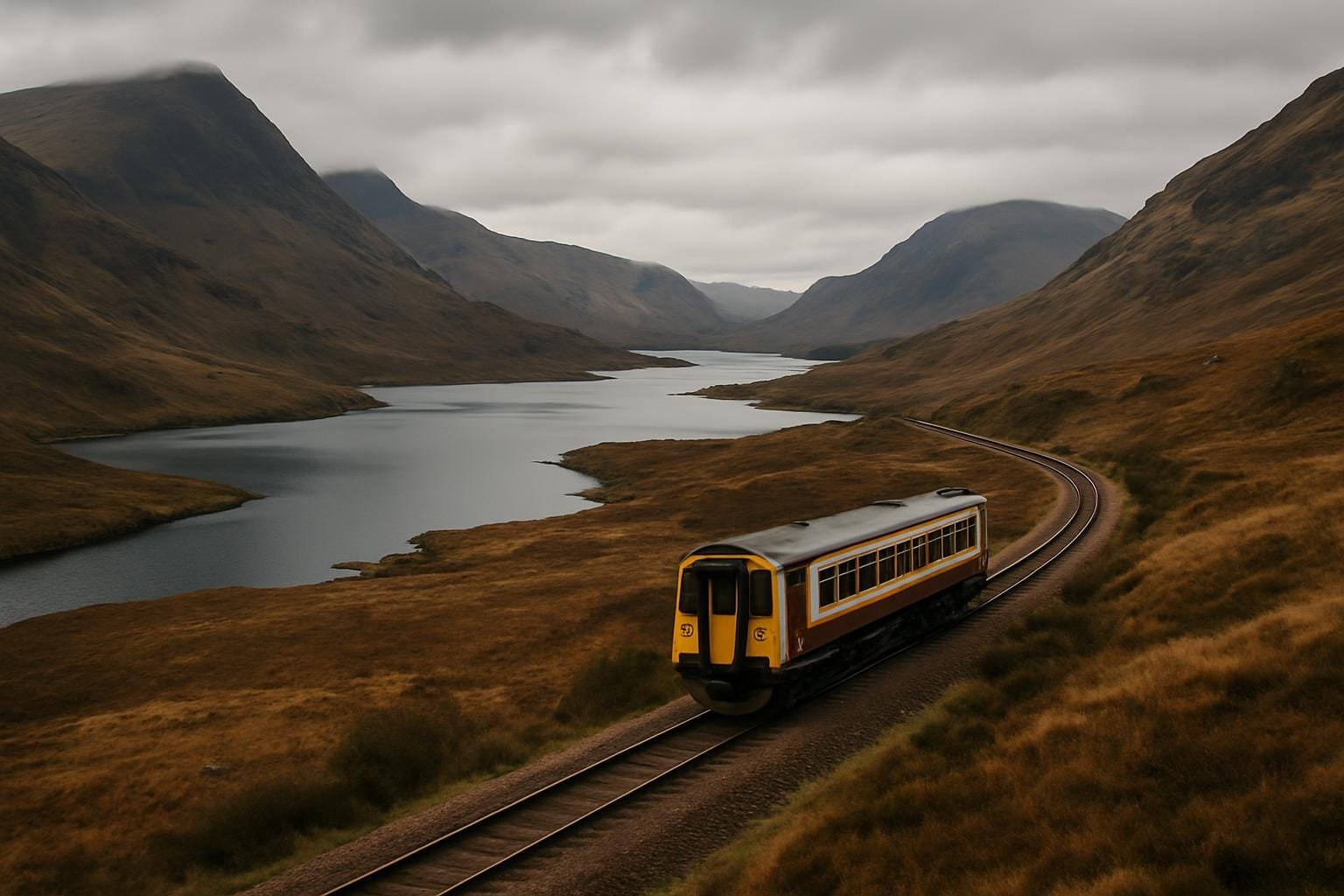
If you’re trying to see the Scottish Highlands without a car, first of all: good. Your stress levels (and the midges) will thank you. Second: you’re in for some of the most oddly satisfying public transport in Britain – Victorian railway lines that cling to sea lochs, buses that wait for ferries, and little boats that feel like you’ve accidentally joined the postal service.
I’ve done Northern Scotland by train, bus and boat a few times now, usually with an overstuffed rucksack and an optimistic faith in timetables. It’s not always smooth. Sometimes the café is shut, sometimes the rain comes in sideways, sometimes you misread the bus times and become briefly religious. But it works. And it’s a brilliant way to see this part of the country properly, rather than white‑knuckling a hire car round single tracks.
If you’re doing the Scottish Highlands without a car, you will almost certainly pass through Inverness. It’s the point where the rail lines from the south, the Far North Line and the Kyle Line all meet, and where the bus station sits a short, drizzly walk from the railway.
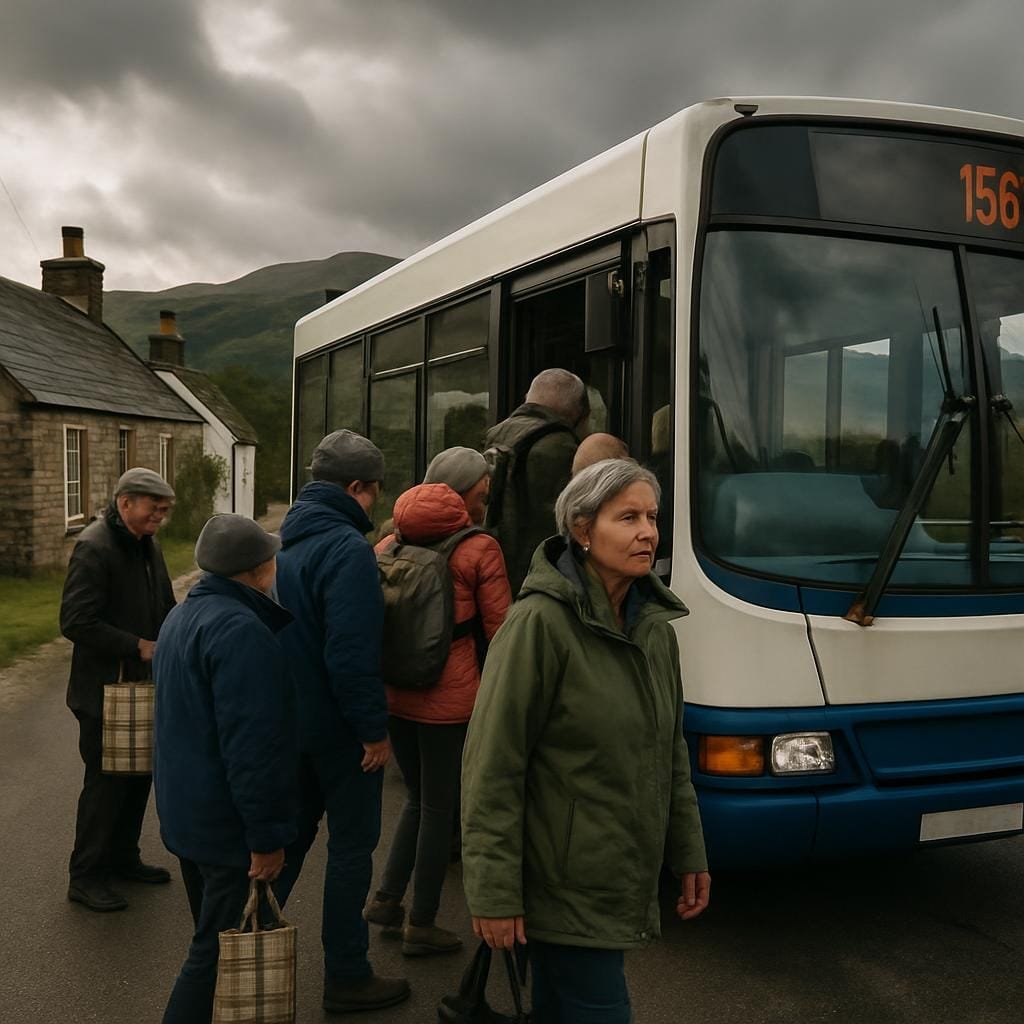
Inverness isn’t somewhere I’d call pretty, exactly, but I like it. The River Ness has that steady, serious feel, and the walk up to the castle gives you a sense of how the city hangs together. When I first came up here, I spent a daft amount of time in the Victorian Market, mostly because it was warm and had a proper old‑school bakery. It’s been tarted up since, but you can still get a good sausage roll from Inverness Coffee Roasting Co., which also does a strong flat white if you’ve been on the sleeper.
The railway station itself is functional rather than loveable, but that’s fine; what matters is what leaves from it. Trains up the Far North Line to Wick and Thurso, and west on the Kyle Line to Kyle of Lochalsh, are your two big spines if you want to see northern Scotland by public transport. You don’t have to do them all in one hit – in fact, I’d say don’t – but Inverness is where you decide.
Worth knowing before you go – Inverness
The Far North Line feels like it was drawn by a slightly tipsy engineer who’d been told to hug every estuary and visit every small town. It heads out of Inverness, swings round the Beauly Firth, crosses the Cromarty Firth, and then sort of meanders, eventually splitting for Wick and Thurso. If you’re doing the Scottish Highlands without a car, this is your route into Caithness and Orkney.
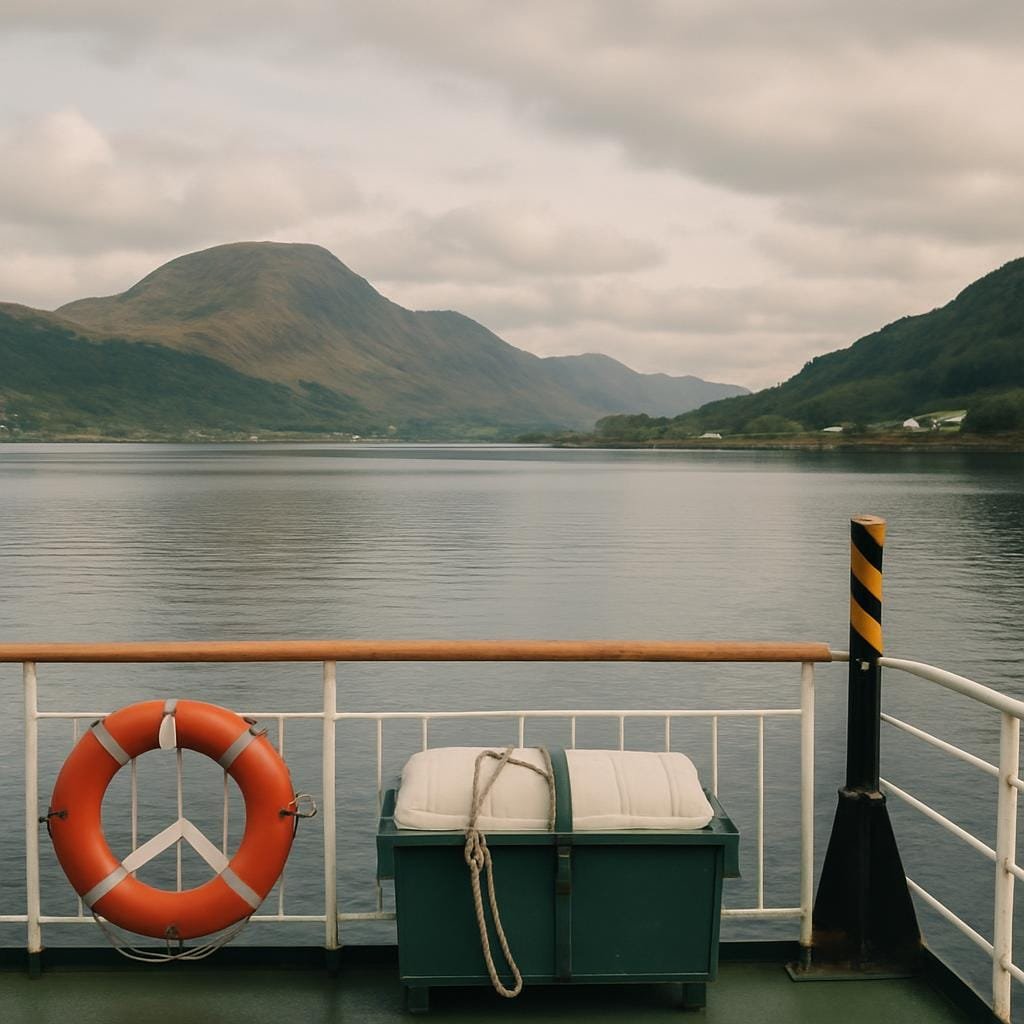
I took the early train out once in late autumn, when it was still half dark. By the time we rattled past Dingwall, the sky had turned that washed‑out grey that photographs badly but stays with you. The line isn’t fast – this is a three‑and‑a‑half to four‑hour amble – but that’s the point. You get views over the Dornoch Firth near Tain, and that odd, wild stretch past Helmsdale where the land looks like nobody’s quite finished building it.
At Golspie, you can see the statue of the Duke of Sutherland glaring down from Ben Bhraggie. At Brora you sometimes get the faint smell of the old brickworks, or maybe I imagined that after reading about it. The train is usually a two‑carriage Class 158, with a tiny on‑board trolley that may or may not survive as far as Wick. Bring your own sandwiches. I’m serious about that.
Worth knowing before you go – Far North Line
Thurso itself is small and workmanlike. I like the honesty of it: a Co‑op on the high street, kids on bikes, and a decent chippy called Danny’s where a haddock supper will set you back about £9 and the portions are sized for actual hunger, not Instagram.
Thurso station is about 2 km from Scrabster, where the NorthLink ferry goes to Stromness in Orkney. You can walk it in half an hour if the weather behaves. It often doesn’t. I’ve done it with the wind trying to blow my rucksack back to Inverness, which was invigorating in the worst sense of the word.
The NorthLink ferry crossing is around 90 minutes, costs about £20–£25 each way on foot, and is one of those sailings where everyone pretends not to be impressed by the sea cliffs and then gives up and takes photos.
Worth knowing before you go – Thurso & Scrabster
I’ll be straight with you – Orkney deserves its own trip, but if you’ve made it this far north by train, it’s worth at least a couple of days. Stromness greets you with a curving main street, flagstones, and the feeling that everyone actually lives here, not just in holiday lets.
From Stromness, frequent buses run to Kirkwall and beyond. The Stagecoach network on Orkney is surprisingly good. You can get from Kirkwall to Skara Brae, the Ring of Brodgar and Maeshowe with a bit of planning, and it’s a lot less faff than a hire car.
The first time I came up, I spent half a day at Skara Brae, where admission is around £10. What stuck with me wasn’t the age of the place – though that’s mad when you think about it – but the way the wind comes barrelling in off the bay and how the visitor centre café insists on serving decent soup no matter how grim it is outside. The Cullen skink there is genuinely good, and I say that as someone who’s had a lot of white soup in his time.
Worth knowing before you go – Orkney
Back on the mainland, the Kyle Line is shorter than the Far North, but in some ways it feels more varied. It leaves Inverness, runs past Beauly and Muir of Ord, then threads between low hills and lochs before popping out at the coast near Plockton and swinging round to Kyle of Lochalsh.
A few years back I did this on a wet Saturday when the clouds couldn’t decide what they were doing. The bit around Achnasheen looks quite bleak at first – bogs, telegraph poles, not much else. Then you hit the stretch past Loch Carron and suddenly every third person in the carriage is glued to the window. This is the line that people in glossy magazines always show off when they talk about the Scottish Highlands without a car, and for once they’re not exaggerating.
Kyle of Lochalsh itself is mostly practical: the Co‑op, some B&Bs, a couple of pubs. I ended up in the Kyle Hotel bar at one point, drying out and eating a passable steak pie that tasted far better than it looked because I’d been rained on for three hours.
Worth knowing before you go – Kyle Line
The bridge to Skye makes public transport a lot easier. From right outside Kyle station you can pick up the bus to Portree and beyond. This is where Scottish Highlands without a car starts to feel properly joined up: train to Kyle, straight on to the bus, over the bridge, job done.
The bus climbs out of Kyle and up onto Skye, where the hills pull in closer. The stop at Broadford is handy for supplies – there’s a Co‑op and a surprisingly good café called Caora Dhubh Coffee Company, where I once hid from a squall with a slice of banana bread that could probably have fed a family of four.
Portree is where most buses fan out towards Uig, the Trotternish Peninsula and the west. This is also where I managed my main logistical cock‑up: I assumed buses to the Quiraing ran later in the evening. They do not. So instead of heroic cliff walks, I had an early tea and a slow wander around the harbour and watched the fishing boats. In hindsight, not really a loss.
Worth knowing before you go – Skye by bus
Ullapool is an odd one because there’s no railway, but it still fits into a Scottish Highlands without a car trip thanks to the bus from Inverness. The Citylink coach (usually the 961) runs a couple of times a day, takes about 1 hour 30, and you get salt‑streaked views down Loch Broom as you roll in.
The village itself is strung along the shore: white‑fronted buildings, the big CalMac ferry terminal, a couple of excellent pubs. I’m fond of the Seaforth, which does seafood but also a venison burger that left me slightly dazed. Expect to pay £15–£20 for a main; this is remote, and the prices know it.
From Ullapool, the ferry runs to Stornoway on Lewis, and it’s a serious ship – cafés, lounge, the lot. Foot passengers pay around £20–£22 one way. The sailing takes about 2 hours 45, and if you’re lucky you’ll see dolphins. If you’re unlucky, you’ll just see your own reflection looking slightly green in the window. I’ve been both types of passenger.
Worth knowing before you go – Ullapool
By this point you’ve probably gathered that doing the Scottish Highlands without a car is entirely possible, and occasionally brilliant, but it does come with quirks.
If you want a rough outline that stitches all this into a week or so, something like this works well:
It sounds a bit mad when you write it down, but in reality it mainly feels like: train, café, view, bus, ferry, pub, repeat. You see more of ordinary life up here than you do from a car – schoolkids getting on with horns in their bags, old boys comparing shopping, conductors who know half the line by name.
Doing the Scottish Highlands without a car won’t give you access to every last glen and dead‑end road, but it gives you a different sort of access: to the way people actually move around up here. And for my money, that’s as much the point as the mountains.