I’ve lost count of the number of friends who’ve asked me to plan “The Kinks Muswell Hill walking tour” for them, as if you can map one of Britain’s sharpest, most awkward bands onto a neat circuit between coffee stops. You can’t, really. Muswell Hill matters, of course, but The Kinks were never a heritage plaque sort of group. They were a chip on the shoulder with a guitar, a North London attitude pressed onto vinyl, and a reminder that pop can be both grubby and precise at the same time.
I was maybe thirteen or fourteen when I first heard them properly. My dad had The Singles Collection on CD, which felt ancient to me in the late 90s. I’d heard “You Really Got Me” as background noise – adverts, film trailers – but that CD hit different. “Dead End Street” came on while I was meant to be doing maths homework, and suddenly the textbook was shut and I was listening to this brass-drenched shuffle about poverty and pride. It sounded like the opposite of the shiny Britpop I’d grown up with. If Oasis were swaggering down a Mancunian high street, The Kinks were trudging past the laundrette after a night shift, taking the piss and holding back tears at the same time.
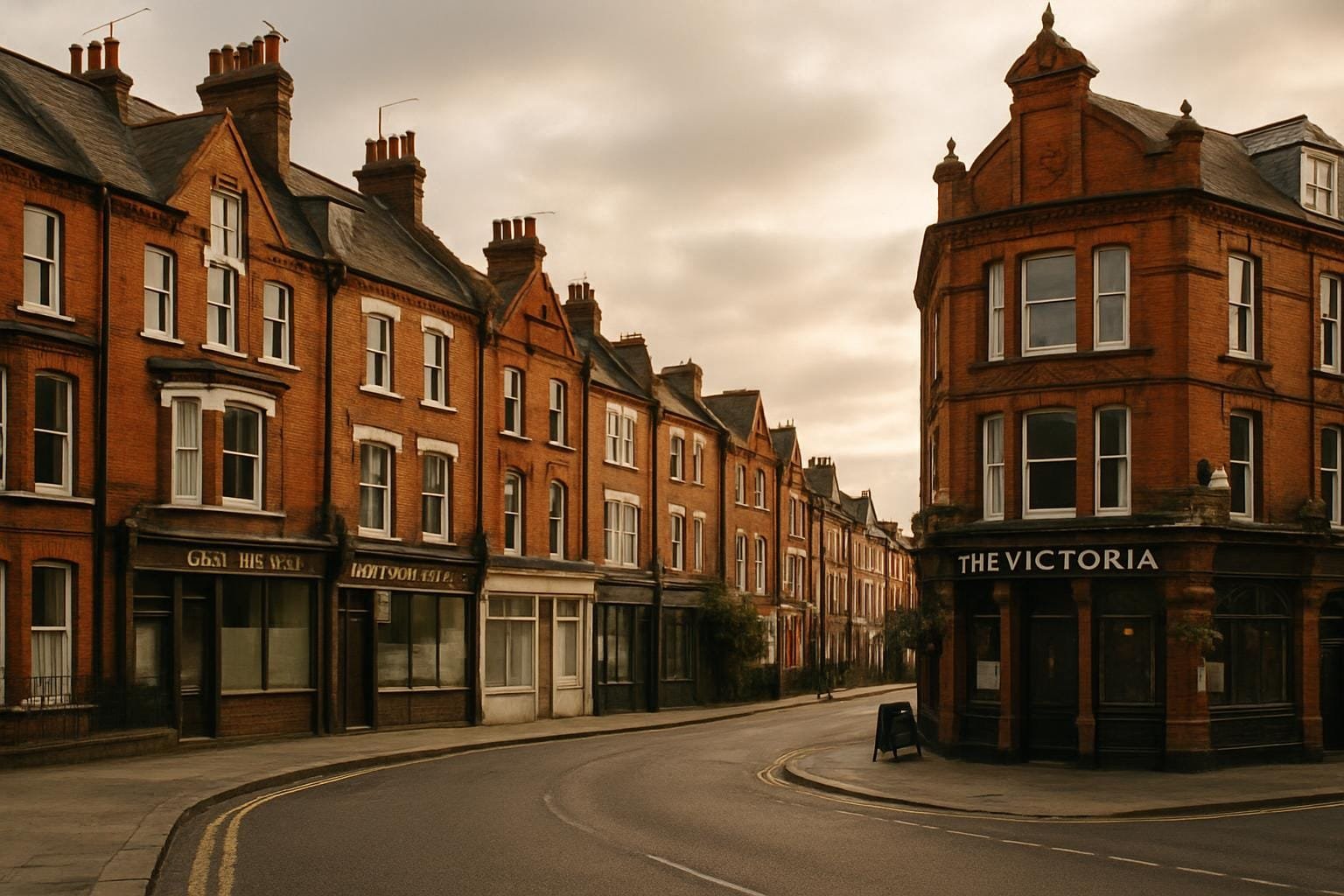
Here’s the first thing worth saying: the whole concept of “The Kinks Muswell Hill walking tour” misses the point if you treat Muswell Hill like a museum. Yes, Ray and Dave Davies grew up there. Yes, North London streets seep into their songs – the semi-detached houses, the pubs, the bus routes, the sense that central London is close enough to resent but far enough to feel excluded from. But Muswell Hill is more of an attitude: slightly aloof, slightly bitter, fiercely local.
By the time they got to the album Muswell Hillbillies in 1971, they weren’t just naming a record after the area for fun. The whole thing is about being squeezed out, literally and culturally. Tracks like “Here Come the People in Grey” sketch demolitions and relocations, that sense of the council moving you on. It’s worth remembering that those songs landed as London was reshaping itself, knocking down streets that looked an awful lot like the ones in Kinks lyrics.
When Ray sings about “cutting down the trees in the street” on that album, he’s not doing some poetic exercise. He’s talking about actual post-war redevelopment and the bureaucratic language that came with it. The Muswell Hill of those songs is half memory, half eviction notice.
Growing up in Newcastle, my idea of North London came mainly from football and sitcoms. Highbury on Match of the Day. Repeats of Only Fools and Horses. It felt fancier than what I knew, more moneyed. But The Kinks made Muswell Hill sound like the place where people who never quite make it end up.
That clicked for me properly when I was at uni in Leeds, early 2000s. My mate Tom had a knackered cassette of Arthur (Or the Decline and Fall of the British Empire), and we’d play it in his student house off Woodhouse Lane, drinking cheap lager and moaning about tuition fees. Songs like “Victoria” and “Shangri-La” are obsessed with that suburban half-dream: tiny patch of grass, neighbours you judge, mortgage you’ll never finish paying. It isn’t glamorous, and crucially, it isn’t mocked from a distance. It’s sung from inside, with affection and despair rolled into one.
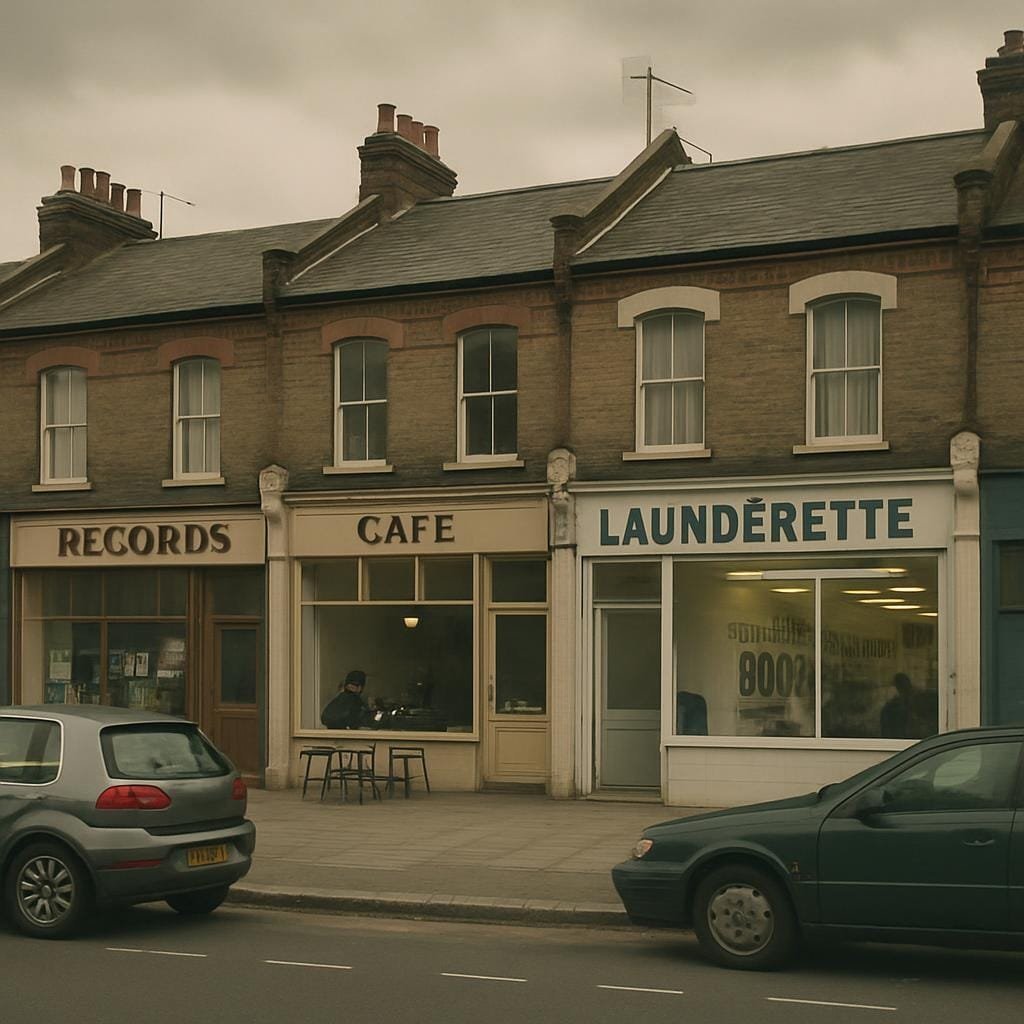
That’s why Muswell Hill matters here. You can’t write “Shangri-La” in a Chelsea townhouse or a Hampstead mansion. You write it in a street where getting a decent bit of carpet and a second-hand telly from Rumbelows actually feels like progress. The geography drives the class jokes, the envy, the snobbery. And Ray Davies understood all that because he grew up right in the middle of it.
I’ll nail my colours to the mast: The Kinks did everything Britpop claimed to do, but with sharper teeth and far better tunes. If The Beatles are the myth of 60s optimism and The Stones are the sleazy counterpoint, The Kinks are where British guitar pop really learned to be small, specific, and quite rude about its own country.
Look at “Waterloo Sunset” from 1967. Everyone gushes about it (fair enough), but focus on the details: a couple meeting at a station, a narrator who’s a bit of a loner, London not as a grand city but as a river you watch from a distance. That’s practically a prototype for every “observe the city and feel jaded” song you ever heard in the 90s. Blur’s “For Tomorrow”? Pulp’s “Common People”? Lovely, but Ray was already there three decades earlier.
And then there’s “Sunny Afternoon”, which hit number one in 1966. It’s about a posh bloke moaning about tax, but the pleasure of it is how smug and petty it sounds. Phil Daniels could have wandered straight in from the Parklife video and no one would’ve flinched. You can draw a direct line from that song to Damon Albarn’s posh-boy barbs, and further still to every indie band who thought singing in their own accent was a political act.
Meanwhile, half the Britpop era pretended The Kinks were a minor influence while raiding their cupboard for ironic nostalgia and class caricature. The only ones who really paid proper, consistent debt were maybe Blur and Supergrass – you can hear it in something like “Charmless Man” or “Alright”, that mixture of swagger and mild anxiety. The rest grabbed the Union Jack-and-fags aesthetic and forgot the social commentary underneath.
All of this is why “The Kinks Muswell Hill walking tour” – the phrase, the idea – always makes me picture things that probably aren’t on any official map: back gardens with line-dried washing, split bags of chips, rows of burgled-looking terrace houses.
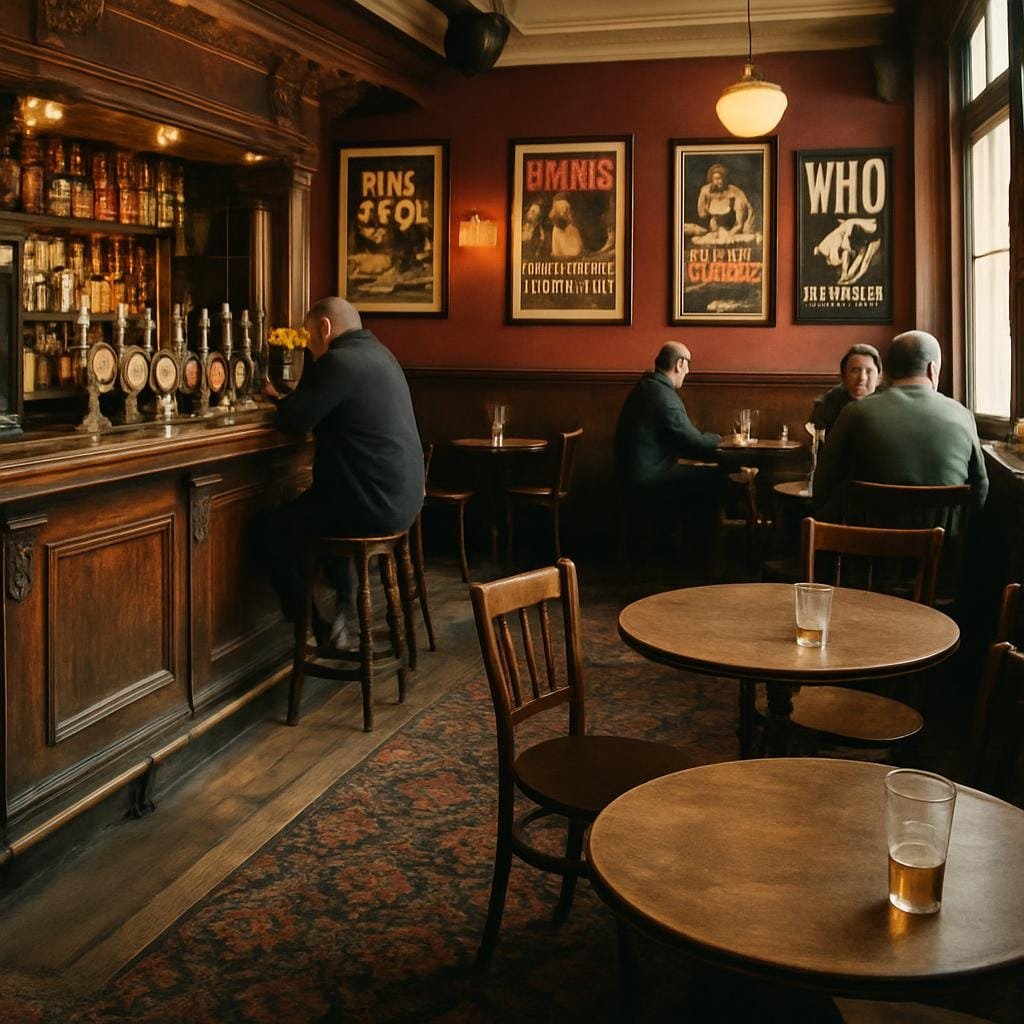
The Kinks wrote pub songs for people who didn’t always feel welcome in the pub. “Lola” (1970), famously debuted at the Fillmore in New York before becoming a hit back home, is about a chaotic night out that scrambles gender, desire and embarrassment. It might be set in a West End drinking den, but the voice in it is pure suburban London boy out of his depth.
Then you’ve got “Alcohol” from Muswell Hillbillies again, which is practically a theatre sketch about booze wrecking lives, sung with cabaret gusto. You can hear the same mix of cackling and worry you get from a Sunday afternoon regular on their third pint, telling you they’ve “cut down a bit, mind”. You don’t need a map pin to understand that. You need to have been in those rooms.
What North London gives those songs is a setting where aspiration and disappointment share a front door. The pubs are full of people who could commute into town for some vaguely creative job but still get stuck in the same family rows about money and respectability. The Kinks nailed that. They weren’t singing for kids in art school squats; they were singing for people who took the 134 bus and wondered if this was all there was.
I really heard the Muswell Hill of it all when I moved to London briefly, early 2010s, and ended up staying with a friend in Bounds Green. We walked down into Muswell Hill one Saturday – yes, I know, technically part of “The Kinks Muswell Hill walking tour” I complain about – and it struck me how normal it looked. Shopper-heavy, parents with buggies, Sainsbury’s, the lot. Honestly, the best thing I ate there that day was a bog-standard bacon butty from a café packed with locals watching the football.
That bacon butty felt more Kinks to me than any blue plaque would. Grease in the paper, weak tea in a mug, some bloke at the next table muttering about parking permits. That’s the texture in a song like “Come Dancing” from 1982: family memories, council rules, local dance halls that are now probably flats. Everyone remembers the video with Ray gurning his heart out, but the heart of it is his sister’s story – wanting glamour in a place that doesn’t give you many outlets for it.
For all the talk about Muswell Hill, The Kinks’ influence stretches in directions the official narratives never quite catch. You can hear them in The Jam’s kitchen-sink detail on Sound Affects, in Squeeze songs like “Up the Junction”, and even in Arctic Monkeys when Alex Turner goes full storyteller on Favourite Worst Nightmare. The trick they all borrow is mixing tenderness with spite: you mock the bloke at the bar, but you also know exactly why he’s there.
One period I’ll stand up for is their early 70s bar-room phase, which most casual fans skip. Albums like Everybody’s in Show-Biz and Muswell Hillbillies get flattened into “concept record nonsense” by people who never actually sat with them properly. They’re messy, yes. There are honky-tonk pianos and brass bits that sound like someone’s uncle got invited to the session. But within that chaos you’ve got some of Ray’s sharpest writing.
Take “Celluloid Heroes” (1972). On paper it’s a Hollywood song, all about actors and the Walk of Fame. But smart ears hear Muswell Hill in there too: a small-town lad staring at the big city, half mocking, half adoring the people he’ll never be. He may be singing about Greta Garbo, but he’s also talking about that gap between your local high street and the fantasy projected on a cinema screen.
That gap is the same one you hear on “Sitting in the Midday Sun” from Preservation Act 1 (1973), a tune about essentially giving up on ambition and watching the world drift by. If you’ve ever sat outside a slightly grim café, nursing a filter coffee because you can’t face going back to whatever you’re meant to be doing, you know that song already.
I’ll go further: the early 70s Kinks are a better guide to British life than half the bands we’ve retrofitted as social commentators. We bang on about The Clash and The Specials (and fair enough, they’re great), but if you want the slow, chronic disappointment of peacetime Britain – the sort that doesn’t always explode into riots, just into rows over dinner – The Kinks get you closer.
So why does the phrase “The Kinks Muswell Hill walking tour” keep popping up in conversation with fans? I think it’s because people are trying to get hold of something that lives inside the records. We want proof that the places were real. If you stand on a hill looking down over London, maybe you feel a bit closer to the band who once did the same.
I understand that urge. As someone who writes mainly about food, I see it all the time – people travelling miles to eat a specific pasty from a specific bakery because it’s “authentic”. But authenticity isn’t in the postcodes; it’s in the small decisions and compromises. The Kinks captured those: which pub you go to even though you hate the landlord, which bus route gets you home quickest, which family argument you pretend never happened.
If you absolutely must do your own informal tour, don’t just chase plaques. Listen to Muswell Hillbillies on the bus. Look at the mix of housing. Pay attention to how many people are pushing prams versus carrying gym bags. Then, later, play “Dead End Street” or “Shangri-La” and hear how those streets echo in songs written half a century ago.
I went through a phase in my late twenties where I didn’t listen to The Kinks much. I’d gone heavy into post-punk and early electronic stuff, and guitar bands felt a bit tired. Coming back to them in my thirties, living in Yorkshire, commuting on scruffy trains and renting in areas politely called “up-and-coming”, I heard something I’d missed as a teenager: weariness.
Even in the upbeat singles, there’s a sagging at the edges. “Tired of Waiting for You” is meant to be about romance, but it’s also about deferred hope generally. Listen to it after a full day of terrible email and it hits different. “Autumn Almanac”, which I used to treat as a bit of whimsical fluff, now sounds like a hymn to staying in, to small routines that keep you sane: roast dinners, football on telly, rows about the heating going on too early.
You don’t need to have grown up in Muswell Hill to get all that. You could be in Hull, Dundee, Cardiff, wherever. What North London gives those songs is specificity: the little ticks and habits of a particular place and class. What makes The Kinks travel is that anyone whose street has a corner shop and a bus stop can recognise themselves.
If you want “The Kinks Muswell Hill walking tour”, here’s my version, which doesn’t require you to leave the sofa:
By the end, you’ll have walked through thirty years of one area’s anxieties and hopes, filtered through a band who never quite fit the neat historical boxes. You won’t get commemorative merch at the end. You might, though, hear your own street in there somewhere.
That’s the thing I keep returning to. For all the fuss about scenes and venues, the reason The Kinks still matter isn’t because Muswell Hill is special. It’s because they proved that somewhere so ordinary, a bit aspirational and a bit fed up, could fuel songs that last decades. And if Muswell Hill can do that, so can anywhere that smells faintly of chip fat and bus exhaust on a damp Wednesday night.