
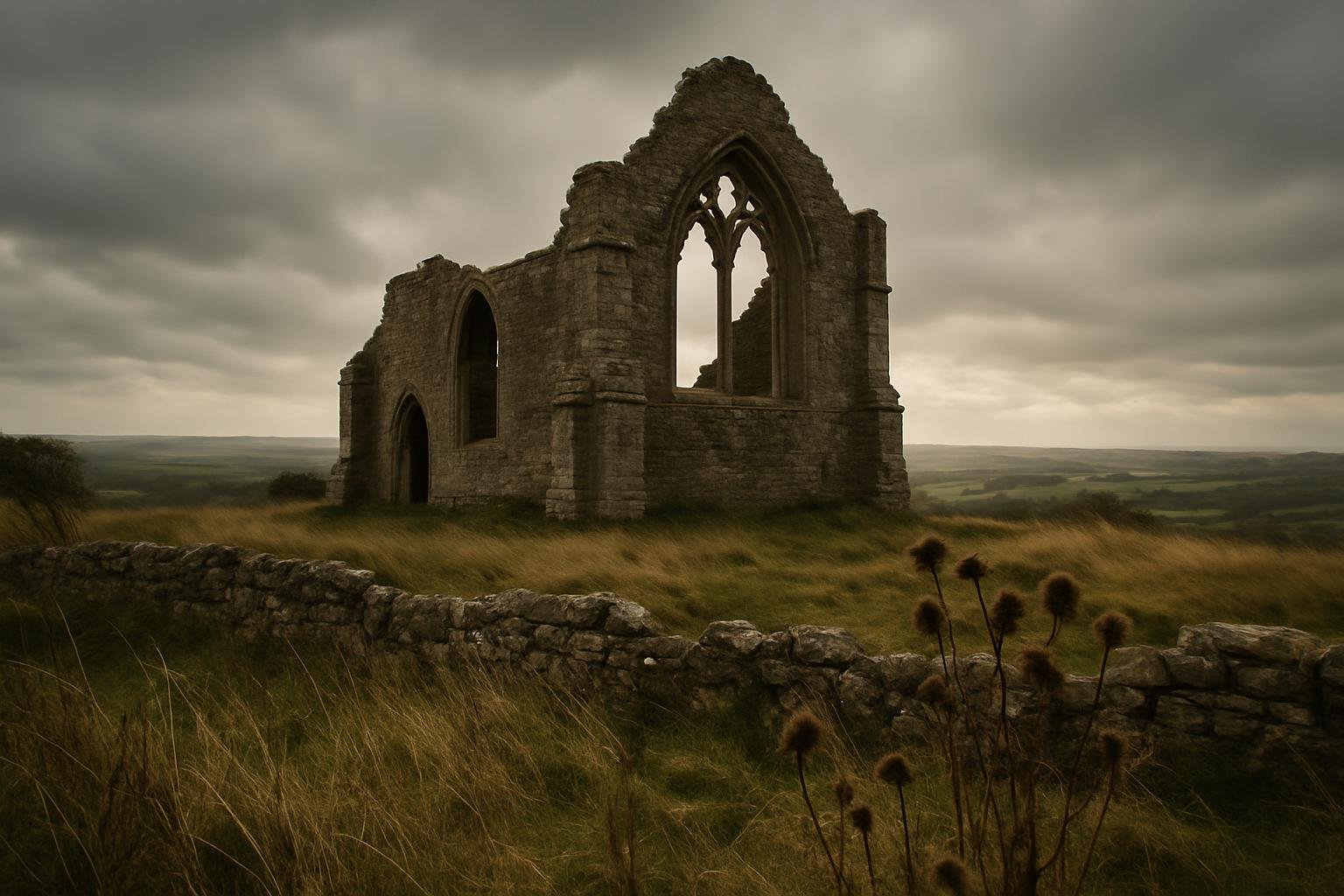
If you grew up on the sort of history that treats the Knights Templar as a minor footnote before zipping off to the Black Death, the phrase “Templar sites in Britain” probably sounds oddly specific. I used to file them under “continental thing, plus that church in London with the round bit”. Then, years ago, I found myself standing in a farmyard in Lincolnshire, staring at a stone archway that once led into a Templar hall, and realised how much of their story here survives in fragments: chapels in fields, reused barns, odd names on old tithe maps.
Once you start looking, you notice them everywhere: “Temple” lane, “Temple” farm, a slightly too-perfect circular church. Britain is scattered with the places the Templars left behind – chapels, commanderies, coastal strongholds and, very often, the ghost of a medieval bureaucracy that outlived them by centuries.
My schoolbook version of the Templars was all white mantles, crusader castles and mysterious rituals. What it didn’t explain was how those knights were paid for. You don’t keep warhorses on vibes alone. The answer lies in places that feel very un-holy-war: sheep pastures in Yorkshire, mills beside small rivers in Oxfordshire, vineyards in Essex.
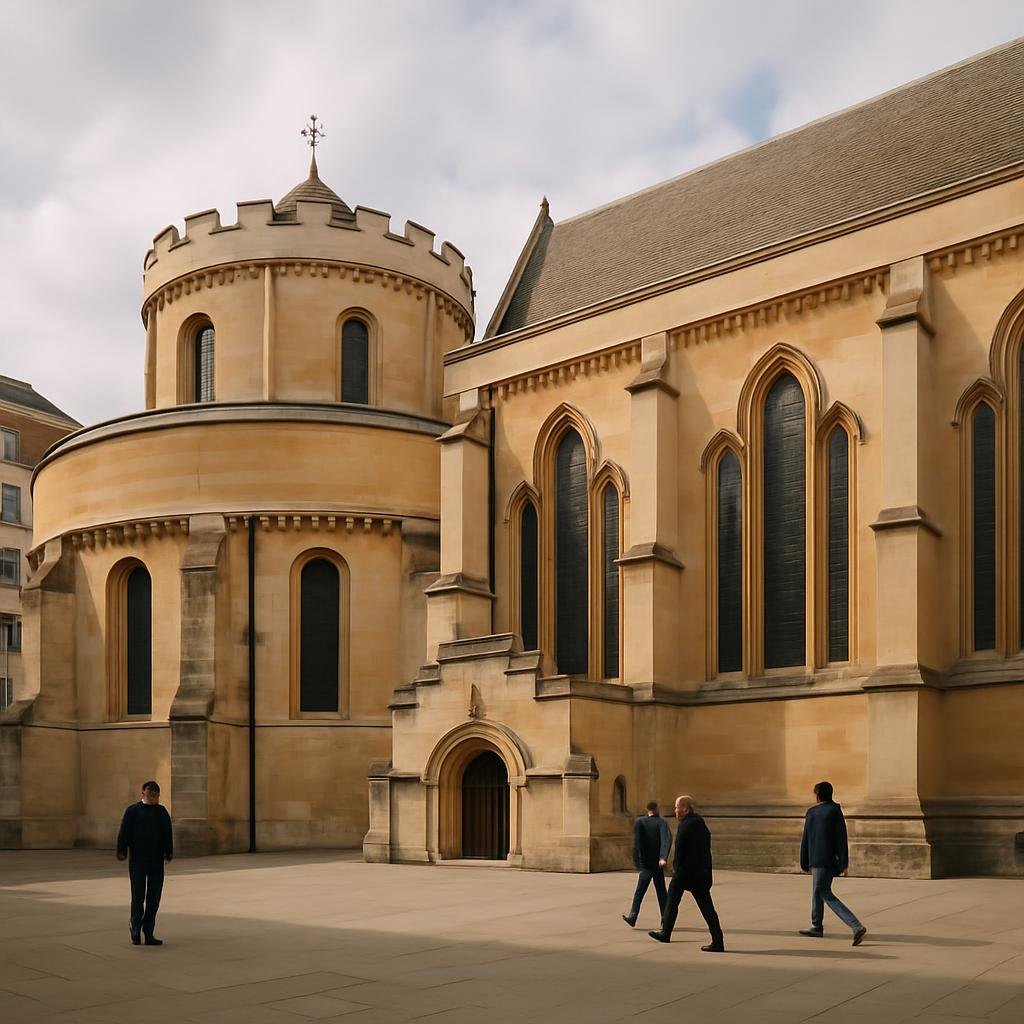
From the mid-12th century, aristocratic donors in England and Scotland handed the Templars land, mills, churches, and income from markets to fund their work in the eastern Mediterranean. The Order turned these into commanderies – local administrative hubs. Think of them as a cross between an estate office, a small monastery and a military recruitment centre.
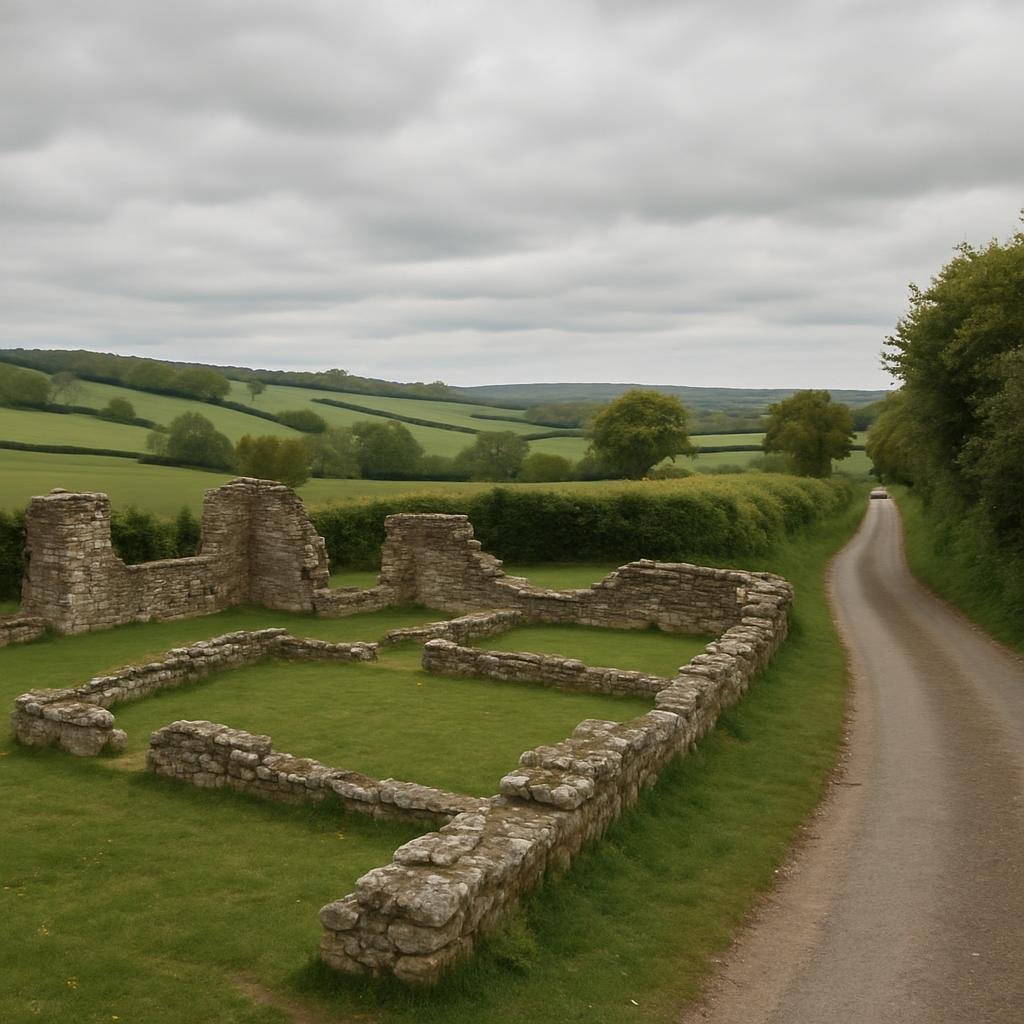
We can still see the outline of this system. At Temple Bruer in Lincolnshire, once one of the richest Templar sites in Britain, a lonely tower rises from flat fields. In the 13th century this was a busy complex: a round church, domestic ranges, barns. The Lincoln city records show Templar brothers coming in to buy cloth and ironware. Local people came out to sell grain, pay rents and – occasionally – complain.
Because for ordinary tenants, a Templar landlord was a landlord. We have a nice, testy example from 1276, when the villagers of Witham in Essex turned up in court accusing the Templars of blocking a footpath and diverting a stream to power their mill. For the people of Witham, the Order wasn’t an international brotherhood of elite warriors. It was the awkward neighbour upstream who nicked the water.
The architectural celebrity in all this is the Temple Church in London, consecrated in 1185. Its round nave was modelled on the Church of the Holy Sepulchre in Jerusalem. The first time I walked in, I expected Dan Brown. What I got was lawyers’ wigs – the church sits in the middle of the Inns of Court – and a very clear sense that this has never stopped being a working building.
The effigies on the floor, often called “Templar knights”, are 13th-century monuments to people connected to the Order and the royal court. William Marshal, Earl of Pembroke, who basically propped up the English crown in the years after King John died, lies here in carved stone. It’s one of those moments where the textbook snaps into focus: the man who forced through the reissue of Magna Carta chose to be buried with the Templars.
But London wasn’t the only place with a round church. At Temple Balsall in Warwickshire, the Templar church was once round too; only part of it survives now as a more conventional-looking building. At Temple in Midlothian, Scotland’s main Templar base, you can stand among the ruins of a later parish church and trace the line back to the 12th-century preceptory that gave the village its name.
Most Templar churches, though, were not showpieces. They were small, functional and built to serve a community that included lay brothers, tenants, and local villagers. Visit somewhere like Garway in Herefordshire – which I did, half-accidentally, on a rainy detour – and the scale is smaller, the atmosphere more local. The Templars were there by 1179; the church you see today is a mix of their work and later additions, and the most telling details are modest:
The human story here isn’t about robed initiates. It’s the 13th-century farmer whose child was baptised in the Templar church, who rented a strip of land from the Order, and who had no intention of going anywhere near Jerusalem. For them, this was the parish – and the Templars were the clergy-landlords in charge.
One thing the myths glide past is the sheer work of running these estates. A Templar commandery was busy and, frankly, quite admin-heavy. The Order kept meticulous cartularies – collections of charters written up by clerks. If you read through selections from the cartulary of the Templars at Paris (the English material is scattered in various collections), what jumps out is the attention to rent, rights of pasture, disputes over boundaries.
So what did that look like on the ground in Britain? Let’s take a composite week at somewhere like the Templar estates around Cressing and Witham in Essex in the late 13th century:
In other words: a Templar site in Britain felt less like a secret fortress and more like a sprawling, rather bureaucratic landlord’s office attached to a working farm. Ordinary people’s encounters with it came through rent days, court summonses and tithe disputes – the mundane end of a transcontinental operation.
We tend to think of the Templars as a Mediterranean phenomenon: Acre, Cyprus, ships moving between France and the Levant. But Britain was part of a northern network, especially once the Order built up its Scottish and English estates.
There’s an enduring story about Templar treasure being shipped from small Scottish ports after their suppression; most of that is romance. The real story, which is stranger in its own quieter way, is about how the Order used outlying estates near coasts and rivers as logistical nodes long before anything dramatic happened.
At places like Ballantrae in Ayrshire or the lands around the River Tees, charters show the Templars holding fisheries and harbour rights. They weren’t building big cliff-top castle complexes, but they cared very much about control of quays, tolls and storage. Fish, grain and wool all moved by water when they could.
Think of a small boat unloading barrels of salted herring at a Templar quay in the 1290s. Local fishermen will have known exactly who owned that stretch of bank. Some of the fish fed local households; some was sold on to fund the Order’s commitments abroad. The “coastal stronghold” here is a ledger entry as much as a stone wall.
There were defensive elements. Some Templar houses in coastal or border regions were lightly fortified – moats, gatehouses, controlled access – because any wealthy estate in a turbulent area needed them. In Northumberland, the Templars held lands exposed to cross-border raiding. For the villagers sheltering behind a stone gatehouse during a scare, it didn’t matter hugely that the men directing the defence were technically a religious order; what mattered was that they had walls and armed retainers.
The bit the myth-makers love is the fall: the arrests in France in 1307, the burnings, the suppression of the Order by Pope Clement V in 1312. Because the French king, Philip IV, grabbed the headlines (and the moveable wealth), later stories often assume that something similarly theatrical happened in England and Scotland.
It didn’t, really. There were arrests of English Templars in early 1308; some were imprisoned for a time, there were inquisitorial hearings. You can read the questioning of brothers from places like Yorkshire in the published translations of the Proceedings Against the Templars. They are long, repetitive and oddly domestic. One brother is asked about secret rituals and ends up talking about what they ate and how often they went to chapel.
No English Templars were burned at the stake. Some were pensioned off, living in other monastic houses on modest allowances drawn from their former estates. What changed, dramatically, was ownership. The lands, churches and commanderies were handed over – mostly – to the Knights Hospitaller, their once-rivals.
Here’s the bit the school version glosses over: for ordinary tenants, this “great suppression” meant that the sigil on the wax seal changed and some legal phrases in the Latin charters were reworded. Otherwise, your rent was still due on Tuesday. At Temple Bruer, Temple Balsall, Garway and scores of other places, the Hospitallers stepped into the Templars’ role and carried on running the estates until Henry VIII had his turn at pulling religious institutions apart.
Locally, though, people remembered. In some English parish records in the 15th century, former Templar lands are still called “Temple fields”. Children got the surname Temple because their family lived on Templar land. One reason we can still hunt down Templar sites in Britain now is that these place-names stuck around long after anyone could remember why.
One question that nags me, standing in these places, is: did medieval villagers think the Templars were odd?
The answer is annoyingly patchy, but a few glimpses survive. In 1309, during an English inquiry held at Lincoln, local witnesses were asked what they knew of the Order. A village priest reported that the Templars kept their own chaplains and didn’t always mix much with other clergy; another witness commented on their wealth. There’s a shrug in some of these statements: the Templars were rich, slightly separate, and part of the background.
There were also hints of resentment. A complaint from a tenant near Dunwich in Suffolk – recorded in a royal inquiry into local grievances in the late 13th century – grumbles that the Templars had pulled rank in a fishing dispute. No one mentions secret rites. They mention lost income.
Later legend tried to fill the gap. By the 15th and 16th centuries, the Templars had been gone for long enough that storytellers could project onto them. At places like Garway, stories grew up about tunnels and hidden hoards. Some of those stories still pop up on local history boards. The gap between the paperwork (rents, mills, fishponds) and the legend (grails, curses, conspiracies) is wide enough to drive a coach through.
If I had to put my finger on one thing the mainstream version gets wrong about the Templars in Britain, it’s proportion. They’re presented as either a sinister sideshow or a glamorous prologue to later crusader failure. In reality, for nearly two centuries they were part of the everyday machinery of power and property here.
The Order touched:
That doesn’t make them more glamorous; it makes them messier. It turns the Knights Templar from a box-out in a crusades chapter into a landlord you could, realistically, have argued with about access to common pasture.
These days, when I visit Templar-related sites, I try to bring that sense of scale with me. Standing by the tower at Temple Bruer, it’s easy to imagine armoured horses clattering into the courtyard. But the more I’ve read, the more I think of the reeve counting measures of barley, the village woman coming to ask for alms during a lean year, the clerk frowning over a blurred line in a charter he’s trying to copy.
At Cressing Temple Barns in Essex, where later barns stand on former Templar land, those everyday rhythms feel very close. The timbered structures you see are post-Templar, early 13th century at the earliest, but the idea is the same: these places were engines that turned English and Scottish resources into coin, and that coin into warhorses, armour and garrisons thousands of miles away.
That’s why Templar sites in Britain get under the skin once you pay attention to them. They’re reminders that big, apparently far-off causes – crusades, papal politics, royal finances – rely on small, local infrastructures. A field in Lincolnshire, a fishery in Ayrshire, a lane in Midlothian called Temple: all of them tiny gears in a very large machine.
And they’re also, frankly, good at puncturing the myth. After you’ve peered at a slightly skew-whiff medieval door in a converted farmhouse that used to be a Templar hall, it becomes harder to take the more breathless conspiracy theories seriously. The Order’s real history in Britain is tangled enough: legal wrangles, economic power, genuine religious conviction, and a long afterlife on ordnance maps and in parish names.
If you live here, there’s probably a trace of it closer to you than you think. A Temple Farm on the edge of a housing estate, a Templar Street behind a Tesco, a small, oddly grand church in the middle of fields. The big story of the Knights Templar runs through these places. But so does something quieter: the lives of people who paid rent, ground grain, whispered local gossip – and who, by doing so, kept a supposedly secretive international order very publicly in business.