
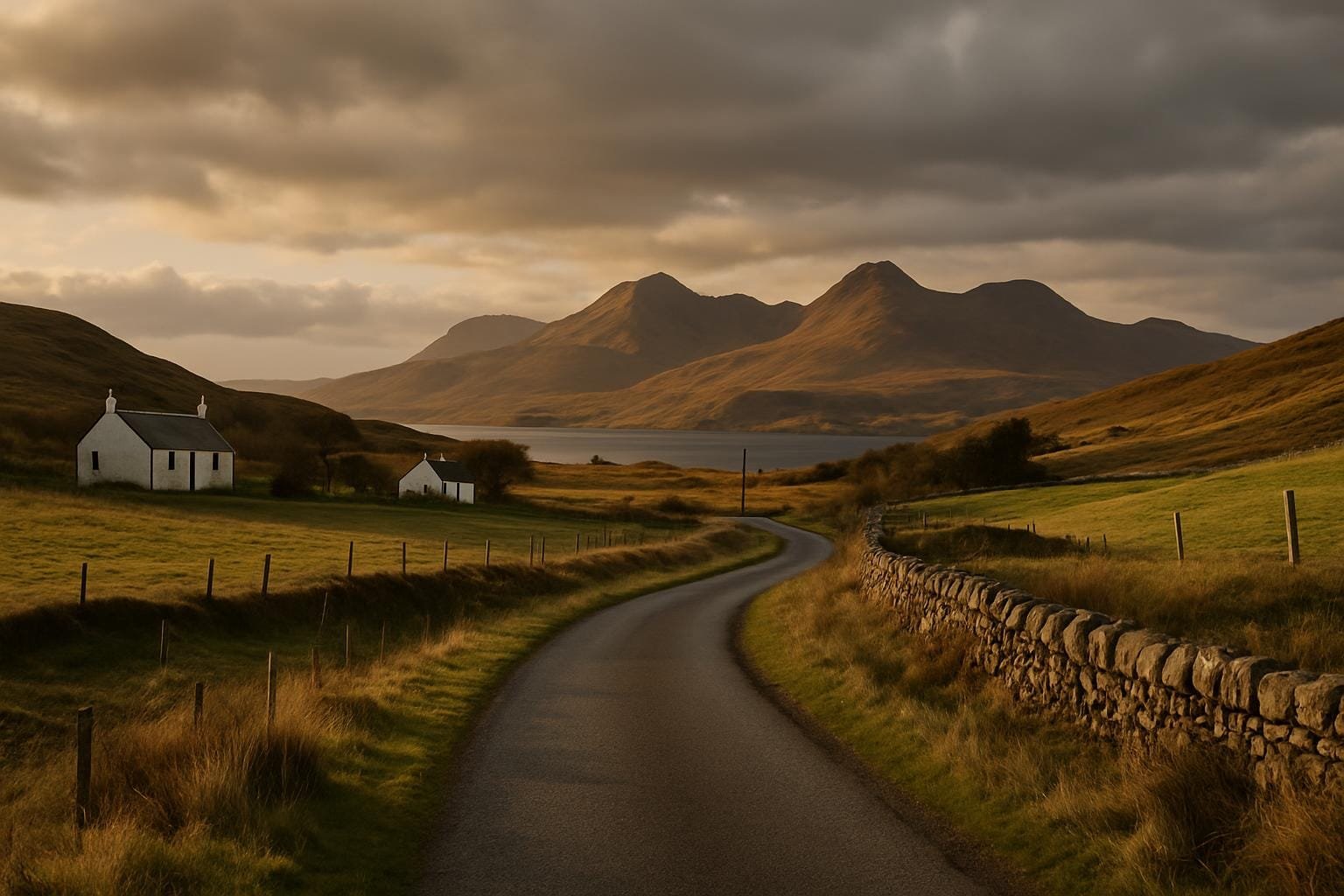
If your feed looks anything like mine, the Isle of Skye appears to be made up entirely of three things: the Old Man of Storr, the Fairy Pools, and people in bright jackets standing on cliffs that would give your mother palpitations. That’s the glossy version. This is an attempt at something a bit different: an authentic Isle of Skye travel guide, the bits that happen when the drone batteries die and the coach tours go back over the bridge.
I’ve been up to Skye a few times now – first time in a tiny hire car that complained at every cattle grid – and the place that’s kept me coming back isn’t the headline views (although they’re there, obviously). It’s the evenings in village halls, the half-empty cafés on Tuesday mornings, the awkward conversations at bus stops. That’s Skye beneath the postcards.
The first time I came to Skye, I did what everyone does: drove straight through Broadford, barely glanced at the Co-op and headed for Portree. On a later trip, stuck behind a caravan and in urgent need of caffeine, I actually stopped. That’s when Broadford started to make sense.
It’s where people quietly get on with life. You’ve got the Broadford village strip along the A87, the fuel station that always has a queue in summer, and, crucially, a couple of places that feel like they’re for locals first and visitors second.
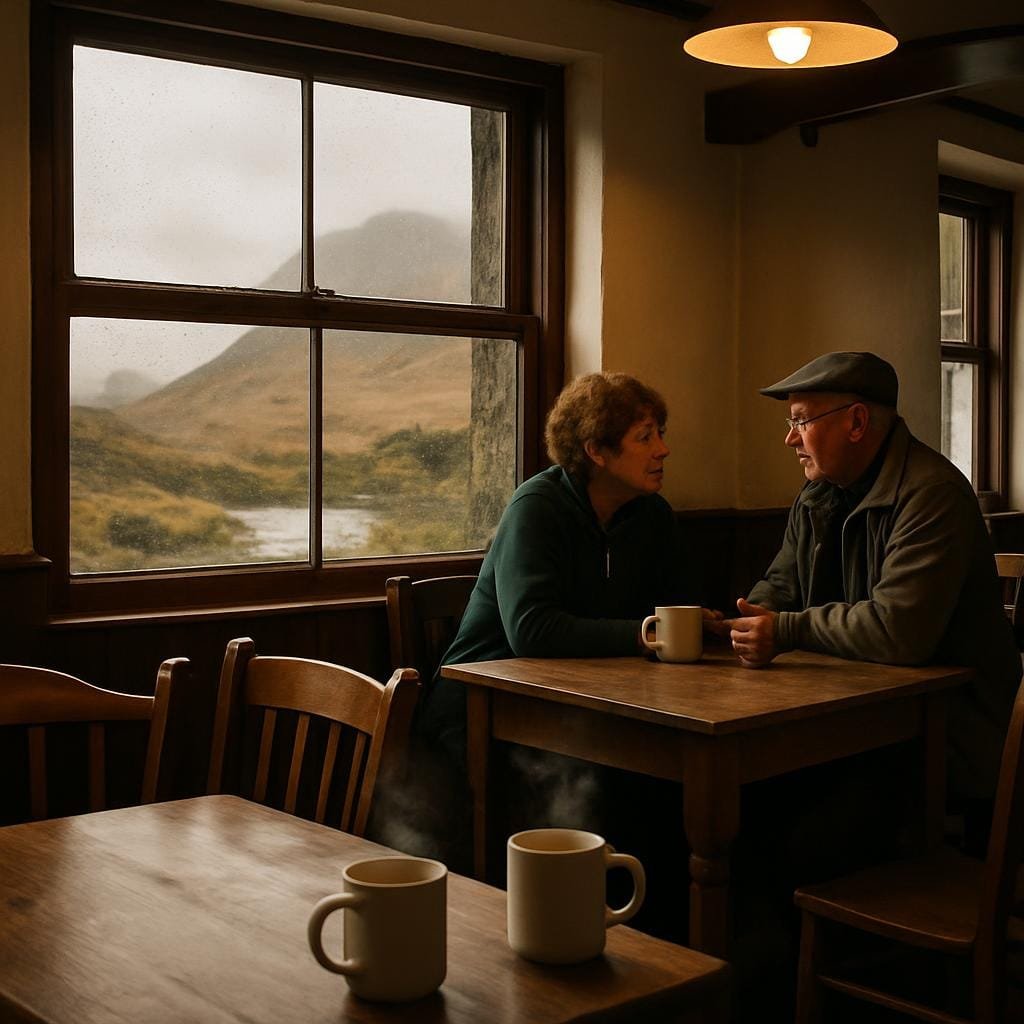
My bias is towards food, so I’ll start with Café Sia. Their wood-fired pizzas are the sort of thing you convince yourself are “well deserved” after sitting in a car for five hours. The coffee is properly decent, and if you sit by the window you can watch a mix of tourists trying to read Gaelic road signs and delivery drivers timing their dash in between showers.
A bit further along is the tiny Isle of Skye Baking Company behind the petrol station. It looks like somewhere you’d pick up a sandwich for the ferry, but inside the cheese scones should probably have heritage status. There’s a handwritten sign about reusable cups, racks of bread that go early on Saturdays, and usually at least one hillwalker trying to work out if they’ve got time for “just one more slice of cake”.
Worth knowing before you go – Broadford
Let’s be honest. The Fairy Pools can be gorgeous – but in high season it’s a procession of tripods and people debating whether to “brave it” for the cold-water dip. The car park is now pay-and-display, around £6 for the day, and in peak times you may well end up parked halfway back down the road.
On one trip I bailed on the Pools entirely and carried on over the hill to Glen Brittle beach. Best decision of that week.
The road down is single-track with blind bends that would make an advanced driving instructor weep, but then the bay opens up, framed by the Cuillin. There’s a basic but perfectly fine car park by the campsite; when I last went it was £3 in coins into an honesty box. Actual coins. Remember those?
The sand is a soft, light grey with streaks of darker volcanic stuff near the waterline. At low tide you get a broad, flat stretch that’s ideal for dogs, kite experiments and couples doing the “walk in silence and pretend you’re in a film” thing. I watched someone setting up a slackline between two driftwood posts, watched them fall off three times, then decided I’d probably hurt myself and went for a paddle instead.
Behind the beach, the Glenbrittle Campsite & Café is a proper little hub. Cakes around £3, soup about £5, and filter coffee that tastes better than it has any right to when you’ve just been sandblasted by Atlantic wind. There’s a very blunt sign on the toilet block telling you exactly what you can and can’t put down the loos. Read it. They mean it.
Worth knowing before you go – Glen Brittle
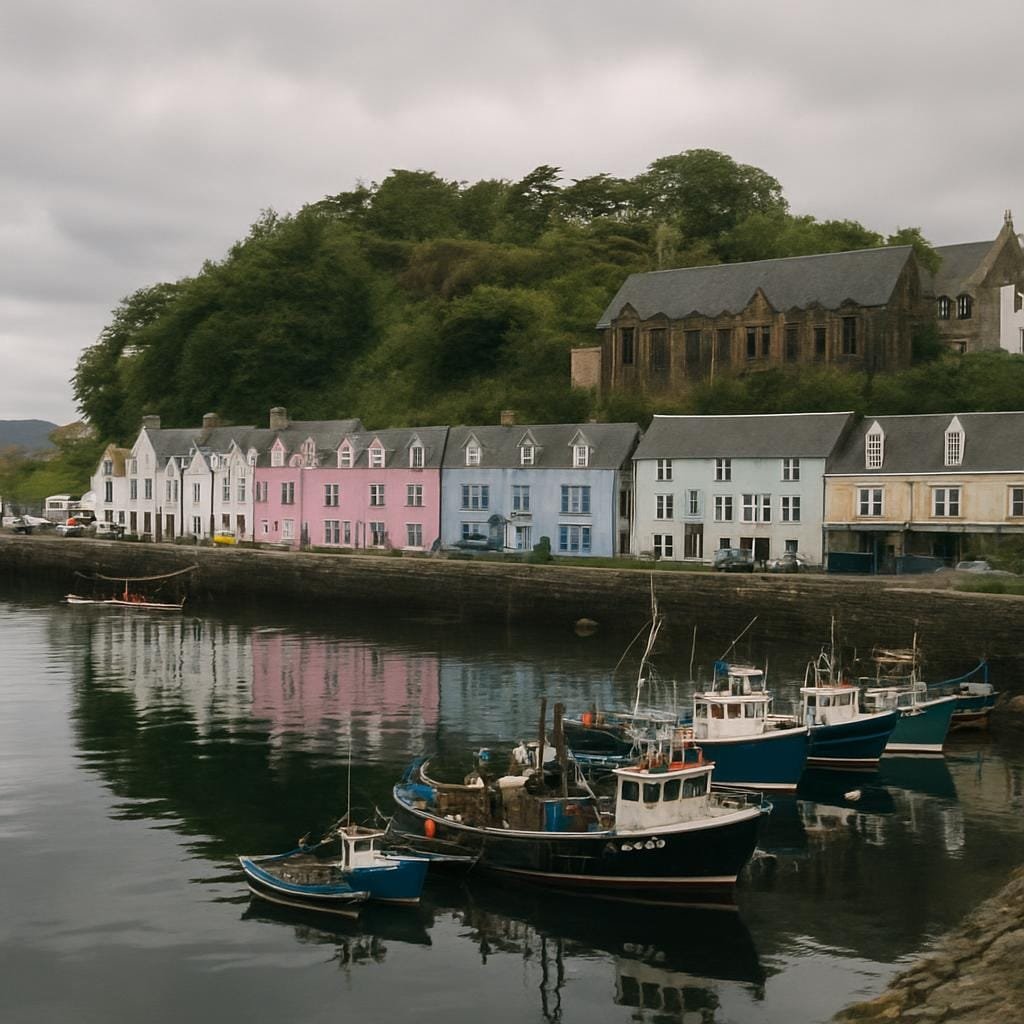
Everyone takes the shot of the coloured houses along Portree harbour. You should too, you’re not made of stone. But then what? This is where authentic Isle of Skye travel starts to creep in.
On my second visit I ducked away from the harbour crowds and headed up the hill to the Aros Centre on the edge of town. It’s part theatre, part café, part exhibition space, and part “where locals actually go on a rainy Tuesday”. They run gigs, film nights and bilingual events, and there’s usually a board up with Gaelic classes and the like. It’s not exactly glamorous, but it feels like a living community space rather than a backdrop.
In town, I’ve had surprisingly good fish and chips out of paper from The Chippy on the harbour. About £10–£11 for haddock and chips, eaten on the bench if you’re lucky enough to find one empty and seagull-free. Keep an eye on the gulls – I watched one make off with an entire sausage in batter without breaking stride.
For a slower pace, Café Arriba above the harbour has big windows, strong tea, and mismatched chairs that look like they came from a church sale. Portions are generous; breakfast rolls around £6–£8. You’ll hear a real mix of voices: German walkers comparing blisters, Glaswegians debating the weather, and quietly amused Portree locals pretending this is all perfectly normal.
Worth knowing before you go – Portree
Dunvegan Castle is very much on the tourist circuit, and fair enough – it’s the seat of the Clan MacLeod, and the gardens are, to use the technical term, properly lovely. Adult entry is currently around £16 for the castle and gardens (check the latest on their site: Dunvegan Castle & Gardens). The seal-spotting boat trips from the slipway are extra, about £10–£12 per person, cash preferred last time I went.
But the bit of Dunvegan I keep remembering is the slightly scruffy stretch of main street where local life carries on. The Jan’s Vans food trailer, parked in a lay-by near the petrol station, did me a bacon roll and tea for about £6, handed over with the kind of chat that suggests she’s heard every weather complaint going.
There’s also the Dunvegan Community Hall that hosts ceilidhs, craft fairs and the Dunvegan Show livestock and produce event in late summer. One year (pre-2019, before things paused for a while) I wandered in on a produce show day: tables of home baking, someone earnestly judging carrots, kids racing toy tractors outside. It was about as far from Instagram as you can get, and brilliant.
For something slower, the short stretch of shore by the Old School Restaurant gives a view across Loch Dunvegan to low hills that catch the evening light. The Old School itself isn’t cheap (mains £20–£30), but their sticky toffee pudding is up there with the best. I once misjudged it after a starter and main and had to walk up and down the lane in the drizzle to recover.
Worth knowing before you go – Dunvegan
Driving between Portree and Dunvegan, most people rattle through Edinbane without stopping. It’s a small place – some houses, a pottery, a loch, and the sort of hotel that makes you think “wedding receptions”. But the Edinbane Inn became one of my favourite spots on the island.
The main bar has low ceilings, an open fire and a slightly eccentric mix of furniture. Food is very good and not shy on portion size: mains from about £18–£28, with local seafood all over the menu. The real reason to linger is the music. Traditional sessions pop up most weeks; I ended up one night half wedged between a fiddler and a man with a bodhrán, trying to drink my Skye Red ale without moving my elbows too much.
Across the road, the Edinbane Pottery workshop and showroom is worth a nosy. Proper working studio, kiln in the back, shelves of mugs and jugs that make your current kitchenware look a bit sad. Prices aren’t bargain-basement (a mug will set you back around £20–£25) but they feel like things that will actually get used rather than sit on a shelf.
Worth knowing before you go – Edinbane
The Sleat peninsula down in the south is sometimes called the “Garden of Skye”, which is a bit of a stretch in February when your face is being exfoliated by sideways rain, but it does feel softer round there. Fewer dramatic cliffs, more trees clinging on and crofts that actually look lived in.
One particularly wet visit I holed up at Ragazzi near Ardvasar, a small Italian café/restaurant in a green building up the hill. Pizza around £12–£15, proper espresso, and a blackboard of specials that changes with what’s come off the ferry or out of the garden. The owner chatted about winter storms like they were slightly eccentric regulars.
Down the road, the Armadale Castle, Gardens & Museum of the Isles is the kind of place you think “I’ll just do the gardens” and then end up an hour later reading about clan feuds in the museum. Entry sits around £14 for adults. The ruined castle has those photogenic half-walls and window openings that make everyone turn into an amateur art photographer, but it’s the woodland walks and viewpoint over the Sound of Sleat that stuck with me.
And then there’s the ferry. Watching the CalMac boat pull in at Ardvasar, cars shuffling on and off the Skye–Mallaig crossing, is extremely satisfying if you’re the sort of person (like me) who still gets excited by a good bit of logistics.
Worth knowing before you go – Sleat
I’ll be straight with you – I didn’t manage this on my first Skye trip. I drove absolutely everywhere, complained about parking, then wondered why I felt knackered. On a later visit I gave myself one day off the car keys and used the buses instead.
From Portree, I took the Stagecoach 57A out towards Staffin. The bus stop chatter alone made it worthwhile: walkers debating the cloud level, a local lad explaining midges to a very polite Canadian couple. Day tickets hover around the £10 mark for adults, cheaper for shorter hops.
I hopped off at Kilt Rock (yes, that Kilt Rock) but walked away from the main fenced viewpoint along the quiet road, where there’s a lay-by with a slightly faded “NO CAMPING” sign and a much better sense of space. No railings, just a view of sea, cliffs and whatever weather is currently bothering the Minch.
Walking a couple of miles between stops, then picking up the next bus, changed the way Skye felt. Slower, obviously, but also more stitched-together. You notice things in the verges: wildflowers, old stone walls, sheep with attitudes. You also notice that waterproof trousers are worth the indignity when the rain switches on horizontally.
Worth knowing before you go – buses & walking
In the end, an authentic Isle of Skye travel experience isn’t about avoiding the famous viewpoints out of principle. Go to the Old Man if you want. Take your photo. Then maybe spend that afternoon in a community hall eating home baking, or in a draughty bus shelter talking about midges with someone who lives there.
The bits of Skye that linger for me aren’t the big postcard moments. They’re small things: the smell of damp wool in a pub after a storm; the way the light hits a lay-by view you didn’t plan; a plate of fish and chips balancing on your knees while you guard it from seagulls with the focus of a security guard.
If there’s a trick – and I’m hesitant to call it that – it’s this: plan your big sights, but leave space around them. One unscheduled stop in Broadford. A detour to a beach instead of a queue. A day where the car keys stay in your pocket. That’s where authentic Isle of Skye travel starts to sneak in, quietly, when you’re not trying too hard.