I’ve never trusted anyone who calls punk a phase. A haircut is a phase. Learning the chords to “Wonderwall” is a phase. UK punk was more like someone rewiring the electrics in the house while the power was still on. You can still hear it humming through pop, through stadium rock, through every lad in a bucket hat chanting along to something that started in a squat with twenty people and a crap PA. So call this a UK punk music travel guide if you like, but it’s really about how certain streets, venues and sticky-floored rooms warped the sound of British pop.
I came at all this late. I was born in the 80s, raised in Newcastle, and by the time I was fourteen my world was Oasis, Blur and whatever Radio 1 threw on between them. Punk, to me then, was fancy dress: safety pins, tartan, someone’s mam tutting at the telly whenever old footage of the Pistols turned up. It wasn’t until I was about sixteen, round a mate’s council flat in Heaton, that someone stuck “Orgasm Addict” on a beaten-up turntable and I realised, quite suddenly, that all my favourite 90s bands were basically moving furniture around in a house other people had already wired up.
Let’s get this out of the way: the Sex Pistols didn’t matter to UK punk in the way people still pretend they did. They mattered to the tabloids. They mattered to Malcolm McLaren’s bank balance. They made great photos. But if you want to talk about how punk rewired pop, you’re better off looking away from King’s Road and towards grottier corners.
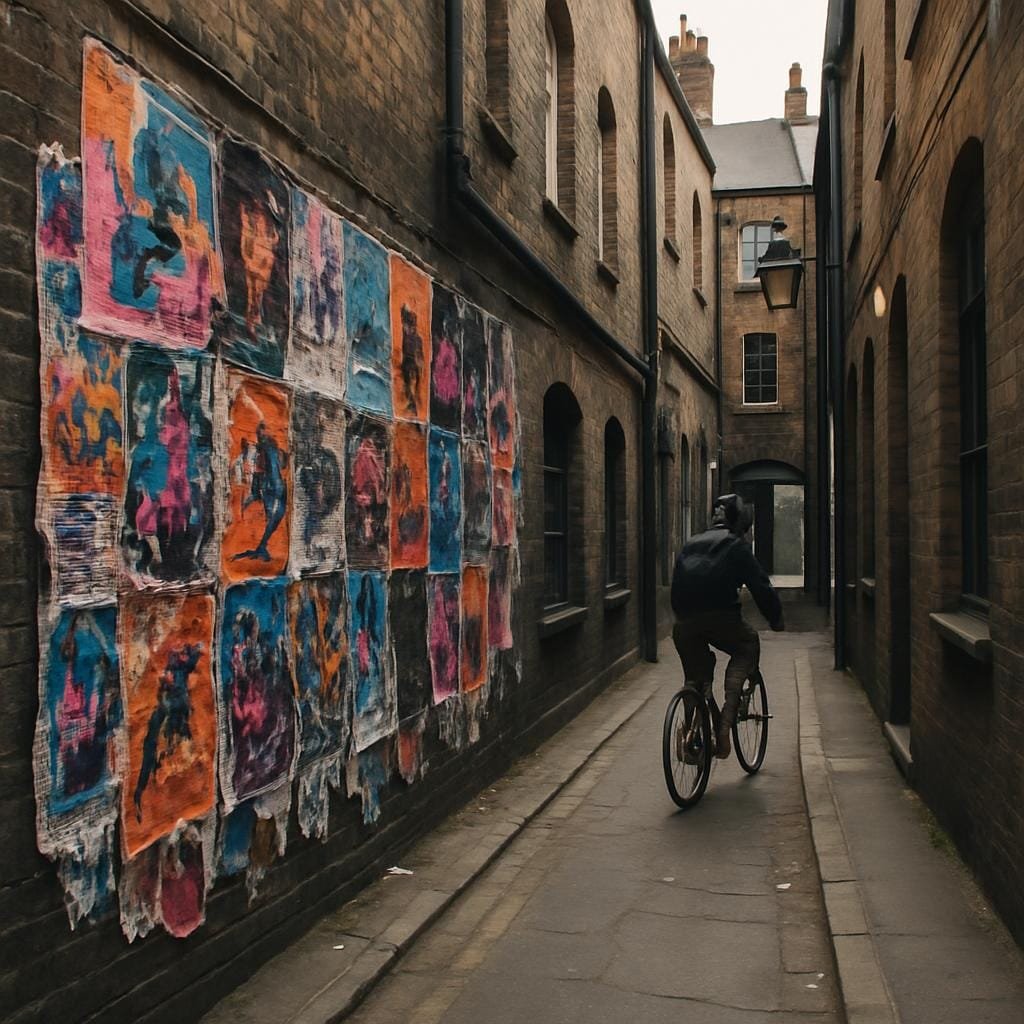
I went down to London in my early twenties and, like every mug who’d read too many magazines, ended up outside the old SEX/Seditionaries shop site, staring at a fancy plaque. It felt like visiting a themed restaurant. The clothes in the windows were expensive, the tourists were taking polite photos. Nobody looked like they’d ever been chucked out of a venue.
Compare that to the actual music. Yes, “Anarchy in the U.K.” tore up Top of the Pops in late ’76, and Steve Jones did have that chopped-up guitar tone that loads of people nicked. But you listen back now and it’s a rock band, really. Sloppy, snarling rock, but rock. The thing that actually spread – the thing that ended up in chart pop fifteen years later – came from bands who couldn’t get near the Pistols’ press but had a much clearer sense of melody, boredom and how British people really speak.
So no, this isn’t a UK punk music travel guide that tells you to genuflect outside where the Pistols rehearsed. Go if you want, but the interesting stuff was happening in places nobody thought to landmark properly.
When people talk about the Manchester punk gig – the Sex Pistols at the Lesser Free Trade Hall, June 1976 – they talk about it like a miracle. Fewer than fifty people there, each one apparently going on to form a band or a label. You’ll know the list: future members of Buzzcocks, Joy Division, The Fall, plus Tony Wilson, who’d go on to co-found Factory Records and give the country half its student T-shirt designs.
I wasn’t there, obviously. By the time I first went to Manchester, in the mid-2000s, the Free Trade Hall had turned into a hotel with nice carpets and a bar menu that put goats’ cheese on everything. But the ghost of that gig is what set up the next bit, and this is where pop really gets rewired: Manchester’s geography funnels everyone together.
Think about it. You’ve got the Free Trade Hall smack in the centre, then the short walk over to what became the Factory club on Russell Street, and later the Hacienda on Whitworth Street West. You can walk it in 15 minutes. People went from seeing spiky, two-minute songs to synths and drum machines without ever really changing postcode. That proximity meant punk ethics – D.I.Y., small labels, art-school sleeves – slipped straight into post-punk and then into dance music.
Buzzcocks might be the most underrated band in this whole story. Their 1977 EP “Spiral Scratch” on New Hormones label is the bit that actually shifted how music was made. They put it out themselves, pressed it with their own money, sold enough that other bands realised they didn’t have to wait for some London bloke in a suit. Without “Spiral Scratch”, do you get all those tiny 7-inches that Britpop bands grew up crate-digging? Do you get DIY hardcore in Leeds? I’m not convinced you do.
And musically, Buzzcocks did more to shape modern pop than the Pistols ever did. “Ever Fallen in Love” is basically the template for about a third of late-90s guitar singles: fast, romantic, slightly self-pitying, chorus hook for days. You can draw a straight line from that to the first Green Day records, to blink-182, to half the NME CD tracklists from 2001. When I first heard “Ever Fallen in Love” properly – hammered at a student night at the Ritz in Manchester around 2005 – what got me wasn’t the punk of it, but how much it felt like pop music with the nice edges rasped off.
That’s the thing people forget: punk wasn’t always about getting rid of choruses. In a lot of places, it was about making choruses cheaper and louder.
I had a short, intense squat phase in my early twenties. Two mates from Newcastle moved into a house-share off Camden Road that was basically half legal, half dream. Mould on the walls, toilet that screamed every time you flushed it, and a constant rotation of bands sleeping on the floor after gigs at the Underworld or the old Purple Turtle.
Those nights – four people sharing a crate of warm Red Stripe, someone putting Crass on at stupid volume – did more to explain UK punk to me than any documentary. You got the sense of how it actually worked: cheap rent, cheap gear, energy drinks, a photocopier, and someone always trying to get you to read a zine about veganism.
Crass operate a bit outside the usual “From squats to stadiums” story because they never made that leap, and that’s sort of the point. But their base at Dial House in Essex fed directly into how British pop later thought about politics. Dial House was more commune than squat, but the idea was the same: make everything yourself, from the records to the posters to the typeface. By the time I finally visited Essex in my thirties, for boring family reasons, I was close enough to where Dial House is that I seriously thought about knocking, then chickened out. Still, the idea that a band could live, write, record and organise from one house, far from any A&R man, was mind-blowing when I first read about it aged nineteen.
Here’s where I’ll plant a flag: Crass did more to change how bands thought about their role in society than The Clash did. Clash fans hate this, but compare specifics. The Clash signed to CBS and made some great records, absolutely. “White Man in Hammersmith Palais” still wipes the floor with most current indie. But Crass put out records like “The Feeding of the 5000” on their own label, used the money to support other groups, and made lyrics that shoved you into thinking about war, sexism and nuclear power in your own town, not just far-off dictatorships.
By the late 80s and early 90s, you’ve got whole scenes – crust, anarcho-punk, squat gigs across Camden, Brixton, Hackney – running on that model. Then, quietly, that stuff leaks into mainstream pop politics. Red Wedge, the “Free Nelson Mandela” single, even the way Britpop bands flirted with anti-royal commentary: all that sits in a Britain where Crass had already normalised the idea that your band could be an organising tool as much as entertainment.
I remember seeing a Crass stencil on a wall near Camden Lock sometime around 2007, half-scrubbed off but still legible. By then, I’d already watched bands like Manic Street Preachers hit the arena level, still quoting Debord in interviews. You don’t get that leap – from squat ideas to stadium speeches – without a Crass-shaped bridge.
Being from the North East, the first punk-adjacent venue that meant something to me wasn’t in London at all. It was the 1 in 12 Club in Bradford, plus its spiritual neighbours: the Phono in Leeds, the Irish Centre, random back rooms of social clubs in places nobody now pretends were glamorous.
By the time I started getting the train to Leeds in the early 2000s, the classic punk era had long gone, but the principle held: these were places that belonged to the people who used them. Member-run, or co-op, or just cheap enough that promoters took risks. I saw noisy local bands ripping through 20-minute sets, and occasionally you’d get someone like Chumbawamba doing a low-key gig that felt half performance, half community meeting.
Chumbawamba are the perfect example of how punk logic gets into stadiums through the back door. Everyone knows “Tubthumping” because you couldn’t move for it around 1997 – it got to number 2 in the UK charts, blared out at football grounds, soundtracked student nights from Sunderland to Swansea. What most people didn’t clock, and what I only realised years later, was that this was a band from the anarcho-punk and squat circuit using major-label money to fund causes they cared about. Their earlier stuff on labels like Agit-Prop – songs like “How to Get Your Band On Television” – were direct, witty takedowns of media hypocrisy, pressed in tiny runs and sold via mail-order.
The mechanisms they used – benefit gigs at co-op clubs, mutual support between bands, scrappy recording setups – trickled through the Yorkshire scene. By the time Kaiser Chiefs were rehearsing in Leeds in the early 2000s, the infrastructure and expectation that guitar bands could spring from small, self-organised spaces was already there, built by punks who never got near Top of the Pops. When I first saw Kaiser Chiefs at Leeds Uni in 2004, before “I Predict a Riot” hit Radio 1, what struck me was how confidently they treated the student union like a training ground for arenas. The punk rooms had already taught everyone: today’s 200-capacity gig is tomorrow’s Reading main stage rehearsal.
If you’re putting together your own mental UK punk music travel guide, ignoring Leeds and Bradford is a mistake. It’s where punk attitudes toughened up northern pop, made it scruffier, more political, and less impressed by London’s approval.
By the time I first went to Brixton Academy – early 2010s, queuing in the rain to see a re-energised Foo Fighters do a “secret” show that everyone knew about – the place had long since become a reliable arena circuit stop. You went there expecting huge choruses, confetti cannons, ten-quid pints.
But if you wind back, the building’s history runs through reggae, punk and squat party culture. The Academy started life as a cinema, then in the early 80s became an independent venue that welcomed anything loud, political or both. The area around it had a heavy police presence, simmering tensions and, yes, a bunch of squats where musicians actually lived.
What fascinates me is how the punk ethos of those earlier Brixton squats ended up stamped all over stadium rock. Take The Clash again: by the time they’re playing “The Guns of Brixton” live in places like the Palace Theatre Manchester in 1980, they’re dragging the specifics of a south London district – the fear of the police, the stubbornness of the residents – into big rooms full of kids from everywhere. Those kids take the energy home, form bands like The Ruts, scrutinise their own cities, and the cycle continues.
When I saw Foo Fighters at Brixton, the support band were a young UK act absolutely tearing through 45 minutes of fast, melodic punk-influenced stuff. The crowd treated them like karaoke warm-up, which annoyed me at the time, but the point holds: this was a global stadium act borrowing its aesthetic from small-room British punk – shout-along choruses, community, sweat – and feeding it back into the same building that had hosted all those tense, politically charged gigs in the 80s.
The actual squat scene around Brixton and neighbouring areas pushed an idea that big venues swallowed whole: a gig as a gathering point, not just a concert. Nowadays arena pop acts talk about “safe spaces” and “community” from the stage. Punks were doing that in leaky gyms and squats with dodgy wiring decades before, using hand-drawn flyers.
I’ll sneak in Hull here, because my first proper pop-punk arena experience connects right back to the DIY lineage. I saw Green Day at Wembley in 2010 – fireworks, confetti, Billie Joe dragging kids on stage – but what stuck with me was chatting in the queue to a bloke who’d first seen them at The Welly Club in Hull in 1991, playing to maybe 100 people, supported by a local hardcore band.
Green Day are from California, sure, but they were deeply shaped by the UK punk they grew up worshipping – Stiff Little Fingers, Buzzcocks, The Jam. Their early UK gigs were in precisely the sorts of rooms UK punk had set up: cheap, all-ages, somewhere between a social club and a youth centre. That bloke in the queue talked about getting a zine with the ticket, picking up a 7-inch from a cardboard box by the merch table, and having no idea this band would one day sell out stadiums.
The leap from Welly to Wembley isn’t about bigger amps or better lights. It’s about scale of influence. Punk’s wiring job on British venues – making them spaces for connection, for local scenes, for cheap entry and big ideas – accidentally built the emotional infrastructure that stadium gigs still trade on. When 70,000 people shout the chorus to “American Idiot” in London, they’re participating in a kind of mass catharsis that was first practised in tiny rooms with no stage barrier.
Here’s the arguable bit: I think the soft power of punk – its effect on how we organise gigs, who we let in, what bands talk about between songs – has mattered more in the long run than any individual record. “Never Mind the Bollocks” sold the story, sure. But the reason 90s Britpop, 2000s emo, and even today’s chart pop can talk about mental health, class and alienation is because a load of punks normalised that chat in pub back-rooms before anyone was taking notes.
If I had to write a literal UK punk music travel guide – and this is probably the closest I’ll get – it wouldn’t be a list of statues and blue plaques. It’d be:
Because in the end, punk rewired pop less through big headline moments and more through repetition. Every badly tuned support band at the local venue, every photocopied flyer stuck to a lamppost, every car share to a gig three towns over – that’s how the wiring spread. When I stand in a stadium now, watching a pop act who owes more to Auto-Tune than to the Ramones, I still see little bits of that circuitry blinking away.
People love to tidy punk up into a three-year burst in London: King’s Road, the Roxy, a nasty TV interview, job done. But if you care about the way British pop still sounds and behaves, the story is messier and more local. It’s Manchester kids walking home from a half-empty Pistols gig thinking, “We could do that cheaper.” It’s Leeds co-ops teaching bands how to run their own nights. It’s Brixton squatters treating a gig as a political meeting. It’s Hull kids seeing an American band in a tiny club and then turning up at Wembley twenty years later, slightly balder, singing every word.
I’m in my late thirties now. I write more about food than music these days – small cafés, proper bread, the kind of chippy you miss when you move away. But the way I think about those places, the way I instinctively side with the independents over the chains, comes straight out of a punk mindset I only fully understood after standing in enough sticky-floored rooms. You back the people who built their own thing from nothing.
So when someone tells you punk’s dead, or that it was all a fashion show, think about the last gig you went to – even if it was at some big arena with contactless bars and sponsored stages. Listen for the shout-along bit where the singer steps back and lets the crowd carry it. Look at the bootleg T-shirts outside. Clock the kid in the corner selling a photocopied zine for a quid. That’s the wiring. That’s the squat logic living inside the stadium shell.
We’re all still living in that rewired house, even if we’ve upgraded the speakers.