If you’re looking at your car keys and feeling vaguely resentful, you’re not alone. I grew up in Shropshire, which trains forgot for a while, so driving felt compulsory. But over time, I’ve grown fond of leaving the keys on the kitchen table and seeing how far buses and trains can actually get me. Spoiler: quite far. If you’re plotting car-free day trips UK style — from proper cities with confusing ring roads — there are some easy wins that don’t involve three changes and a wet bench at Wolverhampton.
This isn’t a grand “you must ditch your car forever” manifesto. I still drive. But I’ve had some of my best escapes from cities by public transport: no arguments about who’s driving back, no parking app tantrums, and you can have a pint at lunchtime without anyone tutting. Here are a few car-free day trips UK city-dwellers can actually do without wanting to cry into a rail timetable.
I’ll start at home turf, more or less. Ironbridge is the sort of place people assume you need a car for. They picture coach parties and pensioners in anoraks doing the industrial museums circuit. Fair. But you can get there happily car-free from Birmingham, and it feels like a proper escape — hills, river, and too many museums to be sensible in one day.
The easiest route is train from Birmingham New Street to Telford Central (around 30–35 minutes, usually £8–£15 return if you’re organised), then the regular bus — currently the X4 or 8 — from just outside the station down to Ironbridge. It’s about 25 minutes on the bus. Sit on the right for the good views as you drop into the Gorge; you get that first glimpse of the River Severn and the red brick houses clinging to the slope.
The first time I came by train a few years back, I expected to feel stranded. Instead, I realised most of the useful stuff in Ironbridge is lined up along one stretch of river, very walkable. The Blists Hill Victorian Town is the furthest out, about 40 minutes uphill on foot from the bridge, so for a single day think about picking one or two sites rather than all of them.
The bridge itself is free to walk over, and the Tollhouse museum next to it is about £6.50 for adults if you don’t have the annual pass. It’s small but oddly moving — there’s something about seeing the old toll rates written out (“Pigs, per score…”) that makes you realise this thing was once basically a very fancy farm crossing.
Food-wise, I’m loyal to Morgans Café on High Street: very straightforward bacon sandwiches, proper mugs of tea, and you can normally get a seat even on Saturday. For something slightly more “we remembered to book”, The White Hart does solid pub food; last time I had a slow-cooked pork shoulder there that defeated me, which doesn’t happen often.
One odd detail I love: up by the ruined Buildwas Abbey (a 10-minute taxi ride from Ironbridge, or a patient walk along the road if you stretch your day), there’s this sharp, damp smell of river mud and wild garlic that always makes me think I’ve gone too far into the countryside for a “day trip”. You probably haven’t got time to do it all, but it’s worth knowing it’s there.
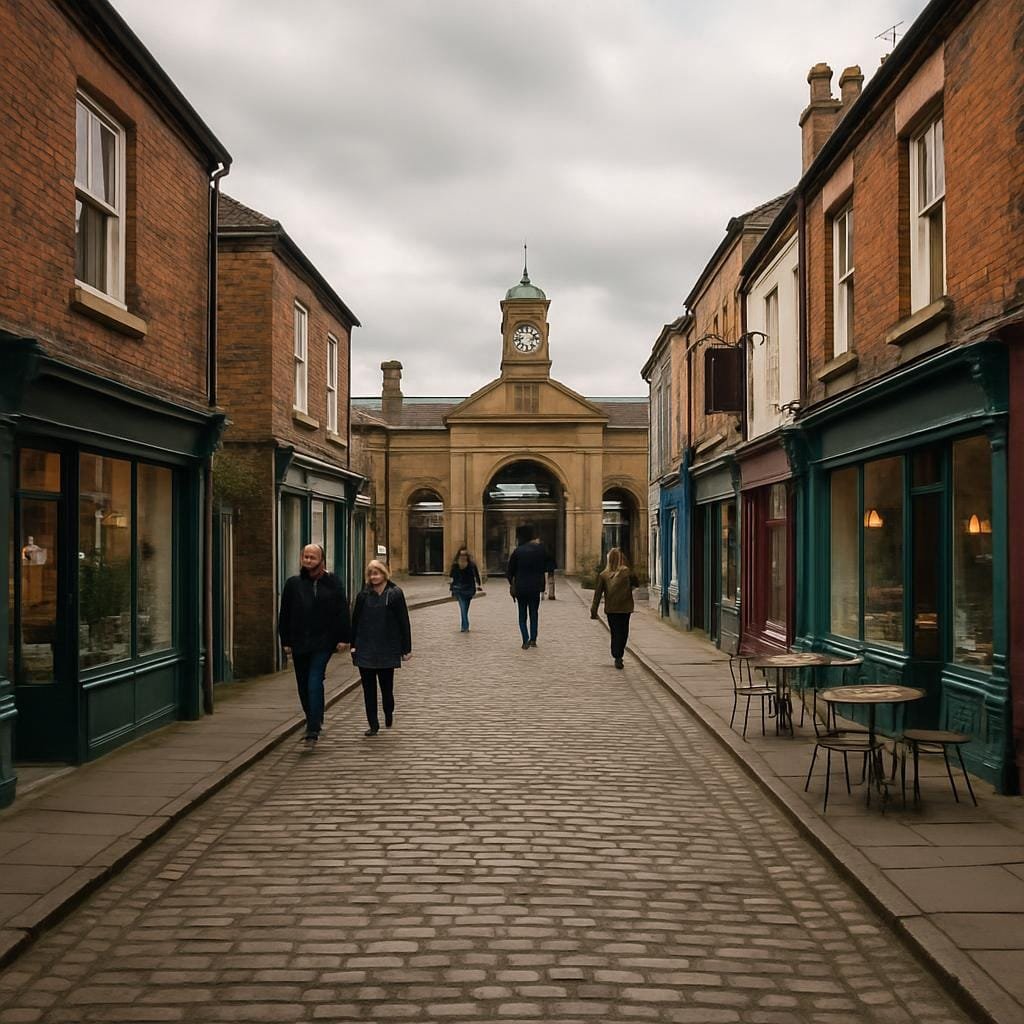
I avoided Rye for ages because I had a mental image of Instagram influencers in long dresses blocking the cobbles. It’s partly true on sunny Saturdays, but as car-free day trips UK go from London, it’s one of the gentler ones. And it’s made easier by the fact that Southern and Southeastern somehow manage not to mess this one up too badly.
From London St Pancras, take the high-speed train to Ashford International (around 40 minutes), then change onto the little Marshlink line to Rye (20 minutes more). Advance returns with a Railcard can hit around £25–£35, but walk-up will make you wince a bit more. The Marshlink train is always shorter than you think it should be, and on a busy day you will be up close and personal with someone’s walking boots. Consider it part of the experience.
Rye itself is compact. From the station it’s a five-minute walk into the old town, where the pavements tilt at odd angles and there’s always someone trying to drag a suitcase over cobbles with a look of deep regret. The Lamb House (National Trust) is worth a poke around — admission about £7 if you’re not a member — especially the walled garden, which is sheltered enough that even on a breezy day you can sit with a coffee and pretend you live there.
For food, I like Cobble Corner at the top near St Mary’s Church: simple sandwiches, crab salad when it’s in season, and cakes that look like someone’s nan still has a say in things. If you fancy a pint, The Mermaid Inn is the famous crooked, supposedly haunted one. My advice: pop in, enjoy the low beams and the fire, have one drink, then escape before the crowds make you start muttering.
Now, the bit people argue about: Camber Sands. Is it worth leaving Rye for the beach? On a warm day, yes. There’s a regular bus — the 102 — from Rye station to Camber Sands Pontins stop, which plods along in about 15 minutes. Ask the driver for “Camber Sands” and he’ll know what you mean. A day ticket is roughly £5–£7. The dunes here are big enough to hide in, the sand is actually soft, and there’s a long shallows where kids (and overexcited adults) paddle for miles.
The beach does get absolutely packed near the main car park. But walk east for 10–15 minutes and the crowds thin out. Bring your own food; the on-beach kiosks do a viable but slightly sad burger. I usually grab a takeaway pasty from Rustico back in Rye before heading out. Sand and flaky pastry is a savage combo, but you work it out.
Hebden Bridge has a reputation. Vegan cake, rainbow flags, more yoga than is surely healthy. But as car-free day trips UK go from the northwest, it’s one of the easiest wins: a straight train, no faffing about, and a town where everything you need is within 10–15 minutes’ walk.
From Manchester Victoria, regular Northern trains rattle along the Calder Valley line to Hebden Bridge in about 35 minutes. Off-peak returns can be under £10 if you time it right. The first time I rolled into Hebden by train, it was on a grim, wet February day, and even then it felt oddly inviting — the canal, the stone terraces climbing up the hills, the smell of woodsmoke and someone burning toast.
Out of the station, head down the path to the Rochdale Canal. From there it’s a flat, level 10-minute amble into town. I like starting with coffee at Wood & Wire on Market Street; they roast their own beans and the espresso is good enough that you momentarily think about moving there and “finally writing that novel”. Then you remember rent prices and calm down.
A simple loop: stroll up Market Street, cut across to the canal, then follow the towpath either east towards Mytholmroyd or west towards Todmorden for as long as your legs and conversation last. If you go west, you eventually wind up near Hare & Hounds above Todmorden if you’re determined enough and happy with a climb. For a more realistic day trip, walk for 45 minutes, then turn back and feel virtuous.
For lunch, Hebden Bridge Trades Club is an odd/elegant choice: music venue at night, low-key social club atmosphere in the day. Cheap-ish, decent food, and you’ll usually overhear a conversation about local politics that makes your own council drama look tame.
A lot of people miss the short haul up to Hardcastle Crags. You can walk all the way (about an hour and a half, steady uphill) or hop on the 596 bus for part of it. The woods there feel far deeper than the distance suggests, with a steep valley, stepping stones, and Gibson Mill in the middle like something someone stuck there to see who’d complain. It’s National Trust, but the access walks are free; the car park charges don’t apply to you anyway if you’ve come by train.
I’m going to admit something: the first time I went to Barry Island, it was partly because I found the name funny on the departure board at Queen Street. I expected arcades and sadness. There are arcades, obviously, but as car-free day trips UK go from Cardiff, Barry is one of those honest seaside runs that does exactly what it says on the tin.
Trains from Cardiff Central to Barry Island take about 30 minutes and usually run every 30 minutes. Off-peak day returns hover around £5–£7. The station is a two-minute walk from the seafront, past a big sign that feels like it’s in on the joke.
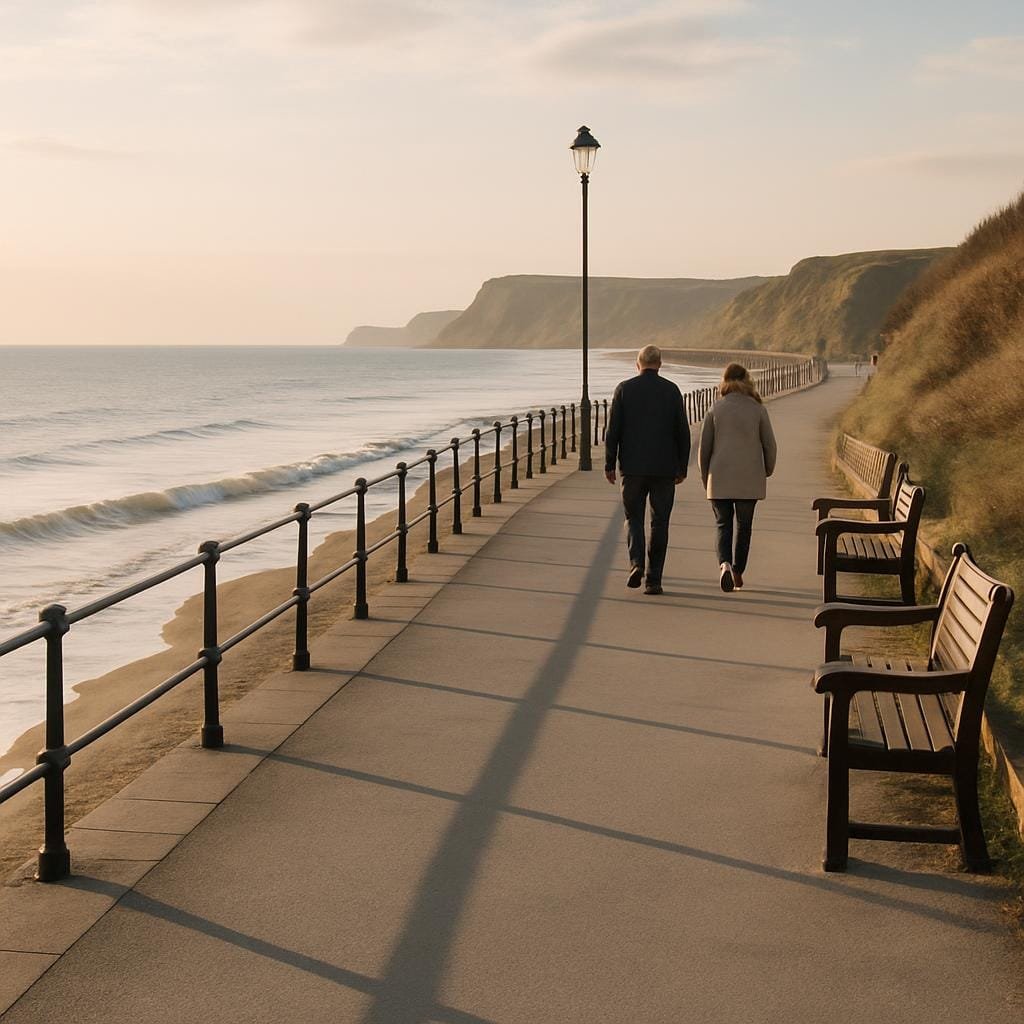
Whitmore Bay is the main crescent of sand. On a sunny afternoon it’s full of kids with inflatable unicorns, parents staring into the middle distance, and seagulls eyeing your chips with military focus. Walk along the promenade, then if you have the energy, follow the coastal path around Nell’s Point. There’s an old gun emplacement there and views out towards the Bristol Channel wind turbines; not glamorous, but oddly soothing.
I’m picky about seaside chips, but the ones from O’Sullivan’s behind the fairground are respectably crisp. For something a bit healthier, Marco’s Café on the prom — yes, the one Gavin & Stacey made semi-famous — does decent coffee and surprisingly fresh rolls. The smell inside is a mix of coffee, bacon and wet sand; you’ll either love or hate it.
If the weather behaves, consider a short detour inland to Porthkerry Country Park. It’s about a 25-minute walk from the station (or hop on a local bus): huge viaduct, big field, pebble beach, and an oddly peaceful feel given it’s basically under a flight path from Cardiff Airport.
I hesitated to include this because it feels almost too easy, but that’s part of the appeal. From Newcastle to Durham is about 12 minutes on LNER or Northern. If you time it right and avoid peak, you can get returns under a tenner. It barely feels like a day trip — more like you’ve been teleported — but in terms of car-free day trips UK rail fans will appreciate, it’s a classic.
From Durham station, the walk into town is downhill and scenic, if slightly harsh on the knees coming back up. You get this sudden, almost theatrical view when the cathedral appears above the trees. The cathedral is free to enter, though they do encourage a donation (and the tower, when open, is around £7.50 to climb). The cloisters still have that faint school-assembly smell, stone and dust and polish.
There’s a riverside loop from Framwellgate Bridge that feels far more rural than it has any right to. If you follow the path past the boathouse and stick with it, you can walk a full circle under overhanging trees, occasionally dodging joggers and geese with attitude. It’s flat, easy, and you’re never more than 10 minutes from a teashop.
Speaking of, for food I like Flat White Kitchen in a tall, skinny townhouse on Saddler Street. Brunch there isn’t cheap — pancakes come in around £10–£12 — but the portions are enough that you may not need dinner. There’s usually a queue. If you don’t fancy that, The Colpitts Inn across the river is one of those gloriously unchanged pubs; carpet that’s seen things, cask ale, and conversation that you get gently roped into.
Car-free day trips UK rail and bus style do need a tiny bit of planning — not Instagrammable “trip planning”, just the boring “does this bus actually exist on Sundays” kind.
Last thing: leaving the car at home changes how you move through a place. You walk more slowly. You notice the chip shop with the hand‑painted sign, the dog that clearly owns the pub, the allotments someone carved out beside the railway. The first time I tried stitching together one of these car-free day trips, I messed up the timings, missed a connection, and ended up eating a cold pasty on a draughty platform. But I also realised I’d seen more in one slightly chaotic day than I normally do in a weekend away with the car, sat in traffic.
So next time you’re itching to escape the city, try leaving the keys where they are. Let the train, the bus, and your feet do the work. You might even enjoy the bits in between.