

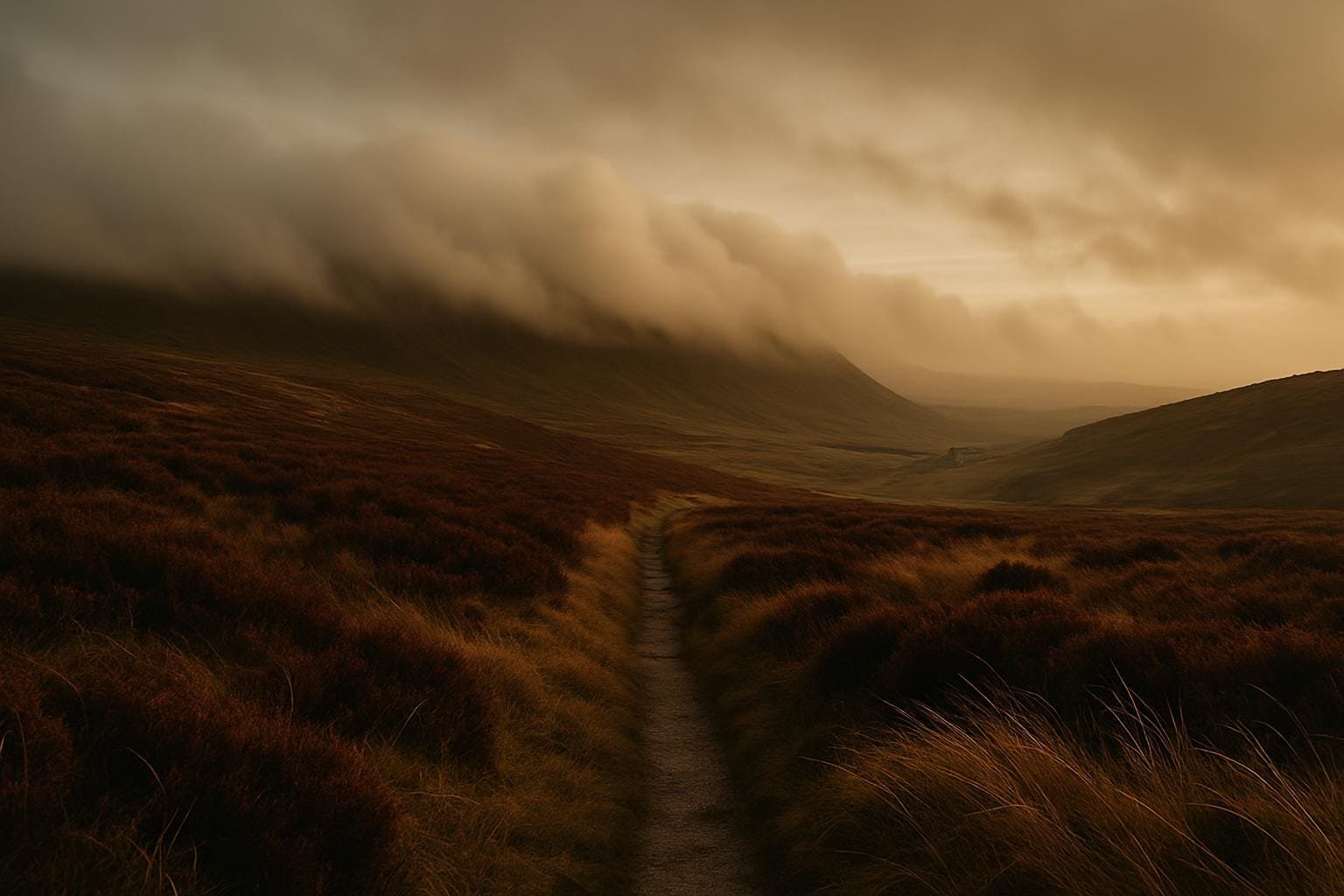
I first typed “Kate Bush UK travel” into a search bar in about 2016, sitting in a Premier Inn somewhere off the A1, trying to work out why Wuthering Heights had lodged itself in my head on a long drive down from Newcastle. I wasn’t actually planning a Kate Bush pilgrimage – I was on my way to review a restaurant in Leeds – but that phrase popped up like I was trying to turn her into a tourist trail. Which is wrong. Kate Bush doesn’t make you want to book a cottage; she makes you feel like the moors, tower blocks and weird back roads are already inside your skull.
I’ll put my cards down early: I think Kate Bush is a more vivid writer about Britain than most “Britpop” bands put together. And I say that as someone who queued for Oasis at the Riverside in the late 90s and thought that was the peak of Northern culture for a solid decade. The difference is that her Britain is crooked, personal and shifting – a place of haunted corridors, quiet cul-de-sacs and wind-battered hills, where the ghosts are emotional as much as supernatural.
I was about fourteen when I first heard Wuthering Heights. My mam had a Best of Kate Bush CD in the glove box of a knackered red Micra. We were driving along the Coast Road, whacking the heater up because the wind off the North Sea gets everywhere. That opening guitar part came on, and then her voice did that mad swoop. I didn’t know if I hated it or loved it. It sounded like someone giving it everything at a karaoke, but the karaoke was happening in a gale.
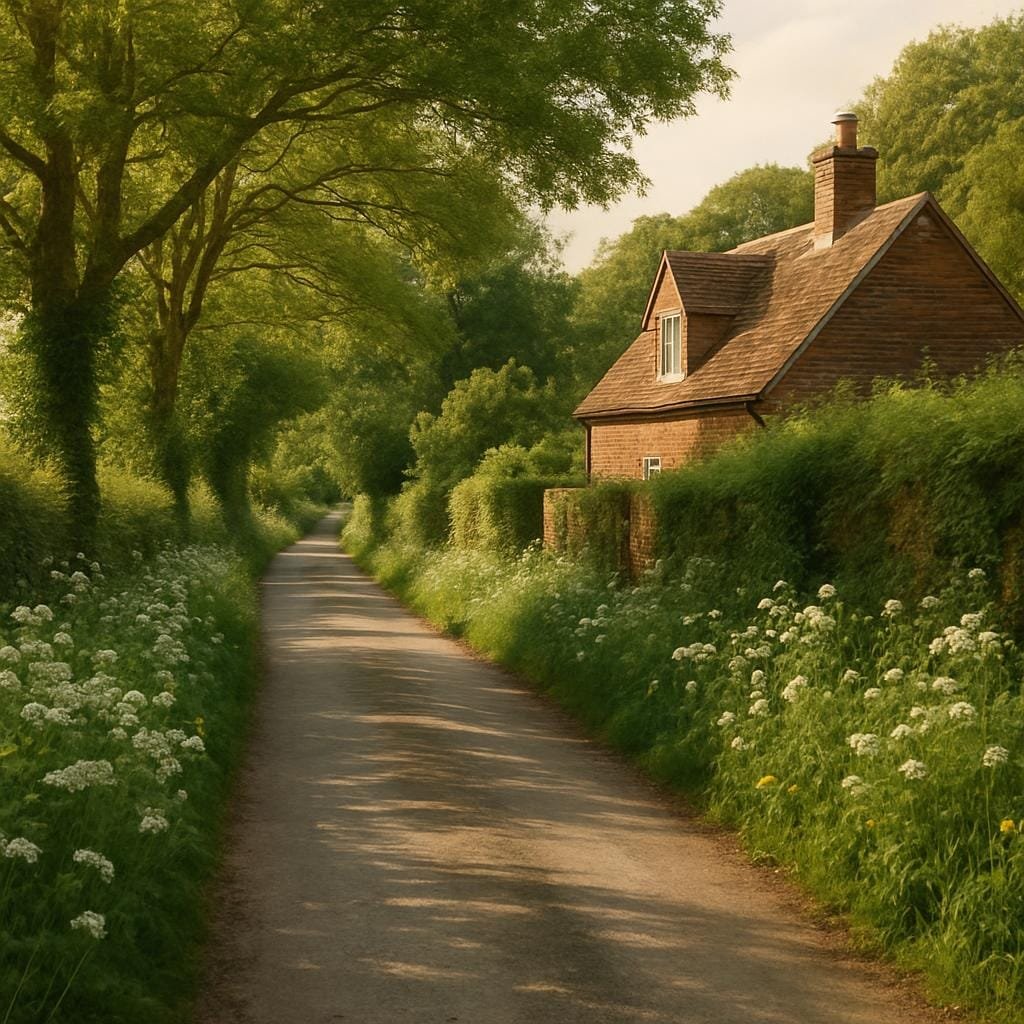
The thing is, for most of us up north, the “moors” weren’t some distant literary setting. They were the bits of scrubland behind the estates, the awkward hills up towards Hexham or over to the Pennines, where the sky feels too big and your phone signal dies. Listening to Kate sing about “Heathcliff” before I’d actually read the book, it still felt local. Wind, obsession, terrible men: yes, that checked out. She made Brontë country feel less like a GCSE text and more like somewhere your cousin might get dumped on a Sunday walk.
Years later, when I finally did a work trip over to Haworth and past Top Withens, that “Kate Bush UK travel” instinct came back again. But standing there, face stung by sideways drizzle, I realised the place was almost a red herring. The real location is the sound: the tight little drum pattern, that glassy piano, the way her vocal feels like it’s gusting in from a different room. She doesn’t describe the hill; she makes the weather crash through your speakers.
When people talk about Kate Bush and place, they go on about the Highlands in Cloudbusting, the English countryside in The Sensual World. Fair enough. But the Britain I hear in her work is mostly about rooms and pressure – houses that don’t feel safe, fields that don’t quite relax, nuclear families about to snap.
Take Hounds of Love as the centre of this so-called “Wuthering Britain”. Side A is suburban fear. Side B is psychological shipwreck. On the single Hounds of Love, you can almost see a street of semi-detached houses, lights out except for one front room where someone’s watching an old black-and-white horror film at 2am. That thudding drum, the barked samples, the chorus pleading not to be pursued – it’s as if Britain itself is a place you can’t get a clean break from.
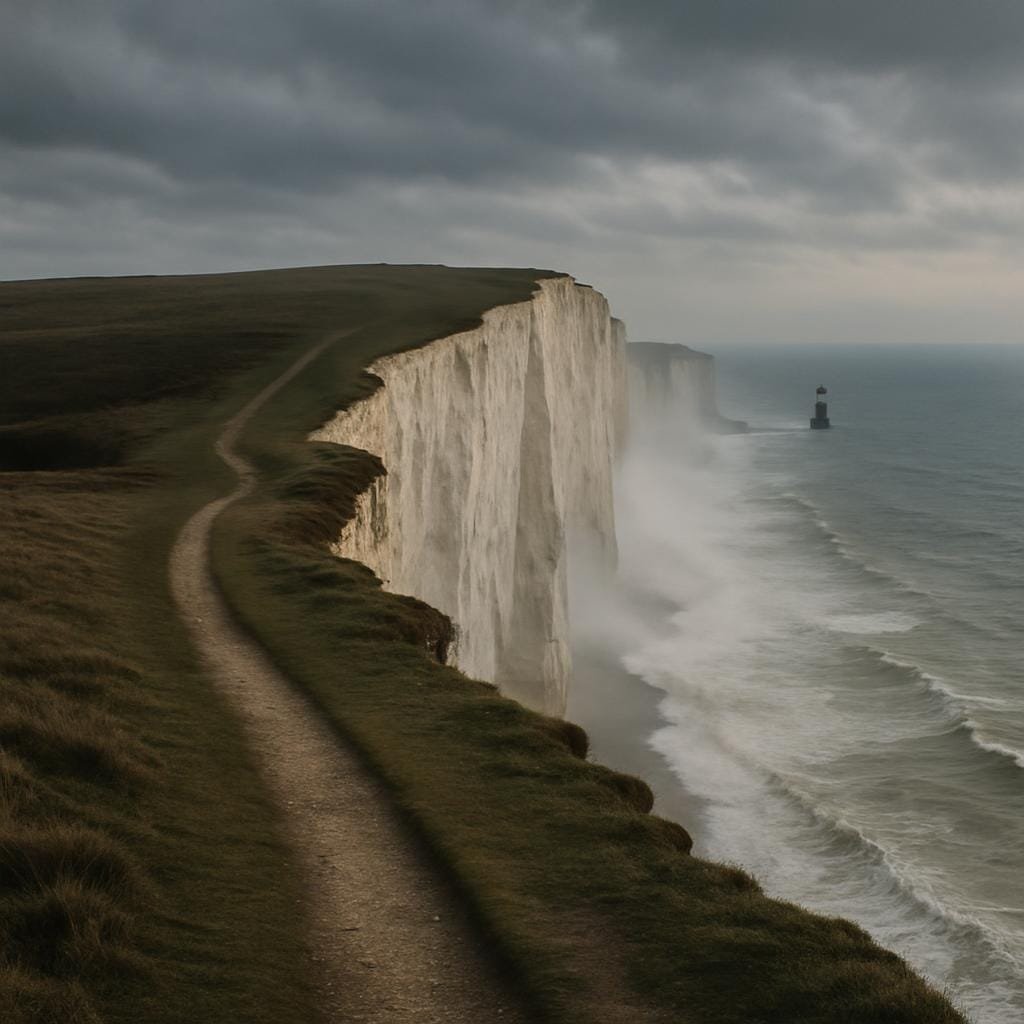
Then you flip the record and get The Ninth Wave, which is stitched together like a BBC drama they never made. There’s the fake radio chatter in Waking the Witch, the helicopter noises in Hello Earth, the icy choir that sounds half church, half late-night shipping forecast. When she sings about being lost at sea, I always picture the North Sea, that horrible steely grey I’ve stared at from Whitley Bay in February, thinking “this could swallow anything”.
This is where I part company with the usual Kate Bush praise. People bang on about her as some floaty art-pop figure, but I think Hounds of Love is basically a horror record about Britain in the 80s. Thatcher, nuclear anxiety, TV screens leaking bad news into living rooms. If Joy Division gave you the city centre version of dread, Kate gave you the rural and suburban one.
Growing up in the 90s, if you were a teenage music nerd in the North East, your education ran through Oasis, Blur, maybe Radiohead if you had a thoughtful mate, and whatever dance stuff you heard on Metro Radio at stupid o’clock. Kate Bush barely got mentioned. She was that woman who sang the weird song your mam liked. I think a lot of us – and I include myself here – completely misread how heavy her influence was.
My arguable position, for you to shout at in the comments: Kate Bush did more for British alt-pop than David Bowie did for the 80s and 90s specifically. That’s not saying she’s “better” full stop. But if you listen to, say, Björk’s Homogenic (1997), Florence + The Machine’s first album, or Bat for Lashes’ Two Suns, the line back to Kate is glaring. Quirky vocals, mythic references, electronics tangled up with folk-ish bits. Bowie gave people permission to be glamorous and slippery with identity. Kate made it normal to sound unhinged and domestic at the same time.
Even the “serious” lads pinched from her. Listen to the drum sound and Fairlight samples on Running Up That Hill from 1985, then put on Massive Attack’s Blue Lines from 1991. Not identical, but you can hear this shared idea of British music as something anxious, ghosted by echo and negative space. She’s there in the DNA of PJ Harvey’s weirder turns too, like on Is This Desire? – songs about haunted houses and small-town suffocation, but done with menace instead of prettiness.
For years, though, “serious music” chat treated her like an eccentric aunt. The charity single with Peter Gabriel (Don’t Give Up, 1986) got mentioned more than the deep cuts. Same old story: blokes in bands rated the blokes in bands. The Kate Bush UK travel brochure was essentially closed for business until the cool kids decided to reopen it.
I was working a late shift in a Newcastle restaurant in 2012 when someone came in raving about seeing her at the Hammersmith Apollo – the Before the Dawn shows. I’d never seen a grown man in his 30s look quite that rattled by a gig. He said there were props, narrative sections, fish-men costumes. I thought he was winding me up until I saw the reviews the next day. People weren’t just nostalgic; they looked spiritually concussed.
By then I’d done my own reappraisal. I’d spent early-2000s uni years at Northumbria pretending I was too into The Strokes to care about someone who’d worked with Peter Gabriel. Then I picked up a battered vinyl of The Dreaming from Beatdown Records on Clayton Street because it was cheap and I liked the cover. That album knocked me flat. Sat alone in a student kitchen, cheap lager in hand, listening to Get Out of My House scream its way to an ending – I could suddenly hear why she’d been sidelined. Too theatrical for the indie press. Too strange for Radio 2 comfort. Too female, too self-directed for a culture that still preferred women as muses or vocalists rather than total masterminds.
Fast forward to 2022 and the whole planet seems to have Kate Bush on a playlist because Stranger Things shoves Running Up That Hill in a key scene. The song rockets up the charts again, decades after it first scraped into the top five. I’m happy for her, genuinely. But I don’t buy the idea that a Netflix show “rescued” her. It’s more that the streaming era finally caught up to what she’d built: a body of work you explore like some eerie, half-familiar house, one weird room at a time.
For all the moors chat, so much of Kate’s “Wuthering Britain” is deeply suburban. Listen to There Goes a Tenner off The Dreaming – a failed bank robbery narrated like a dodgy old film your dad taped off ITV. The accents are hammy, the details oddly specific, like she’s rummaging through a box of discarded British heist movies and making them emotional.
Or take Experiment IV, the 1986 single about a government project making a lethal sound. The video has Dawn French, Hugh Laurie, a military lab, the works. On the radio it sounded like a slightly off-kilter synth-pop tune. Underneath, though, it feels like pure Cold War Britain: state secrecy, clever people in dull offices doing horrible things. That’s as British as the pub.
Even Deeper Understanding, which she reworked on Director’s Cut in 2011, is low-key British sci-fi: lonely person falls in love with their computer. It’s tender and queasy at once, like Black Mirror years before Black Mirror. Instead of shiny Silicon Valley vibes, it feels like late-night broadband in a Barratt home, curtains shut, everyone else in bed.
This is why those “Kate Bush UK travel” articles you see now – go see this cottage, walk that hill – feel a bit off to me. Her best work isn’t about picturesque views. It’s about the feeling of being in Britain with the curtains half-open, your mind wandering somewhere half-remembered and half-imagined.
Because I write mostly about regional food and real-life places now, I’ve started noticing the tiny, throwaway details in Kate’s songs that smell like a particular Britain. The mention of tea, the domestic clutter. On This Woman’s Work, there’s no explicit location, but you can picture a hospital corridor straight off Casualty circa 1990, that NHS green and scuffed lino, the vending machine coffee that tastes like old pennies.
In Cloudbusting, inspired by Wilhelm Reich and his son, there’s this sense of hills, rain, and a slightly naff English science-fiction vibe. Whenever I hear it, I see those old BBC drama locations: fields outside Bristol, a track up to some anonymous research centre. No fancy shots, but the feeling that something profound is happening beside a B-road.
I think this is part of why she speaks so hard to British listeners who grew up with limited budgets and big imaginations. If you grew up in a terrace or a council house, you probably weren’t flying off on holiday every year. Your sense of scale came from TV, books, half-remembered school trips. Kate taps into that second-hand epicness. The moors aren’t somewhere you visit. They’re something you channel through a cheap hi-fi in your bedroom, lying there in the half-dark while your parents argue downstairs.
If you really wanted a “Kate Bush UK travel” plan, honestly, it would be boring. You’d tick off Bexleyheath, some studios, maybe Haworth for the Brontë connection, the Hammersmith Apollo for the ghosts of those 2014 shows. You’d take some moody photos, have an average pub lunch. Then you’d go home and, if you were lucky, put Hounds of Love on and realise you’d had it backwards: the regions in her music are mostly emotional.
Running Up That Hill feels to me like the walk home over the High Level Bridge after a late shift, when you’re negotiating with yourself about every decision you’ve ever made. Wuthering Heights is the bus ride out towards Consett on a windy day, feeling strangely romantic about slag heaps. The Red Shoes is the sticky-floored club in Sunderland in 2003 where you danced badly and thought you were the main character in a film only you could see.
So if there’s a road trip through “Kate Bush’s Wuthering Britain”, it’s the route through the albums as your own life ages along with them. Teenage me heard Wuthering Heights as shrill drama. Twenty-something me clung to Running Up That Hill as emotional gym equipment. Now, in my late thirties, I hear Breathing – about nuclear fallout, from 1980 – and it feels uncomfortably close to current headlines again. Same country, same sky, slightly different fears blasted through similar synths.
I’d argue that’s the mark of her real influence: she’s given us a shared internal Britain. A Britain of bad weather and teletext, of eerie quiet streets and overactive minds. You don’t need a coach tour. You just need decent speakers and enough patience to sit with the strange bits, the tracks people skip. Put on The Dreaming late at night and tell me it doesn’t feel like driving through some unlit industrial estate outside Middlesbrough, headlights bouncing off shuttered warehouses, your heart thumping because you took a wrong turn.
In a music scene that still hands too much credit to the usual guitar-bands-plus-mythology suspects, Kate’s map of Britain is the one that sticks with me: messy, slightly haunted, utterly specific. It’s the only kind of map I trust these days – the sort you can trace while you’re waiting for your train at York with a lukewarm coffee, hearing that familiar drum sound in your head, thinking: I’ve never been to her house, but I’ve definitely been where she’s singing from.