
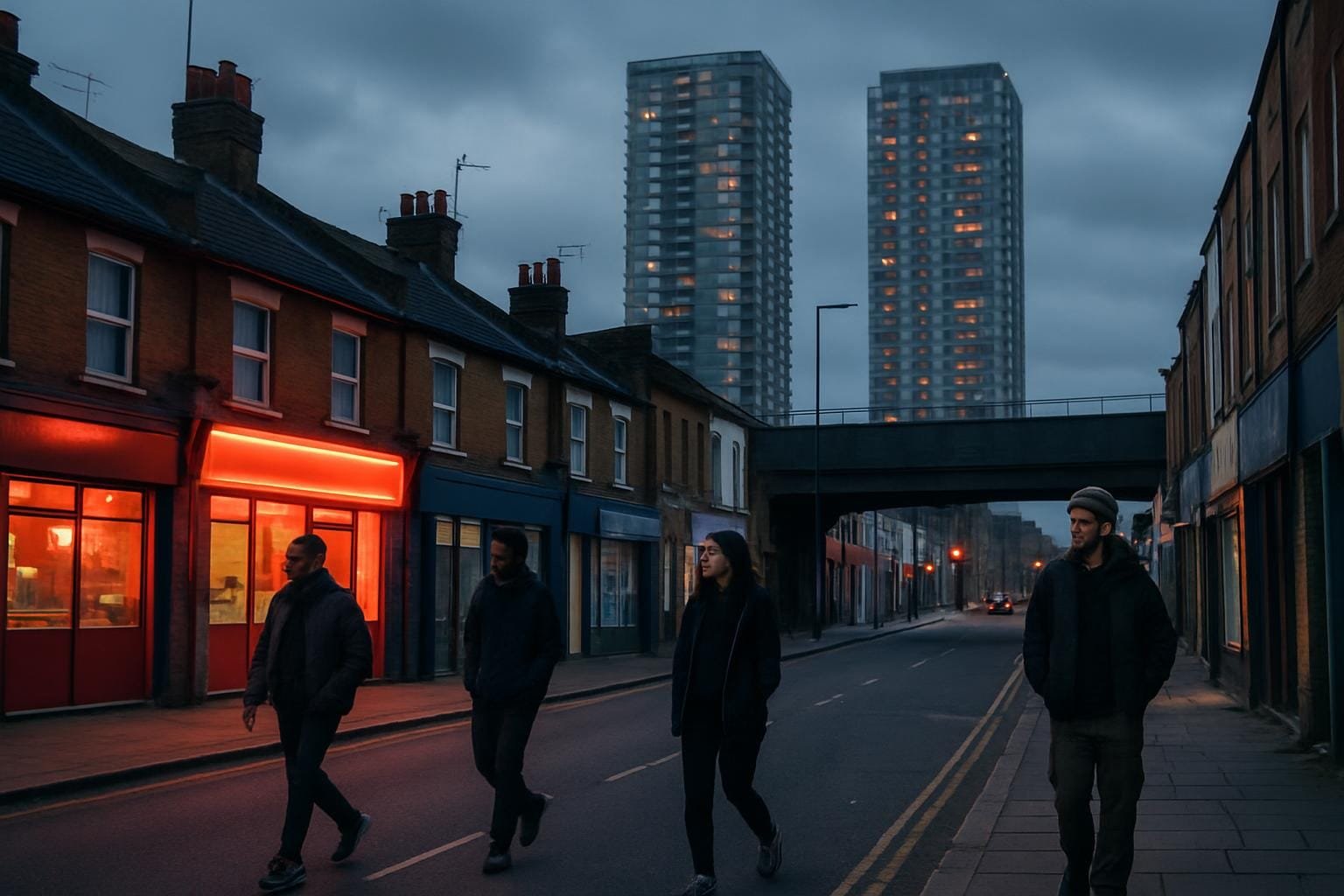
I didn’t set out to invent an “East London grime walking tour” for myself, but that’s basically what happened the first few times I wandered around Bow and Stratford with earphones in, trying to line up street names with half-remembered pirate radio sets. I’m from Newcastle, so my teenage years were more about dodgy happy hardcore CDs from Shields market and badly recorded copies of The Streets’ Original Pirate Material. Grime felt far away at first – a London accent thing, a channel U thing – until I actually walked the places I’d been hearing about for years.
This isn’t a travel guide. If anything it’s a love letter to some very specific pavements and stairwells, the kind you only really notice when you’re killing time between a chicken shop and a night bus, with Wiley in your headphones and someone nicking your lighter.
I was about sixteen the first time I heard Dizzee Rascal’s “I Luv U” properly – not as background noise on MTV Base, but actually listened. A mate’s older brother had this CDR with a load of 12″s ripped onto it: “I Luv U”, More Fire Crew’s “Oi!”, So Solid’s “21 Seconds”, all in one go. We played it through some wheezy Argos speakers in his mam’s kitchen in Heaton.
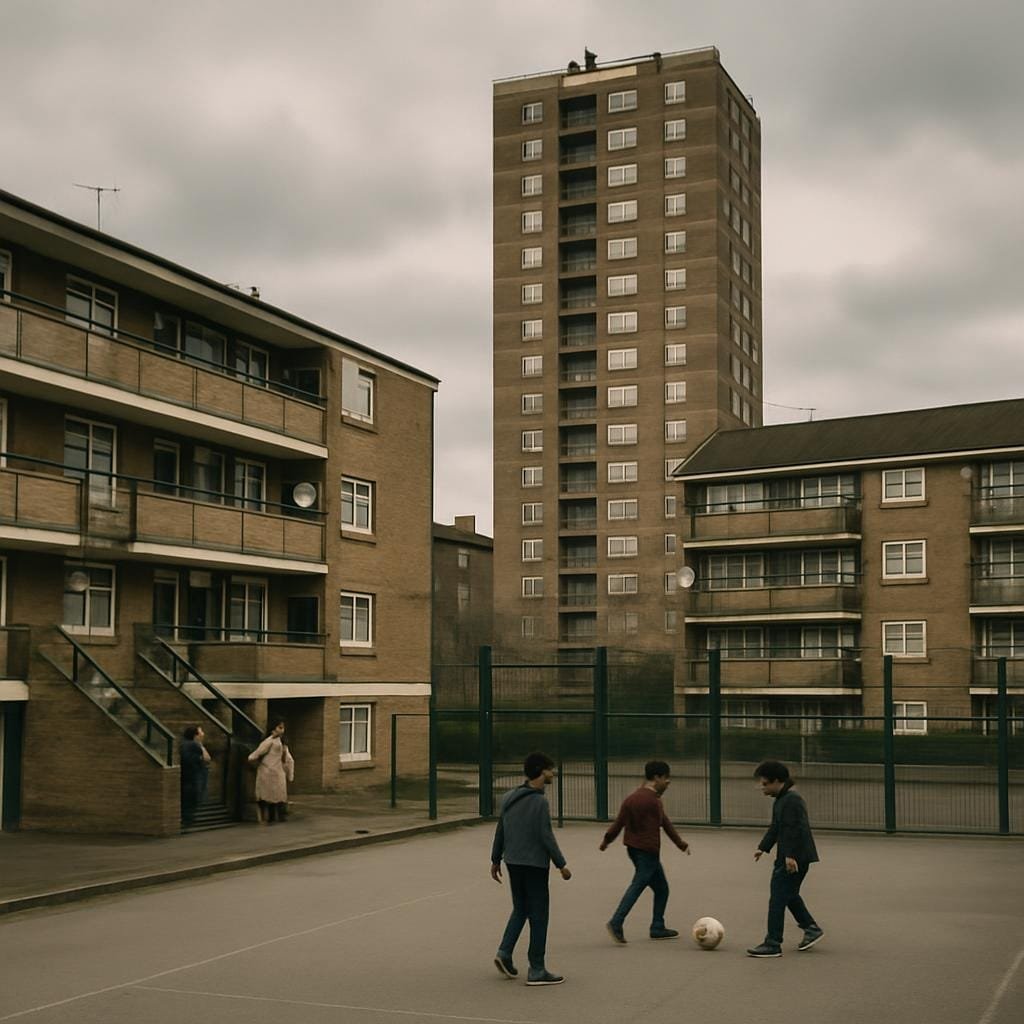
What hit me wasn’t just Dizzee’s voice, all sharp corners and breathless bragging, it was the space around it. That drum pattern felt like walking through an underpass at night – everything echoing and a bit too fast. It sounded nothing like the indie landfill Radio 1 kept chucking at us back then. If the Libertines were beer and fags in a Camden pub, “I Luv U” was cold metal railings and a bus that’s twenty minutes late.
Years later, when I finally ended up near Bow church, it clicked. Those hard stops in “I Luv U”, the way the beat keeps threatening to fall apart then snaps back into line – it felt like the way traffic moves around that junction. Jumpy, slightly hostile, then suddenly calm.
Everyone bangs on about Bow being “where it all started”, which is only half true and a bit lazy. If you’re doing your own East London grime walking tour in your head, Bow’s still the anchor, though. You can’t move for references: E3 on Lord of the Mics clashes, Wiley going on about “Bow E3” like it’s a trademark, Tinchy Stryder popping up from nearby Poplar.
But what actually matters is that Bow had the right mix of boredom and connection. You had the Blackwall Tunnel and the A12 roaring past, the Docklands light railway like a plastic toy on stilts, and a load of estates with thin walls and better reception than they should have had. That cocktail is perfect for pirate radio.
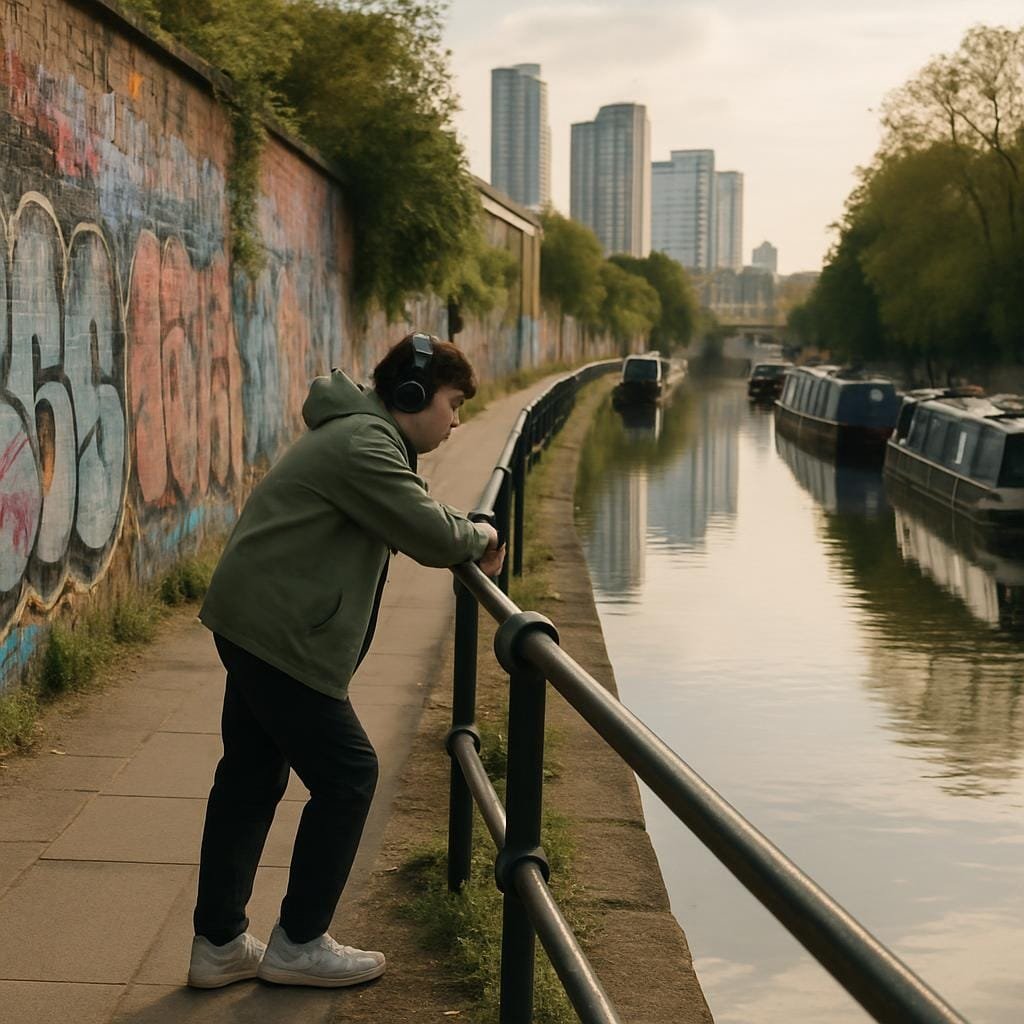
Rinse FM, which started up in the mid-90s and later went legit, used to broadcast from all over East, including around Bow and Forest Gate. Those little flats stuffed with decks, tangled wires and ringers lying flat on the floor to dodge Ofcom raids did more for grime than most of the big name producers people praise now. I’d argue pirate radio did more for British music than the BRIT Awards ever have, and grime is Exhibit A. Without those sets – Dizzee clashing Crazy Titch on Deja Vu in 2003, or early Skepta sets on Heat FM – half the scene would have vanished into bedroom hard drives and never left.
People always say “Boy in da Corner” was the game-changing bit, and yes, it’s a brilliant record, but it’s a snapshot of what had already been hammered out live on-air. The real work happened in the dead air between reloads, when the MCs were trying to think of the next eight bars while the DJ spun back the riddim.
I remember the first time I crossed from Bow to Bromley-by-Bow with Ruff Sqwad in my ears. I’d put “Together” on – that mournful, slightly out-of-tune synth line, Tinchy and Shifty sounding half about love, half about loyalty. That track was recorded when most of them were still teenagers hanging round East, no A&R in sight.
Ruff Sqwad don’t get half the credit they should. Everyone quotes Wiley’s Eskimo or Dizzee’s Boy in da Corner when they talk about early grime production, but the Ruff Sqwad Guns N Roses mixtapes were arguably just as inventive. “Functions on the Low” feels like walking past cracked paving stones with a hangover: sharp, repetitive, somehow comforting. Those beats were made on FruityLoops in little rooms off streets that still don’t look like somewhere “important” has happened. That, to me, is the point.
When you have that in your ears and you’re actually on Devons Road or around the back of Bow Road station, suddenly the cheap synth sounds don’t feel cheap – they feel accurate. Grime always sounded like low streetlights to me. Not darkness, exactly, just permanent half-light.
Stratford these days is all chain restaurants and security guards telling teenagers to move along. But when I first started coming down to London regularly around 2007, it still had bits of the old shape. The walk from the old station exit towards Maryland was full of small shops and dodgy-looking pubs, and you could feel it in the grime that came out of that era.
By then, the sound had started to polish itself. Wiley’s “Wearing My Rolex” (2008) was playing in Topshop changing rooms – I heard it in the one on Northumberland Street in Newcastle, which felt like some kind of glitch in the matrix. But at the same time, you had people like Devlin from Dagenham and Ghetts from Plaistow spitting on Lord of the Mics DVDs filmed in cramped basements and stairwells that could easily have been under any given block round Stratford.
I remember watching Lord of the Mics III round a mate’s flat in Jesmond on a cheap Tesco DVD player, Ghetts pacing about and biting off every consonant, and thinking: this feels nothing like the shiny version of East London the Olympics advert was selling. The official line was regeneration and shopping centres; the unofficial soundtrack was Ghetts on “Artillery” sounding like he’d swallowed three energy drinks and a philosophy book.
One of the things that makes an East London grime walking tour in your head so compelling is how ordinary the buildings still look. There’s no “heritage plaque: Dizzee wrote ‘Fix Up, Look Sharp’ here”. The only markers are in lyrics and radio IDs.
The pirate radio aerials used to be stuck on tower block roofs. Rinse, Deja Vu, Heat, Flava – they all had runs on high-rises. There’s a photo floating round of the old Rinse aerial on a block in Clapton, but it could easily have been any one of the estates that ring Bow and Stratford. Those towers were like uncredited session musicians: no appearance fee, no interview quotes, just quietly amplifying everything.
There’s a particular walk I did once – Bromley-by-Bow down towards Canning Town, cutting through bits of Star Lane – with early Kano in my ear. I’d stuck on “Ps and Qs” and then “Ghetto Kyote”. Kano has always sounded slightly richer and more measured than a lot of his peers, but those beats still had that pirate radio rawness. When the bassline of “Ps and Qs” hits, slightly off-centre and a bit too loud, it feels like you’re walking next to a dual carriageway. Clean vocals, dirty air.
People talk about “representing the ends” as if it’s mostly about lyrics, but grime is geographical in its production too. Those hollow square-wave basses, the square-edged snares – they echo off concrete better than off brick. They were designed, consciously or not, for stairwells and car parks. That matters more than which label released what.
Here’s the bit some people will disagree with: Wiley gets talked about more than he should, and Riko Dan nowhere near enough.
I like Wiley. I’ve danced to “Eskimo”, shouted along to “Pies” in a grotty Newcastle club around 2005, and stuck Treddin’ on Thin Ice on when I was meant to be revising for A-levels. But he’s become a shorthand for the whole scene, and that flattens things.
Riko, on the other hand, was the voice that actually sounded like East London’s stairwells. Listen to him on early Roll Deep sets – the “Riko, Riko, Riko, Riko” chant, the ragga influence woven into grime flows, the way he could sit perfectly over a beat as manic as “Terrible” or as weirdly sparse as “Mystic Forest”. Even later, on tunes like “Voices” with DMZ-adjacent producers, you hear that same concrete echo. If you walk from Mile End to Stepney Green and stick Riko in your headphones, it matches the rhythm of traffic and the slightly skippy way people move round each other on narrow pavements.
Wiley built some of the blueprint; Riko made it sound inhabited.
Because I’m incapable of separating music from what I was eating at the time, my personal East London grime walking tour always has a mental chicken shop attached to it. Grime is perfect food queue music. Short tracks, lots of reloads, someone always talking over the end of someone else’s line – it’s the sound of people half-watching the door and half-waiting for the thing they actually came for.
One of the clearest memories I’ve got is standing in a chicken shop off Roman Road around 2010 with JME’s “96 F**kries” in my headphones. It had come out a couple of years earlier on his Famous? album, and I’d rinsed it on the Metro between Newcastle and Sunderland, but hearing it in London made it click again. JME’s whole persona – slightly geeky, very organised, more about principles than postcodes – felt like a new stage of grime growing up. This was the same East London that had birthed “Pulse X”, but now there were MCs talking about staying independent, running their own labels, blocking out industry nonsense.
That DIY approach was there from the start, but the difference between the early 2000s CD-R mixtapes and JME’s Boy Better Know T-shirts turning up in every sixth-form common room by 2011 is huge. Those were two sides of the same A13. One was borrowing auntie’s hi-fi to dub tapes, the other was shipping merch across the country from a bedroom stockroom somewhere off a North London bus route, but the attitude carried through.
The distance between Bow E3 and a bedroom in the North East got shorter every year. I remember staying up late to catch Logan Sama’s grime show on Kiss FM online around 2006–07 – Kano dropping a freestyle over some insane Skepta instrumental, D Double E turning every reload into a comedy routine. That show was like a weekly map update: who’d moved crew, who had a new riddim, which pirate names had gone quiet because Ofcom had finally caught up.
By the time “German Whip” by Meridian Dan blew up in 2014, with Big H and JME turning up on Later… with Jools Holland, the physical distance barely mattered. You could argue that “German Whip” is the real bridge between the original grime moment and the Skepta/Drake era a couple of years later. It sounded like a rave in a warehouse off the North Circular, but kids in Leeds, Glasgow and, yes, Newcastle were chanting along. Grime’s postcodes were suddenly national.
Still, whenever people talk about the “grime revival” around 2015 – Skepta’s Konnichiwa, Stormzy’s “Shut Up” on YouTube, JME’s Integrity> – I think back to walking through West Ham with an early copy of Kano’s Made in the Manor on my phone. “T-shirt Weather in the Manor” in particular – a slightly nostalgic, slightly bruised tune about growing up round those streets – felt like someone drawing lines on a map between the pirate tower blocks and the gentrified coffee shops. Grime had gone from stairwells to Mercury nominations, but the tempo of the pavements hadn’t really changed.
If you’re reading this hoping for a list of must-see stops for your East London grime walking tour, you’ll be disappointed. The whole appeal is that most of the locations are unremarkable if you’re not listening closely. That’s the joy.
All I’ll say is this:
You don’t have to physically be there, of course. Most of my own East London grime walking tour was done from the North East, stomping up Chillingham Road with D Double E doing “oooiii” ad-libs, or on late buses back from town with Skepta’s “Too Many Man” rattling through Poundland headphones. But if you do end up down here, don’t waste your time hunting for plaques. Look at the gaps between things: the underpasses, the car parks, the way everyone speeds up when they get near a station.
That’s where grime lives – in the in-between bits. Not in the official venues or council slogans, but in the cracked concrete echo next to a bus stop, in the tiny delay on a pirate radio feed cutting across a block. The music came out of people trying to make those spaces bearable, then exciting, then famous, and, finally, worth arguing about.
And if you want one final, mildly contentious opinion to take away: I think the best way to understand grime has always been to walk to it, not rave to it. Raves are the payoff. Walking is the context. Put “I Luv U” on, pick a direction from Bow Church, and go. The beat will tell you when to cross.