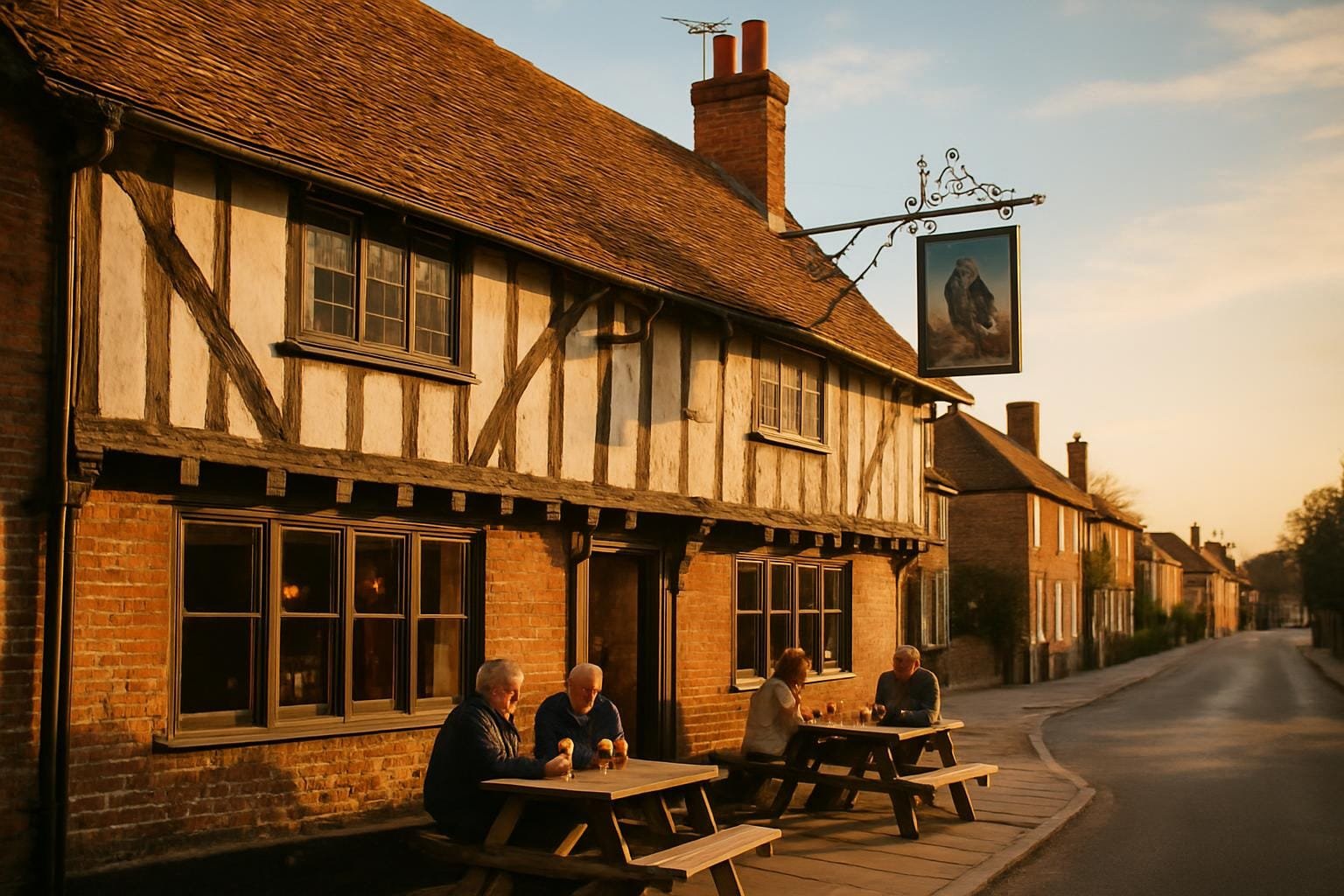
There’s a particular sort of afternoon that only really makes sense in an old British pub: low beams browned with decades of smoke, a handpull that squeaks a bit, and a regular in the corner who looks like he came with the building. That’s the mood behind Britain historic ale trails for me – not ticking pints off a list, but following the old routes between breweries and market towns. And, increasingly, doing it all without a car.
Partly this is environmental conscience. Partly it’s the fact I grew up in Shropshire with terrible bus timetables, so when you find somewhere that still has a half-decent train or bus and a proper pub at the end of it, it feels like cheating the system.
This isn’t a guide to every pub on every route; it’s a handful of places where you can follow Britain historic ale trails by train, bus and the occasional muddy footpath, and still get home in one piece.
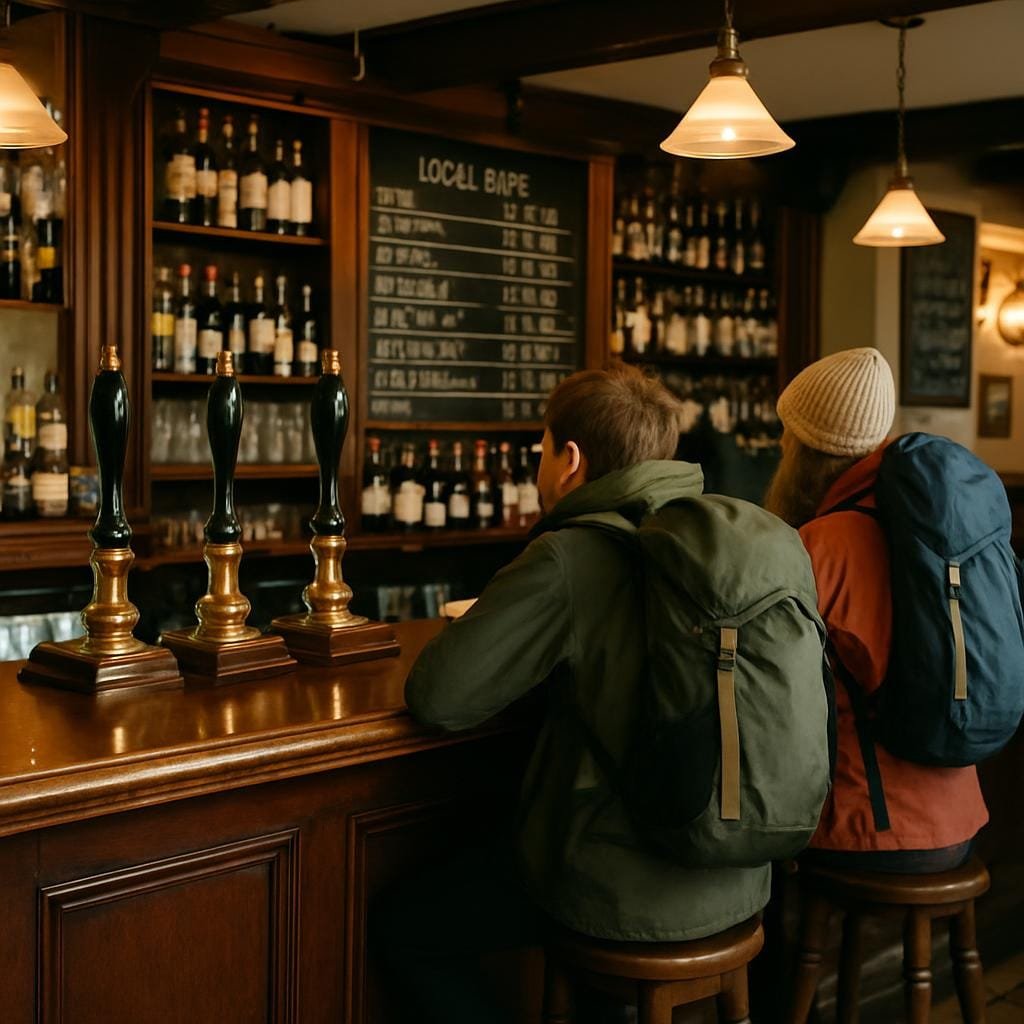
The Settle–Carlisle line has become a bit of a cliché in ale circles, but it earns it. Built in the 19th century to haul coal and people over the Pennines, it now does a solid line in walkers, train spotters and people in waterproofs comparing notes about stout.
I started from Leeds, where you can get an advance return to Settle from roughly £12–£18 if you’re organised. The first pub stop I always make is actually at Shipley, one change down the line, where the BeerHouse sits about two minutes’ walk from the station. It’s a small place, all bare boards and chalkboards, but they take cask seriously – if you like Yorkshire breweries, you’ll lose an easy hour here. They usually have something from Saltaire Brewery on, and if they’ve got the Blonde, get a half; you’ve still got a full day ahead.
Onwards to Settle itself, and here the ale trail proper starts. Step out of the station, and instead of racing off into the hills like everybody in technical trousers, turn left downhill into town. Two places matter: the Talbot Arms and the Settle Brewing Co. Tap Room. The Talbot is where I had my first pint of Settle’s Ribblehead Bitter – dark wooden bar, stone fireplace, and on my last visit a labrador asleep so deeply I had to check it was breathing. A pint’s around £4.20–£4.80. The brewery tap, towards the station, is more industrial – pallets, stainless steel, fairy lights. The cask is fresh enough to make you slightly cross about the stuff you’ve accepted elsewhere.
Further up the line, Appleby has the sort of high street that feels like it should still have a horse trough. Five minutes from the station is the Royal Oak, another low-beamed spot, with Thwaites and usually a local guest on. The last time I looked in, a chalkboard by the bar listed the bus times back to Penrith, written in faintly wobbly handwriting that suggested it was updated after evening service. That’s the other nice thing about these routes: pubs still act as unofficial information centres.
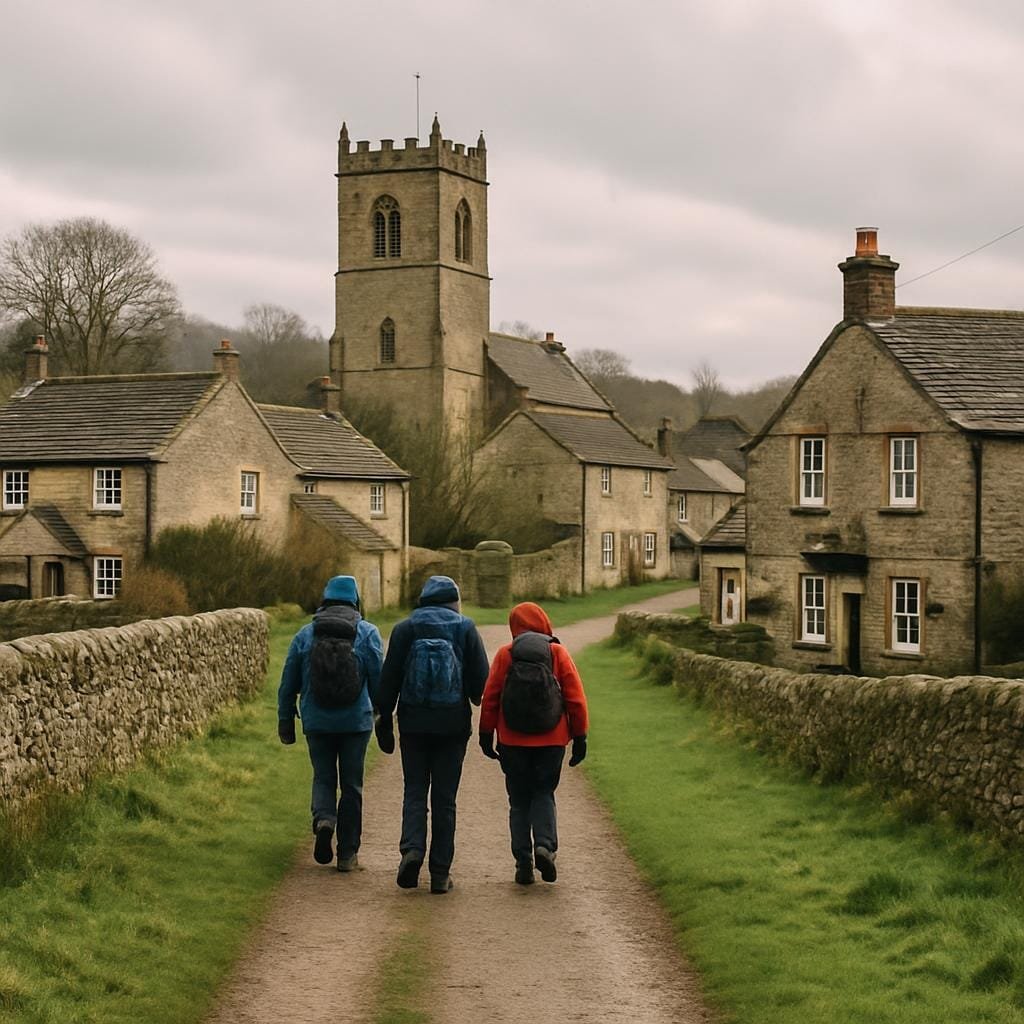
At the northern end, you roll into Carlisle, where the station pub is unforgivably dull, but if you walk five minutes down Botchergate, The Sportsman feels like somewhere the coaches used to stop. There’s tiled flooring, framed football shirts, and usually a couple of local casks from Lakes Brew Co or Carlisle Brewing Co. It’s not remotely fancy, but the pint is well looked after and the bar staff actually notice when your glass is empty.
One practical bit that nobody mentions on those glossy Britain historic ale trails maps: check the last train times before you start, and set an alarm on your phone. I’ve twice ended up nursing an unnecessary final pint out of sheer paranoia about missing the connection home.
Stratford-upon-Avon sounds like a trap for coach tours and people in novelty ruffs. And yes, the main streets can feel like a theme park on a sunny Saturday. But it’s also one of the easiest places to do a car-free historic ale wander, linking old breweries, riverside walks and theatre bars that are nicer than they need to be.
I first came here for a matinee at the RSC, fully expecting weak lager and a packet of crisps at the interval. Instead, the Royal Shakespeare Theatre has a proper bar with local beers – usually something from Purity or Wye Valley – and staff who don’t flinch if you ask what’s on cask. Drinks are London prices (a pint can graze the £6 mark), but you’re drinking it overlooking the Avon, and the view of people trying to control hired rowing boats is worth at least 50p of that.
For the old stuff, walk five minutes from the station to the Stratford Alehouse, a micropub that runs on an admirably simple formula: rotating casks, pies on the bar, and a blackboard that tells you exactly what’s in the cellar. No music, no fruit machines, just conversation. Cash is still very welcome; worth having a tenner in your pocket.
The more obvious stop is the Garrick Inn on High Street, arguably the oldest pub in town. It’s half-timbered to the point you expect it to fall over, ceilings low enough to test your posture, and a slightly haunted feel if you catch it between lunch and evening crowds. It’s now run by Greene King, so the beer range reflects that, but usually at least one guest pump holds something more interesting. Food is solid, in the “big pie, big chips, no nonsense” category, and mains are around £14–£18.
When the town gets too much, there’s a simple fix. Follow the canal from the basin, past the swan statue and the ice cream vans, and walk for half an hour towards Wilmcote. You leave the gift shops behind quite quickly. A mile or so out, when the towpath quietens, sit on a bench, watch narrowboats fail to moor neatly, and drink in the feeling that for a lot of working people in the past, this towpath was effectively their ale trail – pub to pub, lock to lock.
I’ll be honest – Stratford’s historic pub “trail” is more compact than some websites make out. But if you fold the theatre and the canals into it, and treat it as a lazy car-free day with several good pints, it works.
Shrewsbury is one of those towns that, from the train window, looks like it might still be arguing about the Corn Laws. Half-timbered fronts, tight streets, and that ring of the Severn curling around it all. Growing up in Shropshire, this was one of the first places I realised you could have a perfectly decent ale day out without anyone needing to draw straws for designated driver.
Step out of Shrewsbury station and instead of heading straight down the hill, pop into the Albion Vaults opposite the car park. It’s unpretentious: carpet that’s seen some things, regulars at the bar, and usually a couple of casks including something from Salopian Brewery. Pints here still sit in the £3.80–£4.40 bracket, which always feels like getting away with something when you’re used to city prices.
From there, walk into town and find the Shrewsbury Market Hall. If you like your ale with a side of local life, this place is catnip. On the gallery level, GlouGlou does natural wines but also usually has a local keg line on, and you can wander the stalls with a glass, pretending you’re assessing the quality of the tomatoes rather than thinking about the next drink. Downstairs, you’ll often find bottles and cans from Salopian and Hobsons on the deli counters; prices roughly £3–£4 to take away.
The star of Shrewsbury’s Britain historic ale trails, though, is the Wheatsheaf on Frankwell and the Old Post Office on Milk Street. The Wheatsheaf is a Grade II listed tangle of beams, with a beer garden that feels like someone’s back yard. The Old Post Office, down an alley, has a central bar, nods to Charles Darwin (he went to school here), and a slightly echoey main room that fills quickly on match days. I once watched a dog here try to steal a pork pie from a low table and fail, which I still think about at odd moments. Expect three or four cask lines, including at least one Salopian in each.
This is where my background in logistics occasionally intrudes in a useful way: if you time your day around the hourly trains and the bus back from Hadnall, you can turn Shrewsbury into your own miniature Britain historic ale trails circuit without ever seeing your car keys.
Jumping to the coast for a minute. Falmouth, on the south coast of Cornwall, does an accidental ale trail that’s almost too convenient. I first arrived here off a long GWR train, sunburnt from a botched walk on Dartmoor, and slightly resentful. That mood didn’t last.
From Falmouth Town station, it’s a gentle walk down to the harbour, with the salty tang of the docks drifting up the hill. First hit: the Hand Bar, which looks tiny from the street but stretches back. Inside it’s all tiles, reclaimed wood and a long line of handpulls. They specialise in interesting cask and keg – Verdant, St Austell specials, guest breweries from across the UK. Halves are £3–£4, so pace yourself. They do a “mystery third” board that’s a slippery slope if you’re as indecisive as I am.
Around the corner on Quay Street is the Front, down a set of steps under an old warehouse. This is about as archetypal as Britain historic ale trails get: low ceiling, exposed stone, proper sticky carpet in places, and a long row of well-kept casks. On busy evenings the noise level is such that your conversation has to compete with the clinking of glasses and the thud of barrels being shifted. Pints tend to sit around the £4.50–£5 mark, with plenty of Cornish options like Harbour and Skinners (RIP, but you still see the odd barrel working through).
Third point of the triangle: the Beerwolf Books – part bookshop, part pub, accessed through an archway off the High Street. You walk in and immediately have to choose: left for shelves of books, right for pints. They do cask and keg, but the joy is finding some obscure local ale, ordering a pint, then wandering the book stacks while it settles. They don’t chase you; they quietly trust you not to drip over the first editions.
One hiccup: Falmouth can be heavy on the craft keg and lighter on traditional handpulls than some traditionalists like. If your heart is set on a foamy pint drawn through a tight sparkler, you might quietly grumble. I did, before remembering that a well-poured West Coast IPA is perfectly capable of improving my evening.
After years of experimenting — sometimes successfully, sometimes in ways that ended with me stranded in a village bus shelter – a few lessons have stuck:
All of this feeds into why I like Britain historic ale trails more when they’re designed around trains and buses. The pacing is built in. A slow walk back to the station, a juddering ride through town, time for a bottle of water and a sandwich between rounds – it all keeps the day from turning into an endurance test.
There’s the obvious safety angle, yes. Nobody wants to sit over a lime and soda while their mates coo over tasting notes. But there’s something else too. When you follow these old routes by rail and on foot you end up noticing the scaffolding on a church tower, or the shop that’s become a vape emporium but still has “DRAPERS” faintly visible in the stone. You stand on platforms you’d otherwise blast through at 70mph. You realise how much of Britain’s drinking culture has always been tied to people moving – trains, canals, drovers’ roads – rather than cars.
And you get those small, throwaway moments that wouldn’t happen if you were worrying about the A-roads ahead: the conductor on the Truro–Falmouth train recommending a particular pale ale “because it doesn’t give me the burps”; the old boy in Shrewsbury market insisting I try a bottle of something from Three Tuns “before they change it again”; the quiet satisfaction of making a tight connection between pub closing time and the last train, feeling like you’ve pulled off a heist.
You don’t have to do the whole length of the Settle–Carlisle, or turn Falmouth into a box-ticking exercise, to feel like you’re part of Britain historic ale trails. Pick a town with a decent station, a couple of proper pubs, and a market or canal to stretch your legs around. Plan loosely, accept the odd missed bus, and let the taps and timber beams do the rest.