
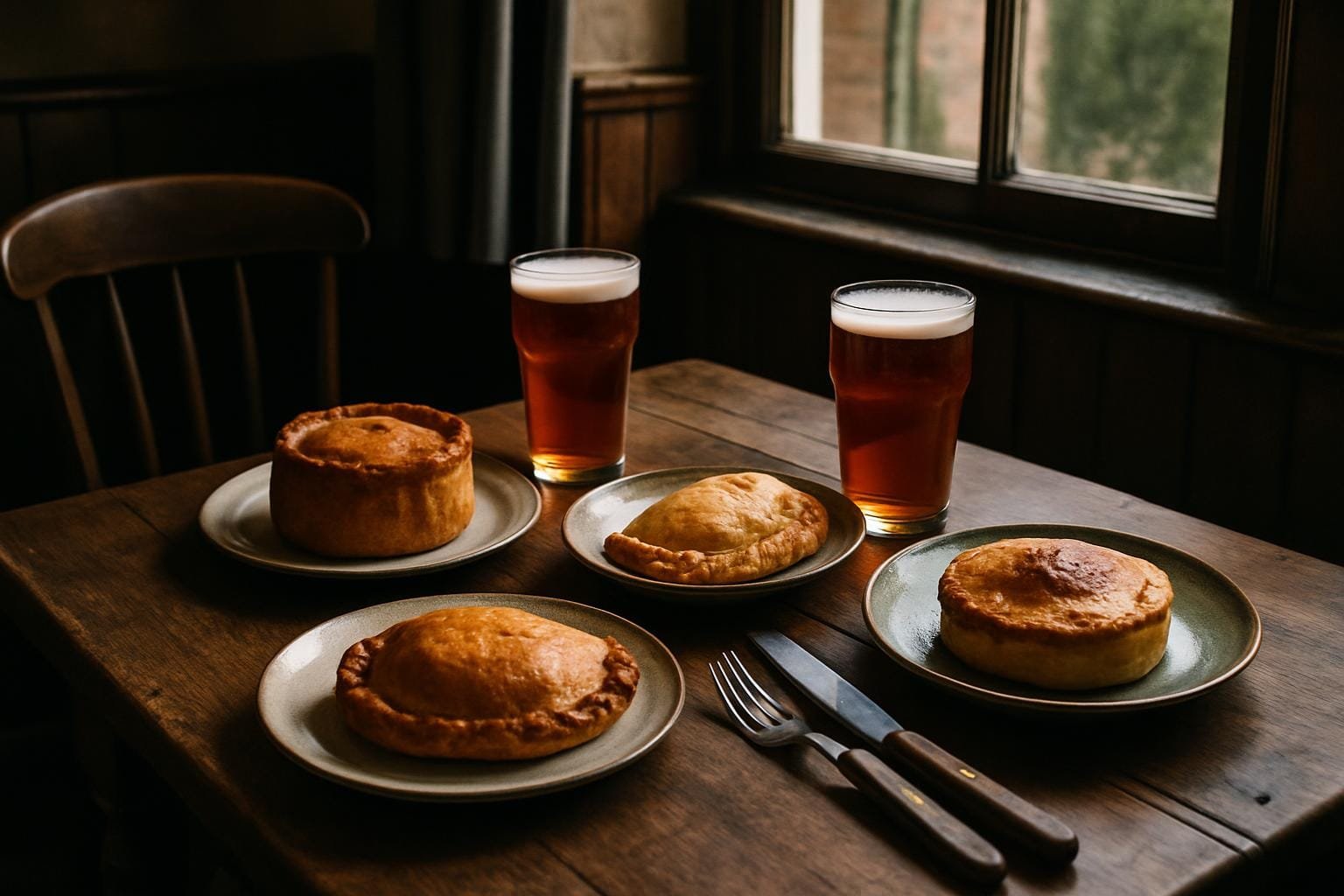
Ask ten people about English regional pies and you’ll get eleven opinions, most of them angry. I grew up on the Shropshire–Staffordshire border thinking “pie” meant steak & kidney from a foil tray, microwaved to the temperature of fresh lava. It took years of driving lorries and hire vans around the country to realise every county has its own idea of what should be wrapped in pastry, and how aggressively it should crumble into your lap.
This isn’t a tidy tour of every pie in England; it’s more like the crusty trail I’ve actually eaten my way along. A few surprises, a couple of disappointments, and some very strong views about gravy.
Melton Mowbray is where pork pies get legal. The proper Melton Mowbray Pork Pie has Protected Geographical Indication status, which roughly translates as: “we’re not messing about”. No moulds, no jelly from a packet, and the meat must be uncured pork from pigs reared in specific counties. It’s one of the flag-bearers of English regional pies, whether you like PGI bureaucracy or not.
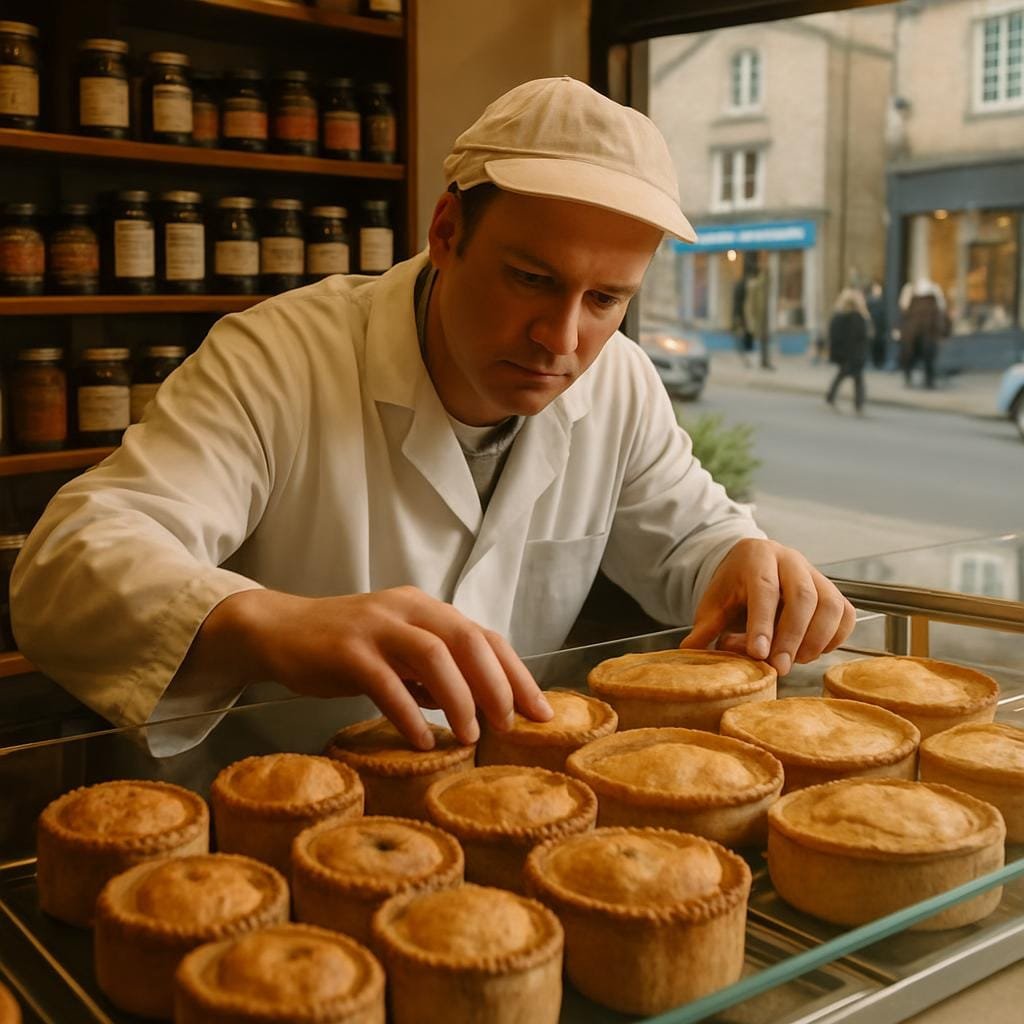
My first visit was on a grim, grey Saturday a few years back, when the town was mostly people queuing for pies and teenagers loitering by The Regal cinema. I headed straight for Ye Olde Pork Pie Shoppe, home of Dickinson & Morris. They sell “tasting” pies, which is a dangerous word when applied to hot water crust. The classic one is dense, peppery and unapologetically porky, with proper wobbly jelly that either delights you or triggers childhood buffet flashbacks.
Across the road, The Castle pub will serve you a pork pie with Stilton and a pint. That’s lunch sorted, even if you had other plans. The pub hasn’t been overdesigned within an inch of its life either – patterned carpet, locals arguing about the football, and a chalkboard that looks like it’s been wiped with beer for twenty years.
Worth knowing before you go – Melton Mowbray
Head north-west and the rules change. In Wigan, pies are still serious business, but they’re also fuel. There’s the famous “pie barm” – a meat pie inside a buttered bread roll – which sounds like a joke until you see someone demolish one outside the DW Stadium like it’s perfectly ordinary behaviour.
I had my first pie barm from Galloways Bakers on Market Place. Steak pie, white barm, enough carbs to power a small factory. The woman behind the counter asked if I was “sure about that, love” in the same tone my GP uses when I mention cheese.
The town centre has that slightly faded Northern high street feel, but if you swing by Grand Arcade, there’s a big mural of a pie with “Wigan – Pie Capital of the World” on the wall near the car park entrance. Not subtle, but honest. On match days, especially when Wigan Warriors are at home, you’ll see people queuing at pie shops in club shirts, discussing team selection between mouthfuls.
Worth knowing before you go – Wigan
This bit’s personal. Growing up in Shropshire, we mainly inherited our “special” pies from nearby Birmingham and the Black Country. The one that genuinely changed my match-day eating was the chicken balti pie – the bright orange, slightly mad relative in the English regional pies family.
The modern version is usually linked to Pukka, but the spiritual home, if you ask any Albion fan, is The Hawthorns. The first time I had one there I was too distracted by the shall we say, industrial, state of the toilets to notice the pastry. Second time, midweek game, I paid attention: flaky top, shortcrust sides and a thick, warming balti filling that somehow works better with pastry than with rice.
Back in Shropshire, my go-to for something similar is Mario’s Pie & Mash in Telford town centre – slightly chaotic, slightly brilliant, and about the only place where you can have pie, mash and gravy at 10:30 in the morning without being judged. Their chicken curry pie nods to the balti idea and has rescued more than one hungover Saturday for me.
Worth knowing before you go – Shropshire & Black Country pies
People argue about whether a pasty counts as a pie. I’m not starting that fight. What I will say is that my first proper Cornish pasty from Pengenna Pasties in Tintagel made every service-station bake taste like damp cardboard. But Cornwall has its own pie traditions too, especially fish pies and heavy, rib-sticking stuff baked to feed miners and fishermen.
In Penzance, I wandered into the Penlee House Gallery & Museum one wet afternoon and ended up in their Café Morrell, where the fish pie came bubbling in its own dish, topped with mash that actually tasted of potato rather than anonymous starch. Underneath: smoked haddock, prawns, salmon, and enough cream to worry your cardiologist. Not technically a “portable” pie, but I’m counting it.
If you want something hand-held, head to Rowe’s Cornish Bakery in Falmouth, where they often have steak and ale pies in addition to the usual pasty suspects. Eat one on the benches above Custom House Quay; you’ll share the experience with gulls the size of toddlers and students who look permanently damp from sea spray.
Worth knowing before you go – Cornish pies
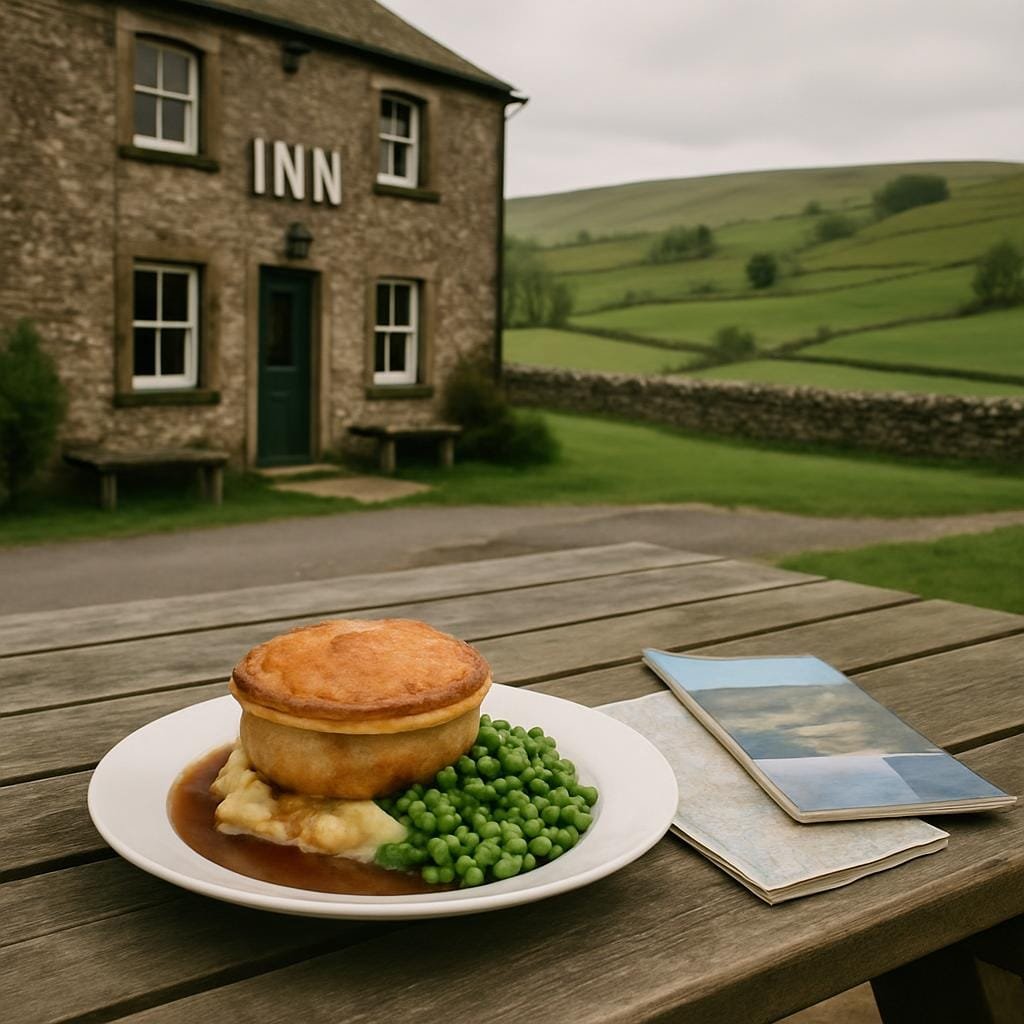
Yorkshire does not do dainty. Pies here are hefty, often square, and served with so much gravy the plate looks like a shallow pond. The first time I went to Shambles Market in York, I was meant to be buying vegetables. I left with a steak and ale pie from The York Pie Company and no greens whatsoever.
Their pies have that proper hand-raised look; the steak & ale has big chunks of meat rather than that suspicious mince-soup texture you get in cheaper versions. Eat it on one of the metal benches by the market while tourists photograph the overhanging timber buildings. You’ll inevitably end up with gravy down your sleeve. Accept it.
For a sit-down version, I’m very fond of the pies at Whitelock’s Ale House in Leeds – one of those timber-and-tile pubs hidden down an alley off Briggate that makes you forget the city outside for an hour. Their steak pie comes under a puff pastry lid in a proper dish, with mash and veg that hasn’t been boiled into oblivion.
Worth knowing before you go – Yorkshire pies
The North East’s contribution to English regional pies is wonderfully plainspoken. Mince pies here don’t mean Christmas; they mean everyday meat pies filled with beef mince and onion, sometimes potatoes, eaten year-round. Have one in a stottie (a thick, soft bread) and you’ll understand why people from Newcastle never seem particularly bothered about the wind.
In South Shields, I once queued outside Greggs on King Street purely to see how many people were ordering pies before 9am. More than you’d think. If you want something more local, pop into Davison’s in Whitley Bay – they’re best known for ice cream, but they also do hearty savouries, including mince pies that taste like the sort of thing a sensible aunty would feed you after a freezing dog walk.
Then there’s the legendary pease pudding stottie combination you’ll find in some bakers around Newcastle and Gateshead; not a pie, but it often turns up alongside them. I mention it because I once tried to carry a hot pie, a pease pudding roll and a coffee along the windswept Whitley Bay seafront and ended up feeding half of it to a very smug Labrador. Self-deprecating moment over; I’ve learned to make two trips.
Worth knowing before you go – North East pies
Bristol is where I finally stopped treating vegetarian pies as a punishment. At the weekly St Nicholas Market, there’s often a stand from Pieminister among the street food. Their “Heidi” pie (goat’s cheese, sweet potato, spinach) is rich enough to make committed carnivores re-evaluate their life choices.
You eat it at a wobbly table in the Glass Arcade, inhaling steam and trying not to elbow strangers who are vigorously attacking Caribbean curries or falafel. It’s messy and brilliant and feels very Bristol – lots of tattoos, lots of tote bags, lots of casual conversations about bicycles.
Outside the city, at the Tobacco Factory Market on Sundays, there’s usually at least one stall doing hearty pies with seasonal fillings – think venison and red wine in winter, or leek and cheddar in spring. It’s the kind of place where someone will explain the provenance of the beef in your steak pie in slightly more detail than you were expecting, but you’ll eat it anyway and be quietly grateful.
Worth knowing before you go – Bristol pies
If you’re planning a trip that follows English regional pies as loosely as I have, a few practical thoughts:
Last thing: pies are, by nature, imperfect. The pastry might be too thick, the jelly might escape, the gravy might choose your shirt instead of your fork. That’s fine. Half the pleasure of tracing English regional pies around the country is finding the awkward bits – the overcooked corner, the unexpectedly fiery filling, the pub where the menu promised “home-made” and your plate politely disagreed.
Eat them anyway. And keep a spare napkin in your pocket.