
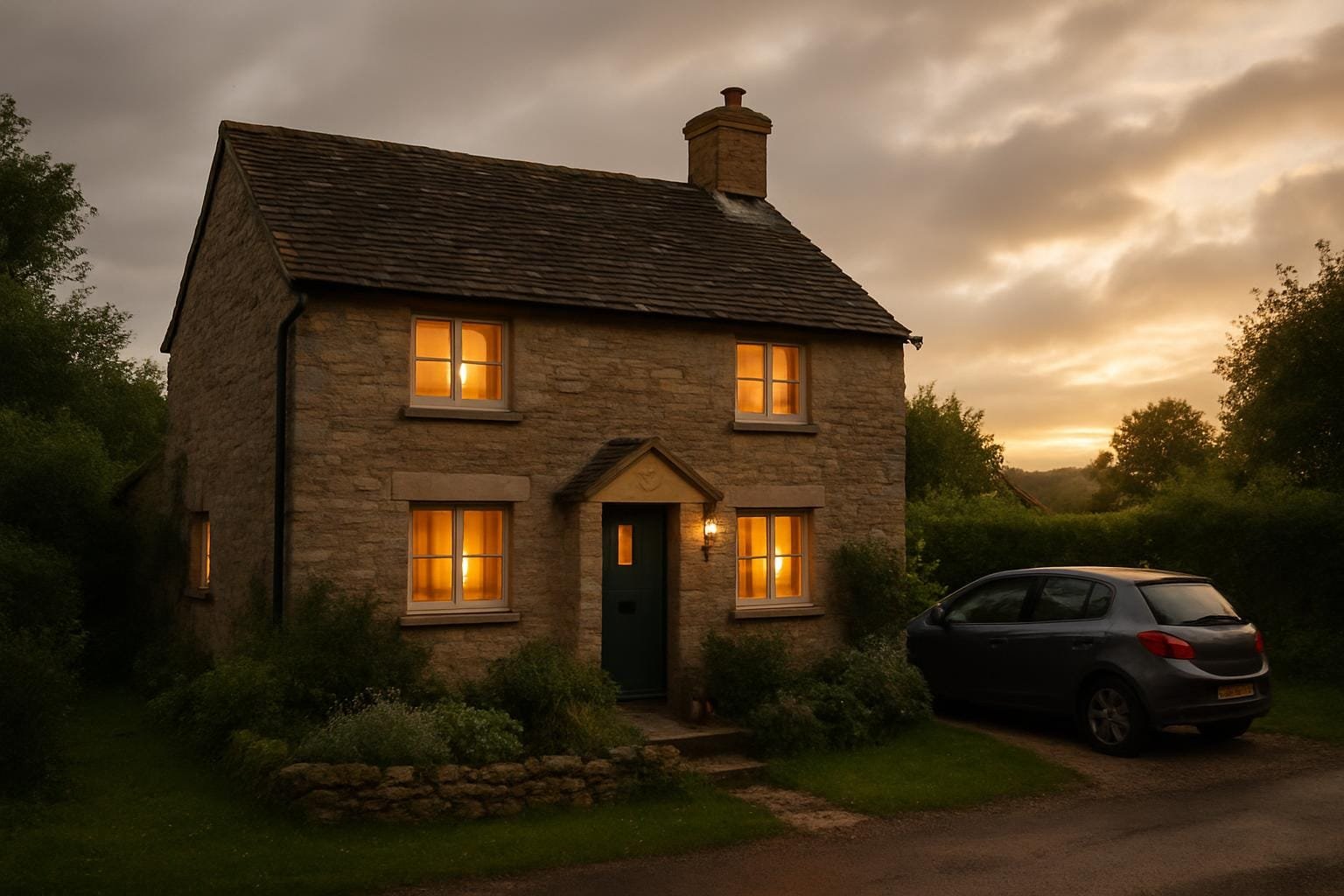
I fell into the habit of choosing a UK holiday cottage the way most of us do: four tabs open, all blurring into one long corridor of exposed beams, “cozy lounges” and suspiciously artful throws. After one too many weeks spent in places that looked like Nancy Meyers film sets online and like student housing in reality, I started reading between the listings a bit more carefully.
This isn’t a grand philosophy of travel. It’s just the stuff I’ve learnt from years of trial, error and the occasional week in a cottage where the “sea view” required climbing on a wheelie bin and leaning dangerously to the left.
When you’re choosing a UK holiday cottage, it’s very easy to get hung up on hot tubs and “smart TVs” and forget to look at where the place actually is. I once booked a “cottage in the heart of the Lake District” that turned out to be just outside Workington, on an estate where the main local activity seemed to be revving motorbikes at idle. Perfectly fine town, but not what I’d had in mind for hill walks and quiet pints.
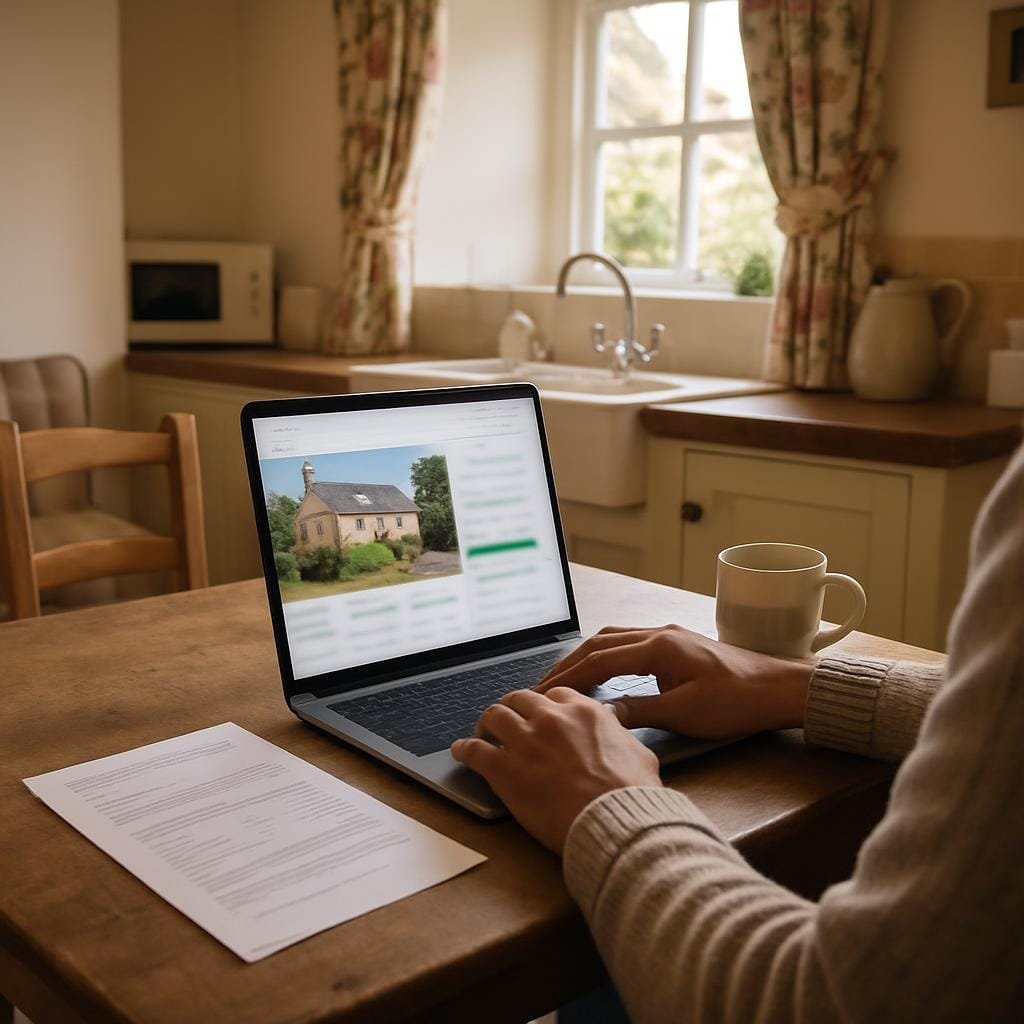
Now my first stop is always a map. Not the small embedded one in the listing that shows a vague blob “somewhere near Keswick”, but an actual map app. Paste the postcode. Zoom in. What can you walk to in under 15 minutes? Is there pavement, or are you playing chicken with tractors on blind bends?
Three real examples from trips that taught me things the hard way:
On paper: “Peaceful rural retreat, 10 minutes from Ludlow.” In reality: a converted barn down a lane so narrow the nettles drummed the car doors, about 15 minutes from Ludlow if you drove like Colin McRae and never met anything coming the other way.
The cottage itself was decent – old flagstones, a log burner that actually worked, and a kitchen with sharp knives, which is rarer than you’d think – but the listing didn’t mention that the “short stroll to the local pub” meant crossing the A49. In the dark. With lorries. We tried it once. Never again.
Still, being near Ludlow had its perks. We ended up eating at The Church Inn just off the market square, where the pies are hefty, the Timothy Taylor is kept properly and you can people-watch through the windows. On the Friday morning, we wandered around Ludlow Market and came back with more cheese than is reasonable for two adults and one slightly offended spaniel.
Worth knowing before you go (Ludlow area)
The lesson from that week: anything described as “peaceful” and “rural” needs checking on Street View. If the nearest pavement is two miles away and there’s a lay‑by full of long‑haul lorries, you won’t be sauntering to a pub after dinner.
Photos will fib to you. It’s not outright lying; more… creative framing. Here’s how I’ve learnt to look at them.
If every single room is photographed from waist height, wide-angle, with the camera pressed into the corner, assume they’re trying to squeeze as much as possible into the shot. That’s standard. What you’re looking for is what they don’t show.
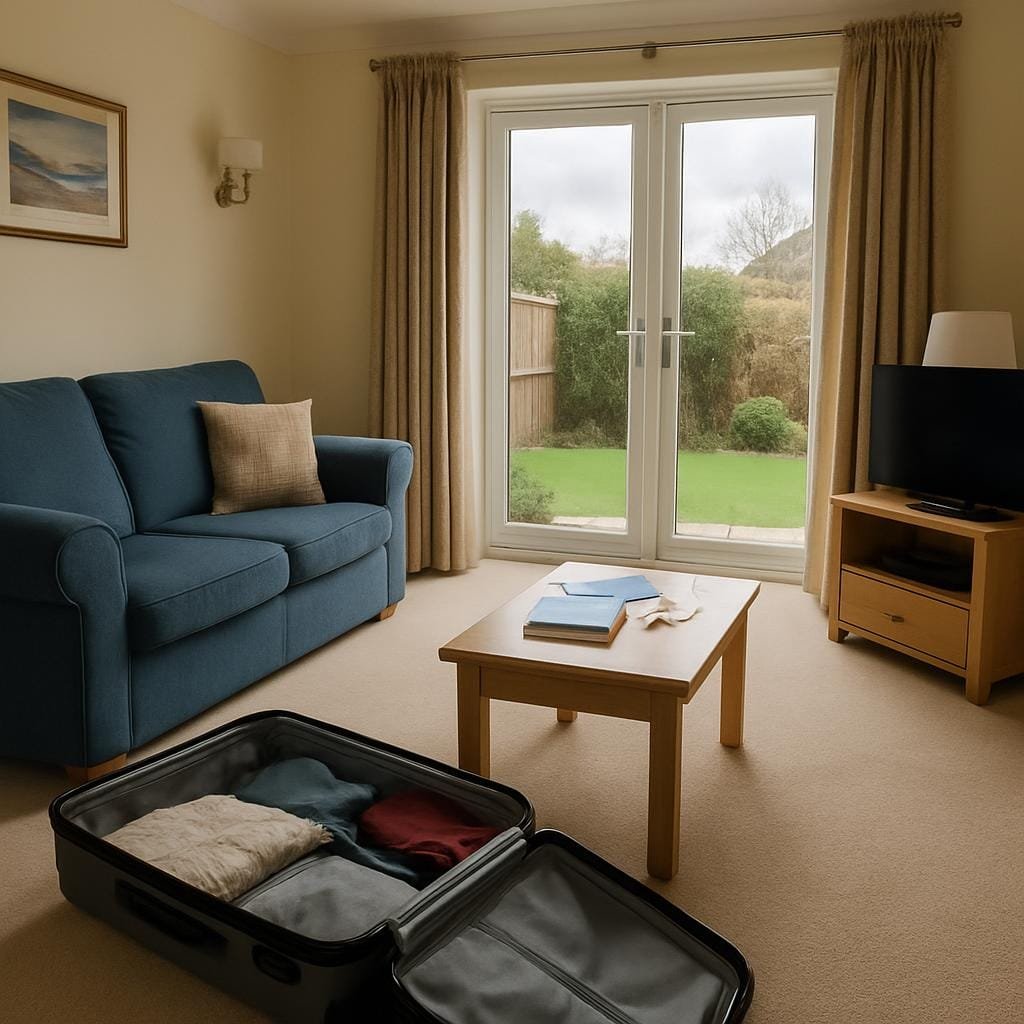
In Cornwall, near Port Isaac, I once booked a cottage with a “spacious living area” that looked airy online. When we arrived, the two‑seater sofa was against the wall because there was nowhere else to put it, and if you stood up too fast you’d clip the light shade. The “dining area” was a folding table that came out from a cupboard, like a budget magic trick.
Later that week, in mild sulk, we walked the coast path to Port Isaac itself and ended up at The Mote by the harbour. We sat outside with fish and chips that actually tasted of fish, and I remember thinking I wouldn’t have been half as grumpy about the cottage if the photos had just been honest: “small but fine if you’re out most of the day”.
Things I now check in listing photos:
The second time I stayed near Port Isaac, I went cheaper and slightly scruffier. The cottage was a short drive inland, in St Teath, round the corner from The White Hart, which does a good steak night on Thursdays and has that slightly chaotic bar set‑up village pubs seem to specialise in.
The listing photos were honest to the point of brutal: faded sofa, basic kitchen, no trendy throws in sight. But the floor looked clean, the mattress looked decent, and they’d actually taken a photo of the parking space. That’s where you want to be.
Worth knowing before you go (Port Isaac / North Cornwall)
Star ratings are mostly useless. People give five stars because the sun came out, or three because they couldn’t work the oven. What matters is the pattern.
On one winter trip to Northumberland, I nearly booked a cottage in Seahouses that had glowing reviews overall – 4.8 or whatever – but something felt off. I started reading the actual comments instead of skimming.
About every fifth review mentioned “a slight damp smell in the twin room” or “a bit chilly in the evenings”. No one had marked it down harshly because the location was great – two minutes from the harbour where you can watch the boats load up for the Farne Islands, and around the corner from The Ship Inn, which does very decent scampi and proper chips. But it was clear that if you felt the cold, you’d be sleeping in a dehumidifier advert.
I ended up booking a place a bit further inland near Bamburgh instead, where the reviews were more mixed on décor (“a little dated”), but everyone said the same thing about warmth and hot water: “boiling in minutes”, “toasty after a day on the beach”. In January, that matters more than scatter cushions.
What I look for in reviews now:
Worth knowing before you go (Seahouses / Bamburgh)
Most listings have a section that should really be labelled “Things that might annoy you, but we’re spinning them as character”. Read it carefully.
For a cottage in the Yorkshire Dales near Reeth, the house rules said, “Access is via a traditional stone track, which adds to the rustic feel.” That sounded charming until I dug a bit. One reviewer, bless them, wrote: “Track very rutted – we grounded the car and had to reverse out in the dark.” I drive an elderly estate car that has seen things, and even I didn’t fancy that. Booked somewhere with actual tarmac instead and slept better for it.
Here are a few phrases I’ve learnt to translate:
The place I did book near Reeth had its quirks spelled out more honestly: “Parking is tight; you may need to reverse down a narrow lane,” and “Wi‑Fi is suitable for emails but not streaming.” Fair enough. The reward was being a five‑minute walk from the green in Reeth, where the Buck Hotel pours a good pint and does solid pub food, and the Reeth Memorial Hall had a folk night on that turned out to be better than half the gigs I’ve paid triple for in cities.
Worth knowing before you go (Reeth / Swaledale)
Travelling with dogs has changed how I look at listings. “Pet friendly” can mean anything from “we love dogs, there’s a jar of biscuits by the door” to “we tolerate one small hypoallergenic handbag creature, please don’t let it touch anything”.
In Pembrokeshire, near St Davids, I booked a cottage tagged as “dog friendly” but the rules quietly said “dogs not allowed upstairs or on furniture” and there was no enclosed outside space. Fine for some, but my two will wriggle under any gap wider than a paperback, and one of them has the recall of a hungover teenager. We spent the week doing lead‑drills to the loo and back.
The better dog‑friendly places spell things out: how high the fences are, if there’s a hose by the door for rinsing paws after the beach, and if there are sheep in the next field. The last one matters. A lot.
The best cottage I’ve had with the dogs was outside St Davids, on the road towards Solva. The owner actually mentioned in the listing: “Enclosed garden – 4ft fencing, but collies and lurchers may test it,” and “Sheep in neighbouring fields – please keep dogs under control.” It was a short drive to the car park at Newgale beach, which costs about £5–£6 to park all day in summer. Worth it to let the dogs go berserk on the sand.
For kids, check what “family friendly” actually means. A drawer of random board games and a plastic highchair, or stairgates, blackout blinds and unbreakable crockery? The reviews will usually tell you how many Lego pieces ended up under the sofa.
Worth knowing before you go (St Davids / Solva)
There’s one thing that has consistently helped me avoid bad stays: sending a short, polite message before I book. A single line can tell you a lot: “Hi, we’re thinking of booking in October. Is there any road noise / is the garden fully enclosed / how far is the walk to the nearest pub in minutes?” Pick the thing you actually care about.
The responses fall into three camps:
I did this with a cottage near Hay‑on‑Wye last spring. The listing said “short walk to town centre” but I’ve lived close enough to Hay for long enough to know that can mean anything from five minutes downhill to half an hour along a road with no pavement. The owner replied with, “It’s about twelve minutes on foot to the clock tower – we do it in ten but we’re tall and keen. Pavement all the way except 100m past the petrol station.” That level of detail won me over.
We ended up spending a few lazy afternoons in Richard Booth’s Bookshop, where there’s a café upstairs with strong coffee and cakes large enough to qualify as meals. Parking in Hay is usually about £1–£1.50 an hour in the main car parks; still cheaper than a round of cake there.
Worth knowing before you go (Hay‑on‑Wye)
I’m wary of sounding like I have a system, because the truth is I still occasionally get it wrong. I once booked a cottage in Dorset and only realised on arrival that the “spiral staircase to mezzanine sleeping area” meant a ladder, essentially. At my age, midnight trips to the loo and ladders are a poor combination.
But when I’m choosing a UK holiday cottage now, I roughly go through this in my head:
Choosing a UK holiday cottage is always going to involve some leap of faith. You’re trading a chunk of your year, your energy and a fair bit of money on the promise that a handful of photos and some adjectives will line up with reality. They won’t always. But the more you treat listings as something to be read carefully rather than swallowed whole, the better your odds.
And if you do end up somewhere with a “sea view” only achievable from the top of the wheelie bin, at least you’ll have a story – and a better eye for the next booking.