

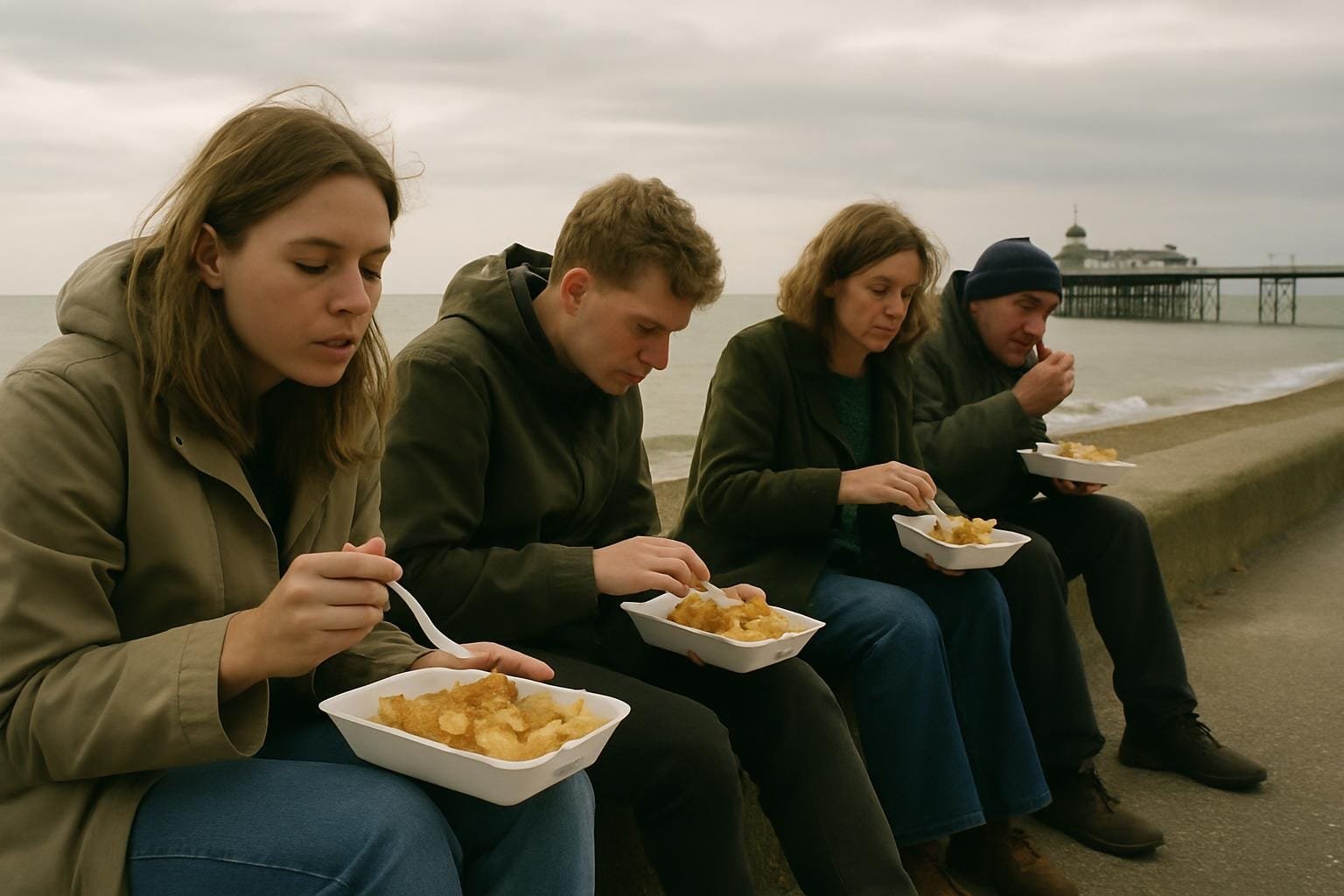
Salt in the air, vinegar on your chips, and your hair doing things no stylist could fix – that, to me, is the core of British seaside fish and chips. You go for the food, yes, but you stay because the seagull stole a sausage, the tea was hotter than the sun, and the walk back to the car felt longer than the entire M6.
I grew up landlocked in Shropshire, so the seaside always had a bit of theatre to it. These days I escape to the coast whenever I can, and I’ve become unreasonably fussy about a proper seaside chippy. Not fancy fish restaurants, not Instagram bait – I mean the real thing: queue on the pavement, steam on the windows, and a wall somewhere with a faded photo of someone holding a cod that looks like it could swallow a labrador.
Here are a handful of places where the British seaside fish and chips ritual still feels right – with a few honest grumbles along the way.
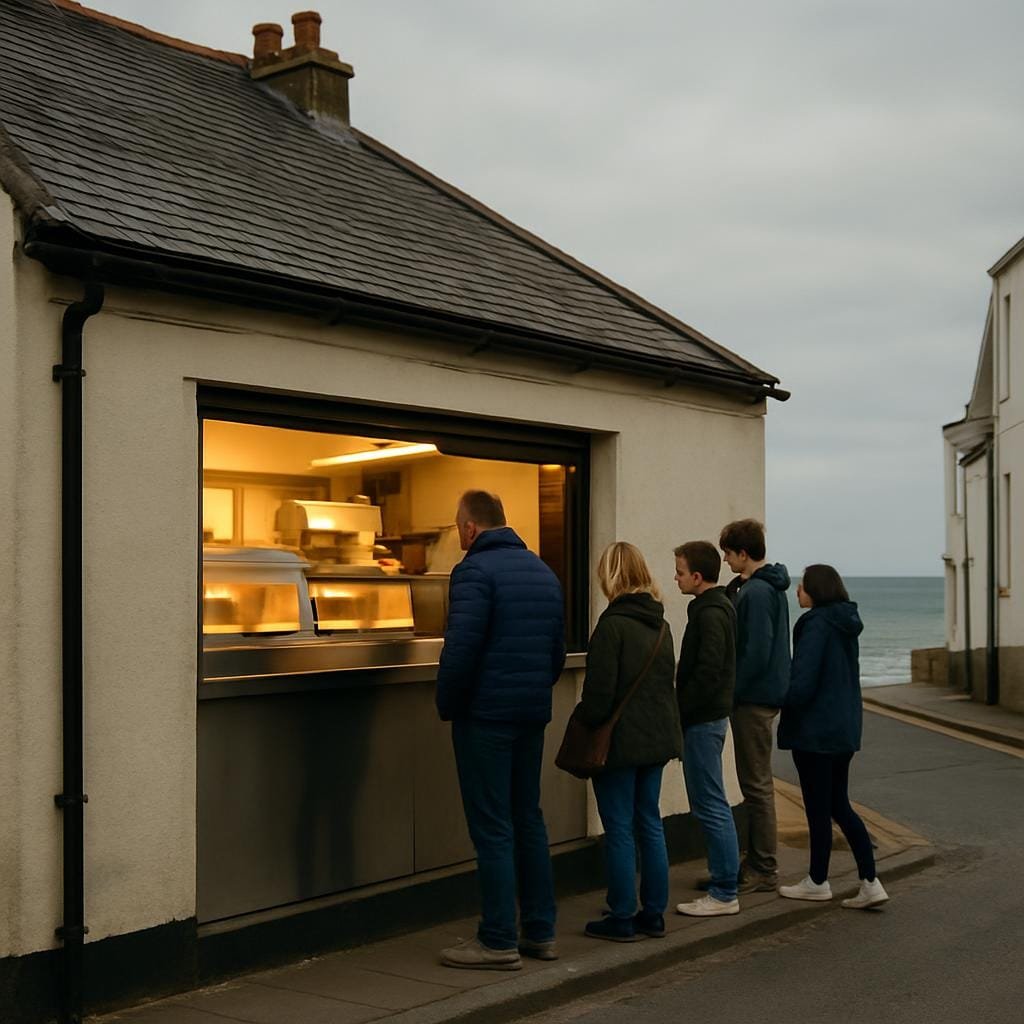
Let’s start with the obvious one. The first time I went to the Magpie Café in Whitby, I arrived smugly at 1pm on a sunny Saturday, genuinely puzzled by the snake of people coiled down the harbour wall. I thought there’d been a ferry incident. No – just everyone in Yorkshire after lunch.
Inside, it’s old-school: wood panelling, waiters who’ve clearly heard every joke about “big fish, small chips” since the 80s, and an enormous menu. I always end up back at haddock and chips, because I’m a coward. The batter is light and very crisp, and the fish actually tastes of something, which isn’t guaranteed these days. Chips are on the paler side, very soft in the middle, and they come in portions large enough to floor a teenager.
The thing that sticks with me, though, is the smell outside – salt, vinegar, diesel from the boats and a faint whiff of seaweed. Pure British seaside fish and chips atmosphere. It’s chaotic, and I wouldn’t say the meal is life-altering, but done right, fish and chips should feel familiar rather than clever.
Worth Knowing Before You Go – Whitby & The Magpie
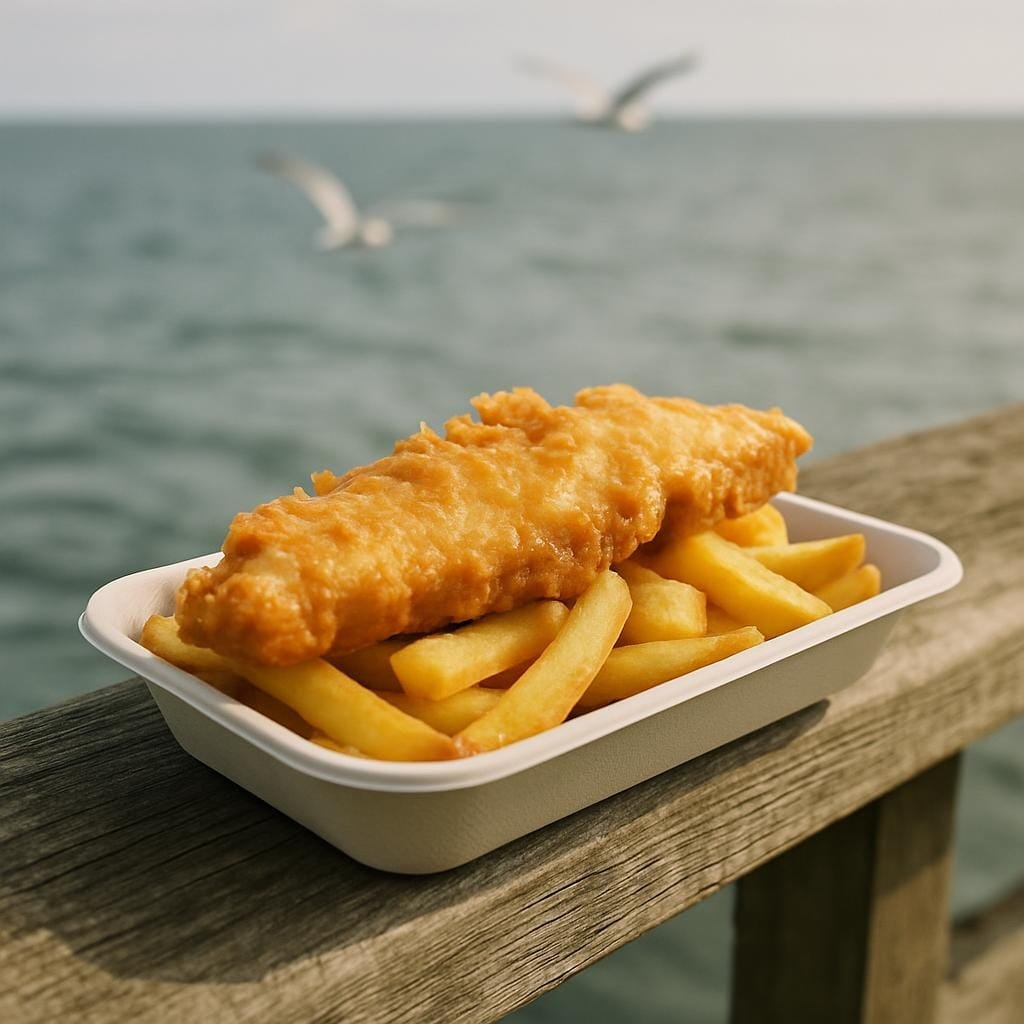
One small warning: portion control. The last time I got carried away and ordered mushy peas and bread and butter on top, I spent the rest of the day leaning on railings pretending to admire the abbey while actually just trying not to explode.
South Shields is the sort of seaside town my ex-colleagues in logistics used to describe as “handy for the port”. Translation: hard-working, honest, a bit rough around the edges. Which is exactly why it has some of the best British seaside fish and chips you’ll find.
Colmans has been on Ocean Road since the 1920s. Inside, it’s bright, spotless and unpretentious. You sit down, you order haddock, and it arrives hanging off both sides of the plate. The batter has a proper crunch, the chips are thick, fluffy and aggressively hot, and they don’t look offended when you ask for a pot of curry sauce.
Last time I went I made the tactical mistake of starting with their seafood chowder, which is excellent – thick, smoky, bits of actual fish, not mystery flakes – but does mean you’re full before the main event hits the table. Still, that’s what coastal walks are for.
When you’ve finished, walk off your lunch along Sandhaven Beach. There’s a strong chance of wind that cuts right through you, but the views up to Tynemouth and the Souter Lighthouse are worth it. Also, lots of dogs, which is always a plus from my biased perspective.
Worth Knowing Before You Go – South Shields & Colmans
Cromer on the north Norfolk coast feels like the kind of place that might politely refuse to modernise. Then No. 1 Cromer turned up with its rooftop seating and slightly more contemporary take on British seaside fish and chips. It caused a bit of a stir at first, but it’s settled into local life now.
I’ve had two very different experiences here. The first time, late autumn, grey sky – it was superb. I sat upstairs with a view of the pier, haddock in front of me, batter blistered and crisp, chips golden and clearly fried in oil that hadn’t seen its entire family tree pass through it. They do a pleasant homemade tartare sauce too, sharp and herby.
The second time, a few summers back on a packed Saturday, it was… fine. Chips a bit underdone, staff clearly run off their feet, and our table was close enough to the door that we got the full blast every time someone came in or out. Still worth it, but I remember thinking, “This is what happens when somewhere gets very popular very quickly.”
There’s a takeaway section at street level that usually has a shorter wait, plus a soft-serve ice cream machine if you’re committed to the full British seaside fish and chips followed by ice cream in bracing wind routine.
Worth Knowing Before You Go – Cromer & No. 1
Cross the border and the chips suddenly start arriving with an even more determined attitude. The Anstruther Fish Bar in Fife is the Scottish poster child for seaside fish and chips, and the queue stretching along Shore Street in summer explains why.
The set-up is straightforward: takeaway at the front, small restaurant area inside. The fish (usually haddock here) is incredibly fresh. You can taste the difference – it’s firm, almost sweet, like it actually saw the North Sea this week. Batter is proper crunchy, and the chips are thick and slightly irregular, the way hand-cut chips should be. They also do haggis suppers and deep-fried black pudding if you want to lean fully into the Scottish chip shop experience.
I’ll admit this is where I committed my worst British seaside sin: I underestimated the local seagulls. I turned to look at a boat coming into the harbour and lost half my fish to a bird that landed, grabbed and left in one smooth operation. If you eat on the sea wall, keep your food close and your pride closer.
Worth Knowing Before You Go – Anstruther
Oban calls itself the “Seafood Capital of Scotland”, which is the sort of slogan that would normally make me suspicious. But then you stand on the harbour front and see the line of seafood huts and chippies, plus the CalMac ferries heaving in and out, and it starts to make sense.
Most people aim straight for the Green Shack (officially the Oban Seafood Hut) for shellfish, which is excellent, but for British seaside fish and chips with a view, the takeaway George Street Fish & Chip Shop is the one I’ve ended up at more than once. It’s halfway up the hill from the harbour, modest frontage, bright interior, and the smell hits you the second you open the door.
I usually grab haddock, chips and a pickled onion, then wander back down to the harbour wall. Chips here are on the darker, crunchier side – clearly cooked long enough to develop real flavour – and the fish portions are generous. The vinegar haze in the bag when you open it on a cool evening with the ferries’ engines beating in the background is pretty much my happy place.
I did once misjudge the weather, though. Oban in August can feel like April in, well, most places. Sitting on a damp bench, trying to keep my chips warm under a low cloud while a group of French tourists eyed my decision-making skills with what felt like pity – that stuck with me. Still worth it.
Worth Knowing Before You Go – Oban
Tenby is one of those seaside towns in Wales that everyone claims as “their” holiday spot. I only came to it relatively recently, after years of hauling pallets up the M4 and never quite getting off before the bridge. The harbour is the star, but for British seaside fish and chips, I ended up at D. Fecci & Sons just off the main drag.
It’s got that quietly worn-in look: tiled floor, big fryers on show, handwritten notices on the wall about which fish are on that day. I went simple – cod and chips in a cardboard box, plastic fork, extra vinegar. The cod was firm, freshly fried, and the chips were some of the best I’ve had in Wales: not greasy, properly salted, and somehow still crisp after the walk down towards the harbour.
I ate sitting on the steps overlooking the harbour, which turned out to be a mistake if you want any feeling left in your fingers. Chips always feel hotter when you’re balancing them on your knees, guarding them from passing dogs and children eyeing them with interest. It’s a good sort of discomfort though – the kind that sticks with you, along with the view of the candy-coloured houses above the beach.
Worth Knowing Before You Go – Tenby
After too many years in service stations and industrial estates, I’ve come to the conclusion that good British seaside fish and chips need five things:
I’ll be honest: I still like the odd quiet chippy in a market town, eating out of the paper in the car with the radio on. But there’s something about coastal air and the thud of waves that makes British seaside fish and chips feel like a small event, even if you’ve done it a hundred times.
You won’t have a perfect meal every time. Sometimes the chips are off, sometimes the weather turns, sometimes you leave thinking, “That was a bit dear for what it was.” But then you walk past another fryers’ window, smell the vinegar, hear someone arguing about who ordered the jumbo sausage, and you think, maybe just one more.