
I grew up about as far from the sea as it’s possible to be in England without accidentally moving to Coventry, so a UK coastal seafood getaway still feels like a minor expedition. Add in the fact I don’t drive, and suddenly tides, trains and tasting menus have to line up just right. When they do, though, you get something better than a classic seaside dash: you get trips shaped by timetables, strange waiting periods and the kind of slow wandering that only happens when you can’t just “nip back to the car”.
This isn’t a complete guide to every harbour and hake fillet in Britain. It’s a set of trips I’ve actually done, slightly muddled by rail delays, tide tables and my own greed. All of them work without a car. All of them lean heavily on good seafood. And all of them reminded me that planning around trains and tides can be a feature, not a flaw.
The first time I came to Whitby I made the classic mistake: arrived hungry, walked up the 199 steps to the abbey straight away, then saw stars halfway up and had to pretend I was stopping “to admire the view”. Don’t do that. Eat first.
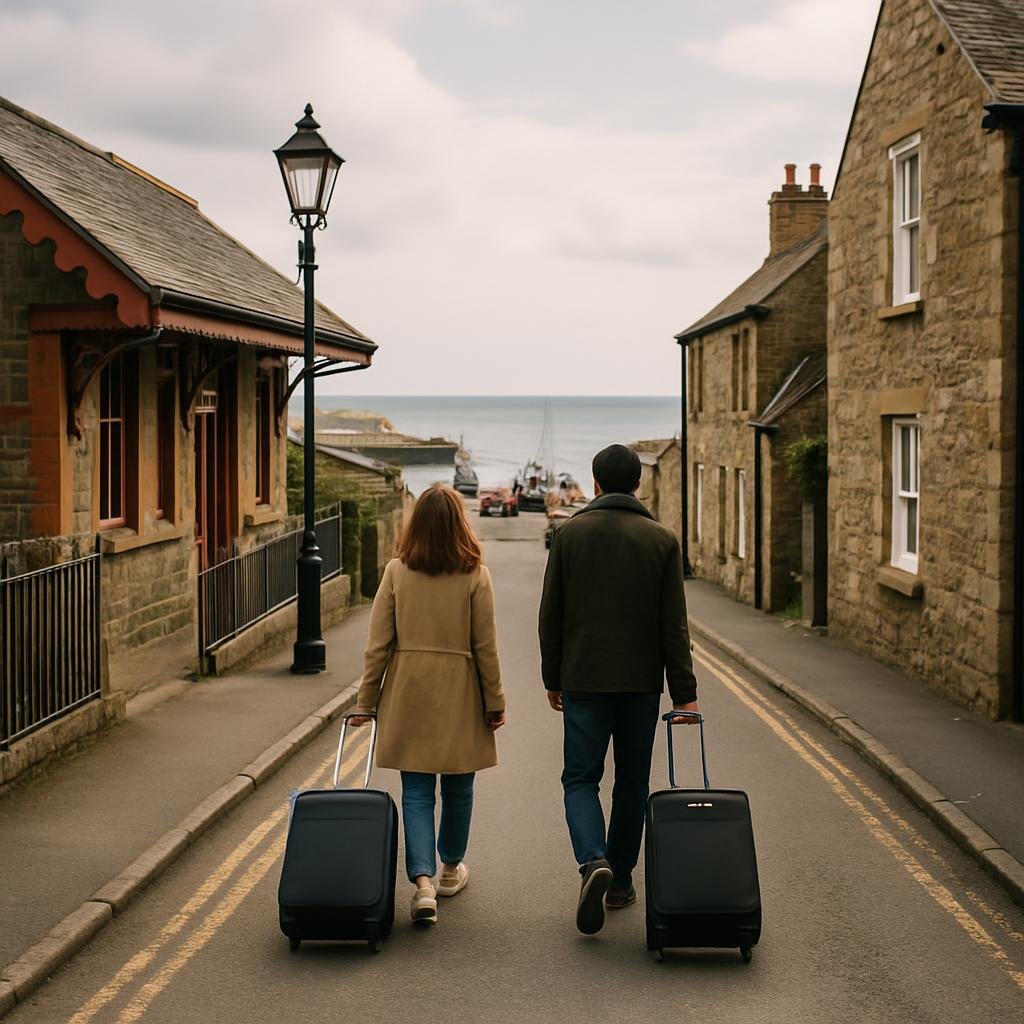
Whitby is made for a UK coastal seafood getaway because it takes a bit of effort to reach by public transport, so the day-tripper crowds thin just enough in the evenings. You roll in by train from Middlesbrough on the Esk Valley line – a single-track route that potters through places like Danby and Glaisdale. It feels improbably rural for a line that still has a regular Northern service. A return from Middlesbrough is usually around £11–£15 if you don’t get too clever with advances.
Kippers at Fortune’s Smokehouse are the thing everyone talks about, and for once they’re right. The tiny brick smokehouse is tucked just under the East Cliff below the abbey steps. You’ll probably smell it before you see it: dense, sweet wood smoke and an unmistakable fishiness that lingers in your hair longer than you’d like to admit. They sell kippers and smoked bacon from a tiny shop front; last time I paid around £4 for a pair of kippers wrapped in paper like an illicit parcel.
For sit-down fish and chips, I’ve tried both The Magpie Café and Trenchers. The Magpie has the reputation, the queue, and a menu that runs to things like crab thermidor and halibut with lobster sauce. Trenchers, down near the station, is where I’ve ended up more often: slightly easier to walk into, good haddock and chips for about £14, and a slightly surreal stained-glass ceiling that makes you feel like you’re eating in a civic building. In a good way.
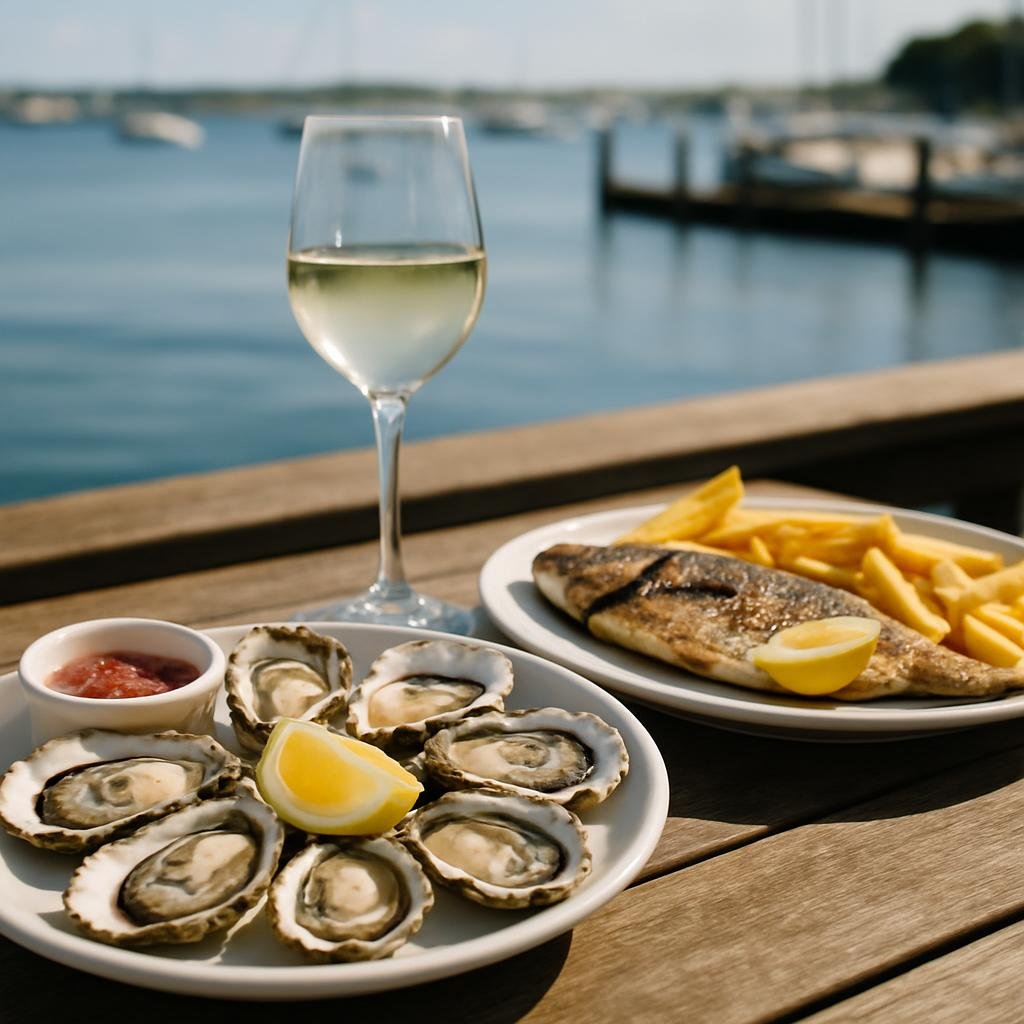
My favourite Whitby meal, though, wasn’t fish and chips at all. It was a slightly chaotic seafood platter and a pint at Quayside, followed by an ice cream I didn’t strictly need from Eskimo Joe’s on Pier Road. Eating prawns while watching the tide push boats around in the harbour is peak seaside theatre.
Worth knowing before you go:
St Ives is where the “trains and tides” thing really kicks in. Cars here are more trouble than they’re worth. Get the train to St Erth, then hop on the little coastal branch line that clings so closely to the water you half expect a wave to slap the window. A return from Penzance to St Ives is usually under £6; from further afield, look at advance fares and railcards or you’ll spend your scallop money before you see the sea.
I came back to St Ives a few years back in winter, slightly off-season, and it suited the town. Fewer bucket-and-spade crowds, more time lingering in the window of The Mermaid Seafood Restaurant wondering how much fish I could sensibly order for one person. Their shellfish platter isn’t cheap – around £35–£40 last time I checked – but it’s generous and you end up in a sort of trance, picking through crab claws and mussels under low wooden beams.
The showpiece meal, though, was a tasting menu at Porthminster Kitchen, perched above the harbour. I booked their multi-course dinner as a slightly over-the-top treat: think cured local fish, grilled prawns, maybe a piece of hake with something clever and green underneath it. Around £65 for a tasting menu isn’t cheap, but the payoff is watching the harbour lights flicker on between courses and realising you don’t have to drive anywhere afterwards – just stroll slowly down the hill, trying not to roll.
On a completely different end of the scale, there’s the excellent fry-up-and-kippers breakfast at Porthminster Beach Café. Sit outside if you can. On a half-decent day you’ll get people in wetsuits, kids trying to dig to France, and the slightly damp smell of neoprene drifting across as you eat smoked haddock with poached eggs. Breakfast hovers around £10–£16 depending how ambitious you are.
Worth knowing before you go:
I’d avoided Padstow for ages, assuming it was wall-to-wall television chef fans in branded aprons. In fairness, there is a lot of Rick Stein around – The Seafood Restaurant, chippy, café, cookery school, probably a Rick-branded crab one day. But it’s still one of the easiest ways to engineer a UK coastal seafood getaway by public transport.
You get the train to Bodmin Parkway, then a bus to Padstow. The Go Cornwall buses are fairly reliable; last time I paid about £5–£7 for the trip. The town smells like a mixture of batter, diesel and wet dog – not unpleasant, just very specific.
I did the full Stein experience once: three courses at The Seafood Restaurant, trying to look as if I belonged in a room with serious napkins. Starters float around the mid-£20s; mains even higher. It was excellent, if slightly formal for someone whose default lunch is whatever’s on the transport café hotplate. The turbot was so accurately cooked it felt faintly smug. Dessert was less memorable, though I think that’s because my brain had already decided I’d peaked with the fish.
The place I’ve gone back to is the more relaxed Rick Stein’s Fish & Chips by the harbour. A cod and chips is around £12–£15, and you can take it outside if the gulls don’t scare you senseless. For slightly more low-key seafood, Prawn on the Lawn does excellent small plates – think mackerel with beetroot or whole baked fish to share. You’ll want to book, especially in summer.
One of the nicer parts of staying car-free here is the little ferry across the Camel Estuary to Rock. It’s a short, slightly bouncy ride – £3–£4 return from memory – and from Rock you can walk along the beach or head up to the St Enodoc Church, tucked behind the dunes. Hardly anyone seems to realise you can do this as a simple foot-passenger loop with no car at either end.
Worth knowing before you go:
North Berwick is one of the easiest places in the UK to do a car-free seafood fix. You can get there from Edinburgh Waverley in about half an hour on the train for roughly £7–£10 return if you’re organised, and you spill out practically onto the high street.
The centre of gravity here, food-wise, is the Lobster Shack on the harbour. It’s basically a hatch, a few benches, and a queue that snakes along the wall on sunny days. A whole lobster with chips will set you back around £25–£30; a crab roll is closer to £12–£14. You collect your tray, pick a spot, and then try to eat while fending off gusts of wind and the occasional enthusiastic herring gull.
It’s the tides that make North Berwick fun. At low tide you can walk out across wet, ridged sand and rock pools towards the islands; at high tide you’re cut off and the sea presses right against the harbour wall. One trip, I mistimed it completely and ended up eating my lobster at speed as the water started lapping higher than felt reasonable. Not actually dangerous – just mildly unnerving if, like me, you’ve got a strong respect for anything that can drown you while you’re holding mayonnaise.
For a slower meal, I like The Grange just up the road – more pubby, with good fish pie and locally landed fish on the specials board. And if you need a non-seafood breather, the National Museum of Flight is a short bus ride away at East Fortune, full of old aircraft and a Concorde you can sit inside. It sounds like a diversion from the seafood theme, but it’s genuinely handy if the weather flips on you.
Worth knowing before you go:
Compared to Cornwall, Pembrokeshire feels slightly less choreographed. The train down through Carmarthen to Tenby is slow in a way that eventually becomes soothing, and if the connection goes wrong you can always kill time in Carmarthen market with a bacon roll. The dogs were unimpressed when I came back smelling of both bacon and cockles.
Tenby station is up the hill from the harbour, which means your first view of the town is rooftops and church towers rather than sand. Walk down and it all opens out – pastel houses, two beaches, a small harbour with fishing boats tipped over at low tide. What makes it a surprisingly good UK coastal seafood getaway is that you can reach nearby Saundersfoot on foot along part of the Pembrokeshire Coast Path, have lunch there, then amble back.
In Tenby itself, I’ve had good fish at The Buccaneer Inn – coastal pub vibes without the feeling someone’s about to start an acoustic set. Fish and chips were around £14; there’s usually something like sea bass or hake chalked up as a special. For more refined plates, Plantagenet House (Plate) has been getting attention with carefully done seafood and a proper tasting menu. Think £70-ish for several courses, sometimes with local lobster.
In Saundersfoot, Coast is the one that really sticks in my memory. It’s right on the beach at Coppet Hall, all glass and views, and the menu leans heavily into local fish. I had a tasting menu there that started with razor clams and ended with something rich and chocolatey I didn’t strictly need. The walk back to Tenby in the fading light helped justify it.
Worth knowing before you go:
I’ll be straight with you: going car-free does limit some classic seafood spots. A few small harbours are so badly served by buses you’d spend longer waiting at rural stops than actually eating. But the places that work well by train and foot have a particular rhythm, and that’s become part of the attraction for me.
A few practical things I’ve learned the hard way:
A UK coastal seafood getaway without a car forces you to slow down. You notice train conductors arguing cheerfully with surfboards. You spend 40 minutes between connections in small towns you’d never otherwise see, hunting for an unexpectedly good chip shop. And when you finally sit down to grilled mackerel or a slab of battered cod, there’s a sense of having earned it that you’ll never get from driving straight from the motorway to the harbour car park.
Just remember: eat before you tackle steep abbey steps, keep an eye on the tide line, and don’t expect your clothes to smell of anything except smoke, salt and vinegar for at least a week afterwards.