
If you spend enough weekends visiting dissolved monasteries in England, you start to feel slightly haunted. Not in a ghost-tour way, but by a sense that something enormous was broken up and scattered, and we only ever handle a few surviving fragments.
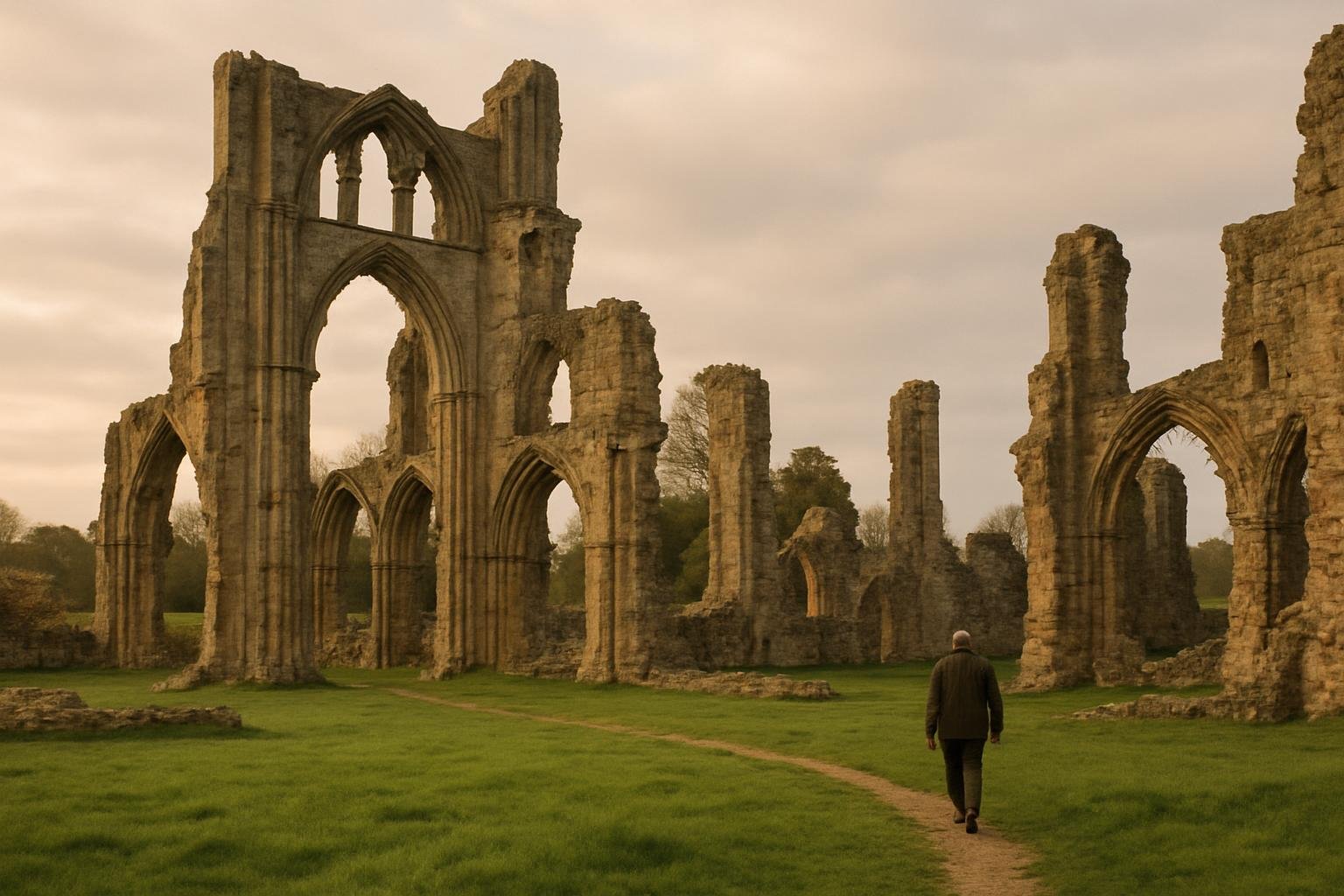
I grew up with the standard Henry VIII story: lustful king wants a divorce, breaks with Rome, pinches some church land, moves on to the next wife. It wasn’t until I stood in the middle of Roche Abbey in South Yorkshire one wet April and realised that the entire middle of the church was simply gone — carted off as building stone — that the scale of the Dissolution really landed. This wasn’t just “confiscating property”, it was dismantling an entire way of organising daily life.
This is supposed to be about visiting those erased monasteries, but I’m less interested in trip-planning and more in what you’re really walking across when you tread the grass at Fountains, Tintern or Walsingham. Because the official version — corrupt monks, greedy king, a bit of looting — leaves out the awkward part: for centuries, these houses had been the nearest thing many people had to a safety net.
School history tends to make the Dissolution sound like a single royal tantrum in the 1530s. In reality it was a staggered process, backed by a lot of paperwork and more than a few armed men.
Some rough anchoring:
That last word — voluntary — is doing a lot of work. Abbots and priors received pensions, sometimes very generous ones. A few, like Richard Whiting of Glastonbury, who resisted, were executed. Most read the room and signed.
When I first read G. W. O. Woodward’s book on the period as a student at Leicester, I came away thinking in economic terms: monastic land goes to the Crown, gets sold to gentry and nobility, and suddenly England has a beefed-up class of country landowners. All quite neat and structural.
Visiting the ruins later, and then reading local account books and churchwardens’ records from the 1540s, you get a messier picture. The question that keeps surfacing is: what happened to everyone who depended on these houses, formally or informally, every week?
Monasteries did pray, obviously. They were also landlords, employers, builders, brewers, educators, moneylenders, and part-time social workers. You can argue about their theology; you can’t really argue about their embeddedness in local life.
Take Bury St Edmunds Abbey in Suffolk. In the early 1500s, the abbey fed up to 24 poor people at the gate every day. That’s not a heroic statistic — it’s just written down in the accounts. At Glastonbury, there was a regular dole of bread and ale on certain saints’ days. At smaller houses, “corrodies” — effectively medieval care-home places — supported the elderly in return for a payment up front.
If you were a labourer in a nearby village, you might never go inside the cloister, but you’d pitch up for work on monastic land, take produce to the abbey grange, buy ale from the cellarer, and know that, in really bad times, there were handouts at the gate. One 15th-century woman in Norfolk left money in her will explicitly “to the poor at the priory door”. People built that expectation into their idea of how the year worked.
Now imagine being that same person in the late 1530s. Word goes round that the house is to be suppressed. Commissioners turn up, inventory the plate and vestments, weigh out the bells. Within months the regular doles dry up, the infirmary closes, the handful of corrodians are told their contracts are void. The statues of saints that you’ve muttered quick, pragmatic prayers to your whole life are taken down as “superstition”.
We have a brilliant, slightly bitter line from a contemporary observer in Lincolnshire around 1536: “the poor shall die in ditches.” Overheated, perhaps, but you can see the fear behind it.
The official story runs something like this: monasteries had become decadent and useless; the king, advised by Thomas Cromwell, decided to reform them; the money was better used by the Crown and new landowners; the old ways were gone, but progress marched on.
There were abuses, of course. In the visitations ordered by Cromwell in 1535, there are reports of monks keeping concubines, abbots lending money at eyebrow-raising rates, houses that were all but empty of active religious life. Crowland Abbey in Lincolnshire is singled out, and probably with reason.
But that’s the bit we like because it makes the story easier: bad monks, good reform, clean break.
Two complications rarely make it into the textbook version:
I used to accept the line that “the monasteries were already in decline”. After a while reading rentals and wage lists, that feels glib. Some were struggling; others were quietly efficient landlords, repairing bridges, draining fenland, maintaining roads and river crossings. That local infrastructure work didn’t stop being needed just because Henry fancied Anne Boleyn.
So where does “visiting dissolved monasteries in England” fit into this? For me, the ruins are a way of seeing the gaps as much as the stones.
At Rievaulx Abbey in North Yorkshire, English Heritage has a very good exhibition explaining how the Cistercians managed sheep, ironworking and trade. But the bit that lodged in my head was a simple line in a 15th-century account book: payment to a local woman to wash the choirboys’ clothes. A tiny transaction, but it anchors all the history-of-economy talk in a real person trudging home with damp linen on a cold day.
Stand in the cloister there and picture all the non-monks who would have passed through: masons, roofers, carters, visiting traders, the millwright, the woman with the laundry. When everything was dissolved, those contracts, those regular wages, those casual jobs tied to feast days and harvests, all had to be renegotiated or disappeared altogether.
At Hailes Abbey in Gloucestershire, famous before the Dissolution for its “Holy Blood” relic, what struck me was the parish church next door. After the abbey went, that modest church took over some local roles, but with far fewer resources. One 17th-century churchwarden’s account from a former monastic parish records money scraped together for poor relief that would once have come from a fat abbey budget.
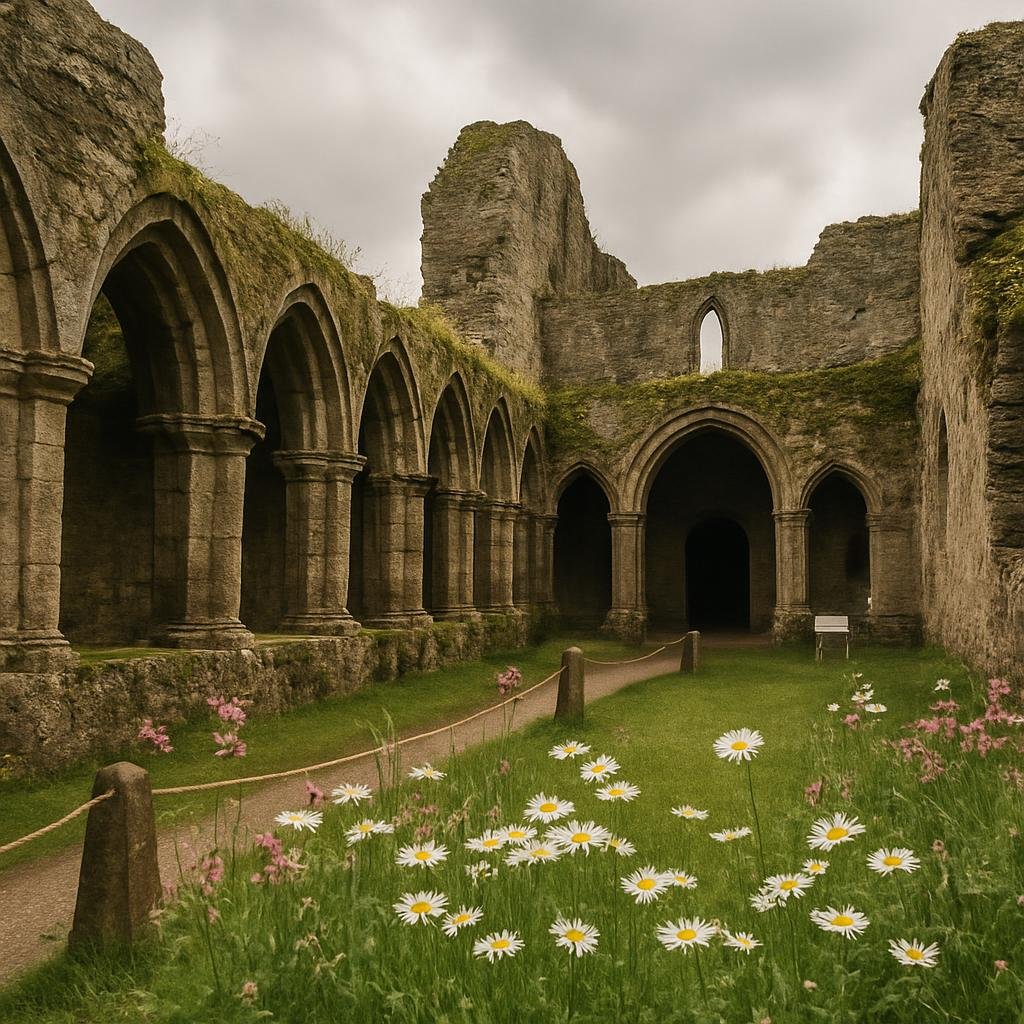
This is one way visiting dissolved monasteries in England can change how you read the period: the silence around the site is part of the story. The missing bells meant no monastic office marking the day; the missing lay-brothers meant fewer semi-skilled workers in the area. That hollow feeling isn’t romantic ruin-gazing; it’s structural change you can literally walk across.
It’s tempting to do a simple ledger: losers – monks, friars, nuns; winners – Henry and the nobility. The truth is more tangled.
Monks and nuns first. Something between 7,000 and 8,000 religious were evicted. Many former monks received pensions and often found work as parish priests or schoolmasters. A few — especially nuns, with fewer options — ended up in far poorer circumstances. One group of former nuns in Yorkshire is recorded sharing a small house and living on a modest joint pension, criticised later for “idleness”, which is rich given who had removed their previous work.
Lay servants and tenants are harder to trace. Monasteries collectively owned about a quarter of all cultivated land in England. That doesn’t translate neatly into “a quarter of all jobs”, but it gives a sense of the scale. When the Crown sold or granted that land, the new owners sometimes honoured existing customary tenures; sometimes they raised rents or enclosed common fields.
In the West Country in the 1540s, there are court cases from peasants complaining that a former monastic landlord had been fairer over grazing rights than the new gentry owners. One Devon man, hauled up for breaking hedges, argued that his family had pastured animals there “since before the king’s commissioners came”. It’s a tiny flicker of resistance, but it speaks volumes about how quickly people felt the shift.
Urban life also changed. Monasteries in towns like Norwich, York or Coventry were landlords of whole streets. When those properties went to lay owners, urban property markets tightened. Rents didn’t have to factor in prayers for dead benefactors; they simply had to support a family’s income. That altered who could live near the centre.
There were also winners outside the elite. Some prosperous yeomen and merchants managed to buy or lease small parcels of former monastic land and climb a rung in status. In Derbyshire, not far from where I live, you can trace families who bought ex-monastic granges in the 1540s and had gentry pretensions by the early 1600s. So the Dissolution helped feed social mobility as well as dislocation.
The Pilgrimage of Grace in 1536–37 tends to be treated as an odd eruption of northern backwardness. In reality, if you read the rebels’ articles (you can, via a transcription on The National Archives site), you see a complicated bundle of motives: defence of traditional religion, anger at Cromwell, and very concrete worries about economic loss.
One of their demands bluntly asks for the restoration of the smaller monasteries “for the relief of the poor”. That’s not abstract conservatism; it’s people in places like Louth and Pontefract looking at their everyday support structures being uprooted.
Henry crushed the rising, executed leaders, and pressed on. Yet the fear that poor relief would collapse didn’t fade. A few decades later, the Elizabethan poor laws began to shape parish-based systems of support. Those are often explained as a response to population growth and inflation; they’re also, indirectly, a patch on the hole ripped out by the Dissolution.
The way we present these sites today says as much about us as about Henry. Early antiquarians in the 18th century sketched Tintern and Rievaulx as romantic wrecks, nature reclaiming man’s folly. In the 19th century, some ruins were tidied up to frame a story of Protestant progress: look what we’ve moved on from.
Modern interpretation boards are better at nuance, but you can still feel the wobble between admiration and disapproval. At some sites, the emphasis is on the spirituality that was lost; at others, on the entrepreneurial energy of the new landowners who snapped up the estates.
Walking round Fountains Abbey and Studley Royal — now a combined National Trust property — you get both in one go. Medieval monastic economy on one hand; Georgian landscaping on the other, where 18th-century aristocrats turned the ruins into a backdrop for their water garden. It’s history reusing history. The dead abbey gave them a ready-made “gothic” scene, and they made it into a pleasure ground. The afterlife of the Dissolution is built into the way we look at it.
For me, visiting dissolved monasteries in England has become a way to keep multiple layers in view at once:
Standing in a roofless nave, you can be sentimental about the “lost faith” or cheer on the Reformation, but either way you’re standing on the same bare stone where a lot of very ordinary people once came for jobs, food, contracts, and a bit of security.
Because this is what a sudden, state-driven restructuring of welfare and property looks like from ground level. Not instantly; not everywhere at once; but steadily, in higher rents, lost casual work, fewer safety nets at the worst moments of the year.
Some historians argue that the Dissolution accelerated England’s move towards a more “modern” economy — bigger private estates, a stronger gentry, more flexible land markets. That may be true. It also created decades of improvisation and real distress before later systems of parish relief caught up.
When you hear politicians talk breezily about “reform” — any century, any government — it’s worth remembering that from 1536 to around 1600, reform meant, for quite a lot of people, wondering who would feed you when the harvest failed, now that the priory’s gatehouse was bricked up.
So yes, I still spend weekends visiting dissolved monasteries in England. I like the ruined arches and the echo of plainchant you half-imagine. But I also go to see the absences: the missing almonry, the closed infirmary, the farms and streets that had to rewire themselves around lost institutions.
And every time I walk out through a modern gift shop built into an old monastic range, I think of the 16th-century carpenters, laundresses, copyists and cooks who once earned their keep under those same rafters — and how abruptly those payslips stopped coming.