

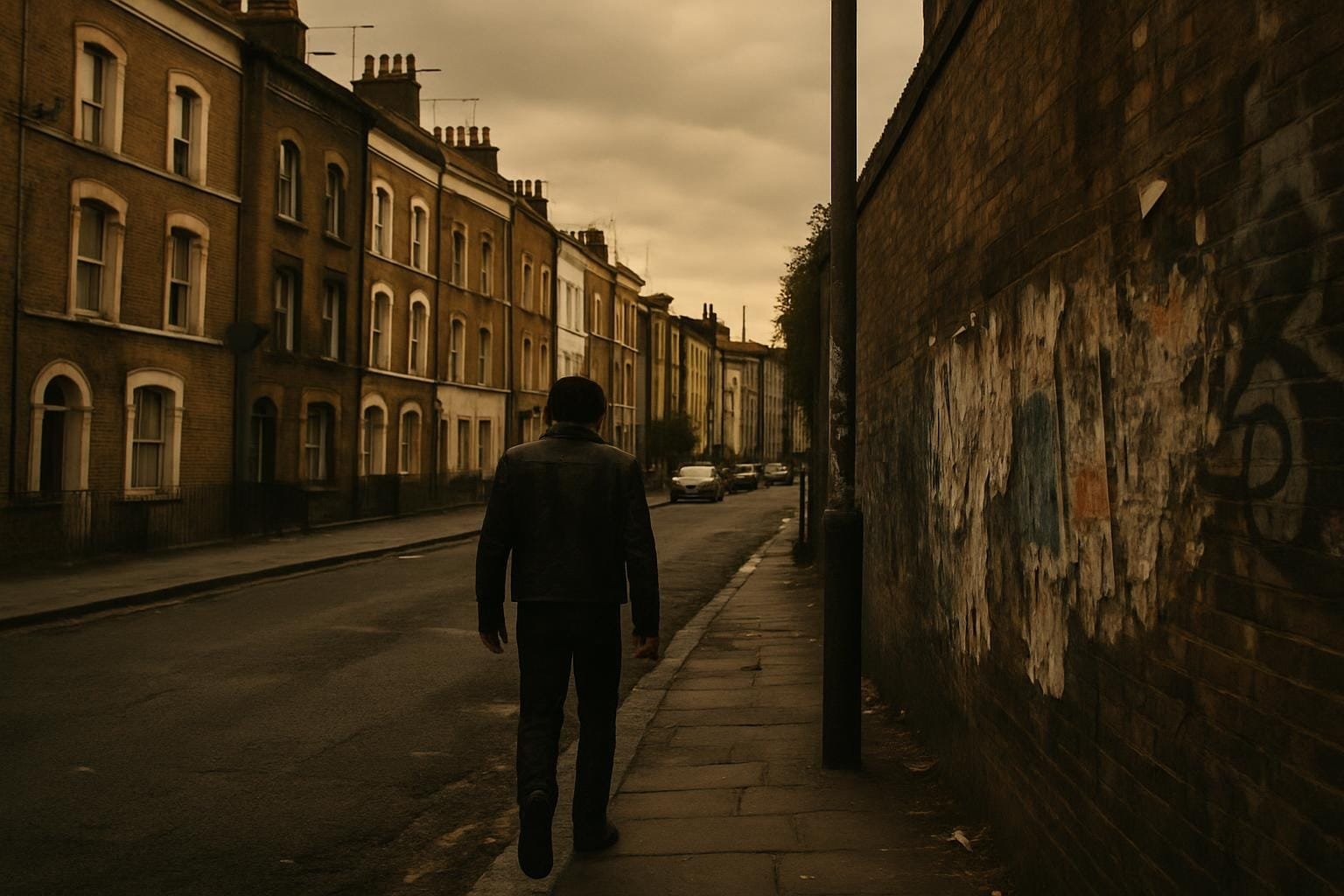
I didn’t go to London to find The Clash. I went, like most northerners of a certain age, for crap temp jobs, late buses, and the hope of catching a band I loved somewhere smaller than an arena. But those walks between bedsits, kitchens and night buses slowly turned into my own crooked version of The Clash London punk travel guide – not in the tourist-board sense, but in the way the band’s records kept rearranging the city in my head.
I was about fifteen the first time I heard “White Man In Hammersmith Palais” properly. A mate’s older brother stuck it on between Green Day and some mid‑2000s indie landfill at a house party in Gateshead. You could feel the air change. That loping groove, the way Strummer half-slurs his way through bored reggae singers, rank-and-file kids on E, and the National Front – it felt like someone was reading out the news from another country and somehow it was more accurate than BBC1.
By the time I finally moved to London in 2010 – sharing a cramped flat above a fried chicken place in Finsbury Park – I’d worn out a CD copy of London Calling and a scratched MP3 download of Give ’Em Enough Rope. And walking around, hungover and hungry, the thing that kept hitting me was this: The Clash are the only band who ever made London feel big enough and small enough at the same time. That’s my first real argument here. All the talk about them being “the only band that mattered” misses the point. They mattered because they made the city sound both huge and absolutely local – corner-shop specific.
Take “London Calling”. Everyone wheels it out as this great end-of-the-world anthem, but the bit I always come back to is the boredom in Strummer’s voice when he starts naming the disasters: floods, nuclear errors, food shortages. It’s like a bus stop rant from someone who’s just missed the 36 and knows they’re going to be late for a shift. When I first started doing stupid hours in a King’s Cross café – opening at 6am, finishing whenever the last hungover student stopped asking for “just one more flat white” – that song felt less apocalyptic and more like a diary entry about running out of options.
You can walk along the Thames during a winter high tide, listening to that bassline, and the city stops being a postcard. It becomes exactly what The Clash were always documenting: a place where the river’s too high, the rent’s obscene, and someone’s still trying to flog you a bootleg football scarf outside the station.
And no, I don’t care how many guidebooks now stick “London Calling” on lists of songs to hear while you’re doing the South Bank. Using it as background noise while you take photos of street performers completely misses what’s happening in that track: fear, anger, and a band trying to make sense of a city that felt like it was slipping away from the people who actually lived in it.
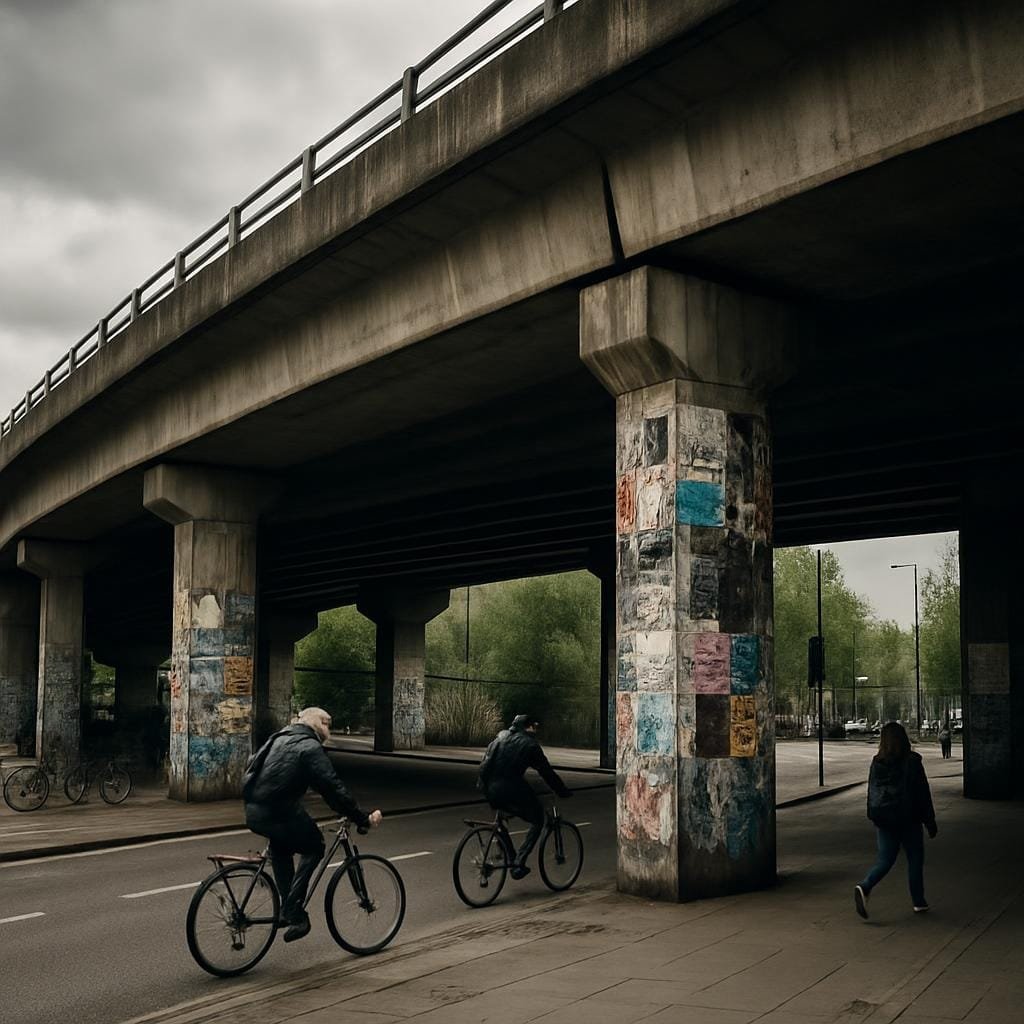
The first time I walked under the Westway, near where Ladbroke Grove bleeds into that mess of roads and train lines, I was already carrying “Complete Control” in my head. It doesn’t matter that the exact spot in my mind doesn’t line up with any particular Clash lyric. What matters is the feeling – trains above you, traffic hammering past, billboards shouting about things you can’t afford. You can hear the tension that made their early stuff so jumpy.
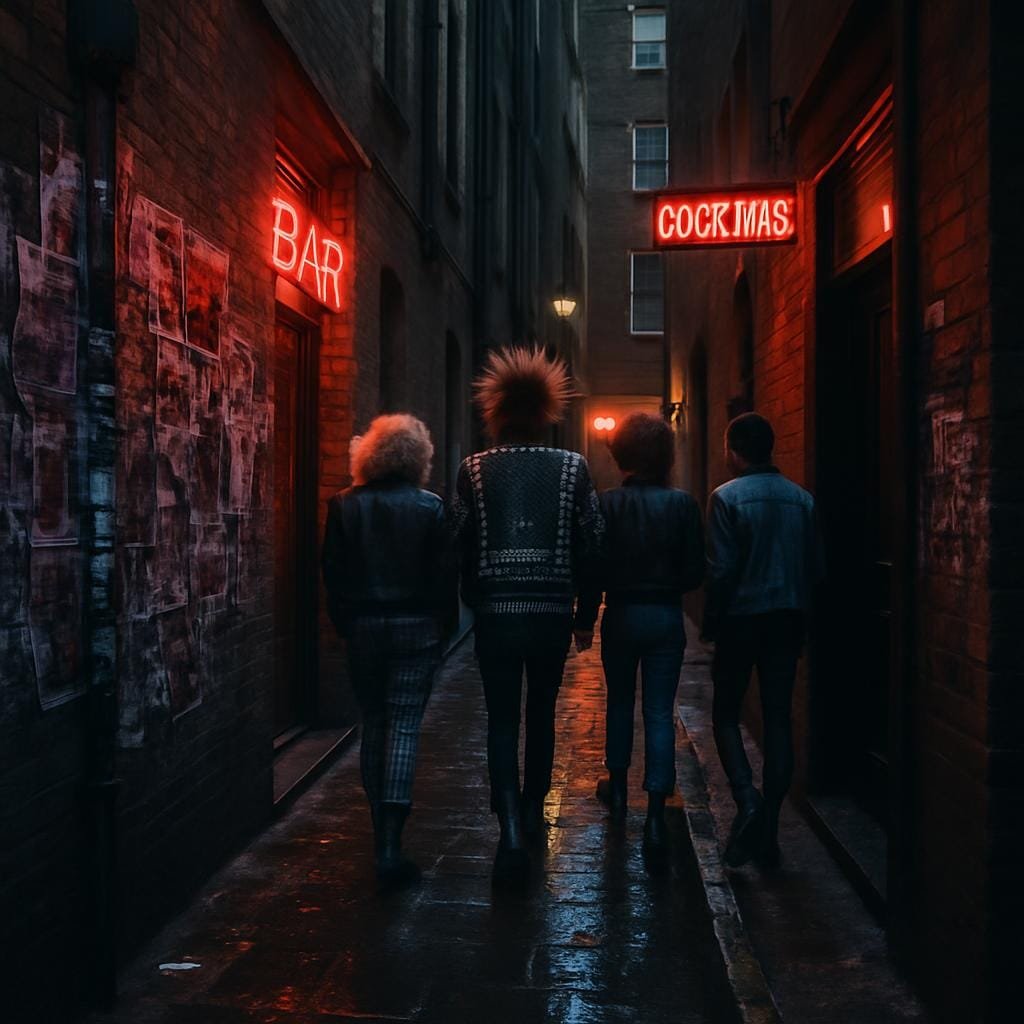
“Complete Control” is supposed to be about record label interference – CBS putting out “Remote Control” as a single without asking – but listen again and it’s dripping with London. That clipped guitar, those shouted gang-vocal bits: it sounds like kids arguing with someone in a doorway on a Friday night, the last bus gone, everything swollen with drink and frustration.
By the time I found myself walking that way regularly – working occasional shifts at a pop‑up food thing near Portobello, serving pulled pork to people who called it “street food” while looking annoyed if any actual street touched it – the song had almost turned into a joke between me and myself. “They said, release ‘Remote Control’,” I’d mutter every time my manager texted another rota change at midnight. London as corporate interference; punk as the feeling that everyone else has already agreed something on your behalf.
And this is really what I mean by The Clash London punk travel guide working in your head rather than on a map. It’s not about ticking off famous addresses. It’s about how the band soundtracked the ordinary tyranny of the city – landlords, bosses, cops, tube ticket barriers that never stay open long enough.
I came to The Clash’s first album backwards. After London Calling, it felt thin at first – all treble and speed. But “Career Opportunities” hit harder once I’d done my own stint on the dole back home, then later, when I watched mates in London pinball between zero‑hours retail and unpaid “internships” at media companies.
“Career Opportunities” is very specifically about mid‑70s Britain – bus drives, telecoms, joining the army – but the contempt in it travels well. Put that on while shuffling along a Jobcentre line in Holloway in 2011 and it didn’t feel retro at all. It felt like a very polite country finding new ways to say “nothing for you here, love”.
Here’s my properly arguable position, then: I think Give ’Em Enough Rope is a better London album than the debut. People bang on about the rawness of The Clash, and they’re not wrong, but those first songs are still half in the fantasy of rock ’n’ roll. By Give ’Em Enough Rope, they sound like they’ve had a few more late buses and baffling conversations with landlords.
“Safe European Home”, written after a trip to Jamaica, is the sound of coming back to a city that hasn’t moved on at all while you’ve been away. “Stay Free” is a South London mates’ story with more tenderness in it than most punk bands ever got near. And “All the Young Punks” – that final shout-along – feels like it’s addressed straight to the kids drifting between room shares in places like New Cross and Lewisham, thirty years before Foxtons made them completely unaffordable.
Punk, for The Clash, was never just about gobbing at the stage. It was about reading the dole office bulletin board and realising every option on it was basically a different flavour of defeat.
“White Man In Hammersmith Palais” might be the greatest song ever written about going out in London and having a mediocre time. Not tragic. Not life‑changing. Just fine. That’s usually how it goes, if we’re honest. You pay too much for the tube, the headliner’s not as good as you thought, you get home with sore feet and less faith in humanity.
By the time I actually passed the old Palais site – long after it had been knocked down, new build in its place, standard London story – the club itself had turned into a sort of ghost in the song. And the really clever thing, listening as an older fan, is the way Strummer moves from personal disappointment (“the bands were all talking over each other, and none of them knew what they were doing”) to this wider disgust with both music industry hype and racist politics in the audience.
Is it a lecture? Yeah, a bit. Does that make it less effective? No. I’d argue London needed a few more lectures shouted over dodgy PA systems at 2am. In a city that keeps reinventing itself as a destination – that horrible word – The Clash refused to let you forget who was actually on the night bus home.
And here’s where The Clash London punk travel guide feels weirdly current. Swap the reggae hopefuls of the late 70s for today’s guitar bands trying to copy Fontaines D.C., swap the National Front for whatever fresh wave of suited reactionaries is currently bleating on LBC, and the basic structure of that night out hasn’t changed. Hype, boredom, background menace, bad sound, last train.
I’ve always preferred “London’s Burning” to half of what’s on side one of London Calling, and that usually gets me a look from people who own twelve different pressings of the album. But hear me out.
“London Calling” is the big statement: rockabilly swagger, apocalyptic radio signal, the crash of a band pulling everything they’ve heard – reggae, R&B, American rock – into one place. It’s the record that gets them on T‑shirts in H&M. Fine.
“London’s Burning”, though, from the debut, is small and petty. It’s a song about traffic jams and late-night radio and kids who don’t know what to do with themselves so they drive around the Westway, again and again, because bus fares are cheaper at certain times and there’s nowhere else to go. It’s about boredom as a political condition.
When I first started doing late shifts at a bakery in north London – mixing dough at midnight, watching foxes skulk past the back door – that’s the song that made sense. Not the romance of apocalypse, but the grind of knowing tomorrow will be exactly the same, and the one small joy is getting to control the dial on the kitchen radio.
If you’re trying to hear London as it actually is for most people most of the time, put “London’s Burning” on repeat while you wait for a night bus in zone three. That’s the real sound of the city: bored, wired, underpaid, slightly ill.
I came embarrassingly late to “Guns of Brixton” as anything other than a bass showpiece. For years, it was just the Paul Simonon one – the track the bloke in the band covers always mentions in interviews. But walking out of Brixton station on a wet Tuesday, seeing the security barriers, the watchful police vans, the pound shops wedged between gourmet burger places – that’s when the menace in that song started to feel less theatrical.
Let’s be honest: it’s odd that one of the defining London songs of the era is sung by a white bloke from a band who had, by that point, a major‑label deal and an American fanbase. Yet it still lands, partly because it doesn’t pretend to be a first-person documentary. It’s mood, not memoir – a way of saying “this is what it feels like when the state treats you like an enemy in your own postcode”.
The smarter “The Clash London punk travel guide” heads will quote you stories about the band playing the Academy years later, about posters, about riots. I keep it simpler. I line up: bassline, nervous energy, the memories of 2011 sirens in south London seeping through Twitter feeds. Different decade, similar crackle in the air.
This is the bit that’ll annoy some people: I think The Clash’s version of London makes Parklife-era Britpop look like a cartoon.
And I say that as someone who’s shouted along to “Common People” in more sticky-floored indie discos than is probably healthy. But where Pulp, Blur and the rest turned London into a backdrop for self-conscious characters – the barrow boy, the art student, the City boy – The Clash make it a system. It’s not about one funny geezer on the bus. It’s about the bus fares, the timetable cuts, the coppers checking your ticket on the platform.
Listen to “The Clampdown” or “Police & Thieves” back to back with “Girls & Boys” and you’ll hear it. One lot are sketching, the other are sounding the alarm. There’s value in both, of course, but if you’ve ever tried to make rent while working three service jobs, it’s The Clash’s London – chaotic, argumentative, always one step away from some kind of trouble – that feels more honest.
Britpop did a great job of selling London to the rest of the country as a weekend destination: Camden market, cheap lager, big choruses. The Clash wrote for the people who couldn’t afford the train back.
Since moving back north – Leeds now, and slowly eating my way through every half‑decent bakery within bus distance – I hear The Clash differently again. London’s receding in my rear-view mirror, but it’s there every time I put on “Bankrobber” while queuing in a Co‑op full of kids in school blazers, or “Spanish Bombs” while scrolling through rental listings that look like the same exploitative nonsense on a cheaper scale.
The last time I visited London, I walked past the old site of the Astoria (gone), the old Hammersmith Palais site (long gone), and a Pret on every corner. Stuck “Clampdown” on my headphones and, yes, it felt a bit on the nose. But when Strummer starts barking about the men in factory hats becoming the men in suits, it still fits – except now the uniforms are Deliveroo boxes and barista aprons and those horrible branded lanyards for “co-working spaces”.
I’ve mellowed a bit with age. At fourteen, I thought The Clash were flawless. At twenty‑four, I decided they’d sold out the minute they made a double album. Now, edging towards forty, I think the truth is somewhere in the boring middle: they were a really good band who occasionally talked rubbish in interviews, made a couple of ropey choices (looking at you, Cut the Crap), and still left behind the sharpest musical map of late‑20th‑century London anyone’s managed.
If you want a literal The Clash London punk travel guide with addresses and plaques, Google will give you one in ten seconds. But if what you’re after is to understand how a city feels, then it’s simpler than that. Stick the records on. Walk until your legs ache. Notice the gaps between the songs and what’s actually happening on the streets in front of you.
When the train rolls back into Leeds and I’m thinking about where to get a decent pasty near the station, The Clash are still in my ears. Because their London was never only about London. It was about work and no work, about landlords and tenants, about kids killing time in bus shelters. That stuff travels north just fine.
That’s the real trick, I think: they made a local argument that turned out to be portable. That’s why people from Newcastle, like me, and from Sheffield and Swansea and Glasgow can still use those songs as a way of walking any city that’s a bit too big for its conscience.
So no, I’m not going to tell you which tube stop to get off at for your next Clash‑themed selfie. I’d rather argue about whether “Up in Heaven (Not Only Here)” is their most underrated London song (it is) and why “London’s Burning” deserves to be played in full, loudly, every time some overpaid developer names a block of flats after a thing they’ve helped erase.
Put it this way: if your personal The Clash London punk travel guide starts and ends with that famous London Calling sleeve shot by the Thames, you’re missing half the story. The real stuff’s in the night buses, the chicken shops, the bad club nights, the Jobcentres and the kids wandering round shopping centres because there’s nowhere else they’re allowed to be.
That’s the London The Clash wrote about. It’s still there, underneath the Pret cups and the contactless barriers, waiting for someone with a guitar, a bass, a half‑knackered drum kit and a grudge to write the next update.