
If you came here hunting for a glossy Scarborough travel guide promising wall-to-wall sunshine and ice creams that never fall in the sand, you’re in the wrong place. Scarborough is better than that: a bit rough round the edges, salty in every sense, and best enjoyed slowly, on foot, up and down those cliff paths until your calves complain.
I first came up here on a delivery run, years back, trying and failing to reverse an articulated lorry down a side street near the station. Since then I’ve been back on purpose, without a tail-lift and a deadline, and the town makes a lot more sense when you’re on two legs rather than eighteen wheels.
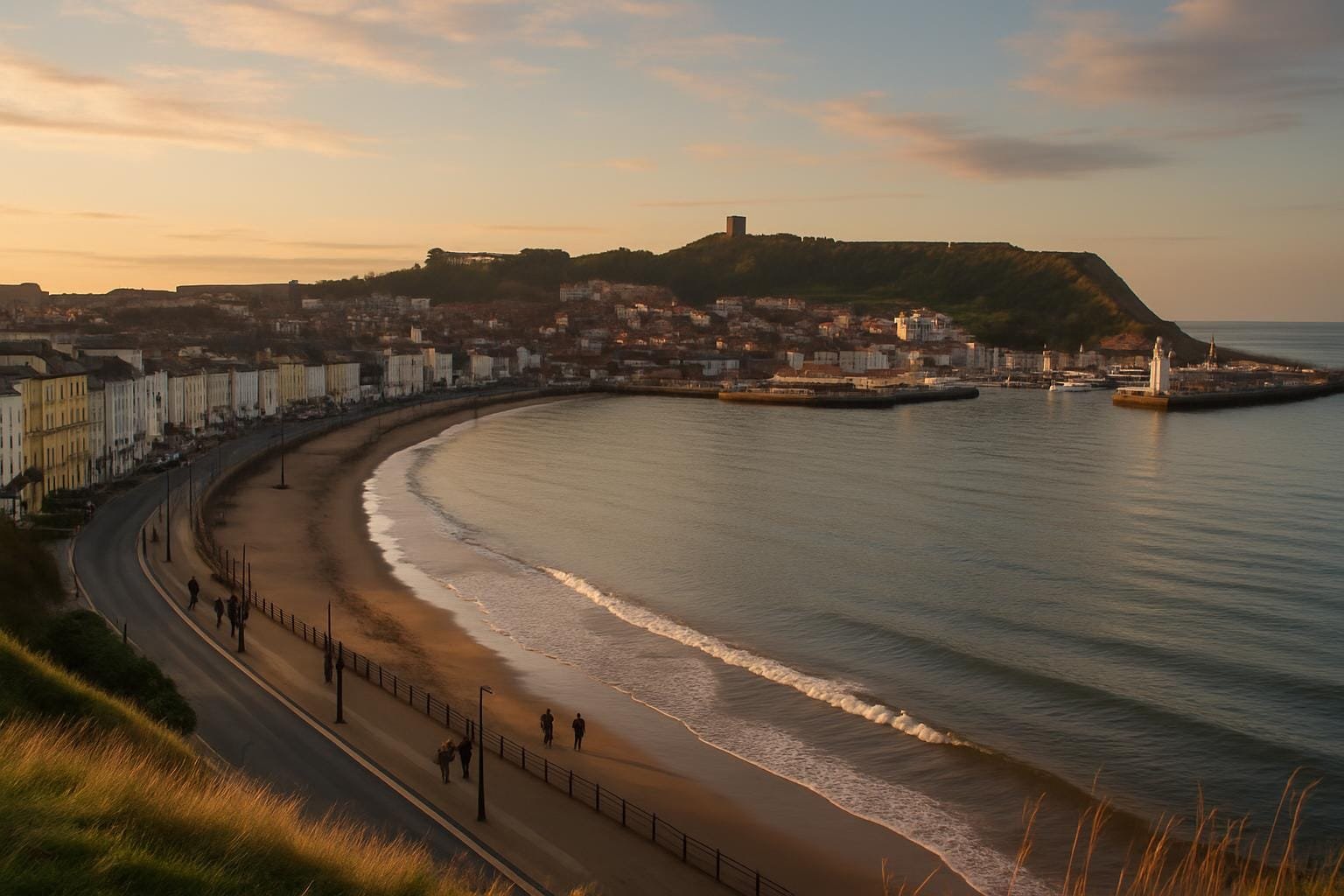
Everyone bangs on about South Bay, and we’ll get there, but I always head to North Bay first. It feels calmer, more lived-in, less fairground soundtrack. Stand on the cliff top near Peasholm Gap and you get that long sweep of sand curving towards Scalby Mills, with the ruins of Scarborough Castle watching over you from the headland like a slightly disapproving relative.
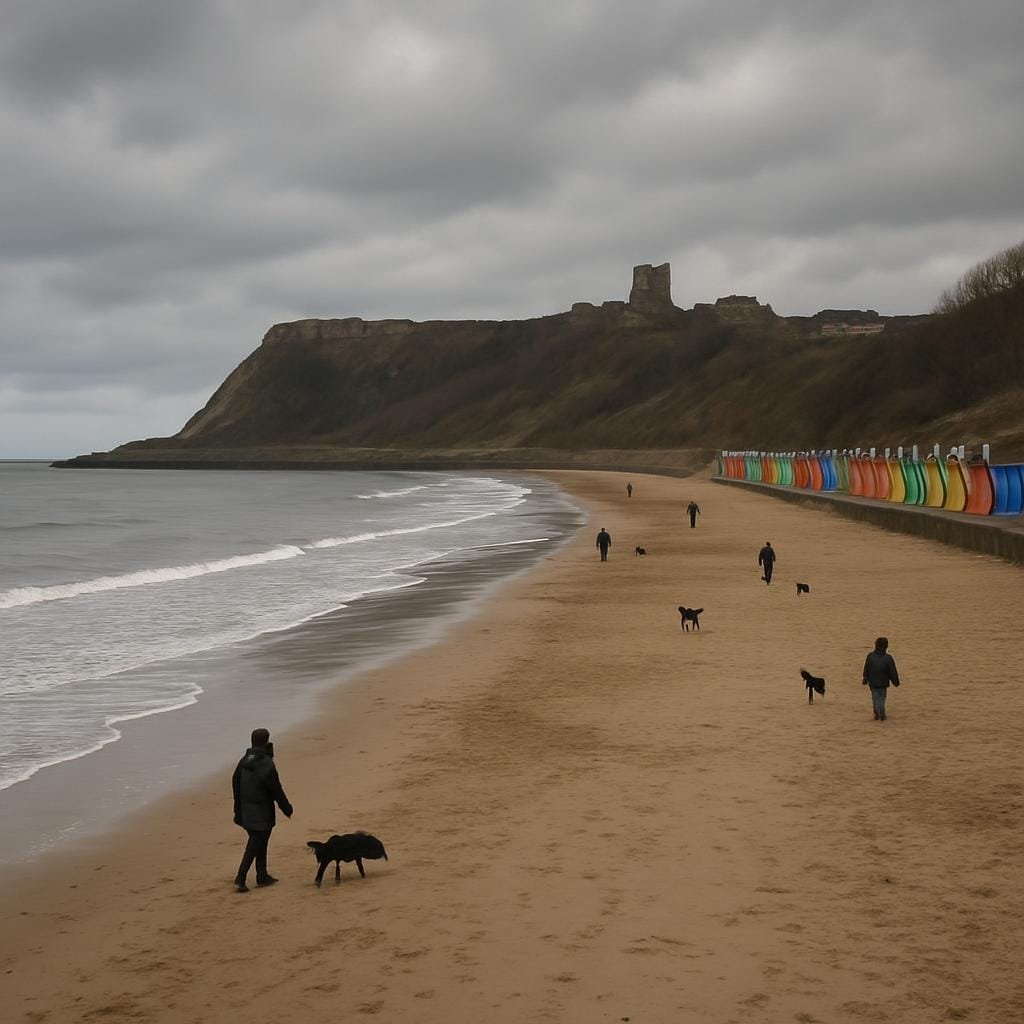
The sea here has no interest in pretending to be Mediterranean. Even in August it’s a brute. I’ve seen people in full winter wetsuits yelping as they go in. I once tried a brave northern paddle in April, got to mid-shin, and immediately reconsidered my life choices. The good thing is, the cold keeps you moving; you walk, you watch the surfers, you count the dogs that are visibly having the best day of their lives.
Just behind the beach is the old North Bay Railway, the miniature line that trundles between Peasholm Park and Scalby Mills. A return ticket is around £5–£6 for adults, and if you’ve any interest in old railways or just enjoy things that still smell faintly of oil and damp timber, it’s worth it. You rattle along beside the road and the sea, passing beach huts painted in colours that can only be described as “optimistic British seaside”.
At the far end, near Scalby Mills, there’s the Sea Life Scarborough centre. It’s not cheap – tickets are typically in the £20–£25 region if you turn up on the day, slightly less if you book online – but kids go wide-eyed at the penguins and the underwater tunnel, and adults get an indoor break when the wind turns spiteful. The café there has the usual chain coffee and cake, but the real draw is the view back along the bay from the clifftop outside: Scarborough stretched out like a postcard someone’s left in the rain.
Worth knowing before you go – North Bay: Parking along the Marine Drive and around Peasholm Park is controlled and can be confusing; budget around £2–£3 for two hours and read the signs properly. If you’re coming by train, it’s a 20–25 minute walk downhill from Scarborough station to North Bay, or you can grab the open-top seafront bus. Best time to walk it is early evening on a clear day when the day-trippers are disappearing. Most people miss the little cut-through steps from the cliff top behind the Sands apartments down to the beach – they’re steep, but they save you a long detour.
Scarborough is made for people who like walking with a bit of effort. The headland between North and South Bays is not huge, but it rises sharply, and the network of paths means you can stitch together a loop depending on your appetite and your knees.
One of my favourite walks starts near Peasholm Park (we’ll come back to the park itself) and heads up through the residential streets until you hit the Cleveland Way signs. From there, you get proper coastal path: hedges, the occasional whiff of fish and chips carried on the wind from South Bay, and that sheer drop to the sea on one side. On a blustery day you’ll taste salt on your lips even if you’re nowhere near the waves.
You eventually reach the entrance to Scarborough Castle, perched dramatically above both bays. Admission for adults is around £9–£11, with cheaper prices if you’re an English Heritage member. There’s a small car park up there but it fills quickly; I’ve always walked, partly out of principle and partly because my handbrake anxiety kicks in on steep coastal car parks.
The castle itself is more atmosphere than intact stone, which is fine by me. The curtain walls, the grassy inner ward, the surviving tower – they all frame some of the best views you’ll get of Scarborough. On one side, the arc of South Bay with the harbour and the grand old hotels lining the Esplanade. On the other, the harsher curve of North Bay. Inside, there’s a small exhibition with the usual mix of weapons, pottery and grim stories about the sieges here, especially during the Civil War when the place was thoroughly pummelled.
There’s a modest café in the visitor centre – tea, sandwiches, the usual suspects – and a terrace with outdoor seating. The tea tastes better than it should purely because of the wind and the view. Down by the main gate, there’s a sign politely asking people not to fly drones; frankly, I’m impressed anyone could keep a drone in the air up there without it ending up in Denmark.
Worth knowing before you go – Castle & cliffs: If you’re walking from town, expect a serious uphill section; bring proper shoes. Entry is cheaper if you book online in advance via English Heritage. Early morning or late afternoon tends to be quieter; on busy weekends the narrow paths leading up can feel like a slow queue. A lot of visitors walk up, look at the gate and the price board, and turn back. The thing they miss is the short path behind the castle that follows the outer bank; you don’t need a ticket for that bit, and you still get those “top of the world” views over the North Sea.
Drop down from the headland into South Bay and the mood changes sharply. The soundscape is different: slot machines bleating, gulls screeching, kids negotiating for another go on the 2p pushers. It’s exactly what people mean when they say “seaside town” in that slightly weary-but-fond way.
The harbour here is still a working one. Early in the morning you’ll see fishing boats coming and going, and if the tide’s right you can wander along the pontoons and watch the crews sorting nets. The water in the inner harbour is a strange colour – more tea than blue – and smells accordingly, but there’s something very grounding about watching a place that still earns part of its living from the sea.
On Foreshore Road, fish and chip shops compete for your attention. I’ve ended up at Winking Willy’s more than once, partly because of the name, partly because they do a decent cod and chips for about £10–£12. The batter is light enough to still taste of fish rather than just crunch. You can sit inside or take it out to the harbour wall if you’re prepared to fend off gulls with the steely determination of a bodyguard.
Further along is the Luna Park amusement area, all flashing lights and ride music from various decades battling for supremacy. The big wheel here isn’t huge, but it gives a decent view over the bay, and a quick spin is usually under a fiver. It runs extended hours during the season, and if you catch it in the blue hour between daylight and darkness, watching the lights flick on around the bay is oddly moving, in a Blackpool-on-a-smaller-budget sort of way.
If arcades are your thing (I still have a nostalgic weakness for the 2p machines), try Coney Island. It’s a tangle of flashing fruit machines, air hockey tables and those slightly uncanny claw games. The place smells of hot dust and sugar. I’ve wasted plenty of small change there trying to win a keyring I didn’t actually want.
Worth knowing before you go – South Bay: Parking on the front is limited and not cheap – expect £3–£4 for a couple of hours, more in peak season. A better bet is one of the multi-storeys uphill (around £2.50–£3 for two hours) and walk down. South Bay is busiest mid-afternoon; early morning has that washed-out, hungover quiet, which is a good time for a harbour stroll. Most visitors skip the short path above the Grand Hotel that leads along the cliff with benches facing out to sea – it’s a peaceful spot to eat chips away from the noise.
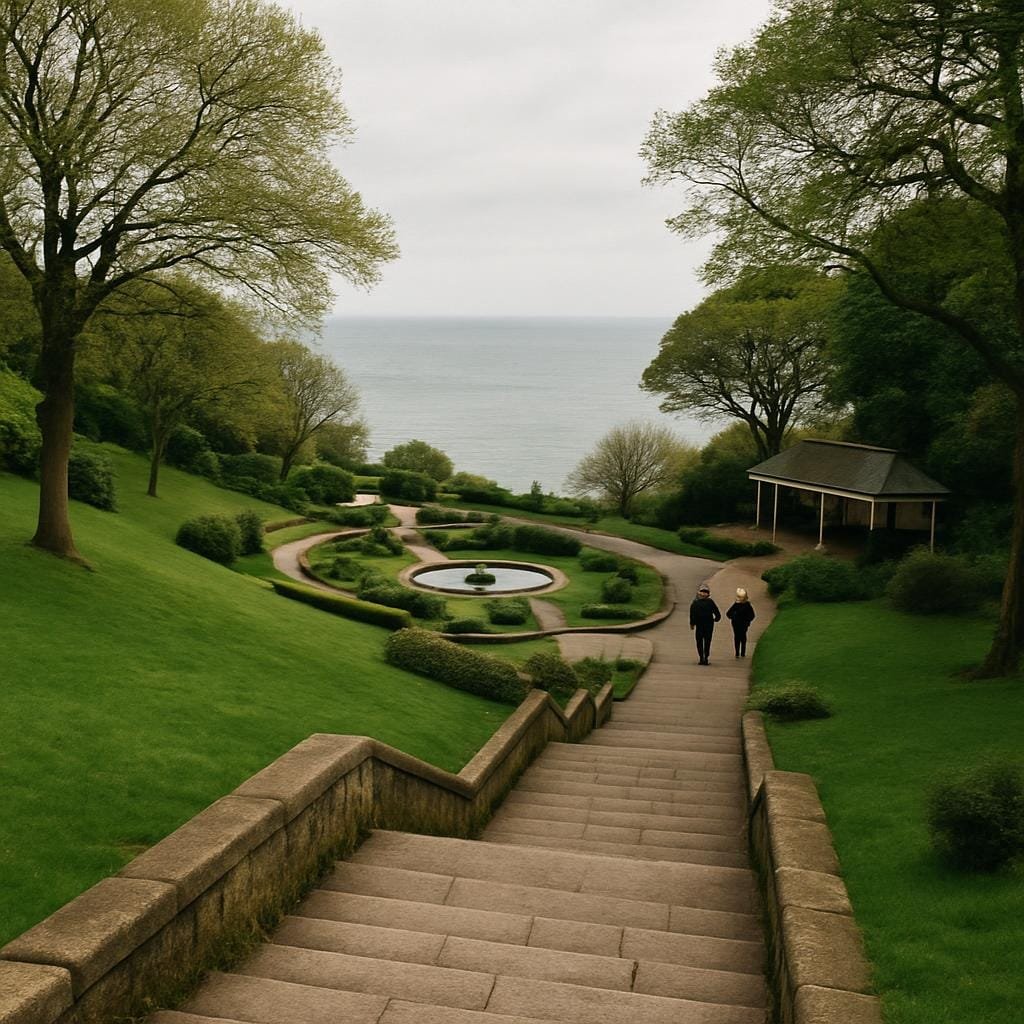
Peasholm Park is where Scarborough leans into its eccentric streak. It’s a proper old municipal park with a boating lake, Oriental-style pagoda on an island, and winding paths through trees that, for reasons I can’t quite explain, always feel slightly cooler than the rest of town.
You can hire a rowing boat or one of those swan-shaped pedalos for around £8–£10 for half an hour. I’ll be honest: I am not a natural oarsman. On one visit I spent a good fifteen minutes spinning in slow circles near the island like some sort of confused aquatic Roomba. Kids thought it was hilarious. I pretended it was deliberate.
The most talked-about bit of Peasholm, though, is the naval battle re-enactment. In summer, on selected days, miniature warships and planes enact a World War II-style battle on the lake, all choreographed explosions and plumes of water. The ships are about as big as dining tables, controlled by people hidden inside the island. It’s gloriously old-fashioned. There’s a small admission fee for the viewing area, usually a few pounds, and they sell programmes with names for the ships as if you’re at a football match.
There’s a café by the main entrance – the Peasholm Park Café – doing bacon sandwiches, ice creams and mugs of tea that arrive hotter than the sun. The smell of frying lingers in the air around that end of the park, mixing with damp earth and duck feathers. On wetter days, the park has that familiar British mix of raincoats, umbrellas and people pretending the weather is absolutely fine for a nice walk.
Worth knowing before you go – Peasholm Park: Entry to the park is free; you only pay for boats and the naval battle events. It’s a short walk inland from North Bay; buses along Columbus Ravine drop you nearby. Best time is later afternoon heading into evening, when day visitors start to slope off and the dog-walkers take over. Most visitors never climb up to the higher paths above the lake – they give you good views across the park and out towards the sea, and they’re usually quiet.
One of the reasons I like Scarborough is that if you step a few streets away from the seafront, it stops performing for tourists and gets on with normal life. I always make time for the Market Hall, a Victorian building tucked between St Helen’s Square and Aberdeen Walk. Inside, you’ve got the traditional stalls on the ground floor – butchers, fruit and veg, fabric, a lady selling wool with the air of someone who’s seen everything – and then galleries of smaller units above.
They spent good money refurbishing it not too long ago, and they’ve managed to keep the character while adding little indie shops and cafés upstairs. Eat Me Café, which used to be near the Stephen Joseph Theatre, had a spell in here doing ramen and cakes with proper flavour; worth checking if it’s currently open or relocated again, as Scarborough’s independent food scene has a habit of moving about.
In terms of pubs, I’ve a soft spot for The Valley Bar on Valley Road. It’s a traditional place with a real ale focus, wood panelling and a faint smell of spilt beer and old carpet that somehow feels reassuring rather than grim. Prices are sensible; you’ll get a well-kept pint for around £4–£5, and there’s often a Yorkshire brewery or two represented on the handpulls. Nobody’s trying to sell you a craft IPA with notes of gooseberry and enlightenment.
If you prefer something right in town, the recent CAMRA guides usually list a couple of solid options near the station; I’ve ducked into the Lord Rosebery (a Wetherspoons in a former hotel) for a cheap breakfast more times than I care to admit. Say what you like about Spoons, but £4–£5 for a fry-up and endless refills of coffee is hard to argue with when you’ve been clambering around cliff paths.
Worth knowing before you go – “real life” Scarborough: The Market Hall is free to wander and open most days, but individual traders keep their own hours; mornings are livelier. It’s a 5–10 minute walk from the station. Most visitors stick to the front streets; go one block further inland and you’ll find cheaper cafés and barbers that don’t look like they were designed by an Instagram consultant. Also, keep an eye out for local events like the Scarborough Fair Festival or the science-fiction-heavy events at Scarborough Spa – posters around town often advertise them before the internet catches up.
If you take anything from this Scarborough travel guide, I’d say: slow down. The town rewards pottering more than it rewards ticking things off. Walk the cliff paths rather than jumping straight in the car. Sit on a bench above South Bay with a coffee from somewhere like Reflections on Sandside and watch the tide creep in. Give the Sea Life centre a go if you like, but also give half an hour to the quiet streets behind the Esplanade, where old boarding houses lean into the wind and the only noise is someone wrestling a wheely bin.
I’ve been here in sideways rain, in flat grey calm that made the sea look like old slate, and on rare blue-sky days when everyone in Yorkshire seemed to be in the same queue for ice cream. Scarborough doesn’t change quickly, and that’s half the appeal. The cliff paths still climb and drop, the sea is still brutally cold, the market still sells trays of eggs and discounted socks.
Walk it, get a bit lost, eat your chips away from the gulls, and let the place work on you slowly. It’s not polished, and that’s exactly why I keep coming back.