
If you’re looking for things to do in Yorkshire beyond the moors, you very quickly realise the county doesn’t stop at heather and windswept sheep. Follow the roads east and south and it turns into harbours, mills, market halls and places where you’ll find as many forklift trucks as hikers. That’s my comfort zone.
I’ve come to Yorkshire for years, first for work in logistics (romantic, I know), then later for actual holidays. The moors are great, but I’ve grown fonder of the coastal towns that smell faintly of vinegar and diesel, and the inland mill towns where the best view is usually a row of chimneys. This is about that side of Yorkshire: salt, soot, and very good cake.
Whitby is the place that finally persuaded me that things to do in Yorkshire beyond the moors can happily involve sand in your shoes and seagulls with criminal intent.
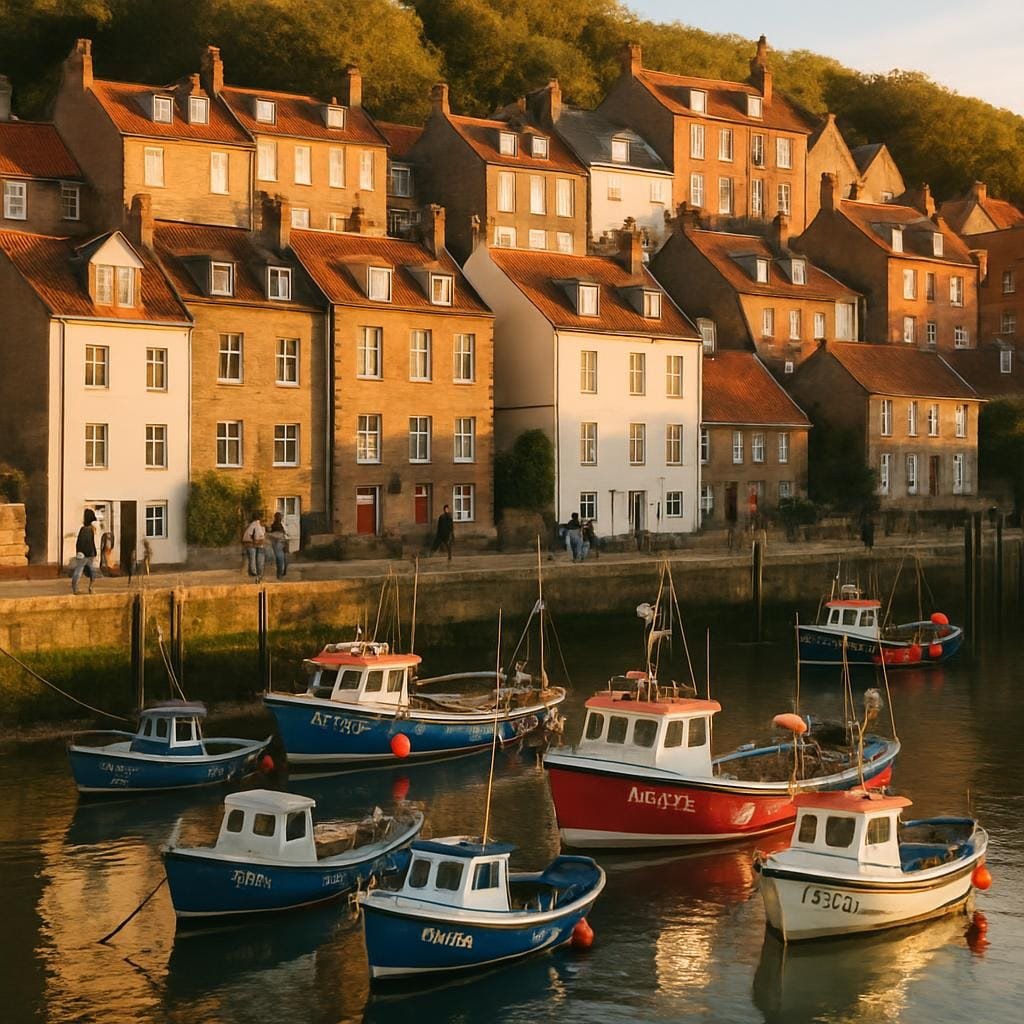
The town is split by the River Esk: one side grand and Victorian, the other side older, tighter and more Gothic, with the outline of Whitby Abbey glaring down from the clifftop. The first time I stayed over, I made the mistake of hauling a weekend bag up the famous 199 steps from Church Street to St Mary’s churchyard, telling myself it would be “atmospheric”. Atmospheric is one word. “Leg day” is another.
Up top, the ruins are properly impressive, but the detail that stuck with me was the wind. It doesn’t blow so much as shove. The clifftop path has a sign warning you not to get too close to the edge. For once, I behaved. Entry to the abbey is around £11 for adults if you pay on the day, a bit less if you’re an English Heritage member, and there’s a decent café in the visitor centre with very solid scones.
Down in town, I still rate the chips from The Magpie Café, though you need to time it right. Go at peak lunch and you’re looking at a queue that snakes round the corner and gives you far too long to debate cod versus haddock. Last time I went I grabbed a takeaway from their hatch (fish, chips and mushy peas just under a tenner) and ate it sitting on the harbour wall, defending each chip from seagulls that have evolved a taste for tartare sauce.
For something slightly calmer, there’s the small Whitby Museum up in Pannett Park. It’s about £7 to get in and has the exact kind of chaos I like: fossils, jet jewellery, a suspiciously haunted-looking hand of glory in a glass case, and a model ship or three. The park itself is a good breather from the crowds, with views back towards the abbey if you line it up right.
Oh, and keep an eye out near the Swing Bridge for the tiny shopfront of Sherlock’s Coffee Shop on Flowergate. It’s narrow, a bit creaky, and serves coffee strong enough to make you reconsider your afternoon plans.

Scarborough often gets written off as “past its best”, which is a bit harsh but also not entirely wrong. South Bay still has the old amusement arcades, donkey rides on the sand and more neon than common sense. If you want polished chic, you’ll sulk. If you want two quid’s worth of 2p machines and a bag of rock, you’ll be delighted.
The thing that rescues Scarborough for me is Scarborough Castle. The headland splits North and South Bay, and the castle sits right on the top, walls gawping straight down to the North Sea. It’s about £9 for adults to get in. There are informative signs, yes, but also quiet corners of grass where you can sit and stare at the sea and pretend you’re contemplating history rather than your next ice cream.
Down below, North Bay is the calmer side: a sweep of sand, the SEA LIFE Scarborough aquarium, and the excellent North Bay Railway, a miniature railway that trundles you along the coast for about £5 return. It’s mainly kids and grandparents, and the occasional adult like me who likes small trains and doesn’t care who knows it.
Café wise, I’m fond of Harbourside Tea Room tucked behind the main drag in the old town. It’s tiny, cash-friendly, and the cakes lean heavily towards “slab” rather than “slice”. One rainy afternoon I ended up there with a pot of tea, a wedge of lemon drizzle, and a bloke at the next table loudly ranking every fish and chip shop in town like it was a competitive sport.

Saltburn is one of those places that feels like it has a clear idea of what it is: part surf town, part Victorian project, part industrial relic. You arrive at the cliff top, with its Italianate gardens and the odd leftover from when the place was a planned resort for mine owners and workers. Then you realise the beach is a long way down.
You can walk down the zigzag path, or take the Saltburn Cliff Tramway, a water-balanced cliff lift dating back to 1884 that looks like it shouldn’t still be working, but does. Return fares hover around £2.20. At the bottom you’ve got the pier stretching into the North Sea, with the massive iron ore loading jetty of Teesport glowering off to the south. It’s an odd view – rollercoaster waves, surfers and heavy industry in the same eyeline.
For food, I’ve had good fish and chips from Seaview Restaurant. Sit-in portions are substantial and around £14, but you’re paying for location; the takeaway from the hatch is more manageable on both fronts. If you’re more in the mood for coffee and cake, Realitea up in town has a gentle chaos of mismatched crockery and very respectable cinnamon buns.
Saltburn’s big annual event is the Saltburn Food Festival, usually late summer. I stumbled into it by accident once and spent a happy afternoon working through pork buns, local ice cream and a local brewery pale ale I was absolutely not planning to drink at midday. The main street closes to traffic and fills with stalls; come hungry and with cash.

Head inland and you swap waves for weirs. Saltaire, just outside Bradford, is a former mill village that now seems to attract equal numbers of art lovers, architecture students and dog walkers who somehow all get along.
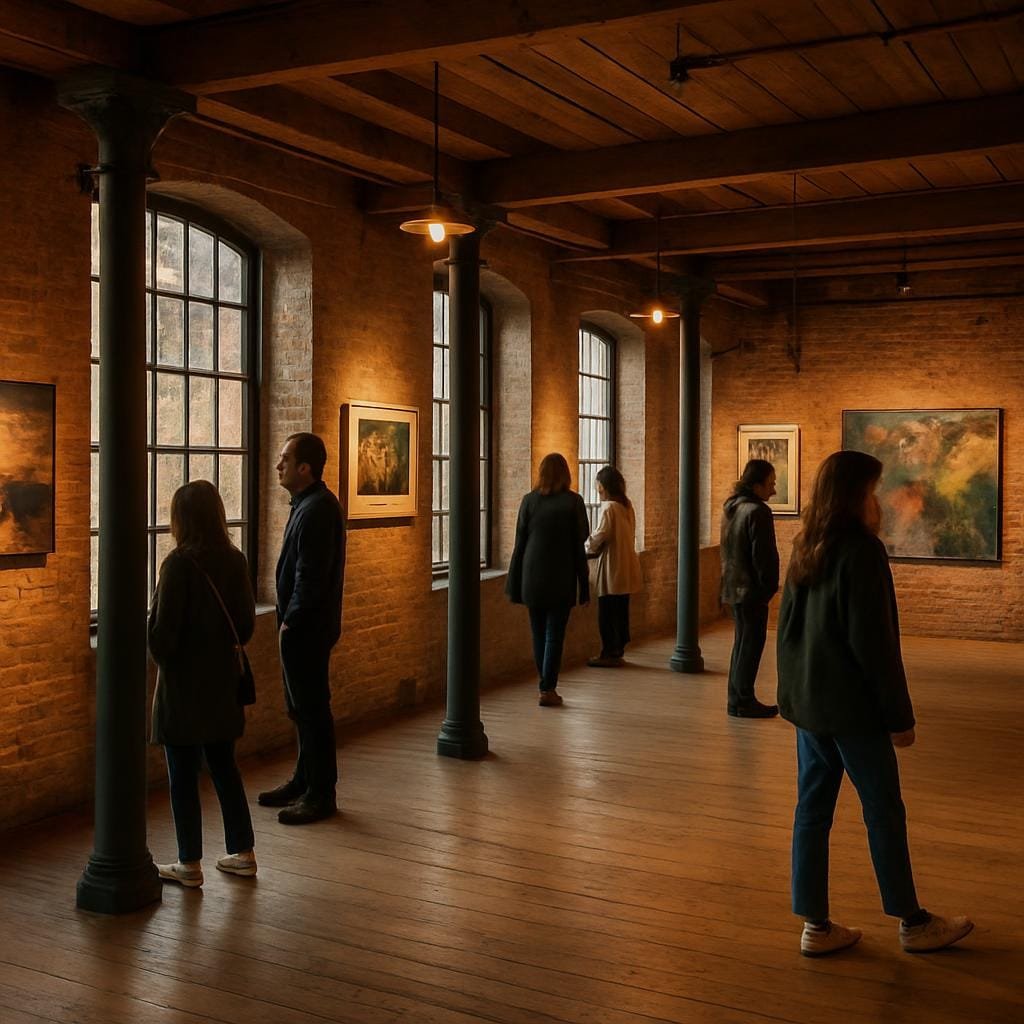
The centrepiece is Salts Mill, built in the 1850s by Sir Titus Salt, who moved his workers out of Bradford’s smoke to this planned community along the River Aire. These days the mill is free to enter and filled with David Hockney works, bookshops, design shops and places to eat. Even if you don’t like art, it’s worth wandering through just to get a sense of the scale: huge stone floors, iron columns, windows that go on forever.
Café-wise, I keep ending up at Caffè in the Opera, tucked inside the old Victoria Hall, or at Salts Diner inside the mill itself. The latter does a very decent pizza for about £12 and has the sort of industrial chic that, for once, is actually industrial.
The village streets are a bit eerie in their uniformity: rows of solid stone terraces, neat gutters, barely a satellite dish in sight. They were designed that way – tidy, moral housing for the workforce, complete with an institute, almshouses and a park but, famously, no pub. Titus didn’t approve. There is now the Don’t Tell Titus bar by the mill as a sort of posthumous protest.
On one visit a few years back, I caught the Saltaire Festival, which turns the whole area into a sort of streets-and-parks arts fair: open studios, live music by the river, stalls on Roberts Park. It’s worth timing a trip for, but even random Saturdays are good for a wander.

I’m cheating a bit pairing these, but in my head they go together: Hebden Bridge for the cafés and canal, Halifax for the big, serious stone buildings and a market hall that made my logistics brain very happy.
Hebden Bridge is wedged in the Calder valley with a canal running through the middle and steep, wooded sides that mean you quickly learn what “up” feels like. The town has a reputation for artists, independent shops and left-leaning everything. You can see why – the old mills have become studios and flats, and the town centre skews heavily towards bookshops, craft places and vegan cake.
For something simple, I like walking the Rochdale Canal towpath. Head towards Todmorden and you pass old mill buildings, colourful narrowboats and patches of woodland where you can pretend you’re in the middle of nowhere until a train hammers by on the opposite side.
Pub-wise, The Hole in the Wall does good beer and evenings that blur slightly if you’re not careful, while café-lovers usually end up at Innovation Café Bar opposite the canal. Expect craft beer, good coffee, and at least one table having a detailed conversation about a community project.

Halifax is where my “things to do in Yorkshire beyond the moors” list starts sounding like a love letter to trade. It’s a town built on cloth, and you can still see it in stone.
The big headline is The Piece Hall, a colossal 18th-century cloth hall that has been rescued from neglect and turned into a public square ringed with shops, bars and galleries. Entry is free, which is absurd given the scale of the place. You walk in under the archways and the courtyard opens up like someone forgot to tell Halifax it wasn’t a European capital.
Around the edges you’ve got places like Elder doing serious food, and The Lantern for coffee and cake. During concerts – everyone from local bands to national names – the whole courtyard turns into an open-air venue. Buy tickets early and bring a jacket; Halifax evenings don’t mess about.
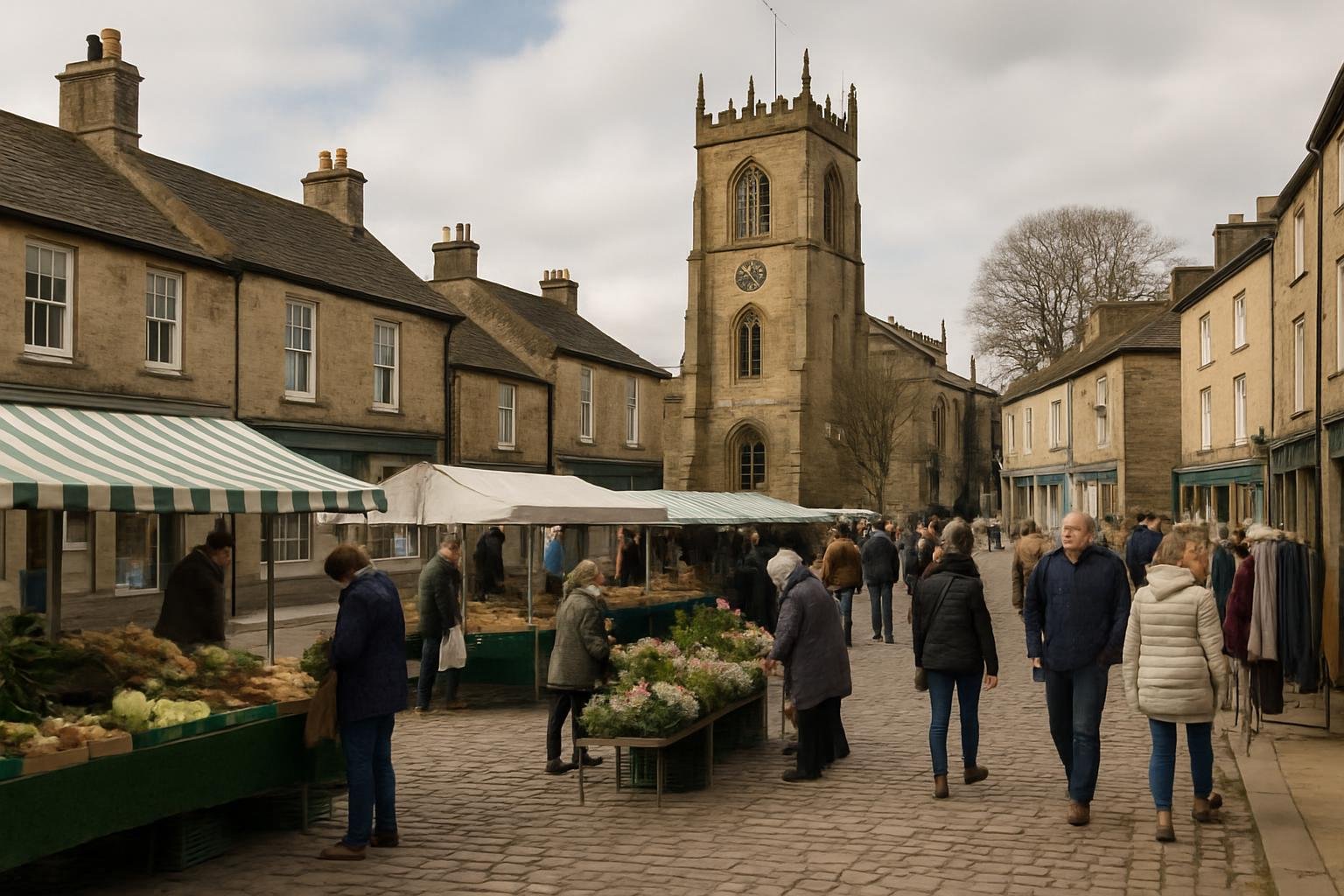
Equally worth your time is Halifax Borough Market, a late-Victorian market hall with a glazed roof, proper butchers’ counters and corners that look like they’ve dodged refurbishment on purpose. It’s the sort of place where you can buy tripe, a phone charger and a bag of Yorkshire mix sweets without leaving the building. I always end up at the Berwick Café inside: strong tea, bacon sandwiches around £4, and the gentle soundtrack of people gossiping across the aisle.

I’ve lost count of how many times I’ve been through Yorkshire for work, staring out of train windows at grey stone and chimneys while other passengers angle for selfies of purple moorland. These coastal towns and mill valleys don’t always photograph as neatly, but they’re where daily life hums along: kids with buckets and spades, stallholders in market halls, volunteer-run cliff lifts that somehow still work.
If you’re planning things to do in Yorkshire beyond the moors, think of it as a triangle: coast, canal, mills. Spend a day on the harbour walls of Whitby or Saltburn, another under the arches of Halifax’s Piece Hall and in Saltaire’s mill, and a third wandering markets and towpaths in places like Scarborough and Hebden Bridge. Your boots might see more pavement than peat, your photos might feature more chip wrappers than wild heather, but you’ll go home with a feel for the county that’s harder to get from the postcard rack.
And if, like me, you occasionally find yourself enjoying a Victorian market hall more than a panoramic view, you’ll be in good company here. Just don’t make the mistake I did of tackling Whitby’s 199 steps straight after a full fish and chip lunch. There are better ways to experience coastal Yorkshire than wondering at which step you’ll actually explode.
For me, that’s the real pleasure of hunting out things to do in Yorkshire beyond the moors: you get stories, not just scenery – and usually a decent brew somewhere along the way.