
I grew up in landlocked Shropshire, where “the seaside” meant a three-hour drive and a bag of sand in your shoes for a week. So the first time I drove all the way to the far-west of Cornwall, I had this daft idea it would feel like any other British coast, just with more postcards of lighthouses. It doesn’t. The further west you go, the more your brain quietly realises: this is the end of the line. That’s how Cornwall feels different down at the tip — slightly disconnected, slightly sideways, like the rest of England has faded into background noise.
This isn’t a neatly planned tour, by the way. It’s a mix of trips, some well-thought-out, some badly improvised in a lay-by. But between them, they’ve built up a sense of how Cornwall feels different when you keep driving until there’s pretty much no more England left.
Driving to Land’s End is a head game as much as a road trip. You pass all the familiar names — Bodmin, Truro, Penzance — and then the place names on the signs go from “vaguely familiar” to “did the council cat walk across the keyboard?”. By the time you’re following tiny arrows to Sennen and Land’s End, England feels like it’s tapering into a point underneath your wheels.
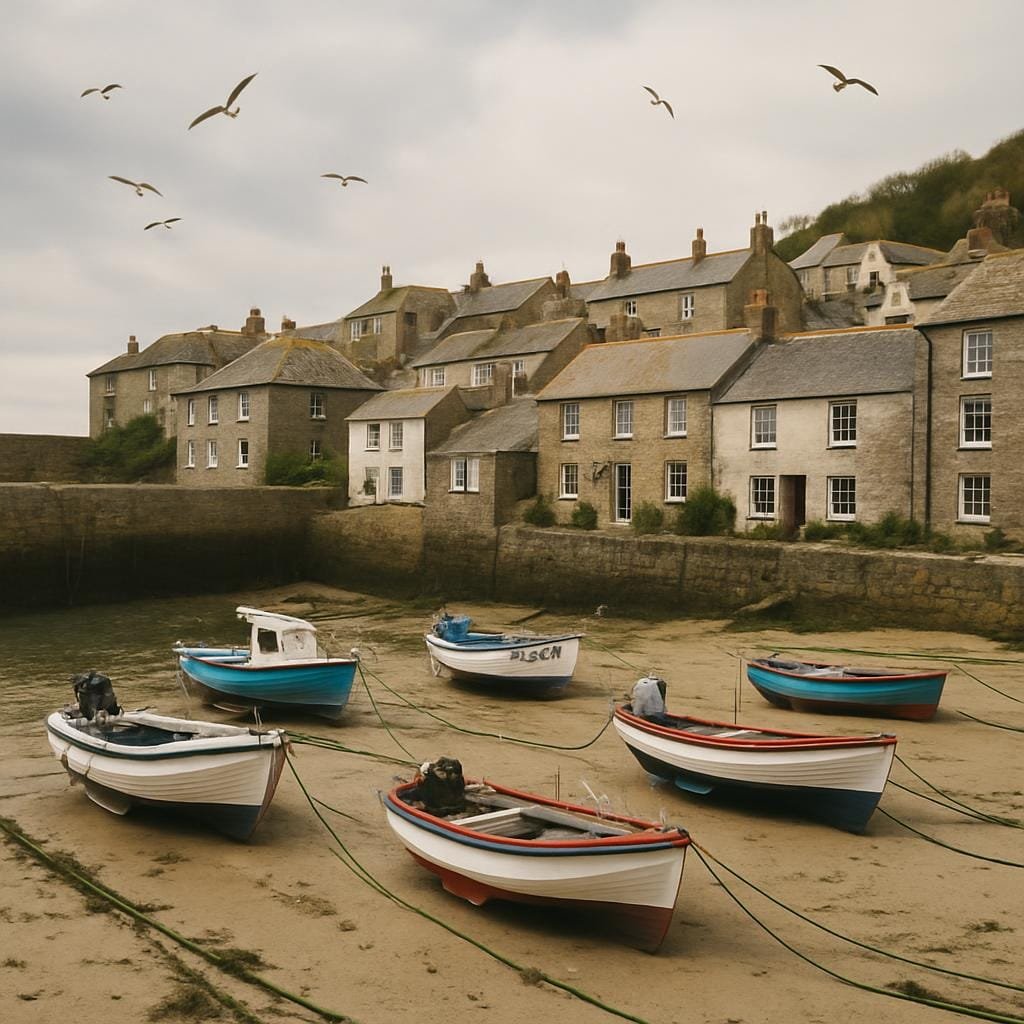
At the actual headland, there are two different Land’s Ends in play. There’s the commercial bit — the branded attractions, the “official” signpost that you pay to stand under, the soft-play vibe. Then there’s the cliffs, the wind, and the sudden, very physical sense that if you carried on in a straight line, you’d eventually bump into America. The tension between these two is a good little summary of how Cornwall feels different here: half seaside attraction, half raw edge of the country.
The first time I came here it was in March, horizontal rain, visibility about 20 metres. The iconic signpost could’ve said “Tesco Express” and I’d have believed it. This is the sort of place where the weather genuinely decides how profound you’re going to feel. Come on a clear day and the sea looks endless and rather cinematic. Come in heavy weather and it feels slightly threatening, like the Atlantic is offended you showed up.
Behind the visitor centre there’s a short walk along the cliffs towards Sennen Cove. You get gorse, seabirds, and the sort of wind that peels your words off your face. A few minutes along you can see the Longships Lighthouse out on its rock, looking tiny and stubborn. It’s one of those views that makes your job title feel incredibly small.
Land’s End is where you really start to feel how Cornwall feels different at the extreme edge: more wind, more sky, fewer options, and the constant sense that everything here has to deal with Atlantic weather as a daily colleague, not an occasional drama.
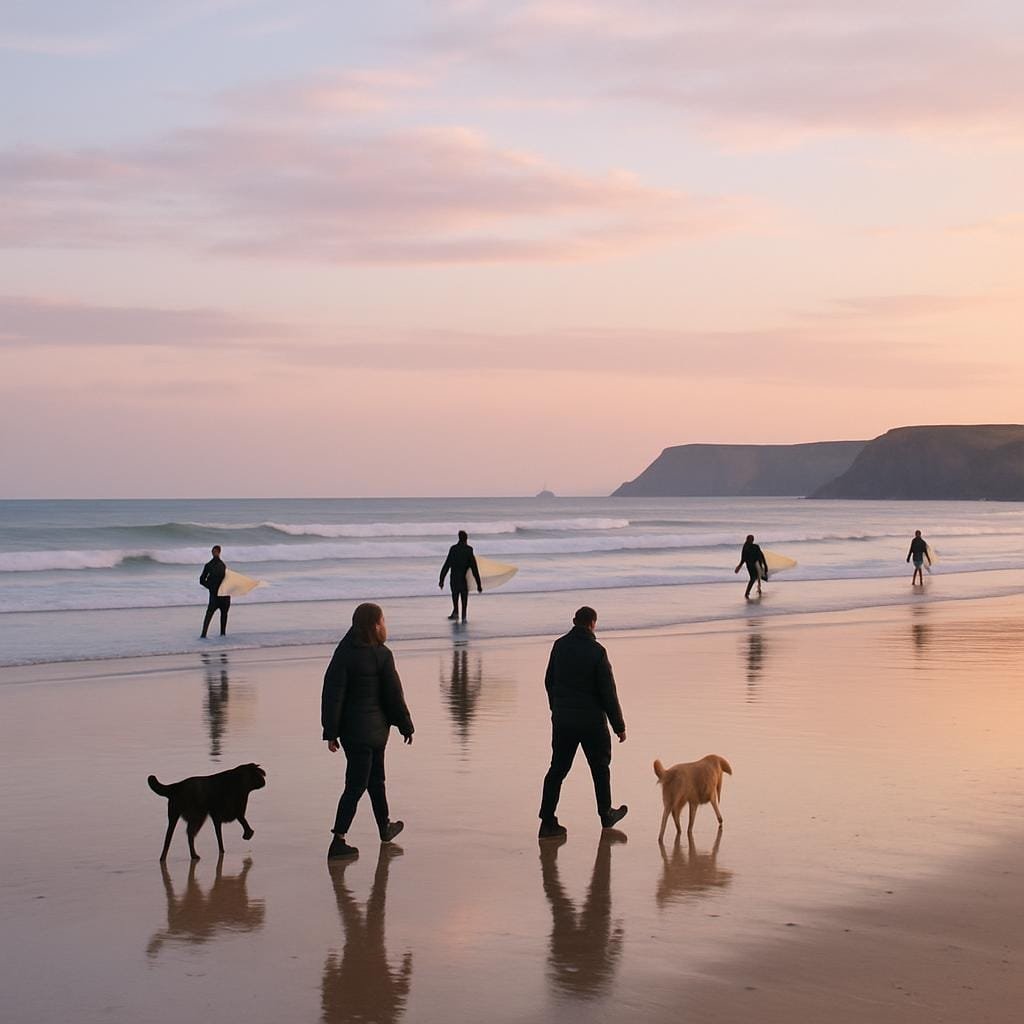
Drive ten minutes north from Land’s End and things get stranger in a good way. St Just is the westernmost town in mainland Britain, but it feels less like a statistic and more like a place that’s had to work hard just to exist. Granite cottages, a proper square, a couple of pubs and a Co-op; it’s not a resort, it’s a town that happened to be built somewhere wildly inconvenient.
This is where old Cornwall muscles its way in. You’re right on the edge of the Tin Coast, and everything about the area reminds you that people dug, sweated and often drowned here for a living. Head down to Botallack and you get those famous engine houses clinging to the cliffs above the sea. They’ve been on all the tourist posters since the BBC’s Poldark revival, but in real life they feel less romantic drama and more “hard job, short life”.
What really sticks is the noise — or lack of it. Standing above the Crowns engine houses, you mostly hear waves and the occasional shout from someone trying to keep their dog away from the drop. There’s a faint metallic smell in some spots where rust and wet stone meet. You can walk a bit of the South West Coast Path here and, if you look inland, you see old mine shafts, capped and fenced, dotted across the fields like abandoned punctuation marks.
This is one of the places where how Cornwall feels different really hits: it’s beautiful, yes, but there’s an underlying seriousness to it. The scenery isn’t just for Instagram; it was someone’s workplace, and you can still feel that.
Of all the towns near the far-western tip, St Ives is the one people get a bit misty-eyed about. Artists rave about the light. Locals grumble about the parking. Visitors spend half their time trying not to lose chips to seagulls the size of Labradors.
The first time I came here a few years back, it was July, and the town felt like someone had taken a normal fishing harbour and dialled the brightness up by about 30%. The sand was almost white, the sea was weirdly turquoise, and the whitewashed cottages bounced the sunlight around so much that I kept squinting just to read the menu outside The Allotment Deli on Fore Street. Their sausage rolls are dangerously good, by the way — peppery, flaky, the kind that make you regret pretending you’d share.
Walk down to the harbour and you get the standard holiday scene — kids with nets, the clink of halyards, the smell of chips and seaweed. But what makes it feel different is how quickly it shifts from touristy to quite intense. Turn left and wander up to the Tate St Ives (around £13 standard adult ticket) and you’re suddenly in this cool, echoing space full of paintings that were made because the light here really is that odd. Head up The Digey and through to Porthmeor Beach and you go from packed harbour to open Atlantic in about two minutes.
I’ll be honest: high summer St Ives is busy to the point of slightly stressful. Pushchairs, surfboards, queues for ice cream that look like they started in March. Last time I went I did a textbook bit of poor planning and drove into town at lunchtime, which meant an hour in the Island Car Park playing “will they, won’t they” with people walking past my space. Next time I swallowed my pride and used the park-and-ride from St Erth; honestly, do that. The little branch line curves right round the coast, and the views into St Ives are oddly soothing.
Down here, how Cornwall feels different is tied to the light and the pace. Even with the crowds, there’s a strange clarity to everything — colours sharper, air saltier, time slightly looser, especially once the tide starts sliding out of the harbour.
Penzance is where Cornwall stops pretending to be on holiday all the time. It’s the end of the main railway line, the last proper town before the single-carriageway wander west, and it has an “end-of-the-line” feel that I’ve grown quite fond of.
Walk down from the station and you hit the long, slightly windswept promenade. At one end you’ve got the Jubilee Pool, that white Art Deco lido filled with seawater. General swim sessions usually run about £7–£8 for adults, and there’s a geothermal pool that’s hotter and more expensive (roughly £11–£12) if you fancy pretending you’re in Iceland, but with more gulls and fewer influencers.
Along the front, there’s often a salty, slightly fishy tang in the air, mixed with chips from the likes of Frankie’s & Lola’s café by the harbour. Head slightly inland and you start to feel the weight of the place: old granite terraces, scruffy corners, tattoo studios, antique shops, and the sudden upmarket hit of Artist Residence with its cocktails and reclaimed-wood aesthetic. It’s a bit rough around the edges and all the better for it.
Wander along the road towards Newlyn and things get even more workmanlike. The harbour here is a serious fishing port; if you’re up early, you can watch boats unloading and hear the clatter of crates. It’s not pretty in the postcard sense, but it feels honest. You can eat extremely well too — Mackerel Sky Seafood Bar does small seafood plates from about £8 a dish, and you eat them perched at little tables while the traffic shuffles past. Book ahead or be prepared to queue; it’s tiny.
Here, how Cornwall feels different isn’t in the “wow” views — though Mount’s Bay on a clear day is hard to ignore — but in the mood. It feels like a real town at the limits of the country, getting on with things at its own pace, season after season.
If you really want to feel the edge under your feet, walk some of the South West Coast Path around Sennen Cove. Sennen itself is a sweep of sand, surf shops, and people trying to look casual in wetsuits. There’s a big car park just above the beach — figure on £5–£7 for the day in season — and the Sennen Surfing Centre runs lessons that will remind you how uncoordinated you are.
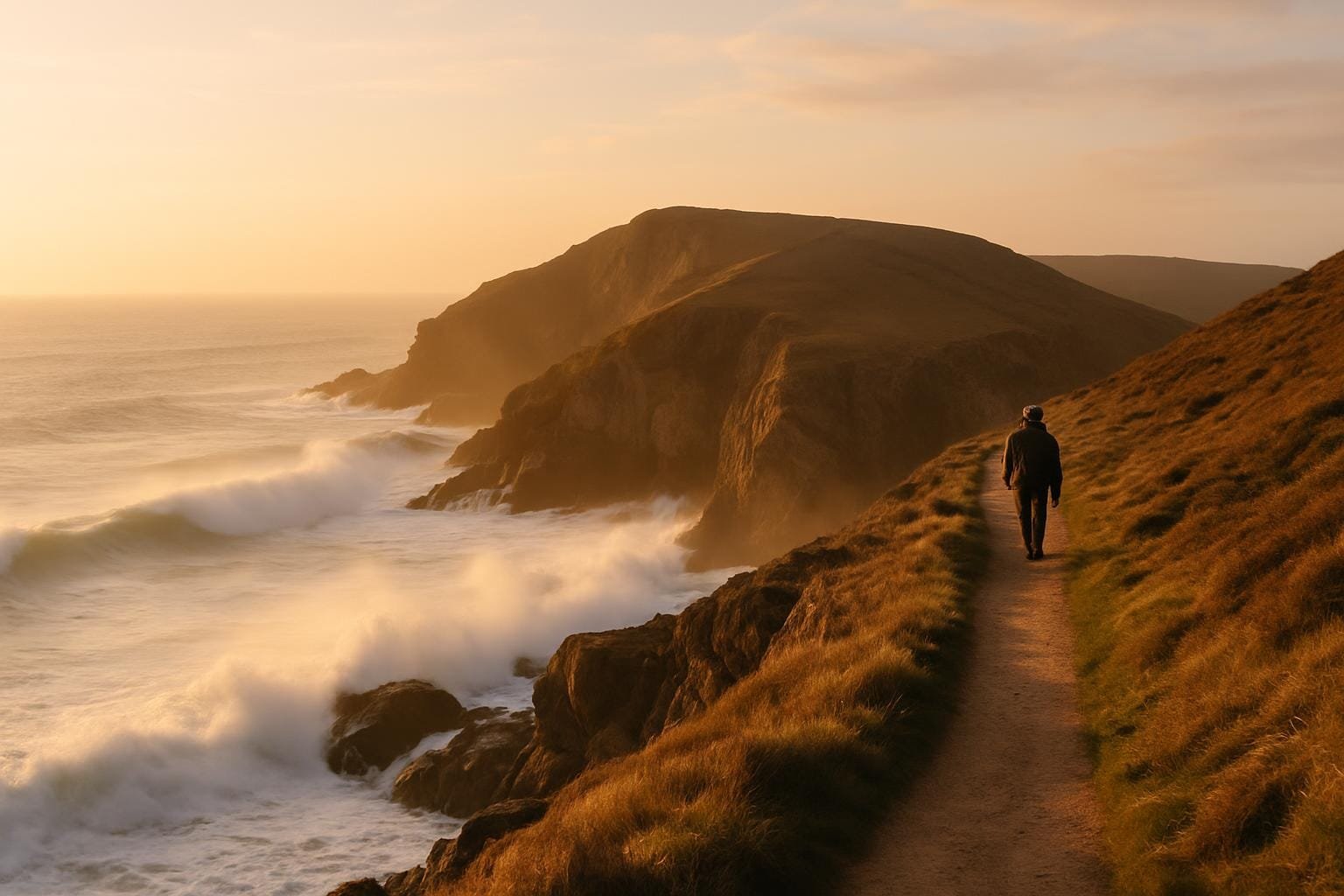
Head out of the village and up towards Land’s End along the clifftop and the noise drops away. You get those low, wind-shaved hedges, larks overhead, and the kind of views that would be used in a national advertising campaign if anyone could work out how to photograph the wind. There are moments when the path gets close enough to the edge that you instinctively walk a bit more carefully. Some of the granite outcrops have this faint iron smell when they’re damp — or maybe that’s just my inner ex-logistics manager imagining old machinery everywhere.
I’ll be straight with you — one time I set off on this path in completely the wrong shoes. The rocks were greasy, the gorse was doing its best to tattoo my ankles, and I ended up sliding inelegantly onto my backside while a family of six walked past in full technical gear and tried (and failed) not to laugh. Worth it though; on a clear day you can see right across to the Isles of Scilly ferry huffing its way out of Penzance.
On this stretch, how Cornwall feels different is all about space. The horizon is so big it almost feels like another physical object. You realise how exposed this end of the country is, how little there is between you and the open ocean.
After a few trips out here — some in rough weather, one glorious, crisp winter visit when the air felt like it had been polished — I’ve realised that how Cornwall feels different at the far-western tip isn’t about one specific town or cliff or cafe. It’s the combination of edges.
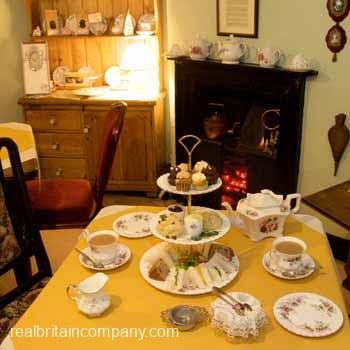
It’s easy to come to Cornwall for beaches and cream teas. Down at the far-western tip, those are still part of it — you can absolutely sit in Pescadou in St Ives or grab a pint at the Old Success Inn in Sennen and feel pleasantly on holiday. But if you walk a little further, stay out a little later, or come back in a quieter season, the place starts to push back a bit. In a good way.
That’s how Cornwall feels different here, right at the edge: slightly raw, slightly worn, resolutely itself. You leave with sand in your boots, salt in your hair, and the sense that you’ve been standing at the shoulder of something much bigger than you.