
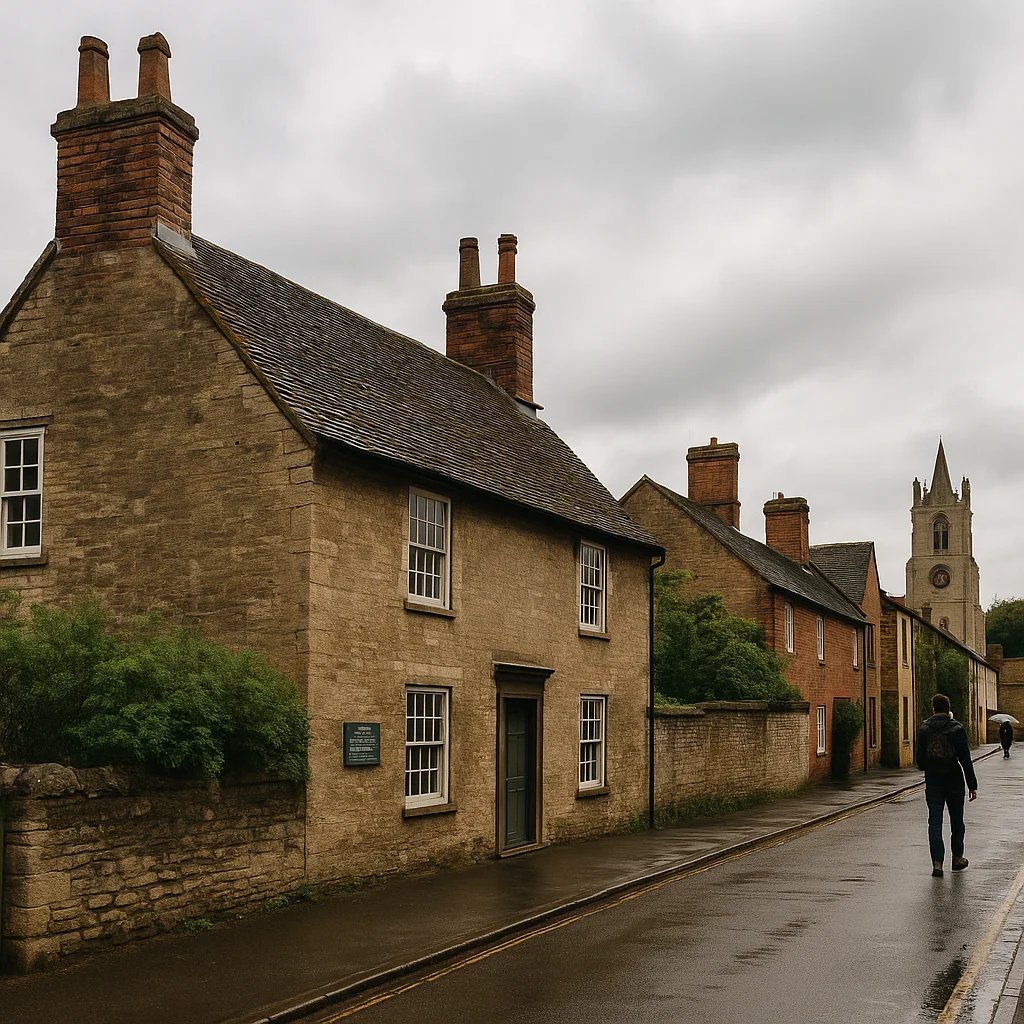
On a whim, I decided to explore Britain’s scientific heritage, focusing specifically on the homes of its famous mathematicians. You might not think of mathematicians as the rock stars of history, but once you start visiting their haunts, you’ll find they’ve left a surprising legacy. Join me on this cheeky but reflective jaunt through the homes of those who calculated the foundations upon which our modern world stands.
First stop: Cambridge, the city that boasts Stephen Hawking, Isaac Newton, and a plethora of brainiacs that dot the landscape like ivy on old brick buildings. I ambled into the very room at Trinity College where Newton supposedly developed his theory of calculus. Now, here’s a fun thing: the admission fee fluctuates depending on the time of year, but you can usually expect to pay around £3 for a brief entry. However, don’t forget to visit the chapel (the best bit if you ask me). It’s free to wander around outside, but stepping inside requires the donation of your dignity—or about £5.
As I stood in Newton’s old room, I could almost hear him whispering about gravity while I fought the urge to drop my phone. And if you’re like me and rubbish with multitasking, it’s wise to keep your hands on your belongings—unless you fancy a clumsy collision with another intrepid explorer.
After my visit, I made a pit stop at the nearby Café Sicilia on King’s Parade. I was tempted by their famous ricotta cake, and I must say, it was mathematically delicious—just the right balance of richness and sweetness. However, note to self: coffee with a side of dessert is a recipe for rapid heart palpitations, especially before a walk.
Best time to visit? Probably outside peak tourist season (spring and autumn), unless you’re one of those folks who enjoys dodging the selfie sticks that seem to emanate from every direction.
Next, I ventured to Bletchley Park, home of the codebreakers during World War II. Mathematician Alan Turing was faced with the insurmountable challenge of decoding the Enigma machine, and he did it against all odds. Entry is about £20, which includes access to various exhibitions and a lovely walk around the grounds.
Now, if you visit during the summer, pack a picnic. The gardens are beautiful and you can practically feel the weight of history in the air. But go easy on the cheese sandwiches—I may have had an existential crisis over whether they were worth the calories. As I sat munching, reminiscing about Turing’s genius, a cheeky squirrel leapt onto my picnic blanket, which only made me question whether I’d be better off dating a codebreaker instead.
While you may have heard of Carl Friedrich Gauss, did you know he’s actually got roots in Greenock, Scotland? Yes, this was new information to me, too. His family’s home is relatively unremarkable, but standing outside, pondering a mathematician who contributed so significantly to fields like statistics and number theory, it struck me how ordinary locations can house extraordinary legacies.
This is not a stopover for those expecting a grand trip. There’s no entrance fee—unless you count the price of a scone at a local café. I dropped by Harbourside Café, and folks, let’s just say the tea was divine, but my scone could have done with a first-class ticket back to the oven.
You’ll have to navigate quite a bit to get there—a 15-minute stroll from the train station, but wandering through Greenock’s coastal charm makes the walk worth it.
While we’re on the topic of mathematicians, I can’t skip over the late great Ada Lovelace, often considered the first computer programmer. Her childhood home is in London, though guided tours can be sparse. The most fascinating part? The attic space where she reportedly dreamt up algorithms, kind of like how I daydream about winning the lottery while realising I don’t even have a ticket.
You can wander around the area, which is pockmarked with intricacies ranging from Victorian architecture to the unmistakable scent of London—a mix of history and pretentious hipster coffee. Admission is free, which bodes well for my wallet, though I might have spent too much on that overpriced artisanal flat white just a few blocks away.
If you’re visiting, stop by the local library where you might find an entire section dedicated to the workings of early computing. Just be warned: the librarian can be a bit of a stickler for silence—if you’re anything like me, your snicker at a particularly awkward title might spark a shushing spell.
After gallivanting around various mathematicians’ homes, I found myself back in Oxford, where the air buzzes with the intellect of historical figures like George Boole. His house is on the outskirts, but for fans of logic, it’s well worth the meander. The entry fee isn’t applicable as it’s just a street address now, but keep an eye out for nearby cafés.
One such gem is The Missing Bean, where you can sip coffee while ogling Boole’s legacy. If you stare long enough at a barista through the glass front, they might open the door just to see if you’re alright—frankly, I would have settled for a decent chat with them about Boolean algebra.
This jaunt through Britain’s scientific heritage, with a focus on famed mathematicians’ homes, has been both delightful and daunting. I stumbled upon nuggets of information, fascinating spaces, and even sore feet, but this only added to the adventure.
When planning your own trip, keep an open mind—mathematics may not seem glamorous, but the homes of these historical giants hold stories that transcend equations. So, pack your bags, grab your calculator, and set out to explore this marvellous, mathematical side of Britain.
For more on visiting these incredible locations, check out the Cambridge University website and the Bletchley Park site. Happy exploring!