
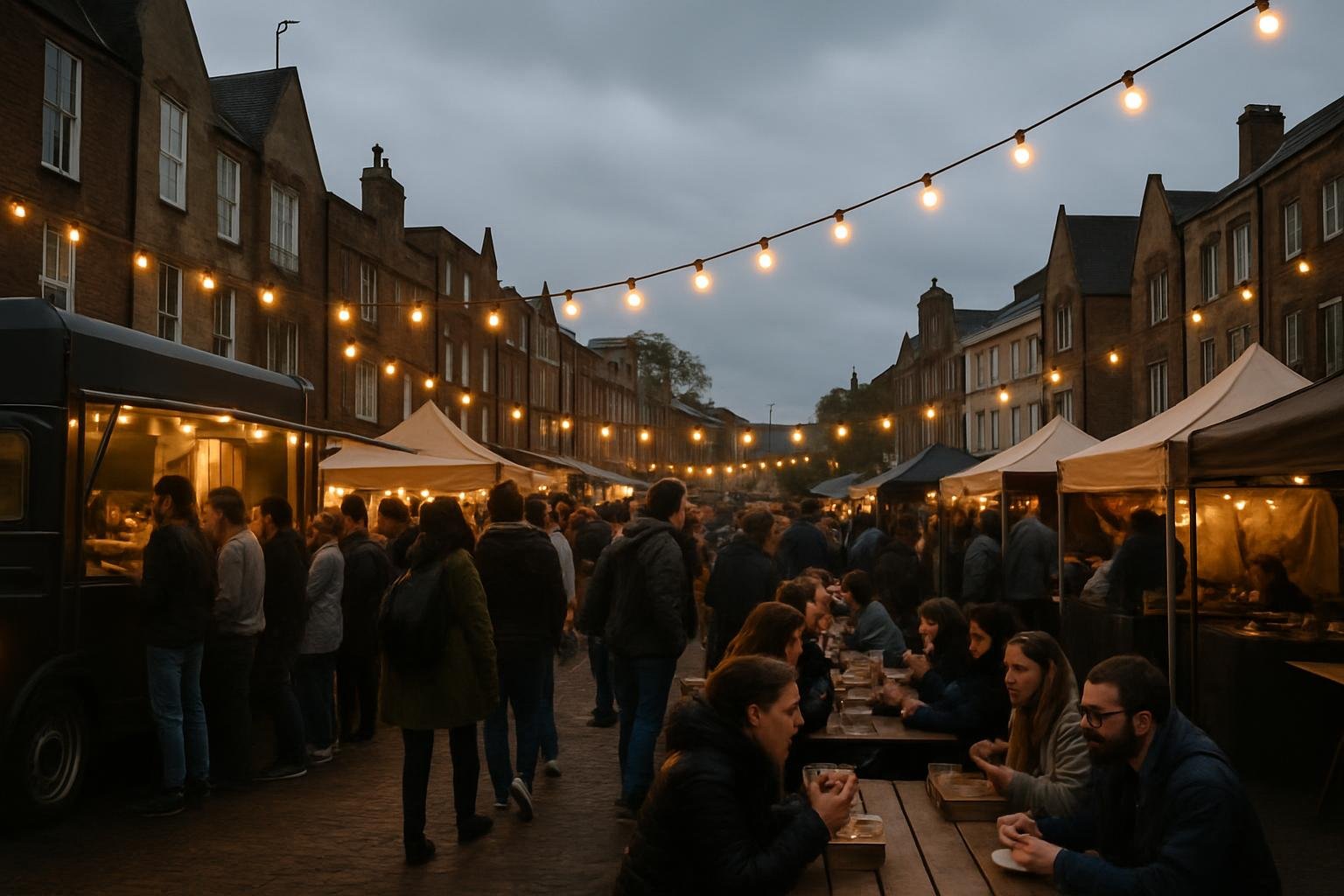
If you still think UK street food travel means a late-night doner and a questionable tray of chips, you’ve missed what’s quietly happened in our cities. Over the last few years, my weekends away have shifted from “see the cathedral, find a pub” to “what’s parked in that yard behind the railway arches and how spicy is that smell?”
The classic UK city break used to be based around museums, shopping centres and a meal you’d booked three weeks ahead. These days I’m more likely to plan things around a Saturday street food market, or a particular bao van someone mentioned in a WhatsApp group. I still like a museum, but if I can eat Nepalese momos from a horsebox on the way, all the better.
Here’s how that shift looks on the ground, from markets to minivans, in a few cities I keep going back to.
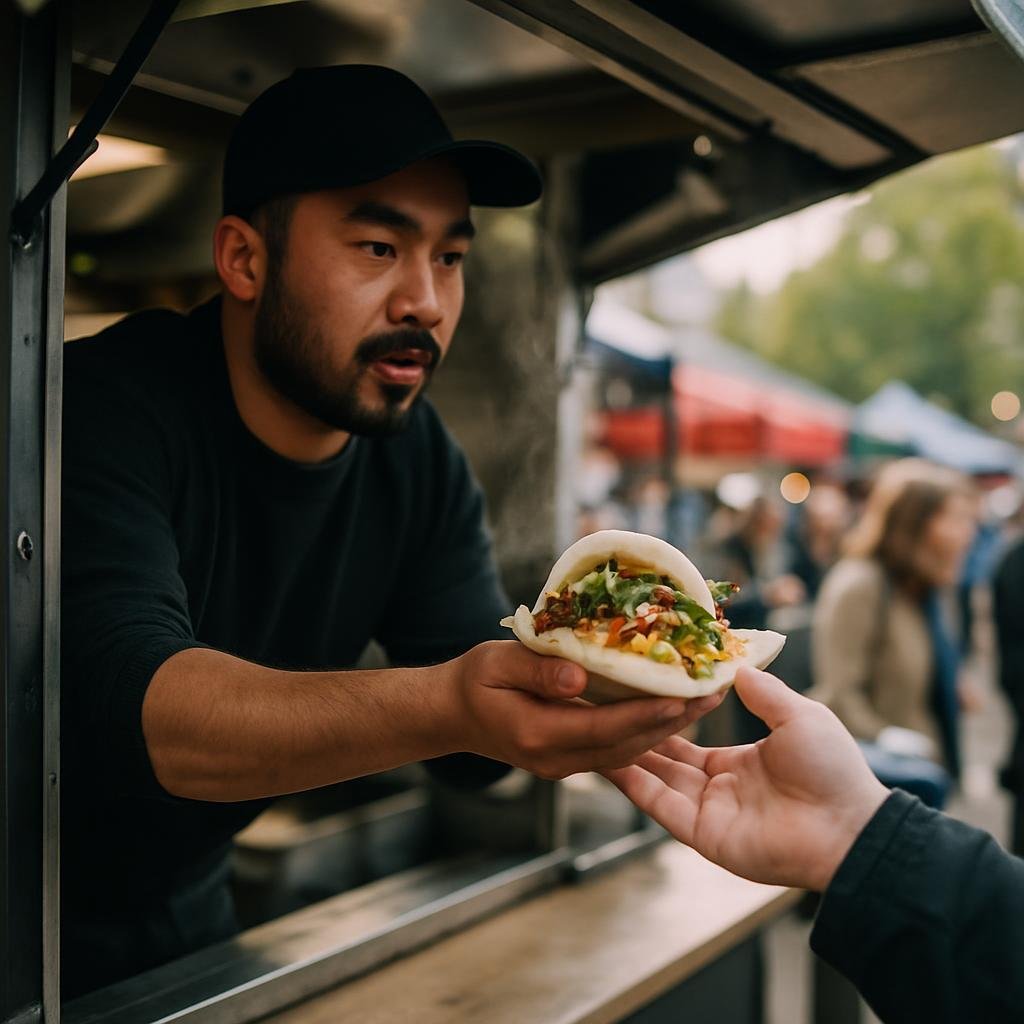
I first went to Leeds Kirkgate Market years ago for work, mostly to kill time between trains. Back then, it was more veg stalls and haberdashery than bao buns. These days, it’s the place that quietly explains why UK street food travel has become a thing.
You walk in under that slightly tired sign on Vicar Lane expecting carrots and socks, and you do get those. But push past the fish section (warning: the smell is enthusiastic) and there’s this run of stalls where it goes from Yorkshire pudding wraps to Syrian falafel to vegan junk food in about ten paces.
What I actually ate
Last time, I ended up at Fat Annie’s, which does “proper” hot dogs with decent meat and without the usual mystery content. I paid about £8 for a Chicago-style beef dog with too many pickles and felt no regret. Across the way, someone was handing over about the same for a box of Korean fried chicken from Bulgogi Korean Grill’s street counter, and I spent ten minutes quietly coveting it.
The nice thing is how low-pressure it feels. You can wander, try a £3 snack from one stall, then something else later. No white tablecloths, no performance. Just food, plastic chairs and the echo of traders shouting prices on the veg aisles behind you.
Worth knowing before you go – Leeds
And that’s the thing: in Leeds you can have a very 2020s bao bun lunch inside a Victorian market hall that still sells tripe. Your city break becomes less “we did Leeds” and more “we ate our way from the haberdashery aisle to the fish counter”.
Manchester is where I realised UK street food travel had gone full theatre. A friend dragged me to Escape to Freight Island, in the old Mayfield depot behind Piccadilly station. From the road you think, “That can’t possibly be it, it looks like a car park they forgot about.” Then you walk in under the neon sign and it hits you: this is an entire weekend built around food stalls.
Freight Island has the feel of a festival that’s decided to stay put. You’ve got pizza from Voodoo Ray’s, tacos from Madre, burgers from Patty Queen, a bar the length of a small motorway and, on the night I was there, a DJ playing 90s house to people simultaneously eating ramen and arancini. It shouldn’t work, but somehow it does.
I ordered a tray of tacos from Madre – about £11 for three, loaded with carnitas, lime and a chilli salsa that politely warned me before trying to remove the top layer of my tongue – and perched at one of the long communal tables. Across from me, a family were sharing a Detroit-style pizza slab from Voodoo Ray’s that could probably have fed my entire old logistics team.
Worth knowing before you go – Manchester
Does this count as “street” food? Technically it’s under a roof, surrounded by carefully distressed furniture and fairy lights. But it’s run by the same people who spent years in vans in car parks. Freight Island just gives them heating, toilets and the odds of a proper sit-down. It reshapes the whole Manchester city break: spend an afternoon at the Science and Industry Museum, then lose your evening to pizza slices and vinyl DJs.
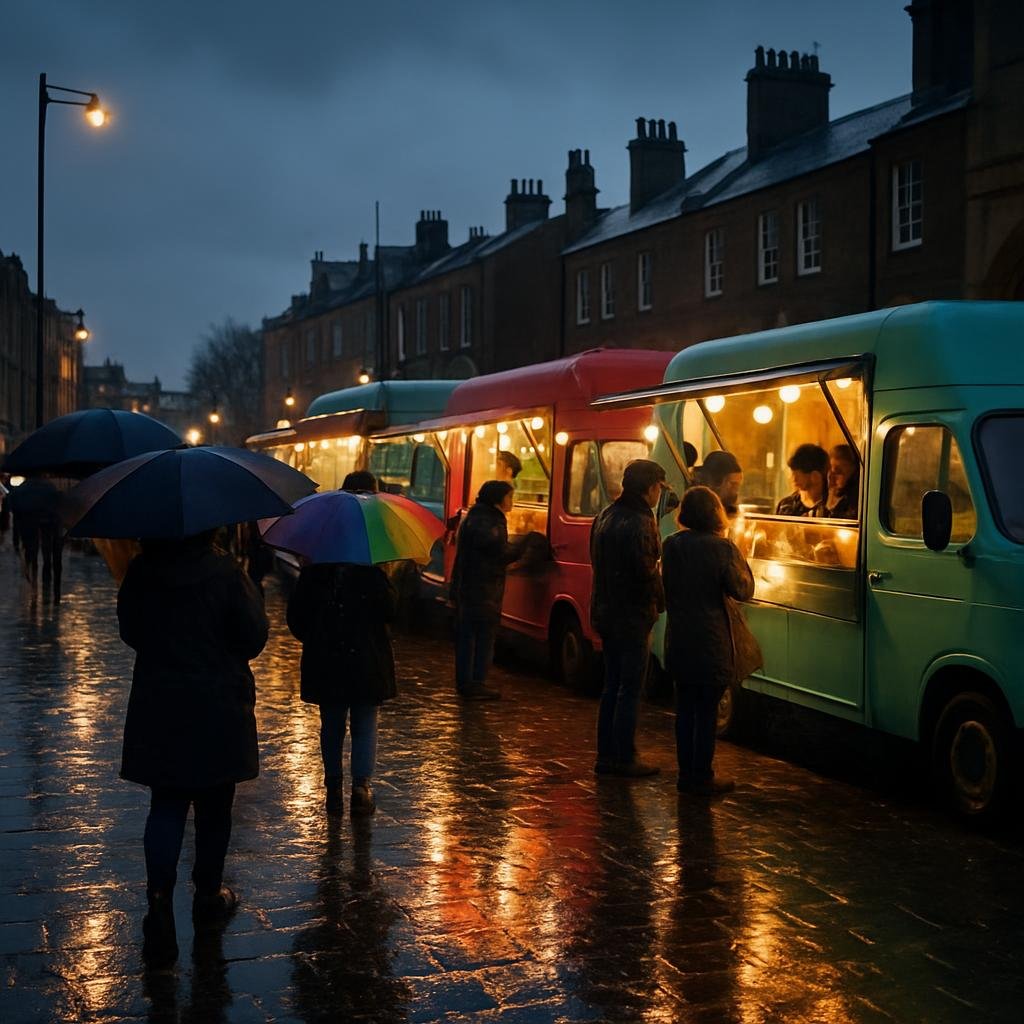
Cardiff is where I finally stopped pretending that street food required good weather. I ended up at a Street Food Circus pop-up outside Chapter Arts Centre on an evening that could politely be described as “moist”. The sort of drizzle that seeps into your soul and your socks.
There were still queues.
We made a dash for a Sri Lankan stall – Maa’s Kitchen – and came away with paper trays of kottu roti, chopped flatbread stir-fried with chicken and vegetables, for about £9 each. I ended up crouched under a parasol trying to eat it with a wooden fork that kept giving up. It was one of the best things I ate that year.
The trick in Cardiff is that these food events latch onto other excuses to be outside: open-air cinema nights in Bute Park, or the Cardiff Food and Drink Festival around Roald Dahl Plass each summer. Street food becomes the centrepiece of your evening, not a backup plan.
Worth knowing before you go – Cardiff
I’ll be honest: trying to eat noodles while it’s raining sideways is character-building rather than relaxing. But it does something good to a city break. You remember the steam rising from the food, the plastic pint glass slowly filling with raindrops, and some stranger recommending you the chilli sauce that looks like it might void your insurance.
People rave about Glasgow’s music, its bars, its sense of humour. They’re right. But the part that’s changed how I think about short trips up there lives in the spaces under and around the railway lines.
Platform at the Arches, below Central Station, is a perfect example. This old nightclub space is now a weekly street food market: high ceilings, brick arches, long tables, and a rotating list of vendors serving everything from Iranian stews to modern Scottish scran with haggis on top of things it probably never expected to meet.
On my last visit I went for a Korean fried cauliflower bun from a stall I’m still slightly annoyed I didn’t write the name down for – £8, sticky, crunchy, a bit of a mess – and then shared churros with chocolate sauce (about £5) from another. There were kids running around, dogs asleep under benches, and a bar at the far end doing local beers for £5–£6 a pint.
Out west, around Byres Road, vans and small units keep popping up in courtyards and old service yards. BAaD in the Barras and the regular street food line-ups at Drygate Brewery have that same casually experimental feeling: you might get a Neapolitan pizza truck one month, then Venezuelan arepas the next.
Worth knowing before you go – Glasgow
Glasgow is where UK street food travel and old-school market life overlap quite neatly. You can eat posh bao buns in a former nightclub, then wander to The Barras and have a conversation about the weather with someone selling you a £2 roll and sausage. Both feel equally valid.
Nottingham isn’t usually the first city people mention when they talk about street food, which is partly why it works. Things feel slightly improvised, like everyone’s still getting away with something.
Head to the area around Sneinton Market Avenues and you’ll find a cluster of small food businesses in old industrial units – bao, Caribbean, vegan comfort food – as well as the rotating line-up at Bustler Market, which usually runs one weekend a month.
On a recent visit I wandered into Bustler during an afternoon session and came out later smelling of about eight different cuisines. I had a £10 brisket bun from a smokehouse truck (still thinking about that pickle), a £4 slice of cheesecake from another stall and a pretty solid local pale ale (about £5.50) from the bar.
Later, down by the canal near Castle Wharf, there were two vans doing coffee and loaded fries. One of them – trading as Fry Up ‘N’ Good – was selling chips with gravy and cheese for £6 that took me right back to every transport cafe I’ve ever sat in, just with better Instagram lighting.
Worth knowing before you go – Nottingham
Nottingham shows how quick weekend breaks can turn into scavenger hunts. You stop walking in straight lines between “sights” and instead zigzag from yard to yard following smells and A-boards.
So what does all this actually do to the classic UK city break? For one thing, it gives you something flexible. You’re no longer trapped by restaurant bookings or resigned to the nearest chain. You can eat at 3pm because you’re hungry after a gallery, or 9.30pm because the gig overran and the taco truck in that dark corner is still serving.
It also makes smaller, cheaper trips feel satisfying. A day in Leeds where you wander Kirkgate Market, walk along the canal, then finish with bao buns and a pint in a yard somewhere can feel as complete as a carefully plotted weekend in London. UK street food travel slots neatly into train schedules and last-minute hotel deals.
The only risk is trying to do too much. I’ve had days where I’ve confidently said, “We’ll grab a Yorkshire pudding wrap for brunch, pizza at that container park for lunch and then try the Venezuelan arepa place later,” and ended up in a quiet food coma by 4pm staring at pigeons.
My best city breaks now tend to pick one main street food hub – Kirkgate in Leeds, Freight Island in Manchester, Platform in Glasgow – and treat it as the anchor. Plan one solid session there. Everything else is bonus snacks.
I’ll be straight with you: I still love a proper sit-down meal in a slightly worn-out local restaurant, ideally with carpets that haven’t moved since the early 90s. But the rise of vans, pop-ups, converted containers and market stalls has changed how I think about short trips.
Instead of that slightly formal structure – check-in, museum, meal, bar – UK street food travel has given my weekends a looser rhythm. Drift through a market, follow your nose, share a table with strangers, work out which stall is worth queueing for based on how smug people look when they walk away with their food.
And the hopeful bit? A lot of these traders started in genuine streets and car parks, survived rough years and are now anchoring how we experience cities. If enough of us keep turning up – rain or shine, rail strikes or traffic jams – maybe the future of the UK city break keeps looking a bit like this: a paper tray balanced on your knee, a borrowed bench in a railway arch, and something unexpectedly excellent dripping down your wrist.