I’ve spent half my life trying to explain drum and bass to people who only know it from office playlists and gym remixes. The phrase “drum and bass city guide UK” sounds like something a marketing intern cooked up after hearing “Original Nuttah” on TikTok. But if you grew up here – actually here, on these buses and in these terrace houses – you know drum and bass isn’t an itinerary. It’s bus fumes at midnight, it’s rain on a bus stop roof, it’s someone’s dodgy Bluetooth speaker in the park cutting out right before the drop.
I’m from Newcastle, and my first proper drum and bass moment was in 2002, in a mate’s Vauxhall Corsa on the Coast Road. Someone shoved a copied CD into the stereo – a mix that jumped from Shy FX’s “Shake Ur Body” to DJ Zinc’s “Casino Royale” – and suddenly the road felt like it had been built purely for that tempo. I’d grown up with my dad’s Thin Lizzy and me mam’s Motown. Drum and bass felt like the first thing that was actually ours, wired to our cities and terrible public transport.
Everyone starts with London in any drum and bass city guide UK piece, and most of them tell the same story: Goldie’s “Timeless” in 1995, Metalheadz at the Blue Note, Rinse FM creeping through bedroom walls. And fair enough – I still remember buying “Timeless” second-hand from a shop in Newcastle around 2004 because someone older told us you had to “study it.” They were right in one sense: sit with “Inner City Life” long enough and you can almost map the city in it – tower blocks, dual carriageways, late-night chicken shops, and those quiet, sad early hours on night buses.
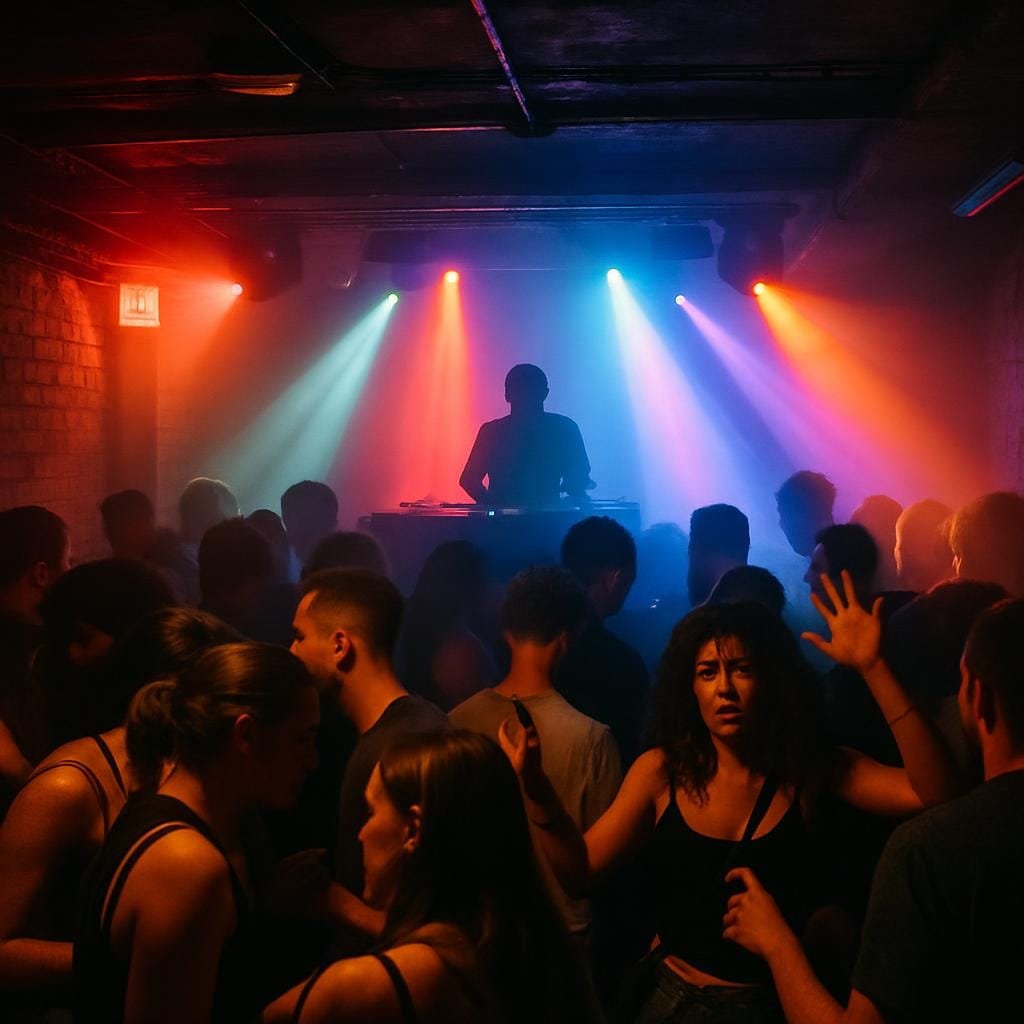
But here’s the opinion some people won’t like: London drum and bass gets too much credit for something it didn’t do alone. Yes, early Metalheadz and Reinforced were ridiculously good, and yes, Fabio and Grooverider on Kiss FM in the early 90s were basically a public service. Still, by the time London heads were patting themselves on the back for being the centre of everything, Bristol, Wolverhampton and Coventry were already twisting the sound into shapes that wouldn’t have survived in the capital’s hype bubble.
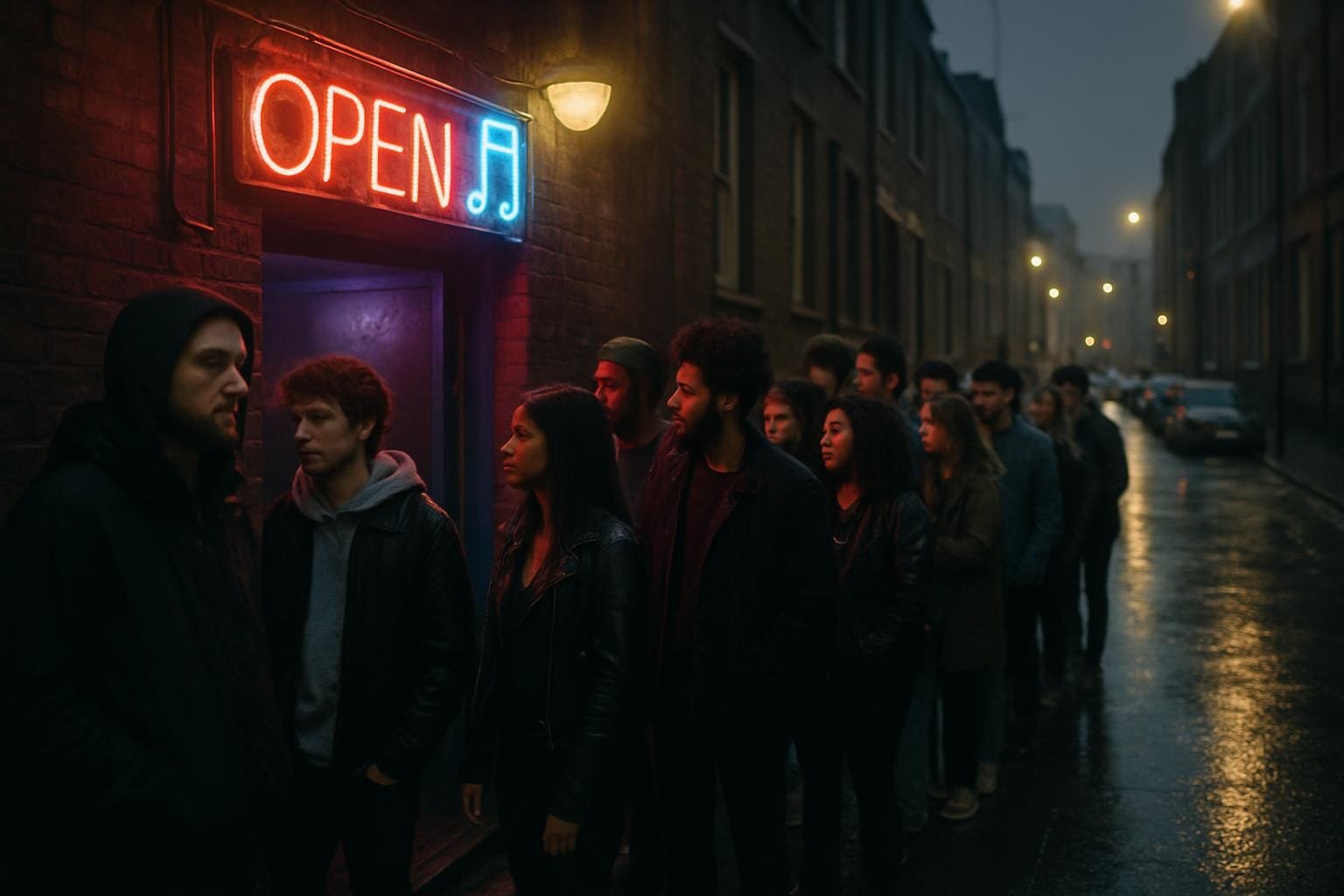
Look at it this way: when I finally went to Fabric in 2009 for a Friday night, the drum and bass room was packed, the sound system hit like a proper punch to the chest, but the crowd… half of them felt like they’d bought the experience off a shelf. Compare that to a smaller London night years earlier – I ended up at Herbal in Shoreditch in 2005, in a room that smelled like lager, sweat and cheap cologne, watching Calibre and Marcus Intalex play for people who were actually there to listen. Half the ravers looked like they’d come straight from office jobs, but nobody was too cool to lose it when “Drop It Down” rolled in. That was real city music: worn out, knackered, still up for it.
The first time I went to Bristol, I noticed the bass before I noticed the harbourside. Standing outside a shop on Stokes Croft in 2011, you could hear at least three different systems bleeding into each other: something half-time and murky from one bar, jump-up from a passing car, and a kid with a tiny speaker playing “Tarzan” rewinds like the world depended on it.
Bristol’s contribution to drum and bass isn’t subtle, but it’s deep. Roni Size & Reprazent’s “New Forms” wasn’t just a Mercury-winning album from 1997 – it was a city in slow motion, all loose snares and space between the notes. By the time I properly listened to it, years later, the London stuff I’d worshipped suddenly felt a bit stiff by comparison. “Brown Paper Bag” stretches out like the walk home when you’ve missed the last bus but you’re still humming the bassline from the club.
People talk about the Motion nights – and fair enough, those warehouse raves under the flyover did a lot – but the city’s drum and bass personality really lives in the way everything seems slightly off-centre. Clipz (before he switched to Redlight) made tunes like “Slippery Slope” that sounded like they’d been dreamed up in a bus shelter. Die’s work on Full Cycle, particularly the rougher cuts like “Clear Skyz,” felt like graffiti you could hear. By the time the newer wave – people like Break with “Slow Down” or Sam Binga hybridising it with dancehall and grime – came through, Bristol wasn’t chasing London at all. It was feeding it ideas.
Here’s the bold statement: if you want to understand modern British drum and bass as something that actually lives in cities and not just in heritage mixes, you’re better off studying Bristol in the 2000s than London in the mid-90s. The experimentation stuck. The attitude stuck. The willingness to be a bit wrong-footed – that became the DNA of half the good stuff that followed.
I didn’t get the Midlands at first. From Newcastle, Birmingham felt like a place you changed trains, not a place you went on purpose. Then I ended up at a hospitality job in my mid-20s with a Brummie who wouldn’t shut up about “proper nights” down there. He lent me a burnt CD with tunes I’d half-heard: Hazard’s “Mr Happy,” Taxman’s “Too Bad,” and some horrible, brilliant bootlegs that probably never left USB sticks.
I eventually went down for a random Saturday around 2010. Second room of a small-ish club near Digbeth, no-frills lighting, security already sick of everyone. When DJ Hype dropped “Ready or Not” into “Original Sin – Dr Feels Good,” the whole place went feral. This was drum and bass stripped of coffee table respectability: rowdy, slightly scary, and deeply local. Headz heads might sneer at jump-up, but that sound kept a lot of provincial dancefloors alive when the more refined stuff went introvert.
Coventry and Wolverhampton deserve more credit in any honest drum and bass city guide UK heads would trust. Early on, labels like Formation Records out of Leicester and the wider Midlands crew kept churning out tunes that worked on actual floors, not just in magazine think pieces. Hearing DJ SS’s “Black” in a tiny room in Walsall around 2013 felt more real than watching bigger-name DJs in London go through the motions.
I always feel a bit territorial when people talk like drum and bass belongs solely to the South. Up here it arrived late and weird, piggybacking on hard house nights and student events in places that weren’t sure what to book. The first drum and bass night I went to in Newcastle that felt like it knew what it was doing was at the old World Headquarters around 2004. Scratch Perverts did a set that zig-zagged across tempos, and someone slipped in High Contrast’s “Return of Forever.” I remember standing against a pillar thinking, “This feels like the Quayside at 5am after a shift – grey, tired, and still a bit beautiful.”
What the North gave drum and bass wasn’t necessarily original producers – though people like Futurebound out of Liverpool obviously count – but a kind of emotional honesty. When Netsky’s remix of “Everyday” and Chase & Status’ “Pieces” started doing the rounds in the late 2000s, I heard them in Leeds, Sheffield, Middlesbrough, with crowds that had no time for scene politics. They just wanted the drop to land hard enough to forget the week and the rent for a few minutes.
And because I’ve spent years writing about food and little local cafes, I notice how closely this tied into actual city life. Post-club, half of us ended up in all-night chippies in Heaton or Byker, basslines still rattling round our heads while we ate chips with way too much curry sauce. Walking home to shared houses that smelled like damp and instant noodles, someone would inevitably still be humming the riff from “Body Rock” or “LK.” British drum and bass has always sounded good next to cheap carbohydrates and fluorescent lighting.
By the late 2000s, something shifted. I remember standing in a bar in York around 2011 – I’d moved over there for work in kitchens – and hearing High Contrast’s “If We Ever” on a Saturday afternoon while couples ate burgers. This was the same label, Hospital Records, that had once belonged to late nights and sweaty rooms. Now it had become melodic enough for craft beer menus.
I’ve got a soft spot for that era, to be honest. London Elektricity’s “Just One Second,” Logistics’ “Together,” Nu:Tone’s remix of “Spread Love” – that stuff got me through double shifts and late buses. But here’s another arguable point: liquid drum and bass accidentally trained a lot of casual listeners to hear the genre as safe background noise. By the time Rudimental hit number one with “Feel the Love” in 2012 and Sigma’s remix of “Nobody to Love” was everywhere, drum and bass had started to mean “festival singalong with a token fast beat” to half the country.
That’s not the fault of the producers themselves – High Contrast’s “Kiss Kiss Bang Bang” is as well-built as any classic techstep tune – but there was a mood shift. Drum and bass had grown up, done its hair, and started getting invited to daytime radio. The darker stuff didn’t disappear, but it got harder to hear in the mainstream noise.
Somewhere around 2018, I started hearing something that made me feel fourteen again. It arrived in weird ways – a kid in a hoodie outside a Greggs in Leeds playing Chase & Status’ “Program” from his phone, a random Spotify playlist that chucked in Bou’s “Veteran” after a bunch of tech house, TikTok videos from kids in Croydon using old jungle tracks as backing songs.
This current wave of drum and bass is rude, shameless and unbothered by history lessons. A lot of younger producers don’t care about “Timeless” or old Headz nights – their references are more likely to be early 2010s jump-up, SoundCloud bootlegs and whatever they heard on YouTube rips. And yet, when I hear something like Hedex & Macky Gee’s “Eliminate” tearing through a cheap Bluetooth speaker in a park, I get the same feeling I had the first time I heard Bad Company’s “The Nine” on a knackered house system in 2003: this music isn’t meant to be neat.
If the old drum and bass city guide UK articles plotted things by scenes and record shops, the modern one runs on bus routes, social media and cheap earbuds. Kids in Norwich making viral tunes on cracked copies of FL Studio, producers in Manchester half-crossing into drill tempo then snapping back to 174 BPM, vocalists who grew up equally on MC Skibadee sets and Stormzy albums. The borders have gone fuzzy, and I quite like that.
So here’s my main contentious stance, clearly: pirate radio did more for British drum and bass than most of the big albums people name-check. Without those fuzzy broadcasts in the 90s and early 2000s – Kool FM, Origin, later things like Rinse again – half of these city scenes would’ve stayed small and separate. I never even lived in London, but I’d get tapes passed up north, boxes of Maxell cassettes with “Kenny Ken – 1997?” scribbled on them in biro. Those tapes travelled farther than most DJs did.
At the same time, there’s a whole group that doesn’t get enough respect: the mid-tier producers who never headlined festivals but who quietly filled USB sticks for a decade. People like Lenzman, whose “Broken Dreams” turned into a late-night kitchen classic in so many flat shares. Or Alix Perez around the “1984” era, whose half-step tunes sounded like walking back from a warehouse in the rain, hood up, wishing you’d brought a warmer coat.
Received wisdom will tell you drum and bass peaks in spikes – “Timeless,” “New Forms,” “Original Jungle Mania,” “Hospitality at the O2.” But if you’ve actually lived with it in British cities – from Leicester kebab shops to London high-rises, from Hull student flats to Bristol backstreets – you know the truth is in the in-between: the tune a warm-up DJ slipped on too early, the dub that never left white label, the track that only ever lived as an MP3 on a phone that’s now in a drawer.
The thing tying all these places together isn’t prestige. It’s the way the music fits the physical country. The 174 BPM tempo clicks perfectly with sitting on the top deck of a bus watching terraced houses repeat for miles. Sub-bass feels right when you’re walking past industrial estates at night. Those frayed vocal samples echo the way conversations sound on train platforms and in smoking areas.
These days I spend as much time in bakeries as I do in clubs – occupational hazard – but drum and bass still follows me around Britain. Staff in a cafe in Leeds sneaking in a Break track between soul records. A Greggs in Sheffield where the teenager behind the counter has K Motionz in his AirPods. A shared taxi back from a wedding in Manchester with a driver quietly tuning into a late-night drum and bass show. This music crept out of basements and raves and into everyday background, for better and worse.
If you forced me to write a tidy drum and bass city guide UK style – lists of places, neat little “must visit” labels – I’d be lying. The real guide is messier: a night bus timetable, a list of half-remembered frequencies, addresses of long-shut clubs, usernames of producers you first heard at 2am in someone’s kitchen. It’s hearing “Valley of the Shadows” leaking out of a cracked window in 2024 and realising a track from 1993 still makes sense against e-scooters and Deliveroo bags.
Drum and bass grew up here, the same way we did: awkward, abrupt, occasionally embarrassing, often glorious, fed on corner-shop crisps and cheap lager, carried by buses and trains and late-night walk home routes that criss-cross every city in this country. If you’ve ever stomped down a backstreet with a bassline in your head, you’re already reading the only guide that matters.