
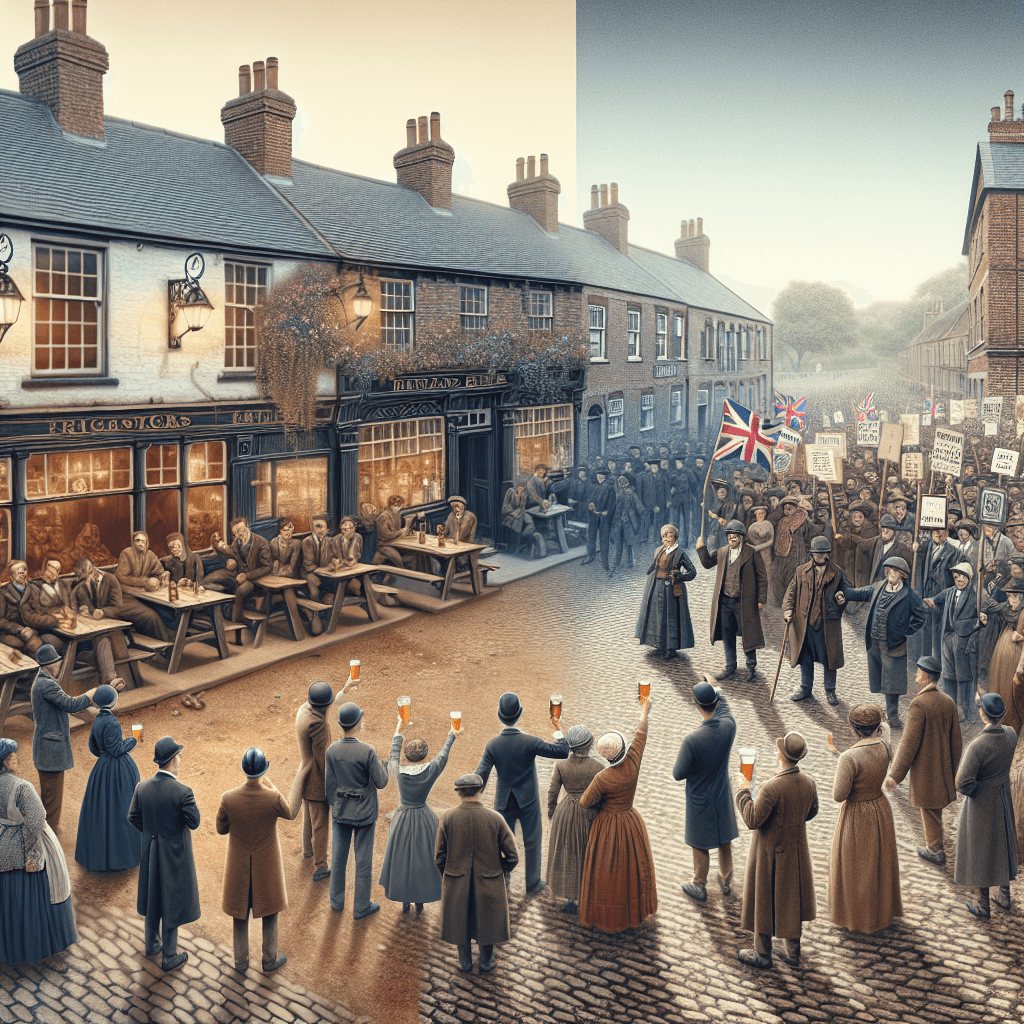
Picture this: You’re in a quaint British pub, pint in hand, the dim light flickering as the locals banter good-naturedly. You sink into the history surrounding you—how many conflicts have these walls seen? How many unions formed over a few drinks? Ah, the stories! Let’s toss the nuts aside and have a chat about British trade unions, shall we?
Trade unions are as British as bad tea and questionable football skills. Their roots dig deep into the soil of this sceptred isle, tracing back to the industrial revolution when workers stood shoulder to shoulder, nose to the grindstone, demanding a fair shake. The journey from pubs to protests is more than just a catchy phrase—it’s a colourful tapestry of struggle, solidarity, and sometimes, let’s admit it, a fair bit of dodgy politics.
Let’s wander back to the 19th century. Picture smoky factories, children working long hours, and men sweating profusely at machines that looked like something out of a steampunk nightmare. Workers had little to no rights, which made for some pretty disgruntled folks.
The first official trade unions started popping up in the early 1800s. Think of groups like the Friendly Society of Ironfounders in 1824. They weren’t just sitting around. They were chatting over a pint about working conditions, pay, and what to do when the boss was being a complete numpty. Imagine them now: “Oi, mate, this pay is rubbish! Let’s do something about it!” That conversation turned into collective action, and the unions we know today started taking shape.
Now, let’s pivot back to the pub scene—because, honestly, who doesn’t love a good old pub story? Pubs became the meeting places for workers to discuss grievances and plan protests. The air was thick with ale and ambition! Many a union strategy was plotted at a table laden with half-eaten pork pies and the last dregs of ale.
And funny enough, the pub scenes back then weren’t too dissimilar to what you see today. You’re there, chatting away about rising costs over a not-so-great cup of tea (seriously, I once had one that tasted like dishwater—never again!). Local communities formed over these conversations, creating a sense of belonging that was hard to find anywhere else.
Now, let’s not forget the protests! The Matchgirls Strike of 1888 was a huge moment. Imagine girls working long hours in dangerous conditions in a factory that could only be described as hell on Earth. They banded together, refusing to be treated like cogs in a machine. And what did they do? You guessed it—protested! To be honest, if I had to work in those conditions, I’d probably join the strike too.
The General Strike of 1926 was another landmark event. Workers across multiple industries downed tools to fight for better wages and conditions. Can you envision the solidarity? Men and women from various trades uniting in the face of adversity! You can practically hear the collective roar of “Enough is enough!” ringing through the streets.
You know, reflecting on all this leads me to one chilly evening in Manchester, where I found myself in a lively pub (not unlike those early meeting spots). The football was blaring, laughter filling the air. I turned to my mate and said, “You ever think about how these places were where people fought for their rights?” He looked at me, pint in hand, and replied, “Mate, I just come here for the crisps.”
Ah, you’ve gotta love a good set of priorities! But this banter got me thinking about how ordinary spaces turned into ground zero for extraordinary movements. Sometimes, anyone can push for change—maybe all it takes is filling your glass and speaking up a little louder.
This youthful spirit of rebellion and camaraderie didn’t fizzle out with the dust of history. Today, trade unions still advocate for workers’ rights, fighting against injustices and improvements in workplaces. They’ve expanded from their humble beginnings. From the National Union of Rail, Maritime and Transport Workers (RMT) to the United Food and Commercial Workers (UFCW), they are a vital part of British society.
You often hear grumbles about union membership nowadays. Some say it’s not worth it. But remind yourself—just as you’d champion the local team or moan about a bad Smiths’ cover, unions demand a voice. They work tirelessly for equality and fair treatment, and honestly, who doesn’t want that?
Checking in with the local scene, you’ve got the TUC (Trades Union Congress) annual conference in Brighton, where serious discussions about the future of workers’ rights take place. You might find yourself cheekily eavesdropping on conversations if you’re in town. Or perhaps wander into the local Archives & Records Centre if you’re keen to explore historical documents relating to strikes and protests.
And let’s not forget the recent strikes in the public sector—workers continuing the fight for fair wages. I’d grab a banner and join in, but honestly, I’d probably do a terrible job of holding it straight while I cheer. My coordination certainly leaves something to be desired!
So, to wrap this up in a neat little package, the evolution of British trade unions is interwoven with the culture that breeds them. Pubs gave rise to discussions and protests, leading to real change that still echoes in today’s society. It’s a history steeped in camaraderie, humour, and a good dose of indignation.
As you sip your next pint, remember those who paved the way for worker’s rights. Then perhaps consider joining a local union to support the ongoing fight!
What’s your favourite pub story related to activism? Ever taken part in a protest? I’d love to hear your experiences—drop a comment below!