
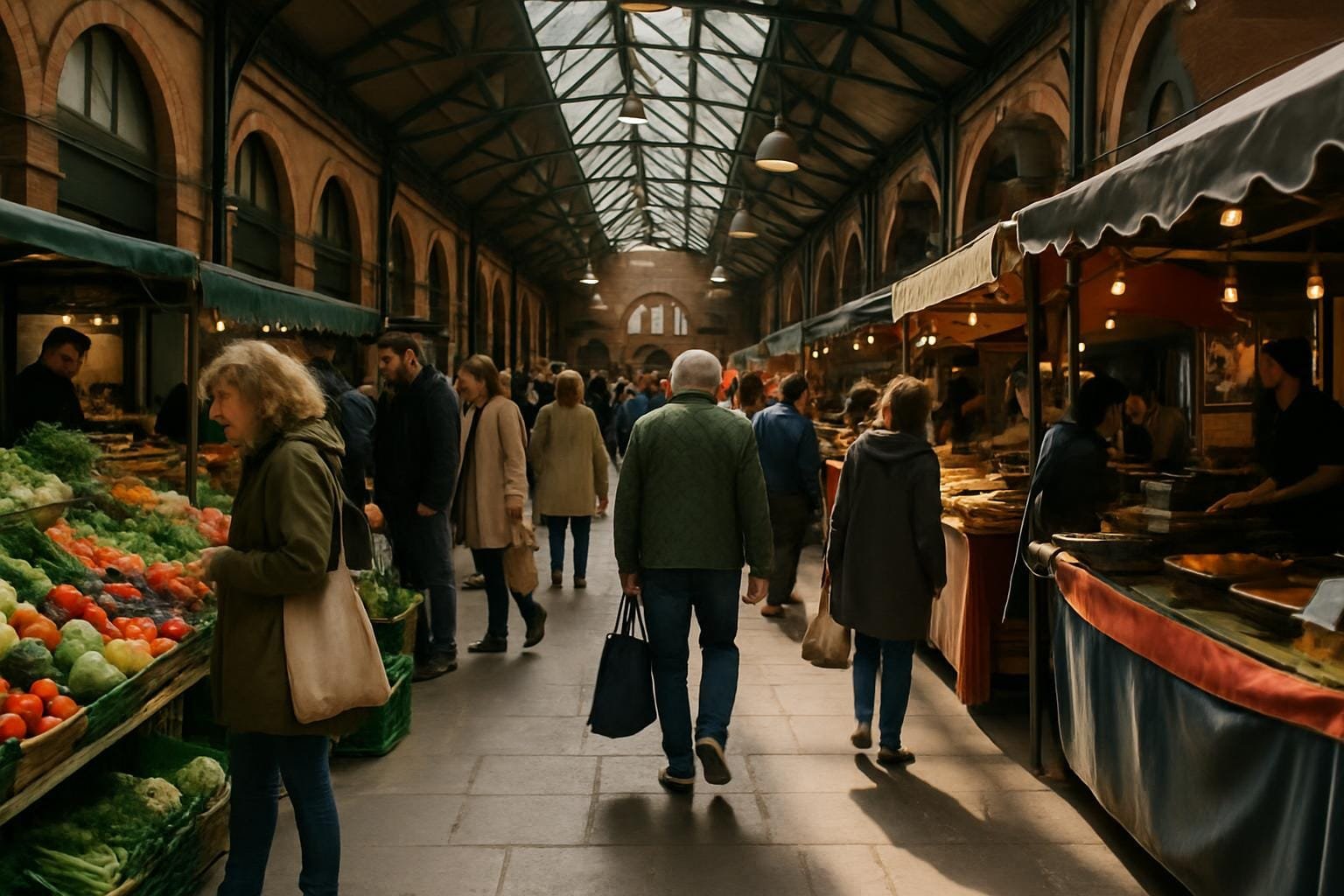
When people plan UK city breaks, they usually start with cathedrals and castles. I start with the food halls. UK city food markets are my version of a sightseeing itinerary: you learn what a place eats, how it argues, and how early it gets going on a Saturday. If I can structure a weekend around a good indoor market hall, I’m happy. If there’s decent coffee and somewhere selling local cheese by 9am, I’m overjoyed.
This isn’t some Instagram-driven thing either. I grew up in Shropshire, and my first idea of “the big city” was going with my gran to buy bacon and black pudding in an indoor market that smelt of fish, bleach and hot chips. Years later, a job in logistics meant I spent a lot of time lurking around UK city food markets at 7am killing time between depot calls. It’s hard not to get sentimental about a place when your memories are tied to a particular bacon bap.
Here’s how I’d plan a UK city break around four proper food halls – the sort of places you could happily lose a morning, then use as your anchor for wandering the rest of the city.
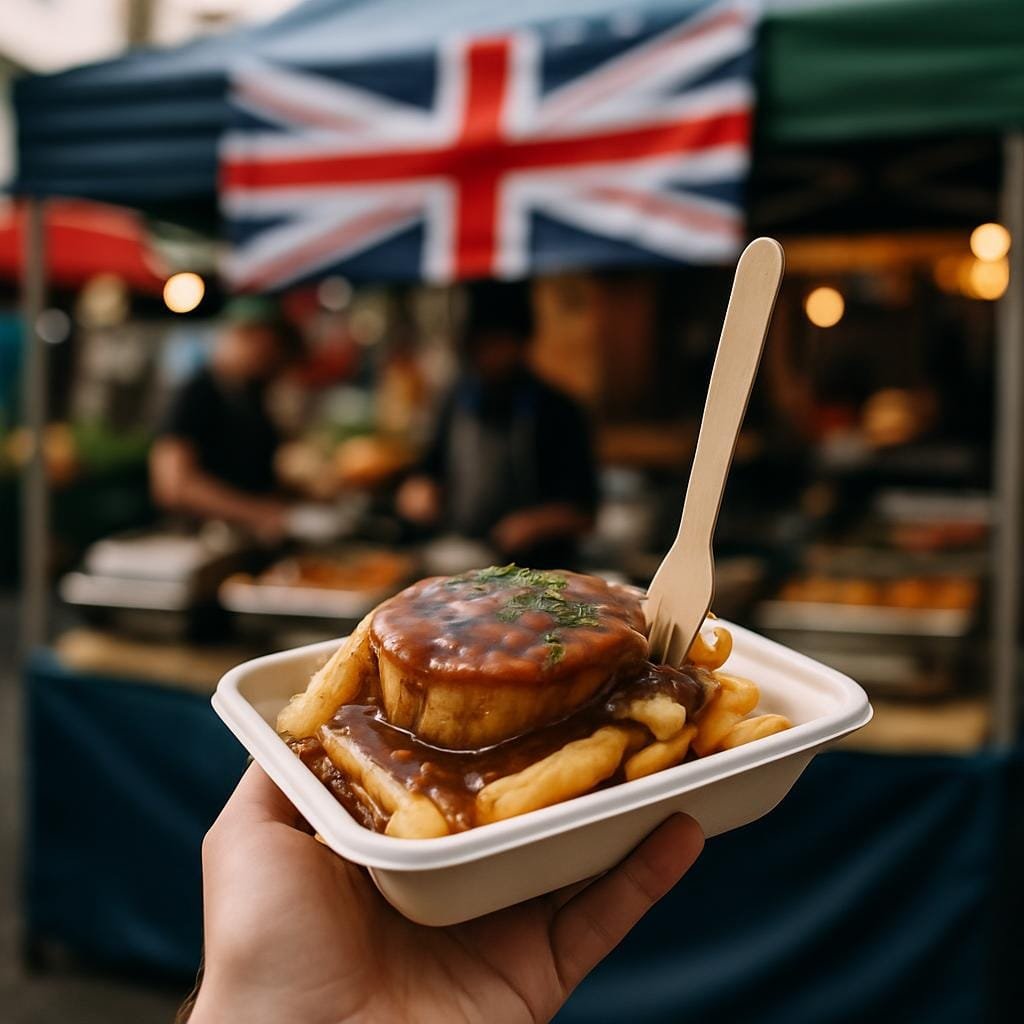
Leeds Kirkgate Market is where I really started planning trips around food halls. It’s a huge Victorian and Edwardian indoor market – one of the largest covered markets in Europe – and it still feels slightly chaotic in the best way. The main entrance on Vicar Lane introduces you straight into a mix of butchers, fishmongers and stalls selling everything from bolts of fabric to mysterious plumbing bits you’ll never need but are pleased someone sells.
The food side, though, is the point. The newer food court area towards the George Street side has turned into a serious spot for UK city food markets fans. First thing in the morning I head to Kapow Coffee for something that tastes like it was roasted on purpose, not by accident. They’re up on the balcony level of the 1904 Hall, with a few stools and a view over the hall’s ornate ironwork and tiled floor. It’s a strangely elegant place to drink coffee out of a paper cup.
Then there’s lunch. I’ve had some of the best cheap lunches in the country here. Bundobust have a stall in the market space now – Indian street food and craft beer – where the okra fries are ridiculously crisp and the chole bhatura is as comforting as central heating. There’s also My Lahore for chicken karahi and samosa chaat, and a stall near the fish section doing haddock and chips that smells exactly like the seaside, in the best possible way.
A small reality check: it’s noisy, a bit draughty, and you will at some point get in someone’s way. I once managed to block a man’s route to the tripe stall with my rucksack and he made his displeasure very clear. Fair enough – he was clearly on a mission.
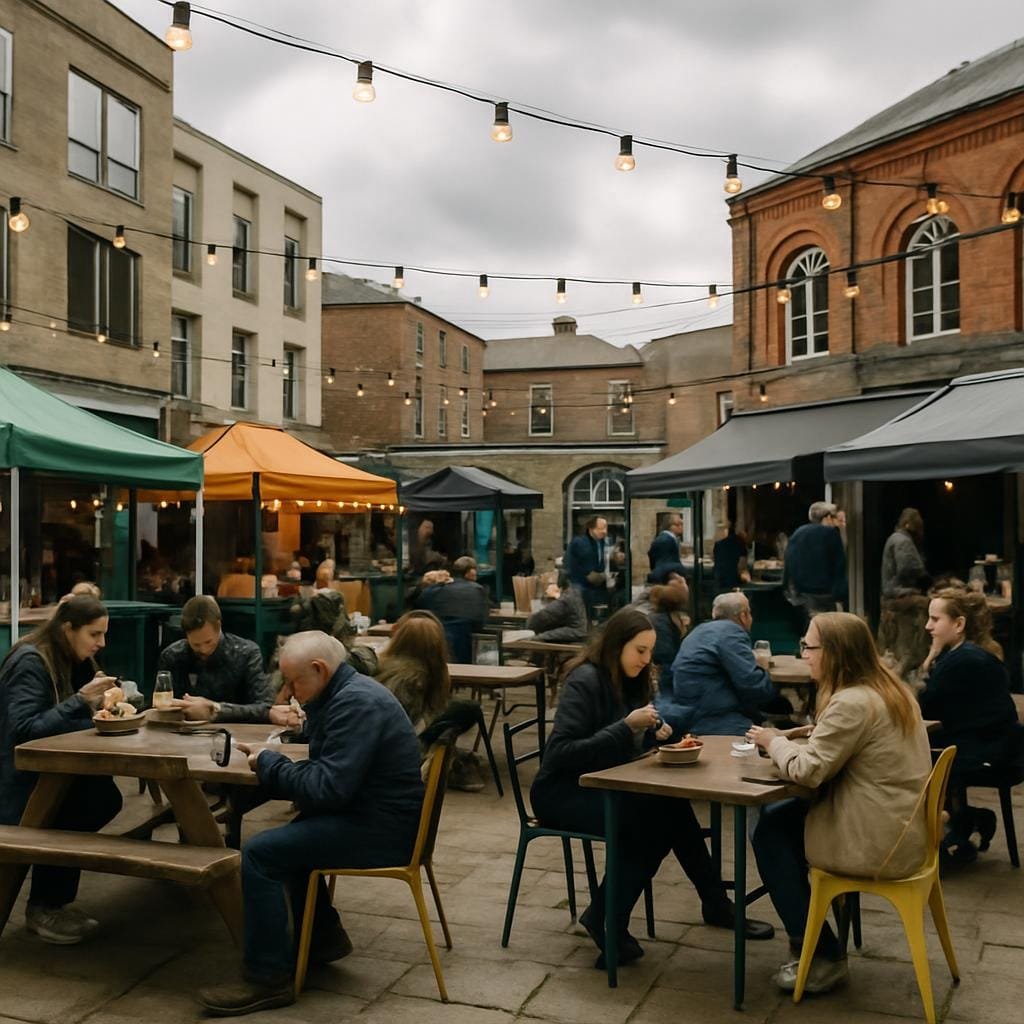
From Kirkgate, you can walk straight out onto Vicar Lane and head up towards the Corn Exchange and the independent shops. It’s like surfacing from a slightly hectic, very tasty underground lair into city-break mode.
Edinburgh doesn’t shout about its food halls in the same way as Leeds or Manchester, but it’s quietly getting very good at them. You’ve got the polished end at Bonnie & Wild in St James Quarter – think Scottish produce, whisky bars, and prices that remind you you’re in a very popular city. I quite enjoy it, but you do feel underdressed if you’re still in train clothes.
The place I actually structure my mornings around now is The Pitt, in Leith. It started off feeling very makeshift, the kind of place that might vanish overnight, and has slowly turned into a fixture of the UK city food markets scene, even as they’ve shifted and expanded. Expect street food traders in a semi-industrial spot, long tables, and enough smoke from grills to season your clothes for days.
The last time I went it was a Saturday that started with a light drizzle – classic Edinburgh – and by the time I reached Pitt Street the place was already busy. I made the mistake of walking straight in without doing a full lap first, and immediately regretted committing to the first good smell. My tip: walk the circuit, note who’s doing what, then choose. The Sri Lankan kothu roti stall and anyone doing fresh langoustines usually have the longest queues for good reason.
Not everything’s perfect. Queues can get daft after 1pm, and seating is a competitive sport. I’ve seen full family negotiations crumble over who has to hold the table while someone gets fries. That said, there’s always a decent bar set-up, and they’re serious about local beer – Campervan Brewery often have something on tap.
If you’re based more centrally and prefer something indoors, pop into Edinburgh Farmers’ Market on Castle Terrace on Saturday mornings, then take your haul to Stockbridge Market on Sunday. They’re more farmers’ markets than food halls mind you, but the effect is similar: lots of small producers, people getting very intense about cheese. At Castle Terrace, I never leave without something from I.J. Mellis – usually a wedge of Isle of Mull cheddar that then dictates what I eat for the rest of the weekend.
Stringing all of that together, you can easily make a weekend in Edinburgh that runs on coffee, cheese, and grilled things, with the castle and galleries simply being places you walk past between snacks.
Manchester has several places that get mentioned when people talk about UK city food markets, but Mackie Mayor is the one that makes me go quiet for a second when I walk in. It’s a restored nineteenth-century market hall on Eagle Street in the Northern Quarter, with a soaring glass roof, long communal tables, and a ring of independent food traders around the edge.
The first time I went in – a few years back now, before they’d completely bedded in the current line-up – I remember thinking: this is what you hope “regeneration” might look like and almost never does. The brickwork is still a bit rough, there are proper draughts when the doors open, and it hasn’t been over-scrubbed into feeling like a generic food court.
My usual routine here:
It’s not all rosy. It can be tricky to find a seat at peak times, and the acoustics are such that you will hear at least three separate conversations about “content” if you’re there on a Saturday. Prices aren’t bargain-basement – think £10–£14 for a main – but the quality’s high, and you’re paying to sit in one of the nicest rooms in the city.
From here, you’re minutes from the Manchester Craft & Design Centre and an easy walk down to the Arndale Market food court, which is more fluorescent-lit and unglamorous but has some very good, cheap Caribbean and Asian food. If Mackie Mayor is your Instagram moment, the Arndale is your “I actually need feeding for under a tenner” back-up.
Bristol likes to act laid-back about everything, including its markets. But there’s a serious food culture here, and it centres on a small cluster of UK city food markets that you can happily wander between on foot.
St Nicholas Market (“St Nick’s” if you’re pretending to be local) is the obvious starting point. Housed in the old Corn Exchange, the indoor covered market is a maze of narrow alleys lined with permanent stalls – hot sauce, records, odd bits of vintage, and a strong showing from Middle Eastern and Caribbean food traders.
The first time I went, I made the classic mistake of arriving hungry, panicking at the choice, and ending up eating a perfectly fine falafel wrap while walking past three other stalls that smelt even better. My advice: commit. If you like the look of the queue at Eat a Pitta, join it and don’t torture yourself wandering off.
Portions tend to be generous, prices reasonable (around £7–£9 for a good stuffed pitta or curry box), and you can walk your food through to the Glass Arcade bit, which is lighter and feels more like a classic food hall. There’s a bakery stall that does sausage rolls the size of your forearm – excellent picnic fodder if you’re heading down to the harbour.
Speaking of the harbour, if you keep walking downhill you’ll reach the Harbourside Market on the Watershed side of the floating harbour. It runs on weekends and has turned into a reliable mix of street food, craft stalls, and people performing feats of balance on paddleboards. Food-wise, expect everything from mac and cheese vans to bao buns. Prices are a notch up from St Nick’s, but you’re eating with water views and the smell of river and frying onions in your nose, which helps.
Once you start thinking this way, UK city food markets become a handy skeleton for planning a trip. A few simple habits help:
City breaks in the UK can feel a bit samey if you lean too hard on the usual sights. Food halls and markets cut through that. Leeds feels different to Manchester feels different to Bristol when you’re standing by the fish counter or trying to negotiate a seat at a formica table with a tray of noodles.
And if, like me, you secretly judge a city on how easy it is to find a decent bacon bap before 9am, then planning around UK city food markets is less of a quirk and more of a basic survival strategy.