
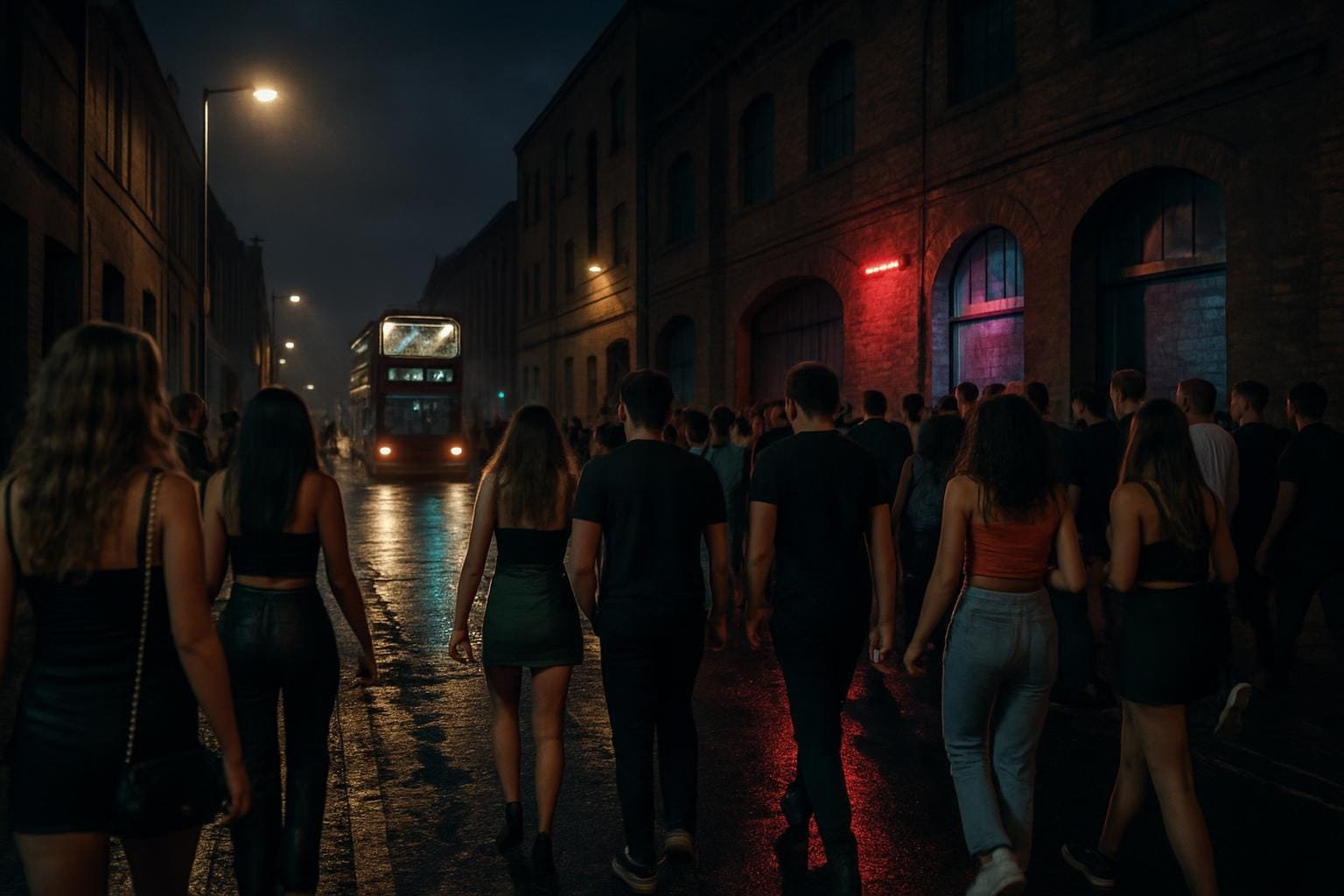
If you’re looking for a British rave heritage travel guide in the usual sense – train times, hotel tips, bar lists – you’re going to be disappointed. For me, the “travel” bit of rave has always been the bus back home at 5am, chewing your lip off and trying not to make eye contact with whoever’s getting on at Heworth. Rave is movement, but it’s messy, half-remembered, very rarely in daylight and almost never brochure-ready.
Still, certain cities do carry the scars and the basslines more visibly than others. And if you care about British music, you end up tracing those routes anyway: in record crates, on dodgy YouTube rips, and in the snatches of half-true stories people tell you in smoking areas. That’s the sort of British rave heritage travel guide I care about – the one that runs on bus routes, pirate frequencies and the smell of someone’s naff aftershave in a warehouse toilet.
I was about thirteen when I got my first second-hand taste of Manchester. A mate’s older brother had a taped copy of Screamadelica and kept telling us about this place called the Haçienda like it was Narnia with more ketamine. By the time I got there myself in the early 2000s it was a block of flats, and every older bloke in a bucket hat was insisting we’d “missed the real thing”. Manchester nostalgia can be exhausting.
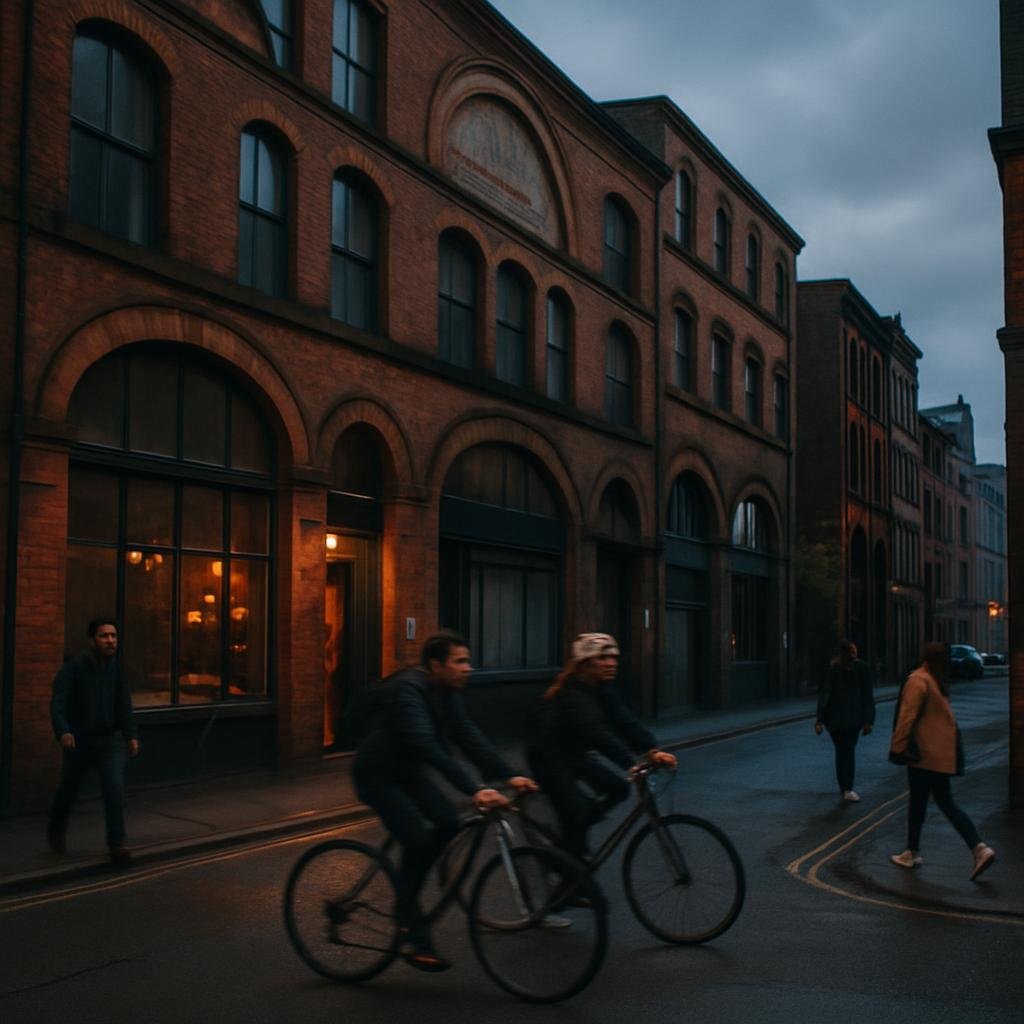
But the thing people outside the city often miss is that the real rave heritage there isn’t frozen at Madchester. For my age lot, proper Manchester rave culture was Mission, Sankeys Soap and the nights that never got documentary treatment. The Warehouse Project under the arches near Piccadilly, when it first kicked off around 2006, felt far more like a continuation of something than any tribute night to the Mondays ever did.
Listen to 808 State’s “Pacific State” next to Low Life-era bassline or early Murkage Cartel mixes and you can hear the city obsessing over rhythm while London was still re-learning how to dance after Britpop. People always talk about “Blue Monday” or The Stone Roses at Spike Island in 1990 as if that’s the whole story, but for my money, the really stubborn Manchester trait is how the city clung on to its groove through the fallow years.
I went to see A Guy Called Gerald at Sankeys in 2008 – he dropped “Voodoo Ray” about two tracks in, got the singalong out of the way, then spent the rest of the set pushing murky drum & bass and rough-edged techno. Half the crowd only wanted the anthem. He clearly didn’t. That’s Manchester’s rave heritage in a nutshell to me: the city knows its classics, but the interesting people are usually trying to wriggle past them.
Here’s my first arguable claim: Manchester gets too much credit for acid house and not enough for what came after. People lazily stop at the Haçienda and ignore how the city helped hold UK club culture together in the bland mid-00s. You can map a line from 808 State and A Guy Called Gerald through to the darker, weirder bookings at The Warehouse Project and the current crop of crews running sweaty loft parties in Salford. The city never really stopped raving; it just got less photogenic.
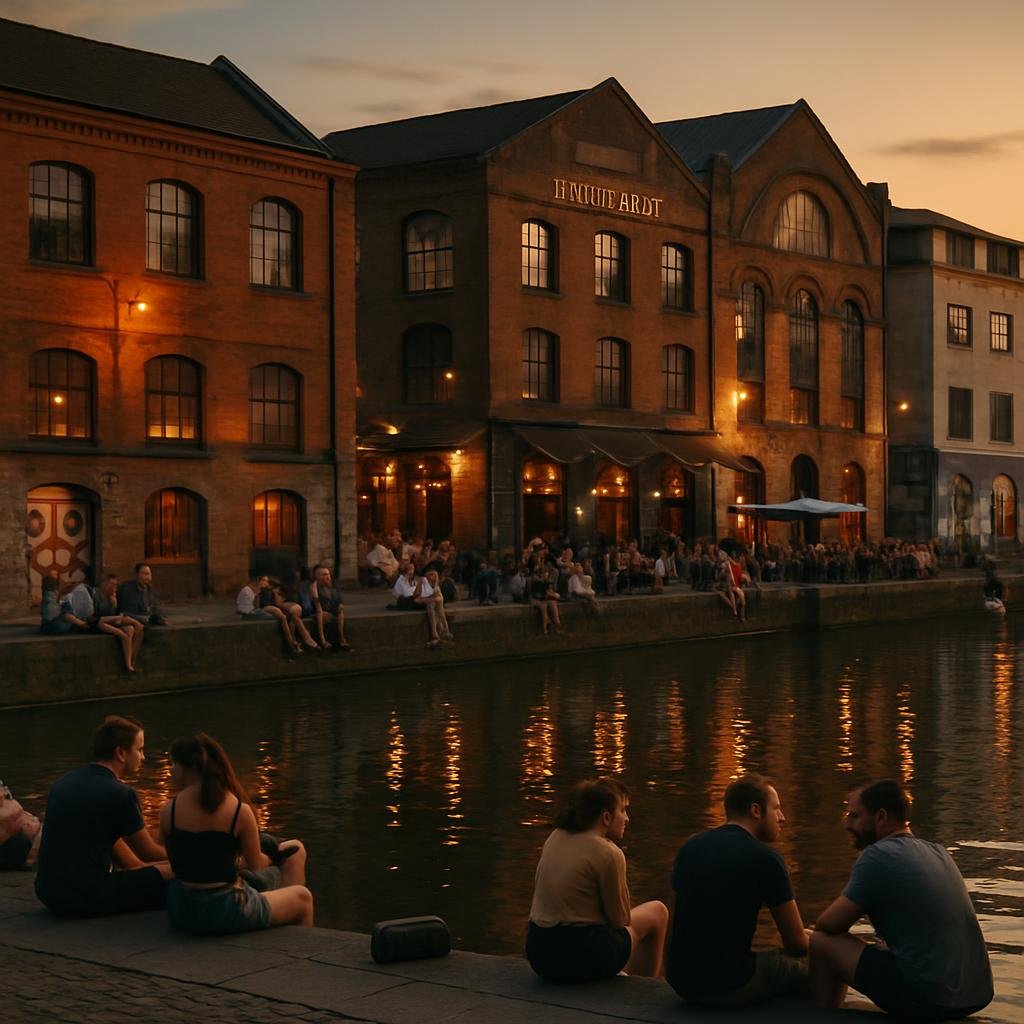
I was fourteen when someone handed me a scratched CD-R with “SHEFFIELD TECHNO” scrawled on it in green Sharpie. It had LFO’s “LFO”, Cabaret Voltaire’s “Nag Nag Nag” and a couple of Forgemasters tracks. I’d grown up on my dad’s Dire Straits tapes and early 90s chart dance; this sounded like the Metro Centre at closing time, if it grew teeth.
Sheffield never shouts loudest about its rave history, which is probably why I like it. Everyone knows about Warp Records, but they often skip the texture of the actual city. Those early Warp records – LFO, Nightmares on Wax’s Warp 9 era, Sweet Exorcist – feel like they were made in half-lit industrial units behind the Parkway. They weren’t glamorous even back then.
By the time I first went clubbing there, around 2005, Niche had already been shut down after that police raid in 2005 that spawned a thousand tabloid headlines. We’d heard the bassline CDs back home – T2’s “Heartbroken”, DJ Q’s early mixes – passed around like contraband on the school bus in Gateshead. The Sheffield sound felt rowdier and less self-conscious than the slick house stuff coming out of London around the same time.
Bassline is still underrated in conversations about British rave heritage. People act like the baton went straight from jungle to dubstep, when actually there was this whole Sheffield-led moment where R&B vocals got tossed on top of monstrous, wobbling bass. Tracks like Delinquent & KCat’s “My Destiny” or Shaun “Banger” Scott’s remixes were absolutely rinsed in student houses, yet rarely get a look-in on retrospectives that act like British club culture politely waited around for Burial to show up.
Here’s the thing: Sheffield rave culture has always had a bit of chip fat on its fingers. Night buses from the city centre full of people eating chicken and chips, bass still ringing in your ears from Tuesday Club at the old Tuesday night sessions, or Plug (it’ll always be Drop in my head). The industrial clichés about the city are boring, but the truth is the geography – those steep hills, the way sound echoes up and down narrow streets – does something to you after a night out. Coming down Ecclesall Road at 4am, kebab in hand, you realise this is as much a rave city as anywhere with a famous superclub.
If you’re putting together your own British rave heritage travel guide in your head, Sheffield deserves a bigger chapter than it usually gets. Not for the plaques, but for the sub-bass that’s still humming in a lot of people’s cars.
London’s rave history is so huge it’s barely useful as one thing. But for me, it lives less in the big moments – no offence to Ministry of Sound – and more in the half-heard stations on the way home.
I started going down to London semi-regularly around 2007, staying on friends’ sofas in West Ham and Leyton. Nights out were always a blur of two or three spots – Plastic People in Shoreditch when Kode9 or Mala were on, Corsica Studios in Elephant for some weird techno that sounded like a building site. But what sticks with me now is the night bus between them, the kid at the back loudly streaming Rinse FM on a battered Sony Ericsson.
Pirate radio did more for British rave culture than the big clubs, and I’ll die on that hill. I remember hearing a DJ on Deja Vu FM run a set that moved from grime instrumentals into early funky house – Apple’s “Far East”, Crazy Cousinz’s “Do You Mind” – and then tip into something that clearly wanted to be house but still had that London snap. That bridge between grime, garage and funky is where a massive chunk of 21st-century British rave lives.
Breakbeat hardcore, early jungle at Rage at Heaven in the early 90s, the whole illegal rave scene in the M25 orbital fields – all of that deserves its space, of course. But I came of age during the dubstep and grime crossover, which means my London rave heritage is centred on tiny basements and huge soundsystems: Skream and Benga at DMZ, Burial rumoured to be in the corner but never quite visible, that kind of thing.
The funny part now is how domesticated some of it has become. I was in a Wetherspoons in King’s Cross last year and heard a sanitised edit of Magnetic Man’s “I Need Air” playing barely louder than the fruit machine. That track once shook Fabric to its foundations in 2010; now it’s background music for a mixed grill. Maybe that’s what happens to all rave eventually – it either fades completely or ends up soundtracking cheap prosecco deals.
I moved to Yorkshire in my late twenties and kept hearing older heads talk about Back to Basics like church. I’m too young to have known it in its prime, but you can still feel its afterglow in Leeds. This is a city that treats dance music as a weekly ritual rather than a special occasion.
The night that fixed Leeds in my brain as a proper rave-heritage city was SubDub at the West Indian Centre. This was mid-2010s, Iration Steppas running the sort of rig that rearranges your ribcage. Half the crowd looked like they could also tell you where to get the best jerk chicken in Chapeltown at lunchtime. That overlap between food, community and sound is rare in British cities – or at least rarely so obvious.
Leeds gets written off as a student stopgap in a lot of supposed British rave heritage travel guide pieces. That’s lazy. From Back to Basics in the 90s, Outlaws Yacht Club for post-club noodling, to the current crop of warehouse nights in Mabgate, the city has always punched hard on house, techno and bass. You hear it in the way people talk about DJs like Paul Woolford (with his “Special Request” alias nodding right back to pirate radio) or Midland, who cut his teeth here before breaking out.
One specific night: Wire, 2014, Ben UFO playing until 5am. It’s a tiny basement that somehow fits a full Funktion-One system, and he spent an hour bouncing between Detroit techno, obscure UKG white labels and screwface dubstep. A girl near me kept shouting “what is this?” every third track, and that’s exactly how a good rave should feel – less nostalgia, more confusion.
The first time I went to Glasgow was 2011, purely to see what all the fuss was about Sub Club. I still think it’s Britain’s most honest dancefloor. No fuss, no tourist mystique, just a low ceiling and people who actually turn up for the music instead of Instagram opportunities.
Glasgow’s rave heritage is different from the English cities. There’s a tougher energy, shaped by weather and politics and the fact that you’re miles away from the London media bubble. When Slam were throwing their early nights at the Arches in the 90s, or when Sub Club were pushing US-style house via Harri & Domenic’s long-running residency, it wasn’t about chasing trends. It felt like a city deciding: right, this is ours now.
I remember Jackmaster playing Numbers tracks at Sub Club around 2012 – HudMo’s “Fuse”, Rustie’s “Ultra Thizz” – next to older house records like Lil’ Louis “French Kiss”. The crowd reacted like it was all one continuous tradition. That’s proper rave heritage: not fetishising the past, but letting it sit next to the present without signposting every link.
If you ever do your own mental British rave heritage travel guide loop, Glasgow should be near the top purely so you can feel how different it is. You walk out of the club into horizontal rain at 4am, chips steaming in the cold, and instead of feeling like the night is over you just feel… re-tuned.
I grew up in Newcastle, and I’ll be honest: compared to the cities above, we don’t have a globally recognised rave brand. No Haçienda, no Sub Club mythology. What we had – and still have – is a weird mix of cheesy Quayside clubs, hard house loyalists, and a handful of heads quietly pushing something stranger.
In the late 90s, my cousin used to go to Promise at Foundation, coming home talking about Tall Paul and Judge Jules like they were gods. I was too young then, but by the time I started going out properly, Digital had opened and you could see people like Jeff Mills or Richie Hawtin on a Friday, then a random Hospital Records drum & bass night on the Saturday. The city never felt central to the story, but we were always on the touring map.
Some of the most raved-about nights actually happened out of town: free parties in Northumberland lay-bys, or that rumoured warehouse near Washington services off the A1. I remember turning up to one in 2004 – we’d heard via a mate of a mate with a battered Peugeot. Two speakers, generator in the mud, someone playing rave classics straight into early hardcore breaks – “Dominator” into “The Helicopter Tune”. The police turned up before 3am. It barely counts as a proper rave by the stories you hear from Essex or the M25, but for us it was enough to feel plugged into something bigger.
If anything, that’s what the North-East adds to this whole conversation: a reminder that rave’s heritage isn’t only in the famous nights. It’s in half-legal parties above pubs in Shields, or the first time someone passes you a copy of Altern 8’s “Full On Mask Hysteria” in a Sunderland college common room and you realise early 90s kids were off their heads in ways you can only admire from a distance.
So what do you actually do with all this if you’re the sort of person who wants a British rave heritage travel guide that’s more than a list of tourist traps?
Personally, I think you follow the buses, not the brochures. You think about which city’s night service you’d rather be stuck on at 4am, sweat drying on your back, ears ringing. Manchester’s 192, with three different sound systems bleeding from phone speakers. Sheffield’s late 120 crawling past old industrial estates. London’s N15, someone at the back trying to mix drill into old grime on a Bluetooth speaker. Glasgow’s, where the driver is clearly sick of your nonsense and yet still somehow gets you home.
You also pay attention to what’s being remembered and what’s being left out. For every well-documented Haçienda story, there’s a nearly forgotten night at the Orbit in Morley or an early happy hardcore session at Rezerection up in Edinburgh. The official histories skew towards certain postcodes and certain genres. They always will.
The arguable position I’ll end on is this: British rave heritage makes more sense if you stop caring about hierarchy. It isn’t “Manchester, then London, then everywhere else”. It’s overlapping circles of influence – Sheffield sub-bass here, Glasgow 4/4 there, Leeds student techno, Newcastle trance diehards, Bristol’s soundsystem schooling, London’s pirate frequency. No city owns rave; they just host it for a while.
So yes, you can absolutely plan a trip around these places if you like. Go to the clubs that are still going, eat something greasy at 3am, talk to whoever’s outside having a smoke about what you “should have seen” years ago. But the real British rave heritage travel guide is in the records you seek out after you get back home: the old Warp 12-inches, the Niche mix CDs, the Rinse FM rips, the half-forgotten white labels that never made it to streaming.
Because the one constant through all of this isn’t a city. It’s that feeling, sat on a night bus, vibrating slightly, headphones on, thinking: I am knackered, my feet hurt, I probably spent too much, and I cannot wait to do this again somewhere else.