If you’re looking for a Rye East Sussex travel guide that actually talks about wet socks, steep cobbles and the smell of frying fish instead of “fairytale vibes”, pull up a chair. Rye is one of those places that gets photographed to death – Mermaid Street, timber-framed houses, all very pretty – but what makes it stick in your head is the odd mixture of tidal mud, old trade routes and everyday life in a town that used to be a big deal in the Cinque Ports.
I’ve been back to Rye a few times now, in different seasons and with varying levels of footwear preparedness. The first time I came I did the classic: parked badly, shuffled up the hill, took the exact same photo as everyone else and went home thinking, “Is that it?”. It wasn’t. I just hadn’t walked it properly.
Let’s start at Rye station, because that’s where the place makes most sense. The train trundles in across the flat marsh from Ashford or Hastings, giving you a clear view of how the town perches on its little hill, like it’s keeping its feet dry. From the platform you can see the spire of St Mary’s, the tiled roofs and, if the tide’s in, a few boats sitting oddly high on the River Rother.
Walk out of the station and you’re straight into the practical end of town: the taxi rank, the Jempson’s supermarket (local chain, not some faceless thing) and a car park that will relieve you of about £1.40 an hour. It’s not pretty, but that’s the point: this is still a working place, not a film set. Duck under the railway bridge and you hit the old town, where the roads start to heave themselves up the hill and the pavements shrink.
Worth Knowing Before You Go – Arriving
Trains from Ashford International run hourly most days and take about 30 minutes; from Hastings it’s around 20 minutes. If you drive, Town Hall car park up the hill is smaller but closer – around £2.50 for two hours – and saves you that slightly dispiriting trudge back up at the end of the day. Most visitors barrel straight up to Mermaid Street; pause at the station end and watch the town from below for five minutes. It explains everything.
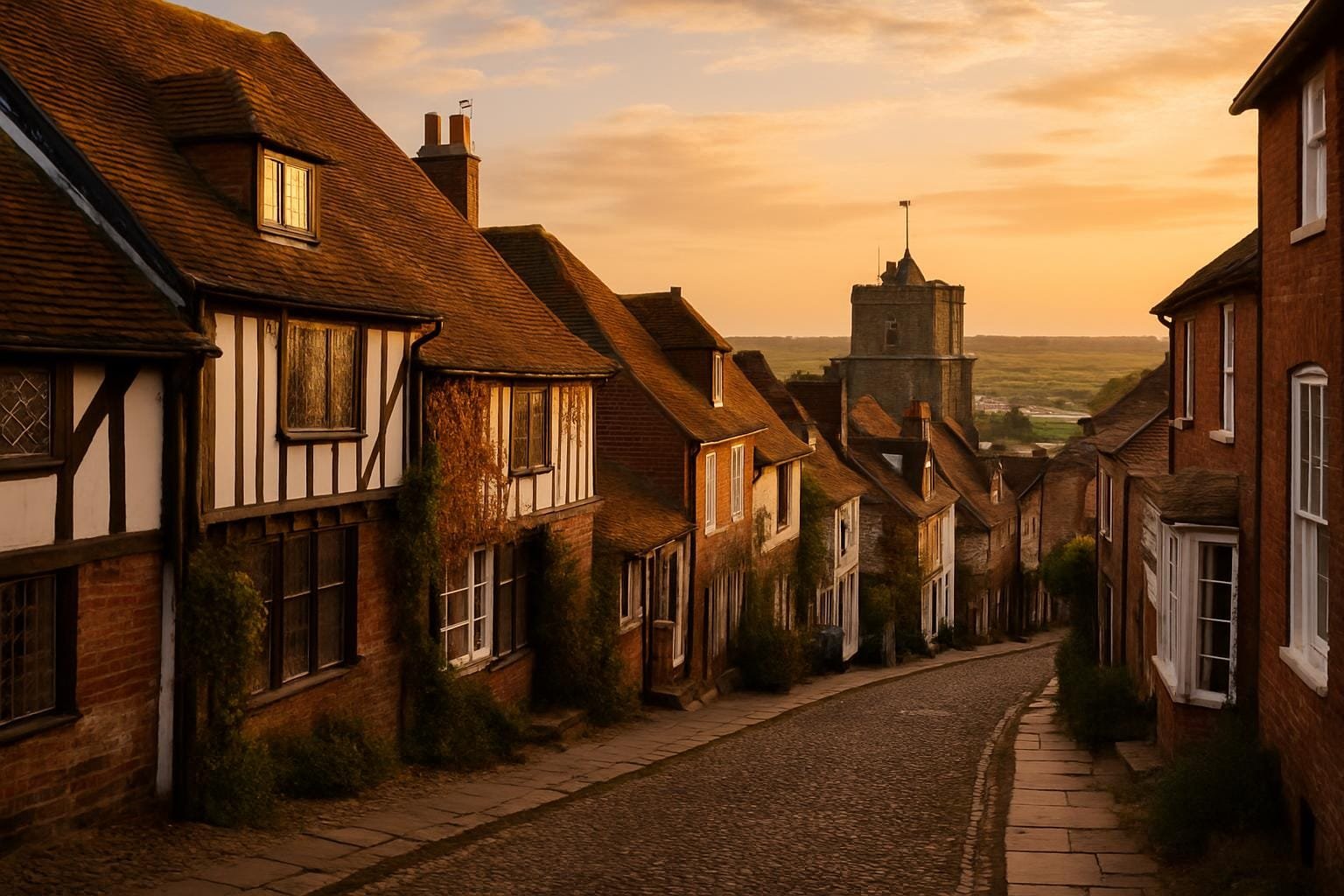
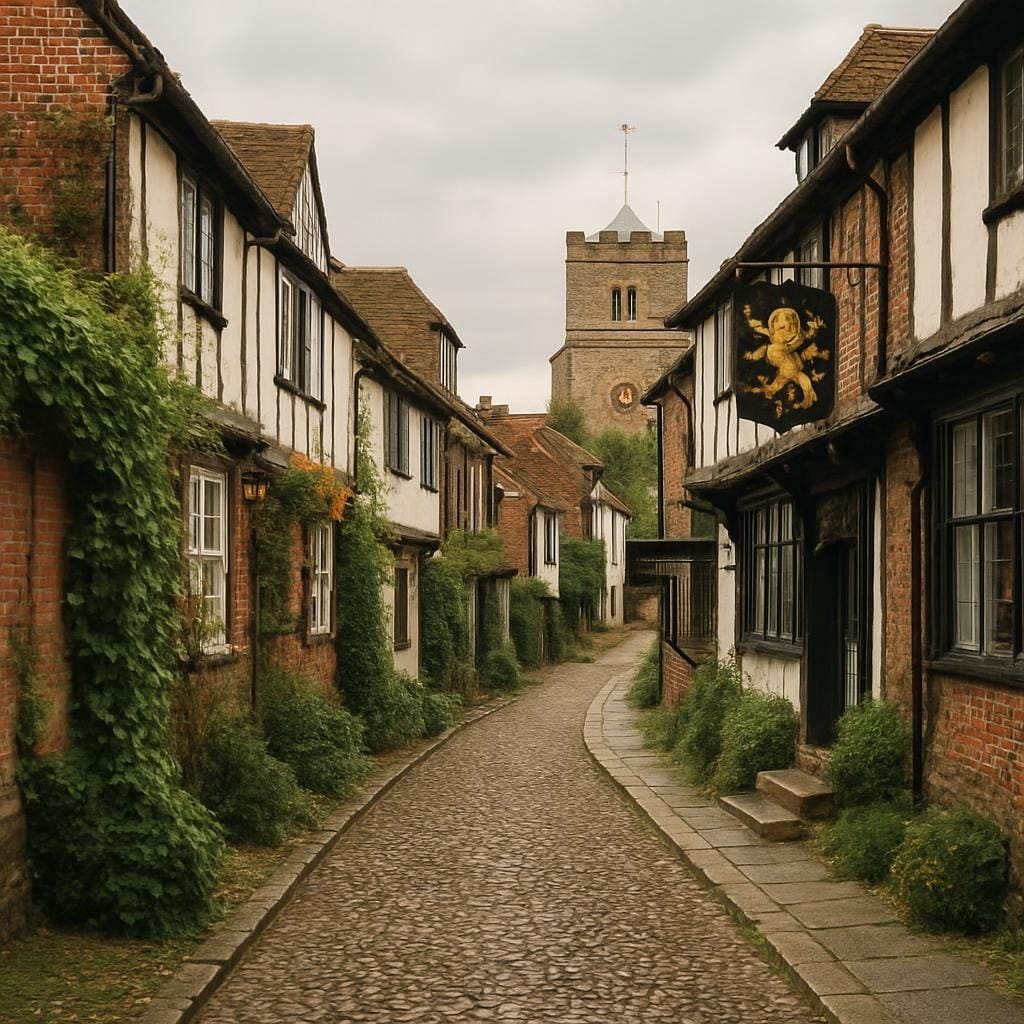
Rye’s core is basically three streets in argument with a hill: High Street, Lion Street and Mermaid Street. The cobbles on Mermaid are as handsome as advertised and about as practical as bowling balls. You can hear first-timers hitting them in flip-flops from a distance.
I normally start at the bottom of Mermaid Street by the Mermaid Inn. Parts of it go back to the 15th century, and it leans into its smuggling history very hard – creaky floors, low beams, paintings that follow you round the room. Last time I went in, the bar was doing a decent pint of Harvey’s Sussex Best for around £5.80, and there was a pair of hikers trying to pretend they hadn’t massively underdressed for the place.
Halfway up Mermaid Street there’s a house with a plaque that reads “The House Opposite”. It’s exactly the sort of deadpan humour I can get behind. Look back down the slope and you get the postcard view: lopsided roofs, the river in the distance, the marsh beyond. It’s easy to imagine carts clattering up here with barrels and bales, though in reality you’re more likely to dodge a Range Rover trying to tuck itself into a gap smaller than its ego.
A block over, Rye High Street feels more everyday. You’ve got Rutherfords, a proper old-school hardware shop with window displays that haven’t changed much since the 80s, and The Rye Bookshop where I once lost 40 minutes in the local history section by accident. There’s a Greggs tucked in further down, which slightly ruins the medieval vibe but does a reliable sausage roll if you’ve just climbed the hill and need to recalibrate your blood sugar.
Worth Knowing Before You Go – Old Town
The cobbles are no joke: wear trainers or shoes with actual grip. Mermaid Street is shared with traffic, and the pavements are tiny, so keep an eye on kids and luggage. Most shops along High Street open around 10am and shut by 5pm; if you like a quieter wander, late afternoon is good once the coach groups have trotted off. Many people skip Lion Street; walk it and peek through to the churchyard for some of the best little views between houses.
St Mary’s Church squats right on top of the hill, and I mean that as a compliment. From the outside it’s all flint and buttresses, but the real draw is the tower. For about £4 (cash or card, and there’s usually an honesty box system when the volunteers are thin on the ground), you can climb up to the top via a narrow, twisty stair. You’ll need to squeeze past the bells and through a hatch that is politely not designed for anyone who has overcommitted to the full English that morning.
The payoff is panoramic. To the north and west you get the Wealden ridges; to the south and east the view drops away into flat marsh and square fields. You can see the defended position straight away: in medieval times, before the river silted up, the sea came much closer. Rye was one of the Cinque Ports – a confederation of harbours that had to supply ships and men to the king in exchange for trading perks and a certain swagger.
Up on the tower, with the wind doing its best to mug your hat, you can line up the old town’s tight streets with the modern industrial bits down by the river. Fishing boats in one direction, campervans in the other, and between them eight centuries of worry about the tide.
Worth Knowing Before You Go – St Mary’s
The church is free to enter; the tower climb is usually around £4 for adults and £2 for children. Last admission to the tower is often 30–45 minutes before closing, so don’t leave it to the end of the day. On busy weekends they sometimes pause entry if too many people are up there; a good time to go is late morning before lunch. Most visitors take their photos and head back down – linger and watch the harbour activity through the binocular viewers (take pound coins).
All that history makes sense when you actually walk out towards the marsh. From the bottom of the hill, follow Rope Walk and then South Undercliff past the fishing quay. You’ll smell it before you see it – diesel, fish, a bit of seaweed if the tide’s right. It’s not pretty in the chocolate-box sense, but it’s real work.
You’ll pass sheds selling fresh fish and shellfish straight off the boats. Rite of Rye usually has good local catch on ice; I once walked away with a paper parcel of hot smoked mackerel that made the entire car smell like a trawler for two days. Worth it.
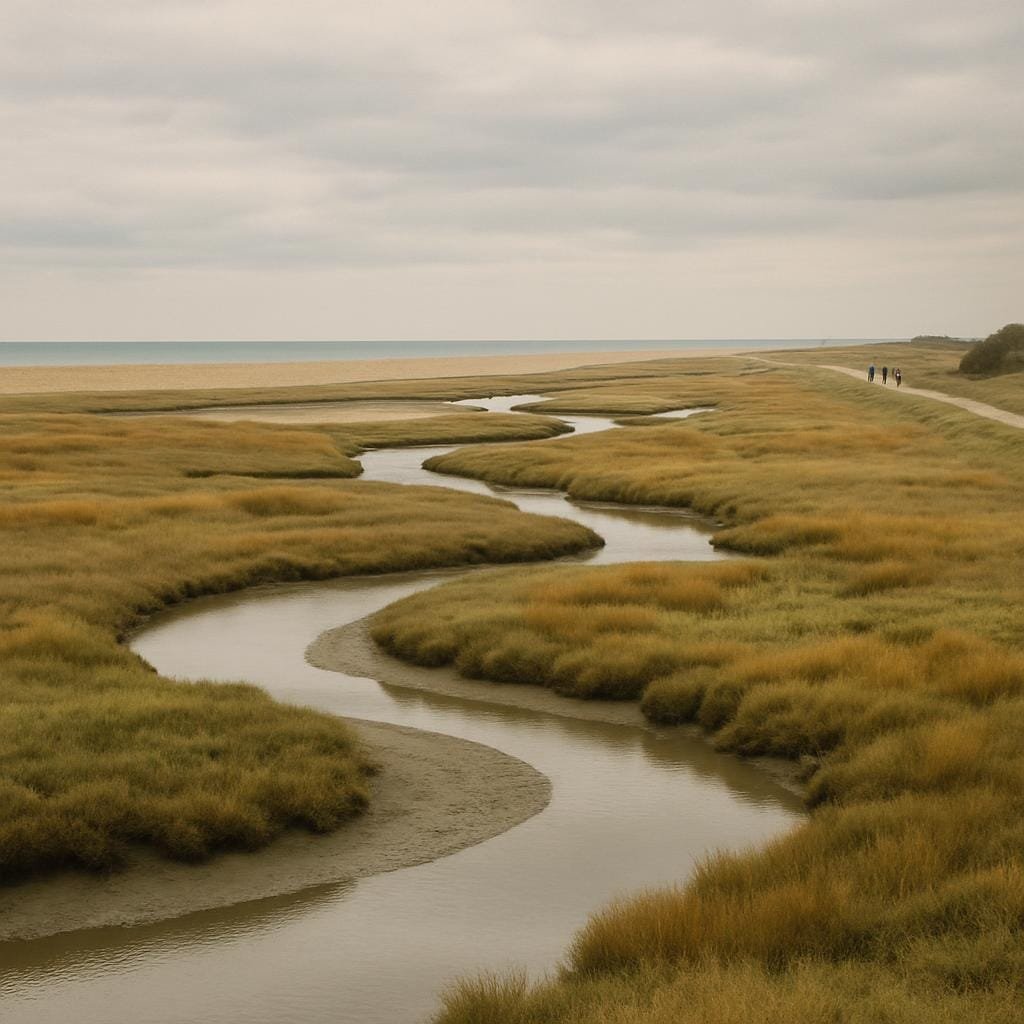
Keep going and you’re out on the raised path by the River Rother, with the town now behind you on its lump of land. The contrast between the tight, timbered streets and this big open marsh is properly striking. The river meanders like it’s got all afternoon; sheep graze the fields; the odd freight train rattles across in the distance. When the tide is low, you get that particular estuary smell – part mud, part salt, faintly metallic – that tells you the sea isn’t far off even when you can’t see it.
I once misjudged the weather and ended up here in horizontal rain, trying to pretend my coat was “showerproof” and not just slowly absorbing the Channel. But even soaked, it makes sense of Rye’s past as a Cinque Port. You can picture ships anchored out there, cargo coming in on smaller boats, the town looking down and counting the profits.
Worth Knowing Before You Go – Marsh Walk
From the town centre to the riverside path is about a 10–15 minute walk on pavements and tracks. The marsh paths can get very boggy after rain; waterproof shoes will save your socks. There’s no admission cost, obviously, but take water and be ready for wind – it whistles across with nothing to break it. Many people turn back at the fishing quay; push on a little further and you’ll get quieter stretches with curlews and redshank probing the mud.
For all the history boards and medieval names, Rye is also a place where people just… live. You see it in the way locals thread through the tourists with practised zigzags, and in the practical businesses tucked between the galleries.
Marino’s Fish Bar on Tower Street is my default refuelling point. It’s a proper sit-down chip shop with formica tables and a queue that nearly reaches the door on Friday evenings. Last time I went, cod and chips to eat in was about £11; the batter was crisp, chips adequately soggy in the middle, and the tea came in a mug that had seen some things. Exactly what you want.
If you’re more in the mood for coffee and cake, The Fig on High Street is the stylish option with seasonal brunch and very good brownies. It’s popular with people in Breton tops and expensive pushchairs, but don’t let that put you off – the coffee is strong, and they’re friendly. I’m more inclined towards Cobblers Corner down Lion Street, which is smaller, a bit scruffier, and does a solid bacon sandwich for about a fiver.
Rye has a decent little weekly market too. On Thursdays, the Cattle Market car park turns into a selection of stalls selling everything from fruit and veg to cheap socks and dog toys. It’s not a heritage spectacle, just a normal small-town market with traders trying to get your attention. Perfect if you’ve forgotten something boring like toothpaste, or you want picnic bits that aren’t shrink-wrapped from the supermarket.
Worth Knowing Before You Go – Eating and Everyday Stuff
High Street eateries get very busy at weekends and during school holidays; if you’ve got your heart set on a particular lunch spot, aim before 12.30. Expect £10–£15 for a main in most cafés and bistros. Many places are dog-friendly, especially pubs like The Ypres Castle Inn (known locally as “the Wipers”) which hides down a lane near the old gun garden and does good beer and hearty food. Most visitors stick to High Street for food; wander down Cinque Ports Street for cheaper, more local-feeling options.
It’s easy to forget that the Cinque Ports (Rye, Winchelsea, Hastings, Hythe and New Romney, plus various hangers-on) were once political heavyweights. These days, the old alliance lives on in ceremonies, mayors in fancy robes and, more interestingly, bonfire societies.
If you happen to visit in autumn, Rye Bonfire Night is something else. It’s usually a week or so either side of 5 November, and the whole town goes all-in: torchlit procession, drummers, enormous effigies trundling through the streets and a big fire in a field down by the river. I went one year thinking it’d be a few sparklers and a gazebo; it felt closer to a controlled uprising, in a good way.
The Rye and District Bonfire Society organise it, and they collect donations during the march. If you go, be prepared for noise, smoke, the odd stray firework and queues for everything. Also for the slightly surreal experience of standing on medieval streets watching people in smuggler costumes carry flaming torches past a parked Audi.
Worth Knowing Before You Go – Bonfire Night
The event is free, but you’ll want cash for donations, food stalls and the odd pint. Trains can be absolutely rammed heading out afterwards; if you’re travelling by rail, check last train times and consider leaving slightly early if crowds aren’t your thing. Parking is very limited on bonfire night, with road closures around the town centre – it’s one of the few times I’d say the train is genuinely easier. Many day-trippers don’t realise how long it can take to file out of the viewing field; wear decent shoes and a warm layer you don’t mind smelling of smoke for a week.
I’ll be straight with you – the first time I came to Rye I didn’t even think about walking out to Rye Harbour. I saw the word “harbour” on the map and assumed amusements, arcades, maybe a tragic doughnut stand. It’s nothing like that.
From the town, you can walk or drive the couple of miles down to Rye Harbour Nature Reserve. Parking at the main car park by the village is currently free, though there’s a donation box. The reserve itself is a long spit of shingle and saltmarsh, criss-crossed with level paths and dotted with bird hides and odd bits of wartime concrete.
The new Discovery Centre is one of those rare eco-buildings that actually works: big windows over the marsh, clear information boards, and a café that does a pork sausage roll large enough to qualify as a weapon, about £4.50 last time I was there. Birdwatchers hunker in the hides with enormous lenses; kids run about on the shingle; somewhere in between you get your head cleared by the wind.
The sea here is a working thing: you see the residue of old industries, the shipping lanes further out, the way the rivers and tides have been arguing for centuries. Remembering Rye’s Cinque Port status while standing here, with the town just visible back inland, makes the whole area click together.
Worth Knowing Before You Go – Rye Harbour
From Rye town centre it’s about a 45–60 minute walk each way on pavements and then reserve paths, or a 10-minute drive. There’s a regular bus (the 313) but check timings as it can be sporadic. The reserve is free to enter and open all day; the Discovery Centre has set opening hours. Most visitors take the main path straight to the sea and back – if you have time, loop round via the Camber Castle direction and you’ll often have long stretches almost to yourself.
You can enjoy Rye in a quick half-day, but it rewards a slower pace, especially if you like walking. A few last things that don’t fit neatly anywhere else:
As a Rye East Sussex travel guide in one sentence: it’s a place where you can walk from a medieval church tower to tidal marsh in under twenty minutes, eat fish that was swimming that morning, and end the day in a pub that smells faintly of woodsmoke and spilled ale. It’s pretty, yes, but it’s the rough edges – the slippery cobbles, the sharp marsh wind, the working quay – that make it stick.
Take decent shoes, leave some time for the marsh, and don’t be afraid to stray off the main Instagram streets. The town’s history is written in where people actually walk.