

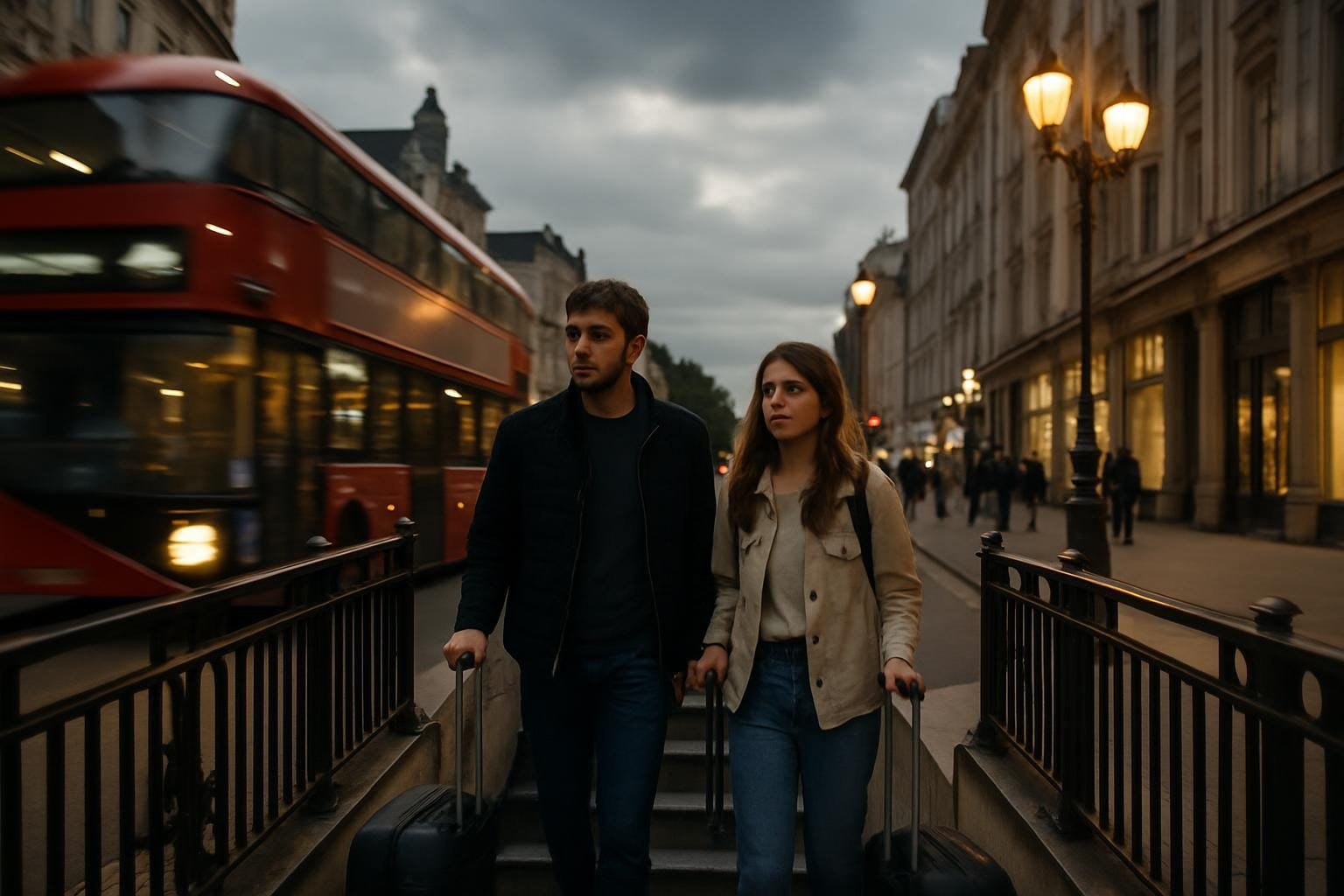
If it’s your first time in London, you’ll probably land with one suitcase, three half‑formed plans, and the vague idea that you should “see Big Ben and eat fish and chips”. I did exactly that on my first go, then spent an afternoon queuing for stuff I didn’t care about and paid £4.50 for a bottle of water. You can do better.
This isn’t a guide to Everything in the Capital. It’s how to arrive without making the rookie mistakes: the expensive airport faff, the wrong travel card, booking your big sights at the wrong time, and ending up in the noisy bit of town when your body thinks it’s 3am.
I like London, but I like it best when it’s dialled down a notch: quiet streets, half‑empty museums, a decent pint and the feeling you’ve got away with something. That’s what this is for.
The first decision on your first time in London hits you before you’ve even seen a red bus: how you get from the airport into town. This is where a lot of people accidentally spend their first dinner budget on a train with fancy branding.
Heathrow is west of London, with three sensible ways in:
Worth knowing before you go (Heathrow bit): Use contactless (your bank card or phone) at the gates – it’s cheaper than buying single paper tickets. Avoid arriving into central London between 8–9.30am on a weekday if you can; the Piccadilly line in rush hour after a long flight is a test of character. Most visitors miss the airport buses, but the National Express coaches are good value if you’re heading straight to west London or further afield, from about £7–£10.
Gatwick and Stansted both have Very Official‑Looking Express Trains. They’re fine. They’re also not compulsory.
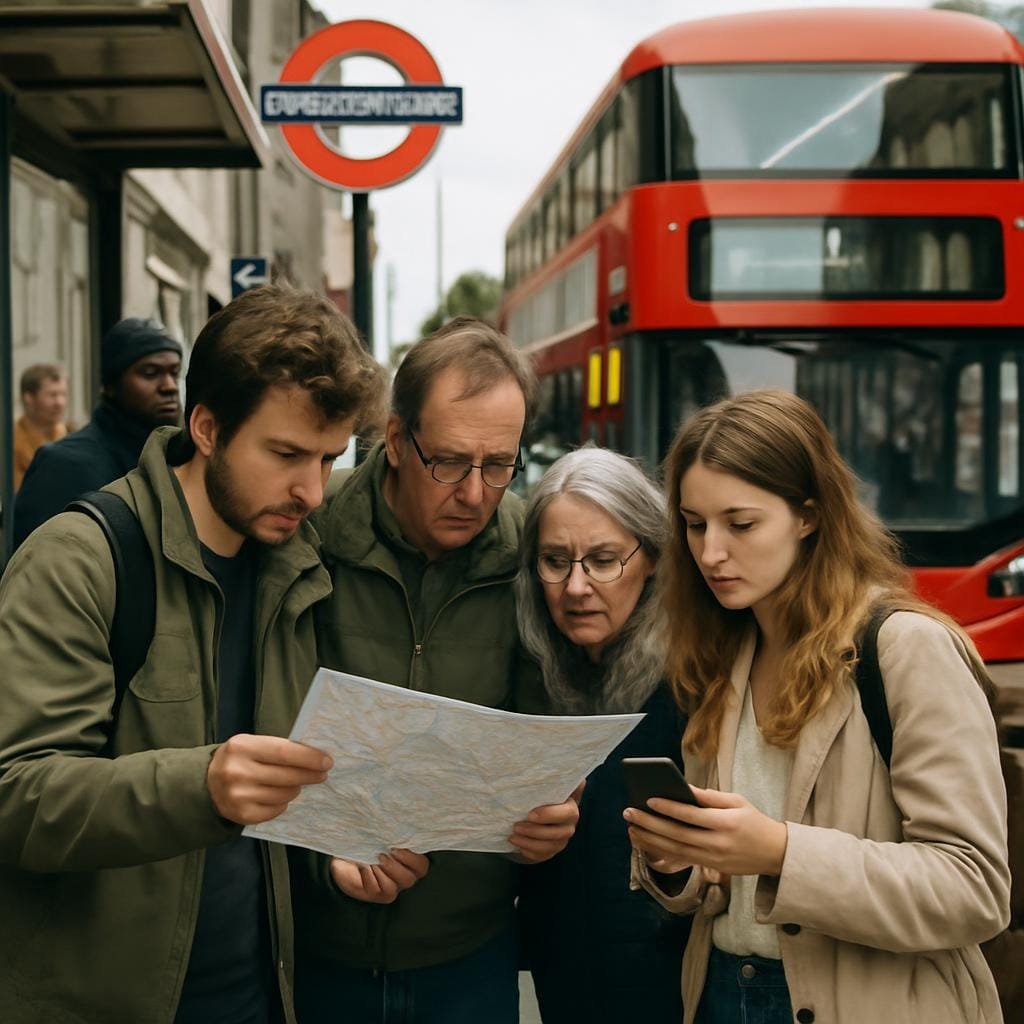
From Gatwick to central London:
From Stansted:
The buses from Stansted to Victoria or Liverpool Street start around £10–£12. They’re slower, especially in traffic, but for late arrivals they can be the least painful option.
Worth knowing before you go (Gatwick / Stansted bit): If you’re coming off a long flight, don’t stack too much on day one. Get to your hotel, have a walk, find a supermarket (Tesco Express or Sainsbury’s Local) and grab water and snacks. Most first timers blast straight out to Leicester Square and then crash by 6pm. Pace yourself.
There’s a whole subculture of people optimising London transport fares like they’re day trading. You don’t need that for your first time in London.
Use contactless payment (bank card or phone) or buy an Oyster card (£7 deposit, non‑refundable since they changed the rules). Daily caps mean you won’t accidentally spend £40 by bouncing around the network like a pinball.
Black cabs are great, and if you’ve got heavy luggage or a late arrival they’re worth the money. But from Heathrow to central London you’re probably looking at £60–£90. One for special occasions, not standard procedure.
What most visitors miss: The official TfL maps include a “step‑free access” version. If you’ve got heavy bags, dodgy knees or a buggy in tow, plan your route with that – some stations are a warren of stairs with no lifts. Green Park in particular is a bit of a slog.
On my first time in London I stayed just off Piccadilly Circus. I thought I’d be “in the middle of everything”. I was: the middle of sirens, buskers with amps and a hen party that came past the window at 3.20am singing Wonderwall.
For a quieter first base, you’re usually better one Tube stop out from the obvious hotspots.
King’s Cross used to be the sort of place your mum warned you about. These days it’s cleaned up without being too shiny. You’ve got trains, the Tube, and the Coal Drops Yard area with its canalside walks, eateries and the fancy Dishoom if you want a very good bacon naan for about £7–£8.
For somewhere calmer, walk ten minutes south into Bloomsbury. Here you’ve got:
Worth knowing before you go (King’s Cross / Bloomsbury):
If you’re a bit wired from travelling but don’t want to tackle the Tube madness straight away, the South Bank area is gentle on the brain. From Waterloo station, a five‑minute walk brings you to the Thames with a wide riverside path.
You’ve got:
There’s a cluster of chain places to eat, but if you walk ten minutes towards Blackfriars Bridge you’ll find Tas on The Cut, a Turkish place where a large plate of meze and bread will sort you out for under £20. Feels more local, less airport food court.
Most people miss: Head up the external stairs of the Tate Modern Switch House (the Blavatnik Building) – there’s a free viewing level near the top with a cracking 360° view over London. No ticket needed, just bag checks. Tate Modern itself is also free for the main collection; special exhibitions are usually £15–£20.
You don’t need to see everything on your first time in London. You can’t, and trying will just leave you with a blur of gift shops. Pick two or three “headline” things that really matter to you, and then some quieter bits nearby.
The area around Westminster Bridge is intense. On a sunny Saturday you move in slow motion behind 300 other people doing the same photo. Go early.
Worth knowing before you go (Westminster):
The first time I went to the British Museum I did that classic thing: turned up in the middle of the day, saw a coach party and almost left. It’s free, so everyone goes. You need a bit of strategy.
My trick now is: go late afternoon. They’re usually open until 5.30pm, sometimes later on Fridays. Turn up around 3.30pm and the school groups have gone. Grab a coffee from Store Street Espresso (five minutes away; flat white about £3.50), then wander in.
London can be a lot. The roar of the traffic, the escalator etiquette, trying not to look completely lost. The bits that made me properly like the place were the quieter pockets you can fold into a busy day.
Near St Paul’s Cathedral, you’ve got a small garden called Postman’s Park. It’s behind the old General Post Office building, and most people walk straight past.
Inside there’s a long wall of ceramic tablets – the Memorial to Heroic Self‑Sacrifice. Each one tells the story of someone who died saving another person: a kid who drowned rescuing a friend, factory workers who tried to stop fires spreading. It’s quietly devastating and oddly calming.
Worth knowing before you go (Postman’s Park):
If you need a tea afterwards, walk up to Exmouth Market in Clerkenwell – it’s about 15 minutes on foot. Small independent cafés, like Moro / Morito for Spanish‑North African small plates, or Caravan for good coffee and sourdough. Prices are London‑ish, but you’re paying for atmosphere as much as anything.
A few years back, after a delayed flight into Gatwick, I checked in at King’s Cross and went straight to the Regent’s Canal instead of collapsing on the bed. It was a good call.
From Granary Square behind King’s Cross station you can pick up the towpath and walk west towards Camden and Regent’s Park. You’ll see:
Worth knowing before you go (Regent’s Canal):
At Camden Lock, the market has food stalls from everywhere. It’s busy, yes, but if you go on a weekday lunchtime it’s manageable. A decent box of food – say Sri Lankan kottu, or falafel and salads – will cost you around £9–£12. Cashless more or less everywhere now.
The rookie mistake on a first time in London is eating because it’s there: the nearest chain on Leicester Square with laminated menus and staff trying to drag you in. Walk two streets away and your options improve instantly.
If your hotel breakfast is £18 for anaemic toast and hard eggs, skip it. There’s usually a café within a five‑minute walk that will feed you for half that.
Worth knowing: in central London, independent places like Omotesando Koffee near Tottenham Court Road will give you a seriously good flat white and a quiet corner if you’re flagging.
Some West End pubs are basically tourist extraction machines: frozen chips, loud music, and toilets you need a map to find. But if you push out into residential streets a bit, you’ll hit the proper ones.
In Bloomsbury, the Lamb on Lamb’s Conduit Street is a classic London pub – wood panelling, decent ale, tables actually used by locals. A main – say fish and chips or a pie – will be around £16–£20. Not cheap, but not outrageous for central.
Most people miss: Pub kitchens usually have specific food hours. Don’t assume you can roll in at 3.30pm for a Sunday roast; many stop serving food between 3pm and 5pm. Always check the website or phone ahead if you’ve got your heart set on it.
None of this is glamorous, but it’s the stuff that makes the trip calmer.
The last mistake on a first time in London is treating it like a one‑off, once‑in‑a‑lifetime marathon. It doesn’t have to be. The city is far less intimidating when you accept you’ll miss things.
On one of my more recent trips I walked past the queue for the London Eye, glanced at the waiting time (about an hour) and carried on to the river path. It’s around £32 on the day for a 30‑minute rotation. You might love it; big views, good photos. But if queues make you twitchy, you could spend that same half hour sitting by the Thames with a coffee, listening to the city and feeling like you’ve actually arrived.
First visits set the tone. If your first time in London is all stress and elbows, you’ll remember it that way. If you give yourself space – on a canal path, in a quiet square, with a cheap bus ride past all the postcards – you’ll see the city as somewhere you can actually live in for a bit, not just survive.
And that, more than ticking off everything in a guidebook, is what makes you want to come back.