
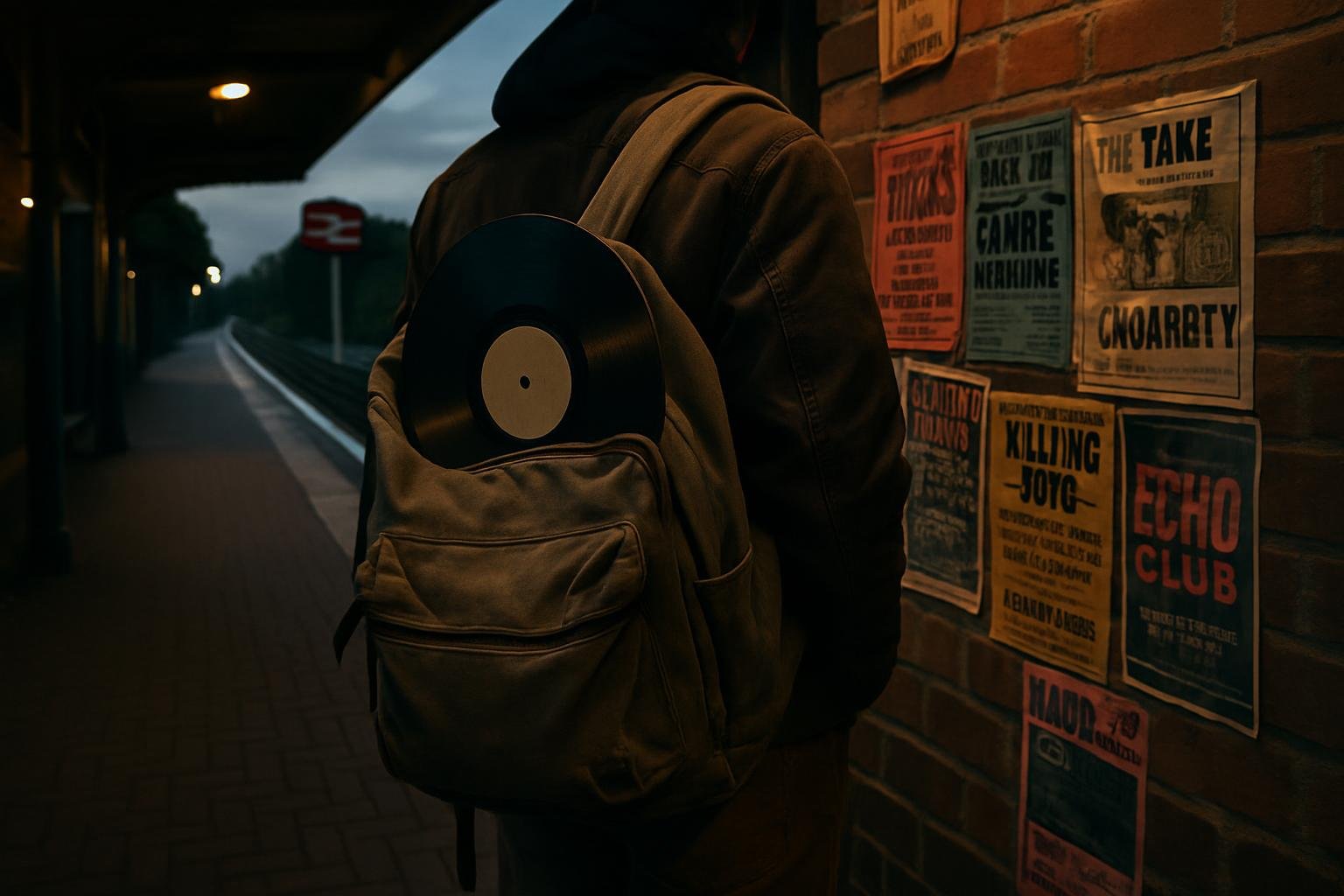
I’ve spent most of my adult life measuring distances in songs rather than miles. From Newcastle to Leeds, Sheffield to Manchester, I can tell you how long each train takes in terms of entire albums: “It’s one Giant Steps and a couple of B-sides,” that sort of thing. So when I first started sketching my own daft, completely unpractical 1980s British indie travel guide in my notebook, the line that made the most sense wasn’t north–south by motorway. It was by rail, from Glasgow to Brighton, following a trail of scratchy seven-inches, Peel sessions and bands who never made the A-list but quietly shaped how a lot of us hear guitars.
This isn’t a route for people who want the big stories polished by nostalgia TV. It’s more for those of us who still remember badly photocopied fanzines and arguing in sixth-form common rooms about who was ripping off who. Call it a 1980s British indie travel guide if you want, but the real itinerary lives in your headphones. The rail line is just an excuse to string it together.
Glasgow in the mid-80s exists in my head as a place I never quite reached in time. I’m a few years too young. By the time I was old enough to sneak into venues, the stories were already set: Maryhill Community Central Halls, the early Creation tours, bands who sounded like they’d grown up on Orange Juice and bad weather.
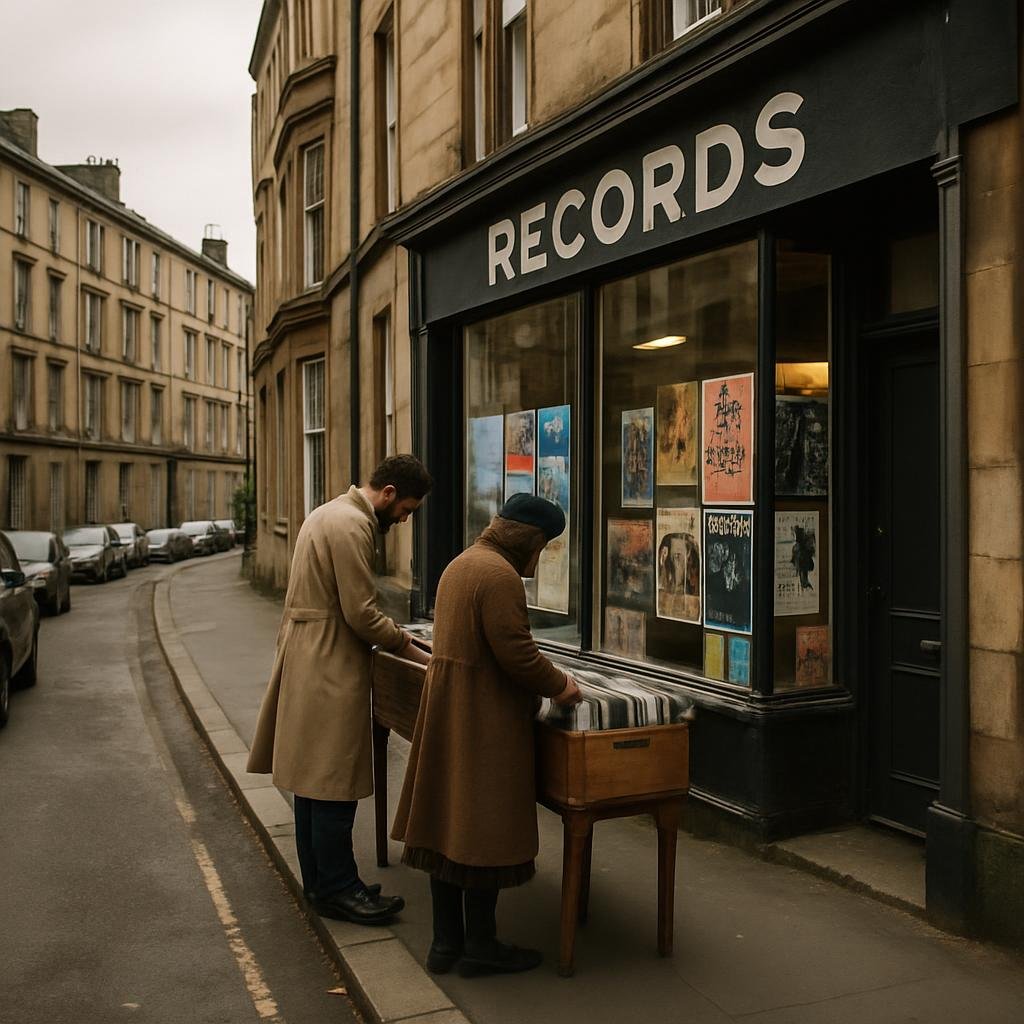
I first heard The Pastels when I was about fourteen. A lad in my class taped me a compilation with “Nothing To Be Done” shoved between Ride and The Cure, and it absolutely wrong-footed me. The guitar sounded like it had been recorded in a stairwell, the vocal barely committed to being in tune, and yet it felt more like real life than anything else on the tape. People still talk about Glasgow’s 80s guitar bands in very tasteful terms – all that jangle and restraint – but live recordings from the time tell you they were louder and scruffier than their reputation allows.
Aztec Camera are the band that mess up any neat story here. High Land, Hard Rain came out in 1983, which I arrived at backwards via a charity-shop CD in about 2001. I remember putting on “Oblivious” expecting something polite and being smacked with those sharp, chiming chords and Roddy Frame sounding both furious and completely relaxed. People talk about The Smiths as the template for smart British indie guitar music, but Roddy was getting there first and arguably doing it with more grace. If this 1980s British indie travel guide had any justice to it, half the pages would be him and nobody in a gladioli shirt.
There’s a straight line, by the way, from those Glasgow guitar lines to later stuff people forget to connect. Put “Just Like Honey” by The Jesus and Mary Chain next to early Pastels tracks and it’s obvious they’re in conversation, even when one band is drowning in feedback and the other is barely getting its act together in a community hall. For me, that’s the real Glasgow sound of that period: sweetness and abrasion arguing in the same song.
Manchester is where the story usually gets overtidy. There’s a lazy TV version – Joy Division, then New Order, then the Factory film poster and that’s that. But my own entrance point was scruffier. I bought a second-hand copy of The Railway Children’s Reunion Wilderness from Steel Wheels in Newcastle when I was about sixteen because the cover looked miserable in exactly the right way. One listen to “A Gentle Sound” and I couldn’t understand why they weren’t mentioned every time people held court about 80s Manchester. Fragile vocal, crisp guitar lines, none of the macho swagger that would turn up in the 90s.
Here’s my arguable position, then: if you take Joy Division and The Smiths out of the story entirely, Manchester in the 80s still gives you one of the richest pools of British guitar music. You’ve got James in their pre-hits, horrible-haircut phase, putting out spiky singles like “Hymn From A Village” on Factory in 1985; you’ve got The Chameleons issuing these huge, echoing guitar statements like “Swamp Thing” that might as well have come from another city altogether; you’ve got A Certain Ratio and The Durutti Column twisting post-punk into things that sound ill at ease in any category.
When I finally made it to Manchester as an actual adult, it was for a James gig at the Academy in 2007. They did “Johnny Yen” like it was still 1986, nervous energy everywhere, and you could see in the crowd’s faces that this wasn’t nostalgia. These songs never sat comfortably in the slick, post-Britpop narrative – too knotty, too anxious – but they’re the ones that still feel true when you’re stood on Oxford Road waiting for a delayed train with chip shop curry sauce on your coat.
People will always argue that The Smiths loom over all this, and fair enough up to a point. The first time I heard “What Difference Does It Make?” I was about fifteen, feet up on my mam’s sofa, watching a repeat of some old Top of the Pops on BBC Four. That clatter of drums and the way Marr’s riff loops back on itself still sounds like a door opening. But I’ll stand by this: the more air Morrissey’s solo career takes up, the easier it gets to hear how much that band also held back other Manchester stories. Plenty of 80s groups with less flamboyant singers got shunted to the side in every documentary since. That’s not The Smiths’ fault as such, but it’s a gap worth talking about.
Coming from the north-east, Leeds was the first city on this imaginary rail route that felt actually reachable. I didn’t know anything in real time, obviously – I was three when It’s Grim Up North came out – but later on, living in Yorkshire, you start hearing about the older stuff as if it’s local gossip.
The Wedding Present might be the most “railway” band in this whole 1980s British indie travel guide: every song feels like motion, like being slightly late and slightly annoyed. When I first heard “Kennedy” on a warped 7-inch a friend in Huddersfield put on after too many cans, it was that relentless guitar chug that stuck. Not speed-metal fast, just permanently urgent. Gedge’s lyrics in that period – “My Favourite Dress” especially – had this matter-of-fact quality I didn’t appreciate until I got older and more tired of clever lads showing off. It’s heartbreak as logistics: who said what, who turned up late, how long it’s been.
Sheffield in the 80s usually gets written off as synths and steel, Human League and Heaven 17. That’s part of it, obviously, but even the guitar stuff from Yorkshire at the time carried some of that cold, mechanical pulse. Pulp are the obvious example, although their 80s work is the bit everyone tries to skip. When I finally dug into Freaks and the early singles in my mid-20s, I was shocked by how skeletal they were – “Little Girl (With Blue Eyes)” is basically melodrama over a bassline that sounds like it’s been practising on its own in a damp room.
In Sheffield itself, the thing that still resonates is how much of this happened off the main stages. I remember standing in the Leadmill in 2012, pint of something cheap in hand, watching an under-attended indie night and thinking: this is probably closer in spirit to 1985 than any of the neat origin stories. Students, a few locals, bands trying to sound like a version of The Fall they’d half-heard through someone’s bedroom wall. That fall-apart-at-the-edges quality has always felt more northern to me than any Manc swagger.
By the time the rail line curls into London, the 1980s British indie travel guide everyone else writes usually veers off into big signposted things – shoegaze forming in Camden or C86 being born at some pub that’s now a block of flats. My own route into London 80s indie was messier and later. In the early 2000s there was a second-hand shop near King’s Cross that used to throw old flexidiscs in a box near the door. I bought one because it had The June Brides on it, a band a friend of mine in Leeds had raved about non-stop.
The June Brides are a reminder that London indie in the 80s wasn’t one sound; it was a lot of bands trying to get heard without sounding like U2. A track like “In The Rain” has that rattling, trumpet-laced brightness people associate with the whole C86 compilation, but underneath it there’s a real bitterness. That balance – well-read miseries hiding under jaunty guitar – runs right through bands like Television Personalities too. “Part Time Punks” came out in 1978, strictly speaking, but the records they put out across the early 80s set a tone that a lot of so-called indie kids still copy without realising.
Then there’s Felt. I came to them embarrassingly late – late 20s, living near Leeds station, buying Forever Breathes the Lonely Word because someone compared it to The Go-Betweens. The first time I heard “All The People I Like Are Those That Are Dead” I remember thinking: this should be the standard reference point whenever we talk about 80s guitar music, not another repeat of “This Charming Man”. Maurice Deebank’s guitar playing was filigree without fuss and Lawrence wrote like someone who had read all the right books but didn’t feel the need to shove them in your face.
The overrated bit, for me, is how much C86 as a brand has been tidied up into one sound. If you actually listen through that NME tape tracklist, what jumps out isn’t some pure jangle ideal – it’s how messy and uneven it is. Some bands clearly had one good song and some pocket change for recording time. Others, like Primal Scream in their pre-rock-god phase with “Velocity Girl”, barely resemble the bands they’d become. It’s a compilation of scenes trying to happen at once, which is exactly why it matters.
Ending this rail line in Brighton feels almost too on the nose, but that’s 80s indie all over – self-aware, slightly arch, never quite as accidental as it tried to look. My own relationship with Brighton indie really starts with The Shop Assistants and Talulah Gosh, who weren’t from Brighton at all but ended up filing spiritually near the seaside in my head: fizzy, noisy, permanently about to fall over. “I Don’t Wanna Be Friends With You” and “Bringing Up Baby” both sound like music for sticky dancefloors near the coast, even if they barely got played there.
The Brighton part clicks later. The Bodines, The Flatmates, all those bands people think of as also-rans. I’m not convinced that’s fair. The Flatmates’ “Shimmer” – which I first heard on a bus to work in about 2010 thanks to a random playlist – has the sort of chorus you assume would have been everywhere if it had come out five years later. Romance, noise, that slightly nasal vocal you only really get in British bands trying to sound American and failing beautifully.
Brighton itself, when you duck out of the hen parties and head towards somewhere selling chips in proper portions, still feels like a good place to think about indie as a way of arranging your life. I spent an afternoon there a few years back, sat in a café near London Road station, headphones on, running through an 80s playlist before a gig. The Go-Betweens’ “Bye Bye Pride” came on – yes, I know they’re Australian, calm down – between Popguns and early House of Love, and it made sense in that spot: yearning, salty air, trains rattling in and out.
If Glasgow was nerves and Manchester was concrete, Brighton in this story is where you finally accept that all this hyper-specific music has seeped into how you move through cities. Indie always pretended to be opposed to tourism, but most of us have used it as a map: where to go, what to avoid, who your people might be in a crowd.
The honest answer: you turn it into your own 1980s British indie travel guide without leaving your seat. You don’t need a railcard; you need a pair of half-decent headphones and a bit of curiosity about everything that sat outside the big narrative. Put The Pastels next to The Chameleons, The Wedding Present next to Felt, James next to The June Brides. Hear how a bassline from Glasgow might echo in Brighton five years later. Notice how often the underestimated bands were the ones doing the heavy lifting.
Every time I actually take the train from north to south now – Newcastle to Leeds, Leeds to King’s Cross, King’s Cross to Brighton – I end up doing this in my head anyway. Stations become record label logos. Sidings look like the backdrop from some half-remembered video on The Tube. The carriages are full of people in vintage Smiths T-shirts who’ve probably never heard “Hymn From A Village” and that’s fine; nobody gets the same route through this stuff.
But if you’ve ever felt like the official history of British indie in the 80s skips over the bits that sound most like your own life – budget concerns, slightly damp shoes, conversations conducted over too-loud guitars – there’s a better way to think about it. Treat the country like a record crate on rails. Glasgow to Brighton, with detours for Leeds curry, Sheffield bus stops and Manchester rainclouds.
I suppose that’s the core of it: the music makes the train line make sense, not the other way round. You can trace that route on a map, or you can trace it in songs: Pastels to Aztec Camera; James to The Wedding Present; Felt to The Flatmates. Either way, it’s still there, humming away underneath the timetable like feedback at the end of a set, waiting for someone to press play and argue about who really deserved more credit.
And if you’re still keeping count: Glasgow to Brighton is roughly one and a half High Land, Hard Rains, one Forever Breathes the Lonely Word, a James B-sides compilation and a well-timed repeat of “Shimmer” somewhere south of London. Give or take a delay outside Doncaster.