If you care about cheese and trains in roughly equal measure (which I do, unapologetically), Britain is a quietly glorious place to potter about. The big names in rail get all the attention, but some of the most characterful British cheese regions are threaded together by old main lines, little rural halts and the sort of branch connections where the guard still calls you “mate”.
This isn’t a grand rail odyssey; it’s a practical guide to places you can reach with a railcard, a bit of patience and a strong tolerance for crumbs on your lap. I’ve eaten my way around these routes over a few years, occasionally getting it completely wrong, and coming home smelling faintly of rind and diesel.
Cheddar & Somerset by Train (ish)
Let’s start with the awkward one. Cheddar itself lost its railway in the 1960s, so purists will already be tutting. But if you’re reasonable about what “by train” means, cheddar country is still very doable without a car.
Base yourself in Weston-super-Mare or Bath, both well-connected on Great Western Railway. From Bath Spa, it’s usually a 30–40 minute train to Weston-super-Mare, then a bus (the First Bus 126) into Cheddar village. Buy a Weston to Cheddar day ticket on the bus for around £7–£8 and you’re sorted.
The first time I came, I made the classic mistake: went straight up the Gorge, took a thousand photos, then realised I’d eaten nothing but a flapjack all day. Do not do this. Start with actual cheese.
Where to eat cheese:
Cheddar Gorge Cheese Company on The Cliffs. They’re one of the few making traditional cheddar in the village itself. You can watch the cheesemaking through a glass window for free, but the “cheese tasting experience” is about £4.50 and includes samples you’ll pretend are for research, then buy anyway.
The Mousehole on The Cliffs – a slightly chaotic café with toasties heavy enough to count as weight training. The cheddar and onion marmalade toastie arrives hot, crisp and genuinely volcanic inside. About £7–£8, and you’ll need a sit-down afterwards, so that works out.
Most visitors charge up and down the main tourist drag and miss the small village centre around the market cross. There’s a quieter feel, a decent Co-op for emergency crackers and, if you walk back towards the parish church, a good view back to the Gorge without the coach crowds.
Worth Knowing Before You Go – Cheddar & Somerset
Approximate cost: Bath Spa to Weston return is often £10–£15 off-peak. Bus to Cheddar around £7–£8 return. Cheese tasting £4–£5.
How to get there: Train to Weston-super-Mare, then bus 126. In summer, buses are reasonably frequent; Sundays in winter can be threadbare, so check the timetable beforehand.
Best time to visit: Late September or early October. The Gorge is quieter, the air has that damp stone smell, and the cheddar tastings feel like a legitimate way to warm up.
Most people miss:Gough’s Cave has the famous “cave matured” cheddar. It’s touristy, yes, but the cheese they mature down there has a distinct earthy tang. Cave entry is around £22 online for adults (includes cliff-top walk). If that makes you wince, just pop into their shop and ask specifically for the cave-aged stuff by weight.
Cheshire by Rail: Crumbly Heaven from Crewe
I grew up not all that far from Cheshire, which meant two things: I knew it existed, and I never bothered going properly. Years later, passing through Crewe for work, I finally clocked that some of the most underrated British cheese regions sit right on that rail map.
Crewe doesn’t get many romantic write-ups, but as a base for cheese it’s absurdly convenient. Trains from Birmingham New Street, Manchester Piccadilly and London Euston roll through all day. Advance tickets from Birmingham can be as low as £12–£15 return if you’re organised.
From Crewe, hop on a local train to Nantwich (about 10 minutes, usually £4–£5 return). Nantwich is small enough to walk across in ten minutes, but big on dairy pride. Every spring, they host the Nantwich Show & International Cheese and Dairy Awards, a frankly ridiculous gathering of thousands of cheeses laid out in huge marquees. The first time I walked in, it felt like I’d accidentally turned up at a very polite, very creamy UN summit.
Essential cheese stops in Nantwich:
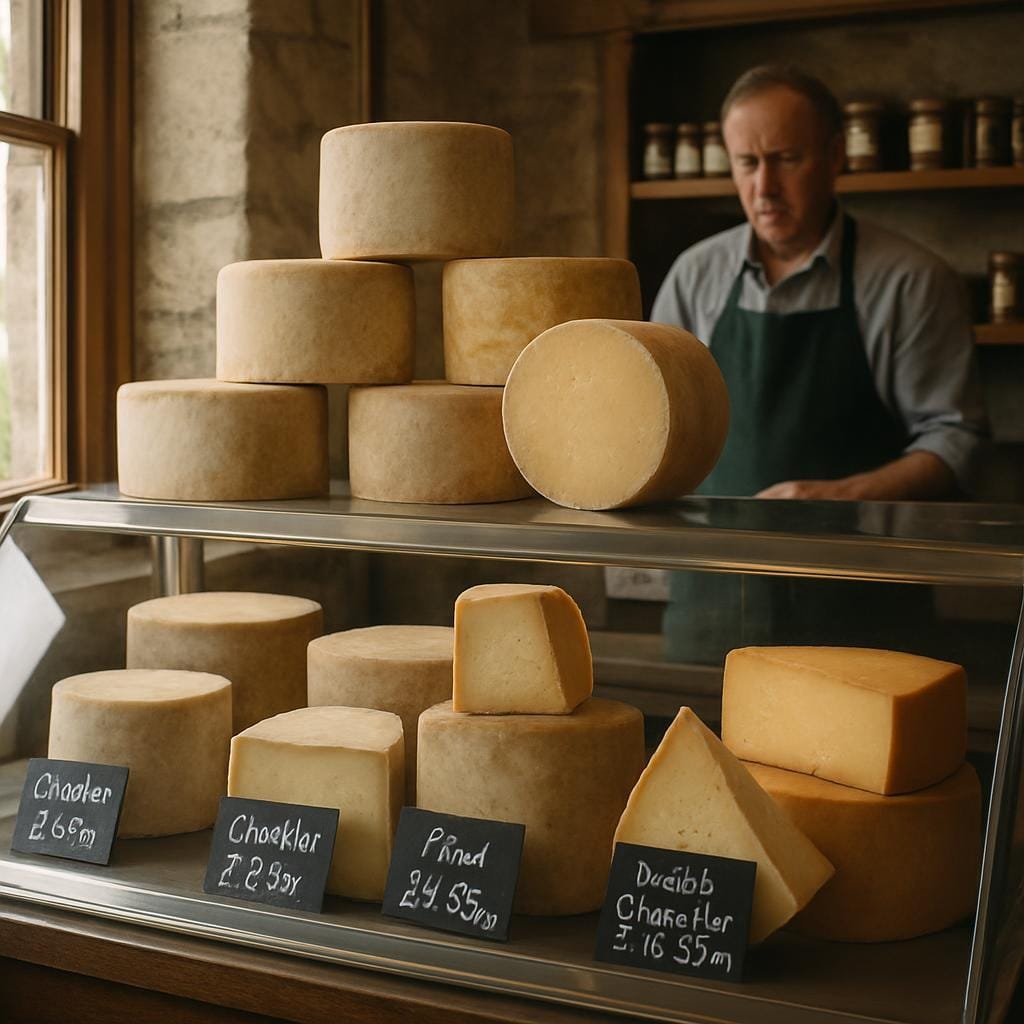
Richard Cooks Cheesemonger on Pillory Street. Proper old-school counter, serious about Cheshire. Ask for a comparison between young crumbly Cheshire and an older clothbound version; you’ll taste citrus versus savoury in one mouthful. Prices are fairly standard – £3–£5 per 100g.
Chatwins Bakery on High Street. Slight tangent, but their cheese & onion slice is unapologetically beige and exactly what you want if the weather’s turned. About £1.80. Grab one, then eat it on a bench by the square like a local.
Back in Crewe, if your train is delayed (which, let’s be honest, happens), the Off The Tracks café-bar outside the station does a decent grilled cheese on sourdough for around £7. You can sit with a view of platform chaos, smug with your Nantwich haul.
Worth Knowing Before You Go – Cheshire
Approximate cost: Crewe–Nantwich day return around £4–£5. Cheese show tickets usually from £22 adults if you pre-book.
How to get there: Fast trains from London Euston to Crewe take about 1.5 hours. Local Northern services run between Crewe and Nantwich regularly, but check late-evening returns.
Best time to visit: Around the time of the International Cheese Awards in summer, if you like your cheese with a side of organised chaos. Otherwise, a weekday out of school holidays – the town feels pleasantly sleepy.
Most people miss: The Cheese and Dairy Room at Nantwich Museum. It’s small and slightly old-fashioned, but you get a sense of how central cheese was to local life. Free entry, donation box by the door.
Wensleydale & the Dales: Cheese at the End of the Line
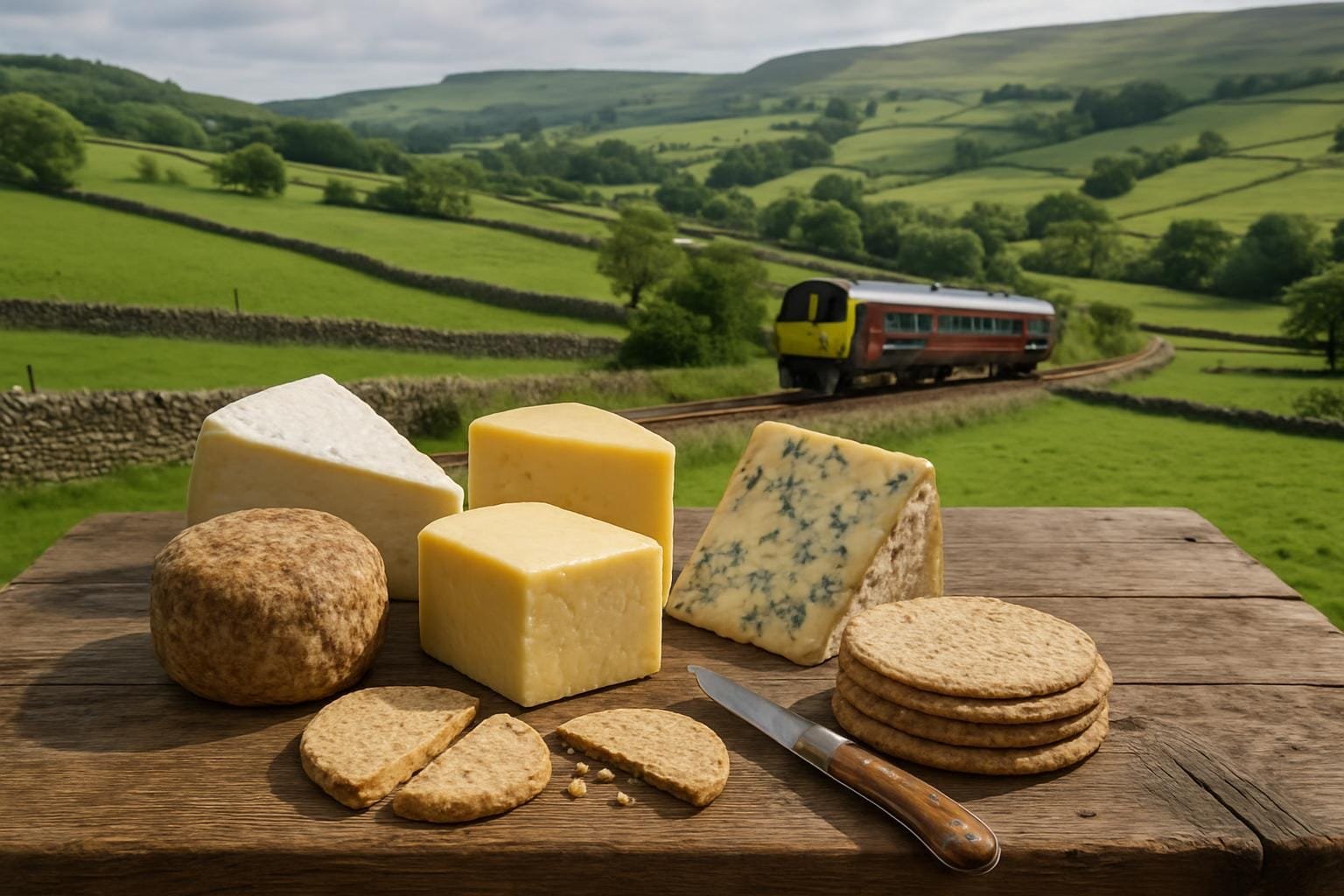
The Settle–Carlisle line is one of the classic rail routes in the north, and everyone goes on about the viaducts (fair enough). But for cheese, you want to hang a left at Leeds and take the little trains that snake up through the Leeds–Settle–Carlisle corridor to Hawes, home of Wensleydale.
To be technically correct, Hawes no longer has National Rail services, but the preserved Wensleydale Railway and good bus links mean you’re effectively doing this by train with a heritage flourish.
Here’s the faffy but worthwhile route:
Train to Garsdale (on the Settle–Carlisle line). Leeds–Garsdale is about 2 hours, roughly £25–£35 return off-peak.
From outside Garsdale station, catch the Little White Bus (service 831) to Hawes. It loosely matches the trains, but definitely check times. Usually around £3–£5 a trip, cash or card.
It feels like you’re travelling to the end of the cheese universe. Garsdale platform, lone sheep, sometimes a bloke with a collie who looks like he’s seen a lot of winters.
In Hawes, head straight for:
Wensleydale Creamery Visitor Centre. Yes, it’s touristy. Yes, there’s a Wallace & Gromit cut-out for photos. But the cheese is properly good. The Cheese Experience is around £4.95 for adults and includes access to viewing galleries and generous tastings – original Wensleydale, smoked, blue, and the fruit-studded ones you either love or quietly judge.
Calvert’s Restaurant on site does a Wensleydale macaroni cheese that could peacefully resolve most international disputes. It’s around £14–£15, but they do smaller plates in the 1888 Coffee Shop if you’re on a budget.
The thing most people do wrong in Hawes – and I absolutely did this on my first visit – is eat everything at the Creamery and then waddle straight back to the bus. Give yourself time to wander up the main street. Pop into Elijah Allen’s grocers (spot the creaky wooden floor) and the Dales Countryside Museum by the old station (around £5.40 for adults). The museum tells the rail story as much as the farming one, and the platform outside has a slightly melancholy feel, like the trains might still roll in if you wait long enough.
Worth Knowing Before You Go – Wensleydale
Approximate cost: Leeds–Garsdale £25–£35 return. Little White Bus around £6–£10 return. Creamery visit about £4.95 plus whatever you eat.
How to get there: Northern trains on the Settle–Carlisle line. Check the Settle–Carlisle timetable carefully; gaps between services can be long.
Best time to visit: Late spring on a clear day. The valleys are green, lambs are everywhere, and eating crumbly cheese in the Creamery courtyard feels exactly right.
Most people miss: The short walk from Hawes towards Hardraw. Even if you don’t go all the way to Hardraw Force (waterfall, entry around £4 paid in the Green Dragon Inn), heading out along the road gives you a wide-open view back to Hawes and the Creamery chimney.
Cheddar’s Cousin: Gloucestershire & the Cotswolds by Rail
Everyone goes on about Cheddar, but I’ve got a soft spot for Gloucester and Stroud and their local cheeses. This corner belongs on any list of British cheese regions, even if it doesn’t shout about itself as loudly.
Base yourself in Gloucester – easy by train from Birmingham New Street, Bristol Temple Meads or Cardiff Central. From there, local trains trundle to Stroud in about 20 minutes (around £5–£7 return).
In Stroud:
The Stroud Farmers’ Market on Saturdays is the main event. It claims to be one of the oldest in the country, and it’s got that slightly hectic, shoulder-bag, soggy-dog energy. Look out for stalls selling Double Gloucester and Stinking Bishop from Neal’s Yard Dairy suppliers and local makers. Prices vary, but expect £4–£7 per wedge.
Simpsons Fish & Chips just off London Road. Odd choice in a cheese guide, I know, but they sometimes have a Double Gloucester-topped special, and in any case, a cone of chips at around £3.50 is a fine way to reset after too much dairy.
Back in Gloucester, head to the Docks. In the old warehouses you’ll find Lauda Fine Cheese, a small counter inside the Food Dock complex. They specialise in British cheeses. Ask them to put together a “Gloucestershire selection” and you’ll probably get Double Gloucester, Single Gloucester, maybe a local blue – expect to pay £15–£20 for a sensibly sized haul.
If you happen to be around early May, there’s the weird and wonderful Cooper’s Hill Cheese-Rolling near Brockworth – technically closer to Cheltenham, but reachable via Gloucester then a bus. Watching people voluntarily throw themselves down a terrifyingly steep hill chasing a Double Gloucester is equal parts impressive and deeply confusing. Do not attempt it after three pints.
Worth Knowing Before You Go – Gloucestershire
Approximate cost: Birmingham–Gloucester off-peak returns can be around £20–£30. Gloucester–Stroud day returns around £5–£7.
How to get there: Direct trains from Birmingham New Street, Cardiff and Bristol. The line along the Severn is oddly soothing on a grey afternoon.
Best time to visit: A market Saturday in Stroud. Aim to arrive before 11am before the serious crowds appear, then retreat to a café when it gets too busy.
Most people miss: Walk up from Stroud station to the subscription rooms area via the back streets. Some of the little delis tucked away up there have interesting local cheeses by the slice, not just pre-wrapped in plastic.
Lancashire by Train: Crumbly, Tangy and Public Transport Friendly
Lancashire is one of those British cheese regions where you can eat extremely well without ever being more than a short walk from a platform. It’s like someone planned it with a rail map and a cholesterol wish list.
Start in Preston. It’s a proper rail hub, with direct trains from Glasgow, Manchester, London and the Midlands. From here, little Northern services radiate out to smaller stations.
Two spots in particular:
1. Garstang (via Lancaster or Preston)
Garstang itself doesn’t have a station anymore, but don’t panic. Head by train to Lancaster (10–15 minutes from Preston, £4–£6), then bus 41 or 42 down to Garstang (around £4–£6 return, 30–40 minutes).
Garstang proudly calls itself “the world’s first Fairtrade town”, but the main reason you’re here is Lancashire cheese.
Dewlay Cheesemakers just south of town, right by the A6, is walkable if you’re stubborn – about 20–25 minutes from the bus stop, past traffic that looks slightly confused to see pedestrians. They do a visitors’ viewing gallery (free) and tasting counter, plus a shop where you pay around £3–£4 per 200g wedge. Their Garstang Blue has won all sorts of awards, and with reason.
On your way back through Garstang, The Crown Hotel on High Street is a solid, slightly old-fashioned pub doing a respectable Ploughman’s with local Lancashire for around £10–£12.
2. Todmorden & the Calder Valley
I’ll be straight with you – the first time I came through Todmorden I didn’t know there was a cheese angle at all. I stopped because I got the train times wrong. Turned out to be one of my better mistakes.
From Preston, take a train to Hebden Bridge (usually with a change in Manchester Victoria), then a short hop to Todmorden. The station is right next to the town centre; you’re never more than five minutes from a coffee or a wedge of something.
Todmorden Market Hall – a classic Victorian indoor market with slightly yellow strip lighting and a proper hum of activity. Ravens Butchers & Deli usually has a good selection of Lancashire and Yorkshire cheeses, including crumbly varieties and the odd local blue. Prices are reasonable – £2.50–£4 per 100g.
The Co-op Todmorden (not the supermarket; confusing, I know) is a small wholefood shop near the canal with local organic cheeses and occasionally some interesting washed-rind stuff in the fridge.
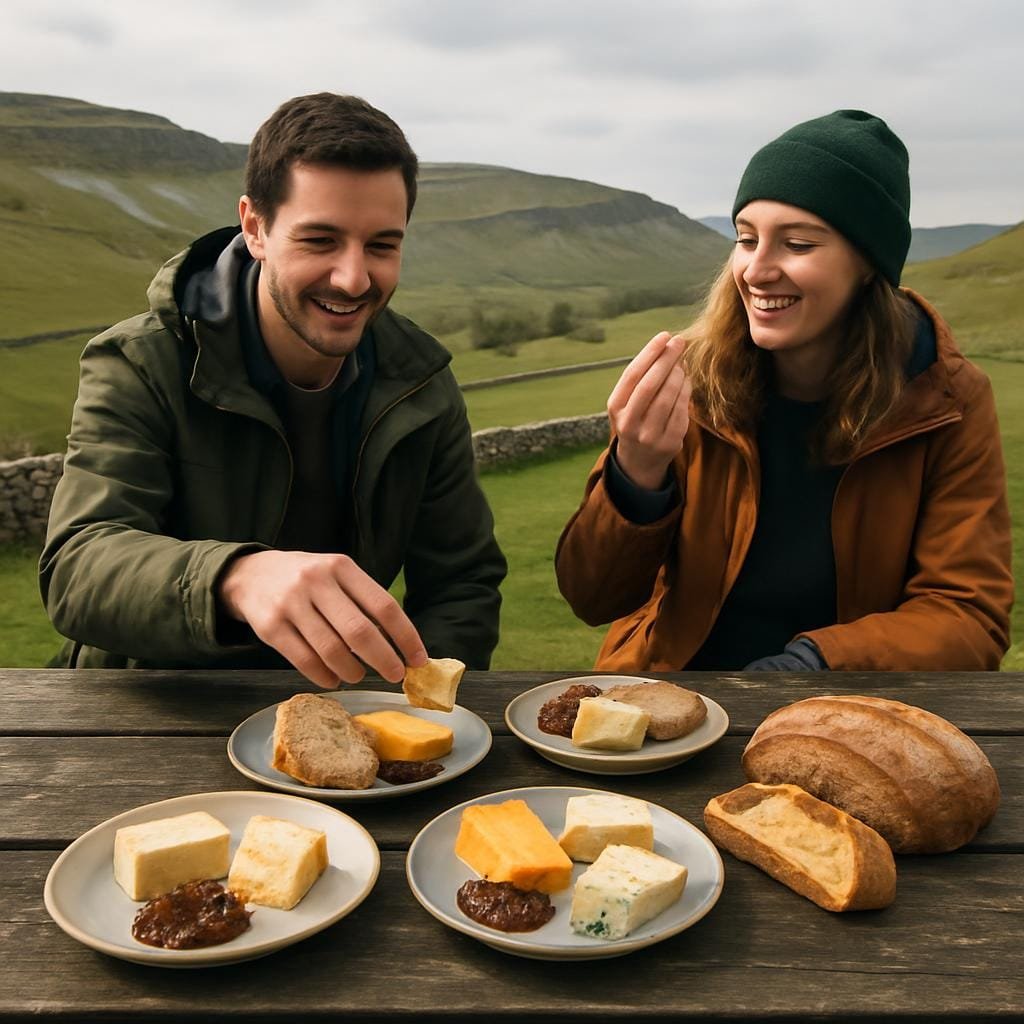
There’s something about eating sharp, lemony Lancashire while watching local trains snake along the valley that feels unexpectedly calming. Or maybe that’s just me being middle-aged about it.
Worth Knowing Before You Go – Lancashire
Approximate cost: Manchester–Preston around £10–£15 return. Preston–Lancaster around £4–£6. Buses to Garstang about £4–£6 return.
How to get there: Northern and Avanti West Coast services to Preston. Regional trains into the Calder Valley run regularly but can be busy at commuter times.
Best time to visit: A dry day in late summer or early autumn when the hills are still green and you can eat your cheese outside without your fingers going numb.
Most people miss: The viewing tower at Dewlay. You climb up a little metal staircase and get a surprisingly wide view over the Fylde and Bowland while inhaling distant cheesemaking smells.
Putting It All Together (Without Overdoing It)
You could, in theory, string all these British cheese regions into one heroic rail-and-dairy marathon, but I wouldn’t recommend it unless your digestive system is made of sterner stuff than mine. Better to treat them as little self-contained trips – a weekend here, a long day there – and let the trains and the cheeses overlap slowly in your head.
A few general tips before you head off, railcard at the ready:
Bring a small cool bag. Nothing fancy. Even a zip-up lunch bag from the supermarket will keep your haul respectable on a two-hour train home.
Check bus times obsessively in rural areas. Garsdale, Cheddar, Garstang – the last buses can be earlier than you think, and a taxi from the middle of nowhere is rarely cheap.
Don’t buy everything at the first counter. I have done this, then spent the rest of the day carrying a sweaty half-kilo of something robust around. Start slow, taste, then commit.
Ask for local recommendations. Market traders, café staff, the person sitting opposite you with a National Rail mug – they often know a farm shop down the road you’d never find online.
Last thing: British trains and British cheese have something in common. Both can be slightly unpredictable, occasionally whiffy, and sometimes you wonder why you put up with them. But then the light hits the hills right outside a grubby window, your packed lunch turns out to be a cracker with perfect Wensleydale, and you remember exactly why you do.
About the Author
Daniel Hartley
Daniel grew up in Shropshire and spent his thirties in logistics, which took him to every unglamorous corner of Britain and gave him an unreasonable affection for transport cafés, Victorian market halls and pubs that haven't changed since 1987. He writes about the parts of the country that don't make the brochures. Lives in Herefordshire with two opinionated dogs.