
If you grew up on guitar bands in the 90s, you’ve probably done a Britpop cities road trip in your head already. Manchester, London, Liverpool, Sheffield: those names come with their own chord progressions attached. You hear “Camden” and you’re already smelling stale Red Stripe and thinking of a bloke in a Fred Perry arguing about B-sides. I was about thirteen when this whole thing really hit, taping “Live Forever” off the radio on a cheap cassette, trying to scribble down lyrics I absolutely misunderstood. I didn’t have the language for “Cool Britannia” yet, but I could hear that certain post-pub swagger on the airwaves every Thursday night.
Looking back now, the thing that strikes me about those so-called Cool Britannia heartlands is how different they actually were. A proper Britpop cities road trip, in musical terms, doesn’t feel like driving from one tourist stop to the next. It feels like going from one way of being British to another. Different accents, different pub cultures, different rain. And that gets into the songs in a way you can’t fake in a studio in London, no matter how many Union Jack guitars you buy.
I’ll start with Manchester because, frankly, everyone always does. And here’s my first arguable position: by the mid-90s, Manchester was already slightly bored of Britpop before the rest of the UK had finished buying bucket hats.
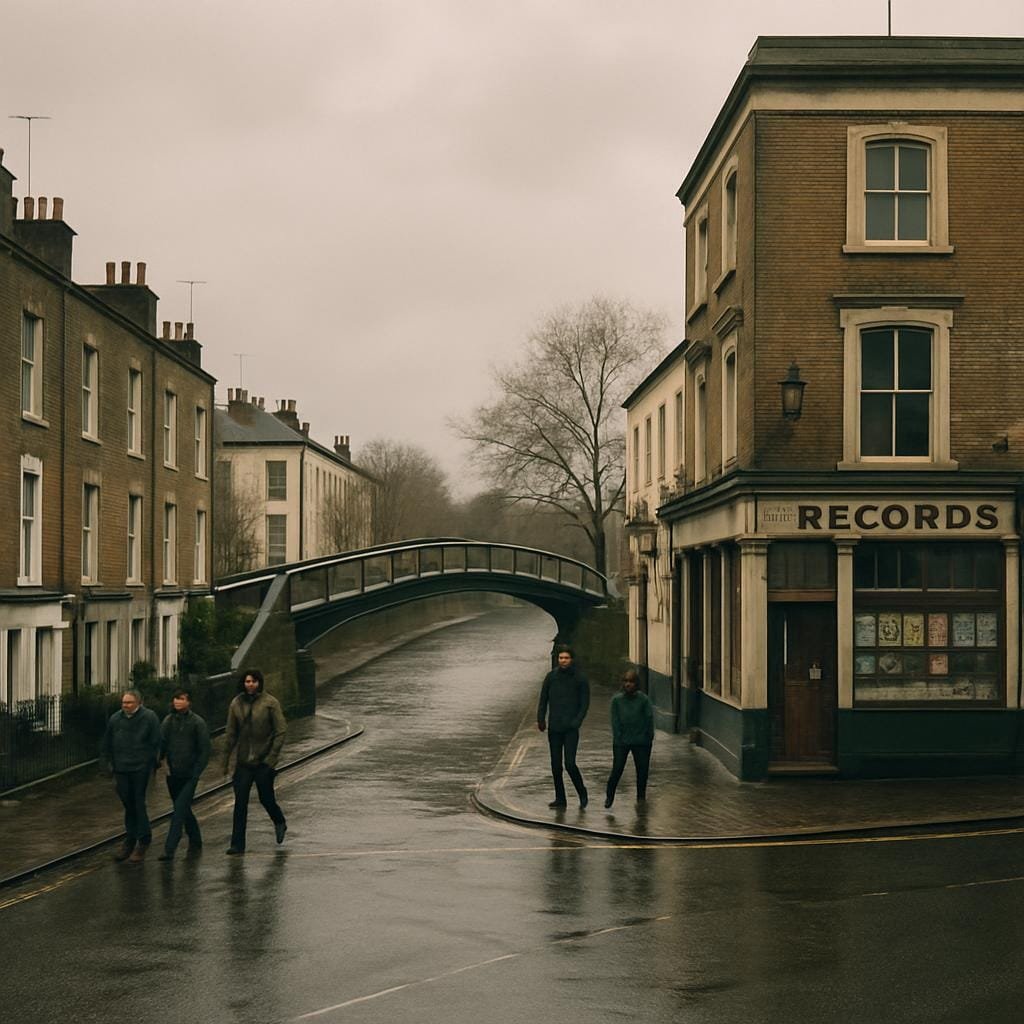
I went to Manchester for the first time in 1996, technically for a cousin’s university open day, practically to see if The Haçienda still felt dangerous (it didn’t, it felt knackered). The “Madchester” thing had already burnt out, but its ghost was in everything. The Stone Roses’ debut, Happy Mondays’ Pills ’n’ Thrills, even New Order’s late-80s stuff – they’d already stretched guitar music round the dancefloor. So by the time Oasis turned up with “Supersonic” in 1994, Manchester wasn’t birthing a movement; it was cashing in on unfinished business.
That doesn’t mean Oasis were hollow. When I first heard “Cigarettes & Alcohol” on Now 29, it sounded like someone had recorded a Friday night on Clayton Street in Newcastle and put it on a CD – bored kids, cheap lager, too much confidence for the amount of money in their pockets. That’s pure northern city energy. Definitely Maybe and then (What’s the Story) Morning Glory? turned that into something stadium-sized, but it was still about standing on a grey street and daring something good to happen.
Manchester as a city shapes that: wide roads, old mills, proper rain, football as religion. You can hear it in the way “Live Forever” builds like a terrace chant, or the way “Some Might Say” feels like walking home from a match through puddles and chip wrappers. You can hear The Smiths in the background too – Morrissey moaning about damp bedrooms in Hulme ten years earlier – even if Noel was pretending he’d invented melancholic pride all by himself.
But here’s the other bit: by the time Brits were screaming about “Cool Britannia” in 10 Downing Street when Noel and Damon got their invites in 1997, Manchester bands were already looking sideways. The Chemical Brothers were hammering out “Block Rockin’ Beats”, James had quietly written “Sometimes” (a song that absolutely wipes the floor with most Britpop “anthems”) and even Oasis had slipped into cocaine autopilot on Be Here Now. The city that allegedly defined Britpop had mentally moved on, even if the press hadn’t.
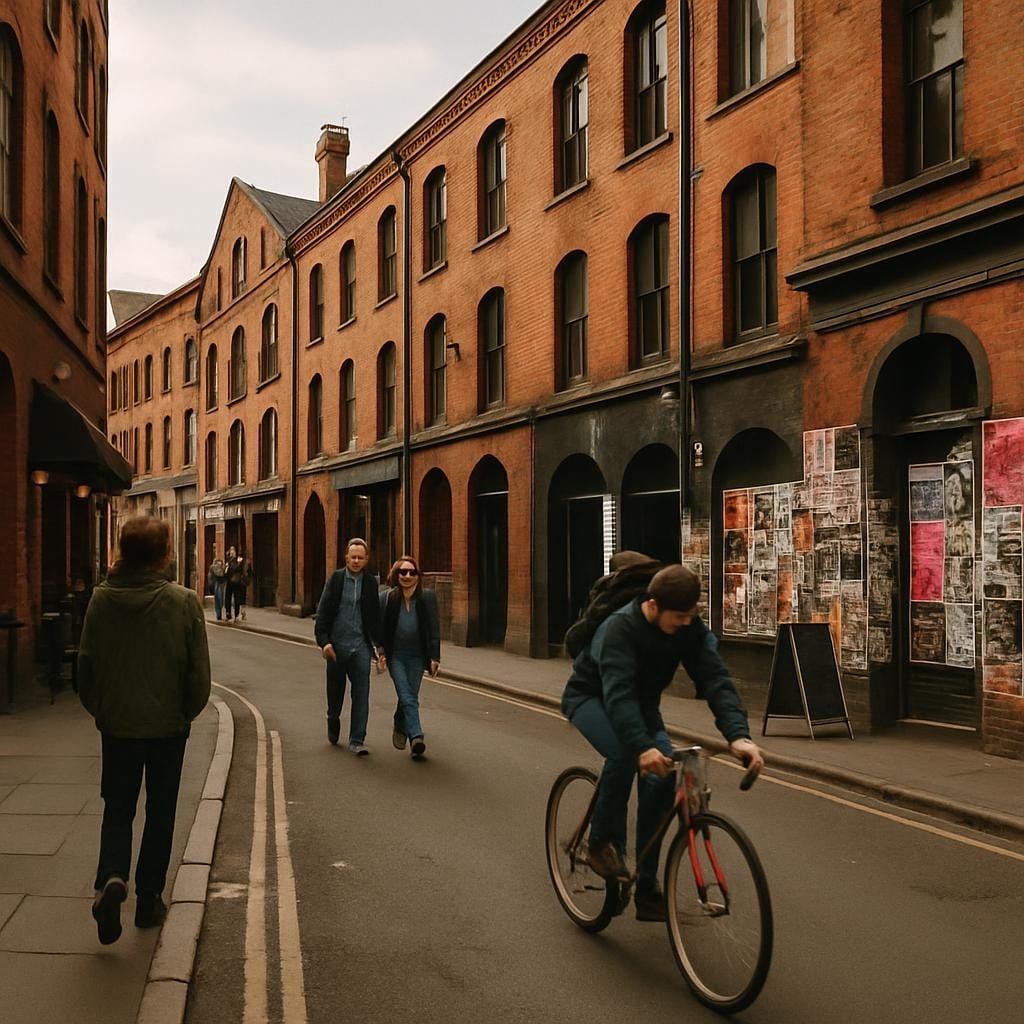
If Manchester gave Britpop its hangover anthems, London gave it wardrobe and attitude. My first trip to Camden was in 1998, already a bit late. I was sixteen, clutching a tenner like it was going to magically turn into a bootleg of every Elastica B-side. Instead I found a lot of incense and a bloke trying to sell me a fake Blur T-shirt for the price of a weekly shop.
There’s no way round it: Camden is built into Britpop mythology, mainly because Blur orbit it. Blur get more credit than they sometimes deserve, but they did write the script that half the country followed for a few years. “For Tomorrow” has that specific London thing: singing about bus routes, ring roads, flats you can’t afford and still pretending it’s glamorous. You listen to Parklife now and it’s basically an anthropological survey of early-90s Londoners, narrated by someone who’s had a pint too many in the Good Mixer.
That venue matters. The Good Mixer in Camden wasn’t some mystical shrine – it was a small pub with sticky floors where you could see someone from Menswear at the bar and immediately lose interest in them. I remember going in 2000 and realising I’d missed the moment; the only recognisable face was a bloke who swore he’d once tuned Graham Coxon’s guitar. But in 1994–95, that pub was basically the live-action comments section underneath the NME. Bands formed, split, slagged each other off, and then sometime after last orders they all said “see you at T in the Park”.
My arguable position number two: London-era Britpop put style over substance, but that was sort of the point. Suede’s Dog Man Star in 1994 is a far better record than most of the chirpy lad-rock that came after, yet it’s the same city in its bloodstream – West London bohemia, tiny flats with too much eyeliner. Elastica’s self-titled debut has that clipped, sharp feel of the city too: short songs, tight trousers, everybody talking too fast. It sounded like getting the last tube, half-cut and slightly invincible.
Camden’s contribution to the Britpop cities road trip is that self-awareness. Blur’s “Country House” isn’t really about a bloke with a house in the sticks; it’s about London’s obsession with itself. Even Oasis vs Blur at the height of the chart battle in August 1995 – “Roll With It” versus “Country House” – was basically a made-for-TV north vs south argument. I remember watching the chart show with my older brother insisting Oasis “stood for real people” while I quietly thought “Country House” was more fun and that both songs were weaker than “Some Might Say” and “End of a Century” anyway.
Now, Sheffield. If Manchester and London get talked to death in Britpop chat, Sheffield is the city that sneaks in through the service entrance and ends up playing the best set of the night. And here’s the hard line: Pulp are the true moral centre of Britpop. Not Oasis, not Blur. Pulp.
I was about fourteen when I first heard “Do You Remember the First Time?” on Top of the Pops, Jarvis in that brown suit looking like an exhausted substitute teacher who’d finally snapped. This wasn’t swagger for the sake of swagger; it was sardonic, slightly ashamed, oddly gentle. Then Different Class arrived in 1995 and suddenly the north’s role in Britpop stopped being “drinking and shouting”. Pulp brought sex, class, and supermarket lighting into it.
Sheffield as a city is important here. It’s hills, terraces, steelworks and chippies that serve gravy as a default. When Jarvis sings about the girl behind the counter in a supermarket on “Common People”, that isn’t abstract social commentary. That’s real life, in a place where you feel the difference between the student houses off Ecclesall Road and the estates further out. When I went over for a gig at the Leadmill in the early 2000s, what struck me wasn’t any grand scene – it was how normal everything felt. No theatrics. But then the band walked on and suddenly those ordinary lives became Technicolor.
Pulp always sounded tied to Sheffield’s geography. “Mis-Shapes” is about those kids who don’t quite fit in Town on a Saturday night. “Something Changed” feels like an overheard confession at the back of a bus up towards Crookes. Even “This Is Hardcore” later in 1998, recorded when the party was souring, feels northern in its hangdog honesty: glamour turning seedy under strip lights.
The thing with Sheffield is that its Britpop moment never felt like repping a brand. It felt like reporting from the front. While Oasis were off becoming national caricatures and Blur were getting fancy with The Great Escape, Pulp were writing “Sorted for E’s & Wizz”, a queasy little postcard from the end of the rave era. When that single came out in 1995, with a mocked-up instructions diagram on the sleeve, the tabloids had a meltdown. Yet every teenager I knew, from Newcastle to Nottingham, recognised the story it told. That’s Sheffield’s contribution: pulling the fantasy trousers down and pointing at the reality underneath.
You can’t talk about Britpop cities without Liverpool, but you also can’t pretend the 90s were its most celebrated decade. When you’ve already given the world The Beatles, any later guitar band is going to be compared to the mop tops before the first chorus has finished.
I remember seeing The La’s mentioned in some Britpop piece years later and thinking how wrong that was. “There She Goes” came out in 1988, properly re-issued in 1990; by the time Britpop’s Union Jacks were on Primark cushions, Lee Mavers had already retreated into myth. And yet “There She Goes” might be one of the purest blueprints for 90s indie guitar music: chiming, wistful, deceptively simple. You can hear it echoing in Sleeper, even in lighter Blur tracks like “End of a Century”. Liverpool got there early, as usual, and then watched everybody else cash in.
The 90s did have The Lightning Seeds, of course. Ian Broudie’s “Pure” and “The Life of Riley” have that wistful, slightly too-bright quality that could only have come from a city used to surviving Thatcher and football disaster and still daring to write choruses like blue skies. Then there’s “Three Lions” in 1996 – arguably the most enduring Britpop-adjacent tune, if you judge by how often it still gets howled in pub gardens when England are about to lose on penalties again.
The thing about Liverpool is, it never fully bought into Britpop as branding. While London was wearing Fred Perry and calling it heritage, Liverpool already had the Cavern Club, Eric’s, a whole separate history. When I finally went over in the early 2000s, I ended up in the Jacaranda rather than any Britpop pilgrimage spot, and it felt like nobody was particularly interested in 1995. They were still talking about gigs from 1979 and then skipping straight to The Coral.
Maybe that’s the point: Liverpool’s role in the Britpop cities road trip is as the place that reminds you guitar bands didn’t start in 1994 and don’t end with lads from Burnage. Britpop borrowed a lot of its melodic chutzpah from Merseyside, cashed the cheques, and then everyone pretended it was all about lager and parka jackets.
Being from Newcastle, I have to get this off my chest: the north-east was short-changed by the Britpop story. When people do the Britpop cities road trip thing, we’re rarely on the map, but the energy was absolutely there – it just never got shaped into one handy narrative.
In 1996, when Oasis were doing Knebworth, I was buying Seven Nation Army-sized bags of chips near The Haymarket and listening to Ash and The Bluetones from a Walkman. The local scene was lively: bands at the Riverside, student nights at what was then the University Union, endless Oasis covers in pubs. But the acts that did come from the north-east never got invited to the Cool Britannia party in quite the same way.
Take Maxïmo Park. They’re technically 2000s, but listen to “Going Missing” or “Graffiti” and tell me there isn’t a straight line from Pulp’s wry storytelling to Paul Smith’s clever, slightly frantic observations. That way of singing about bus routes, bridges, cheap pints and daft romance in a northern accent? That’s the same cultural soil Britpop grew from, just a few years after it stopped making the front pages.
We had our moments filtering the sound in too. The Charlatans and Manic Street Preachers gig posters were permanent fixtures in record shops on Old Eldon Square. I saw Cast at the Mayfair in the late 90s, long after “Walkaway” had made them that band dads cried to in the car. They walked onstage to half-full room, but when “Fine Time” kicked in, every person there knew every word. You won’t find that on any neat timeline, but it mattered to the people in that room.
My real conviction here: the real casualty of Britpop wasn’t the bands themselves. It was the five to ten years of regional guitar music that never got properly listened to because everyone thought the story ended when Oasis got boring. From Middlesbrough to Sunderland to Gateshead, there were bands picking up where “Common People” and “Disco 2000” left off, just with fewer London label reps in the front row.
Looking back from 2026, Britpop feels less like one “scene” and more like a set of overlapping city arguments pressed onto CD. Manchester arguing that boredom is heroic, London arguing that self-consciousness is sexy, Sheffield arguing that class is the only thing worth singing about, Liverpool rolling its eyes and reminding everyone it did this decades earlier. Then the rest of the country, including my corner of the north-east, quietly nicking the best bits and having our own smaller, stranger moments.
I saw some of these bands again years later. Blur at Hyde Park in 2009 – older, looser, “This Is a Low” hitting harder than any of the cheeky singles. Pulp in Sheffield in 2012 – Jarvis walking out onstage and announcing, “We are Pulp, and we are from Sheffield,” like it still mattered more than being a national treasure. Oasis I only ever saw once, in 1997, when they were already half on rails. Even then, “Slide Away” felt like a glimpse of a better, scruffier band that might have been if stadiums hadn’t swallowed them whole.
If you’re the sort of person who thinks about a Britpop cities road trip, I’d say stop thinking of it as a list of venues and start thinking of it as different ways of being from somewhere. Listen to “Live Forever” and imagine the arches and canals of Manchester. Put on “Parklife” and picture the overheard bus conversations in London. Stick “Common People” on and see the fluorescent aisles of a Sheffield supermarket. Then listen to something beyond 1997 – Arctic Monkeys’ “Mardy Bum”, Maxïmo Park’s “Books from Boxes”, even early Libertines – and hear how those cities kept speaking, long after Cool Britannia had turned into a bad joke on a Brit Awards clip reel.
The myth says Britpop was a brief, shiny moment when the UK felt confident about itself again. But when you trace it through the places it came from, it looks messier, more interesting. Less about Union Jack dresses and more about bus stops, terraces, chip shops and damp practice rooms. Less about one big national story, more about dozens of smaller, local ones, some of which never made it onto Top of the Pops but still matter every time someone picks up a guitar in a rainy British city and decides their street is worth singing about.
Maybe that’s the real point of a Britpop cities road trip: not a checklist, but an excuse to listen again, properly, to what those places were saying – and to what they’re still shouting, muttering, and mumbling into microphones now.