
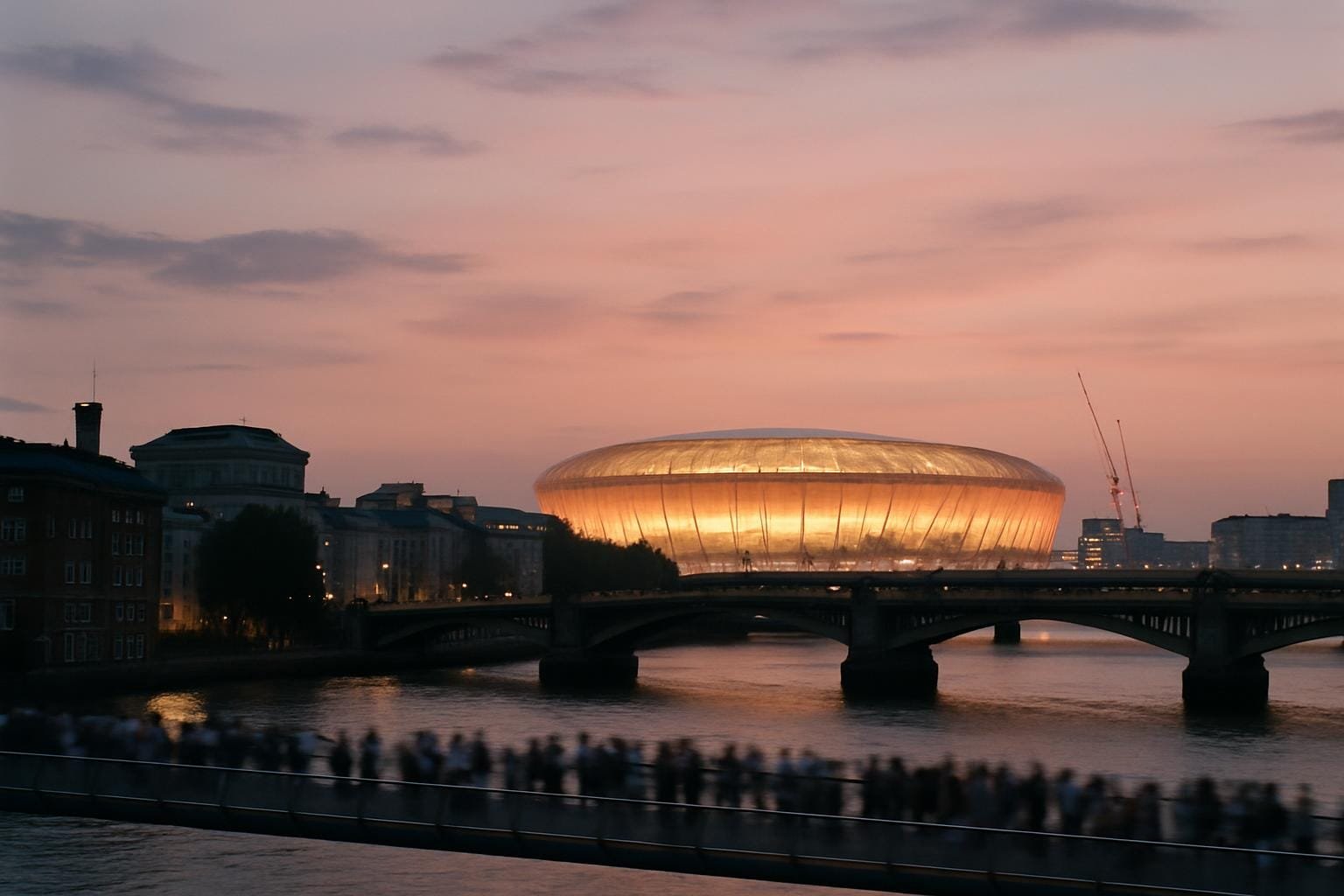
I’m going to say this straight away: if you came here looking for a Coldplay UK travel guide in the usual sense – list of places to tick off, selfie spots, that sort of thing – you’re going to be disappointed. Coldplay’s Britain isn’t a route on Google Maps. It’s pubs with sticky floors, late trains back from London, JD Sports hoodies in the front rows, and that very specific British talent for pretending you’re not bothered while secretly being flattened by a chorus.
I’ve never understood people who talk about Coldplay as if they just appeared at stadium level, fully formed, waving LED wristbands. For me, they’re tangled up with the end of the 90s, cheap lager and the horrible realisation that Britpop was wheezing to a close.
I was about eighteen when I first heard them properly, so this would have been late ’99, maybe creeping into 2000. A uni mate dragged me to a tiny Camden show – I’m 90% sure it was the Dublin Castle, because I remember the low stage and dodgy loos – and there were maybe a hundred of us. I’d heard “Brothers & Sisters” on the Evening Session but hadn’t joined the dots. Live, they were still awkward and a bit wet, but when they played an early version of “Yellow” the entire room changed temperature.
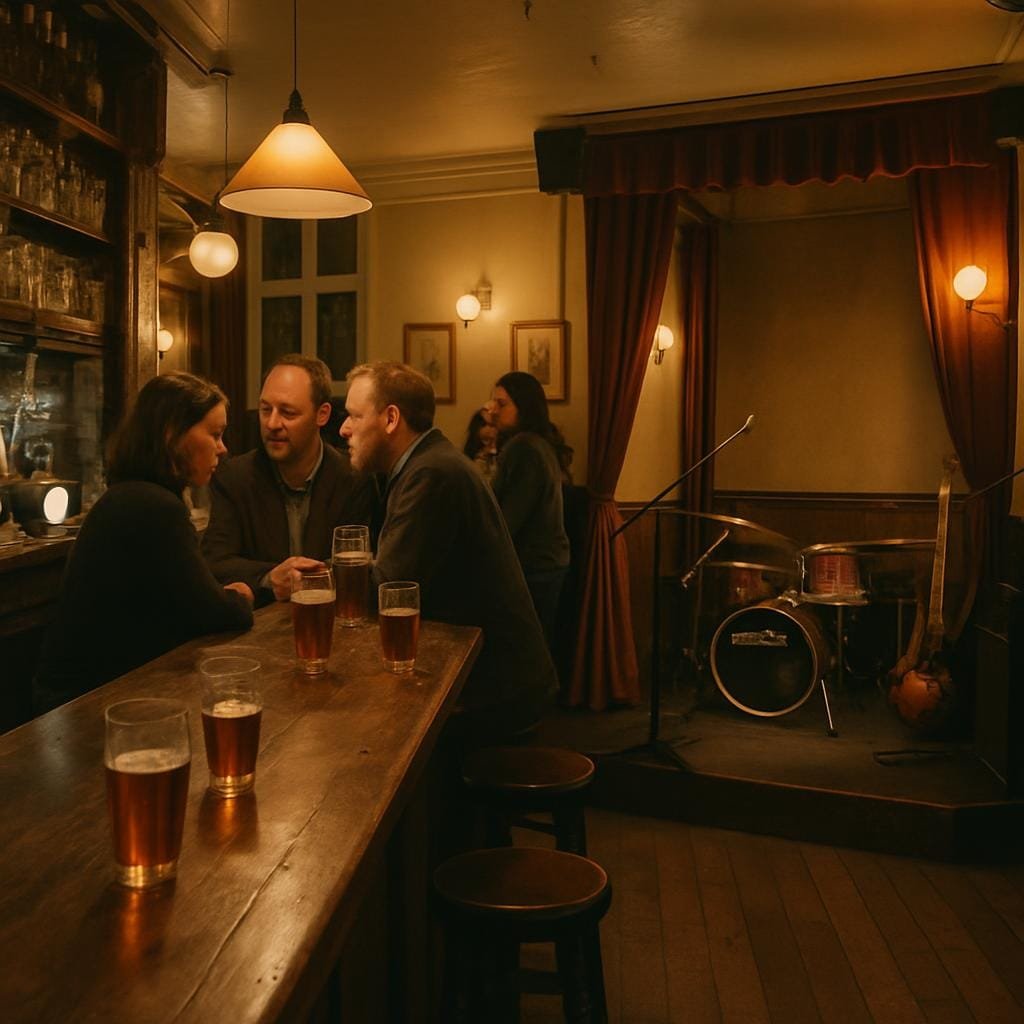
Looking back now, it’s obvious what they were doing. They were stitching together bits of early Radiohead, Jeff Buckley, the softest end of Travis, and sanding down the awkward bits. At the time, though, in that pub, it felt like someone had finally admitted that post-Britpop could be emotional without being either laddish or pretentious.
What I remember most isn’t Chris Martin. It’s the way Jonny Buckland’s guitar sounded like rain on windows – properly British, completely un-showy. It reminded me of being on the Coast Road back home in Newcastle, bus windows steaming up, listening to “High and Dry” on a scratched CD. I wasn’t thinking “future stadium band”; I was thinking, “This’ll murder me in the right mood.”
When Parachutes came out in July 2000, everyone I knew pretended they weren’t fussed and then secretly stole the CD from flatmates. “Shiver” was the one that got me. It’s needy, borderline embarrassing, and that’s why it worked. The British indie scene at the time still preferred its frontmen wrapped in mystery; Chris Martin sounded like a bloke oversharing on the last Metro home from town.
People forget how small that record felt. “Yellow” went to number four in the UK Singles Chart, which is hardly obscure, but the album itself sounded cheap and airless, like it belonged in student halls. Martin’s slightly nasal voice over Guy Berryman’s unflashy bass, those warm, slightly murky snares that producer Ken Nelson seemed to specialise in at the time – it was music for damp rooms and cheap headphones.

Here’s my first arguable opinion for you: Coldplay were a better band when they sounded a bit rubbish. Not badly written, but slightly under-produced, slightly out of their depth. Tracks like “Don’t Panic” and “High Speed” don’t pretend to be anything they’re not. Listening back now, they sound like four lads trying to make sense of late-90s British guitar music, not global pop.
And this is where the whole “Coldplay UK travel guide” thing makes me laugh, because the actual geography of Parachutes is incredibly small-scale: student flats in north London, parents’ houses in suburbia, buses back to hometowns for Christmas. You can almost smell the Pot Noodles.
I saw them again in 2002 at the Birmingham Academy on the A Rush of Blood to the Head tour. By then, “In My Place” and “The Scientist” were all over Top of the Pops and CD:UK, and the crowd had shifted. Less scruffy indie kids, more couples who’d bought one album a year since Urban Hymns. You could tell the band knew they’d levelled up: bigger lights, slightly crisper shirts, the sort of self-belief that comes with selling about 20 million copies of a record worldwide.
That second album is where Britishness for them stopped being about bedrooms and started feeling like weather. “Clocks” is coastal twilight; “Warning Sign” is the feeling of missing a train by thirty seconds. Those chiming piano arpeggios and measured drum patterns are pure M25-at-night energy – everything moving, nothing really changing. It’s not fashionable to say this, but I think A Rush of Blood to the Head is their most complete album, because it still sounds like a band, not a project.
Specifics, because you can’t talk about this era without them: their 2002 BBC performances of “In My Place”, Chris in that military-ish jacket, bouncing on the spot like he’d nicked moves from Michael Stipe; Will Champion singing harmonies that did half the emotional lifting. It was carefully scruffy. Polished, but pretending not to be. Very British in its own way.
Here’s where Coldplay’s version of Britain gets strange. I saw them a third time at the Etihad in Manchester in 2012, on the Mylo Xyloto tour: full LED wristband spectacle, fireworks, confetti cannons. It was fun, in the way a well-run fireworks display is fun, but the emotional gear had shifted. The band that once sounded like damp carpets suddenly sounded like a global sportswear advert.
This is where I’d argue they accidentally invented the Coldplay UK travel guide – not for fans, but for international audiences. Those massive shows turned Britain into a sort of mood-board: Union Jack guitars, neon graffiti referencing Brixton and Camden, Chris dashing around like a hyperactive PE teacher shouting about how great “Manchester” or “Glasgow” or “London” was. It was tourist-board Britain, soundtracked by “Viva La Vida” and “Every Teardrop Is a Waterfall”.
I’m not saying it was bad. “Viva La Vida” deserved all the chart domination it got in 2008; that string line still hits like a marching band turning the corner outside your flat. But something small and specifically British in their sound got ironed out. By Mylo Xyloto, their reference points felt less like Verve B-sides and more like U2’s PopMart tour.
One thing I don’t think gets talked about enough: Coldplay are a middle-class band in a country still obsessed with class, and that shaped who claimed them. When Parachutes and A Rush of Blood to the Head came out, they slotted perfectly into sixth forms where kids watched Dawson’s Creek and wore G-Star, while the lads who’d grown up on Happy Mondays and Oasis took the piss out of Chris Martin’s falsetto.
But by the mid-2000s, something funny happened. The same people who’d once sneered were suddenly hearing “Fix You” on Sky Sports montages and choking back tears. You can roll your eyes at it – and believe me, I did, repeatedly – but you can’t deny that “Fix You” became our default national catharsis song. Tube bombings, memorials, charity concerts; if something sad and public happened in Britain, someone slapped “Fix You” under it.
Here’s another opinion to argue about: The British music establishment never forgave Coldplay for being earnest and successful at the same time. Arctic Monkeys could shift units because they were “clever lads from Sheffield”. Radiohead got a pass because they stayed abrasive. But Coldplay? Too sentimental for the critics, too posh for the purists, too popular for the snobs. So we all pretended we hadn’t cried to “The Scientist” at 2am in someone’s parents’ kitchen in 2003.
Most casual Coldplay talk skips from early “Yellow” days straight to stadium pop anthems, but the bit I go back to most often is the mid-period awkwardness: X&Y into Viva La Vida or Death and All His Friends. In 2005, X&Y got sold as their big return, but listening now, it sounds like a band trapped between wanting to be beloved in Britain and wanting to be something else entirely.
“Talk”, with that Kraftwerk guitar riff; “Square One”, which could almost be a U2 deep cut; the slightly cloying “Fix You” – you can hear them straining. It’s too long, too self-serious, but it’s interesting. Then they swerved and brought in Brian Eno for Viva La Vida, and you can practically hear him saying, “Stop trying to be clever and write some songs people will sing in ten years.” “Violet Hill” still sounds like tramping home across a muddy field after a festival, ears ringing, hoodie stinking of chips.
If I had to write a proper Coldplay UK travel guide that wasn’t embarrassing, I’d anchor it in this phase: cheap hotel rooms off ring roads, service station pasties at 1am, condensation-soaked windows on National Express coaches. That’s the Britain those mid-2000s records carry round in their bones.
At some point around 2010, Coldplay stopped being a band you either liked or didn’t and became something else in the UK: atmosphere. They were everywhere – Asda, charity shops, football grounds, filler between segments on The One Show. You didn’t put them on; they were simply on.
It’s easy to mock that, but think about the last twenty-odd years: recessions, referendums, austerity, all the low-level stress of trains that never arrive when they’re meant to. In that context, of course a band built on safe, ascending choruses and lyrics about carrying on would become national mood music.
And yet: buried in the later albums – Ghost Stories, A Head Full of Dreams, even parts of Music of the Spheres – there are still moments where that original small-scale Britishness peeks through. “O”, the hidden track at the end of Ghost Stories, sounds like walking home alone from the pub across a quiet estate. “Everglow”, for all its Californian gloss, could have been written by the same band who did “Everything’s Not Lost”. Small, slightly embarrassed tenderness is still the thing they do best.
I’ll happily argue this in any pub in Britain: Coldplay are simultaneously overrated as “the biggest band in the world” and underrated as a specifically British musical project. Overrated, because some of their later singles are pure algorithm bait – “Adventure of a Lifetime” could soundtrack any tech advert, anywhere. Underrated, because for twenty-five years they’ve quietly mapped how a certain section of Britain deals with feeling too much and saying too little.
Think about the catalogue: “Yellow” (2000) as bashful confession; “In My Place” (2002) as apology; “Fix You” (2005) as grief management; “Viva La Vida” (2008) as national hangover; “Paradise” (2011) as escape fantasy during austerity. We can pretend it’s cheese, but it’s our cheese. The emotional arc of those singles runs alongside cheap cider, house parties in rented terraces, slightly passive-aggressive flatmate notes on the fridge.
When I hear people talk about a Coldplay UK travel guide like it’s about Abbey Road crossings and stadium tours, I always think: you’re missing the real story. The actual locations are your mate’s front room in 2001 when someone sticks “Trouble” on and everyone goes quiet; the smoking area in 2008 where “Viva La Vida” floats out of the club and people sway while finishing their fags; the back of a Megabus in 2015, sharing headphones with someone you barely know, listening to “Magic”.
I’m in my forties now, based in Yorkshire, more excited about a decent sausage roll than a surprise single drop. I still put Coldplay on, usually when I’m on some rail replacement service between Leeds and Huddersfield with a cold coffee and someone’s rucksack in my back.
“Politik” on a grey morning still works. “Amsterdam” still floors me. “Up&Up”, from 2015’s A Head Full of Dreams, is the one later track that earns its fireworks – the kids on the train singing along to it from tinny phone speakers don’t care that the critics rolled their eyes. They’re too busy feeling it.
So no, this isn’t a Coldplay UK travel guide in the tourist-board sense. It’s closer to an admission that, for all the snark and the stadium excess, this band has quietly soundtracked two and a half decades of British life: queuing, commuting, breaking up over text, sitting in suburban kitchens, and occasionally looking up at a sky full of drizzle and thinking, against your better judgement, that things might just be alright.
You don’t have to like them. You’re absolutely allowed to think “Yellow” is smug and “Fix You” is manipulative. But if you grew up in this country any time from the late 90s onwards, Coldplay are in your head somewhere – in the pub jukebox, on the radio in the taxi home, leaking out of the headphones of the teenager across the aisle.
And if you want to understand the last 25 years of British emotional life – the big feelings we’re too awkward to say out loud – then you could do worse than your own private Coldplay UK travel guide: from your first cheap cider to your last train home, with a slightly croaky Chris Martin humming away in background.