I like Liverpool best when I’m nowhere near a Beatles tribute act. Nothing against them – I’ve hummed along to Hey Jude with the rest of the hen parties – but if you’re looking for things to do in Liverpool beyond the Beatles, you start to see a different city entirely. One that smells of the river and chip fat, hums with street art and Sunday markets, and has neighbourhoods that tell you straight away if you’re welcome… or slightly in the way.
This isn’t a grand tour. It’s how the city feels on foot: through backstreets, along the docks, and across areas that don’t really care if you’ve done the “Liverpool One shopping experience” yet.
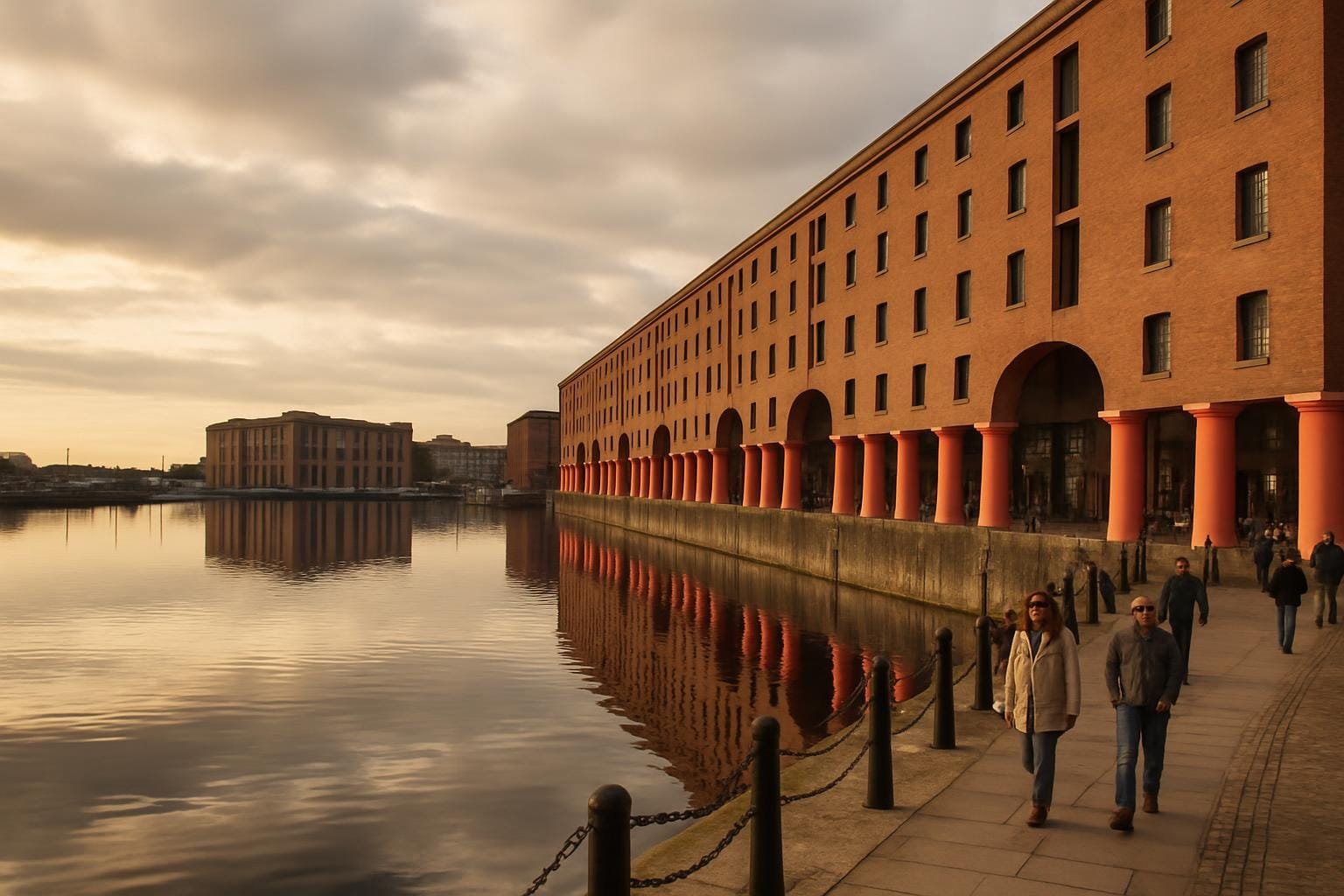
The first time I came to Liverpool I did the classic thing: straight to the Albert Dock, quick lap, snapped the red columns, bought a fridge magnet, left. It was only when I came back a few years later with time to wander that I realised the docks are less a single attraction and more like a long, slightly moody spine you walk along to understand the city.
Albert Dock is still worth a look, of course. The water pools between those red columns, the Tate Liverpool sits in one corner and the Merseyside Maritime Museum in another. You can duck inside the Tate for free (special exhibitions are usually around £10–£15), and they’re oddly relaxed about people just wandering in for five minutes of quiet if the wind’s had a go at you along the waterfront.
But if you keep walking south, the crowds thin out, the air picks up a proper tang of oil and salt, and the mood changes. Past the arena and on towards the old Queen’s Dock, you hit that stretch where joggers, dog walkers and people on bikes outnumber tourists, and the warehouses start to look less polished. There’s a derelict crane painted over with graffiti that keeps reappearing in my photos. It’s rusting, slightly tragic, and somehow more honest than the polished bits.
A little inland from here you get one of my favourite stops: the Baltic Market at Cains Brewery Village. It’s inside the old brewery, now crammed with street food. You can sit under strings of fairy lights eating a £10 steak and cheese sarnie from Slim’s stall while a DJ tries to make Sunday afternoon feel like Saturday night. The loos are immaculate, which is more than you can say for most “authentically edgy” places.
Worth knowing before you go – docks & Baltic
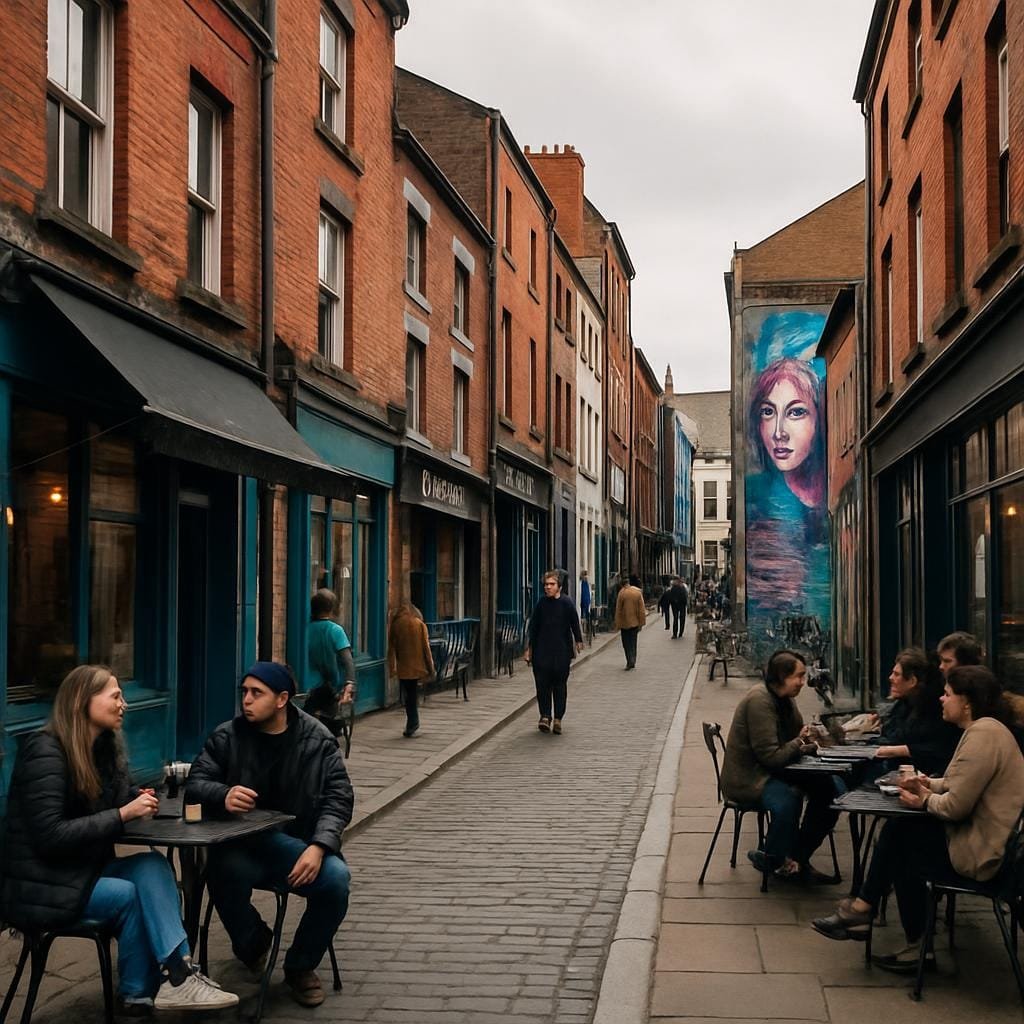
If you’re hunting for things to do in Liverpool beyond the Beatles, the Baltic Triangle is the obvious next stop. It’s the sort of place you end up slightly lost, walking past a brewery, three creative agencies and a vintage shop selling eight identical denim jackets – then suddenly you hit a full-on street party.
The area is full of huge murals – the most famous is the massive portrait of Jürgen Klopp on Jamaica Street, on the side of Hotel Anfield: Baltic. You’ll also spot the technicolour bird on New Bird Street and a collection of more political pieces spread across back walls and shuttered units. It’s worth slowing down, because some of the best ones are down the alleys you’d normally ignore.
Coffee-wise, I keep ending up in 92 Degrees on Jamaica Street. It’s all industrial brick and laptop people, but the flat whites are consistently good and roughly £3.30. If you want something that feels less like work, Constellations used to be the go-to; these days the attention’s shifted to Cains Brewery Village with its mixture of mini-golf, bars and independent shops. It can feel a bit like a theme park on Saturday nights, but it’s still better than queuing for a chain bar up in Concert Square.
Worth knowing before you go – Baltic Triangle
Every city has that bit where the pavement is sticky but the night is good. In Liverpool, that’s around Ropewalks and Berry Street. You move from the more polished Liverpool One into an area where the buildings have a slight lean and the bars look like they’ve seen things.
Berry Street is where I always seem to end up hungry. The Egg Café, up several flights of wonky stairs, is a vegetarian place that still feels like a secret despite being around for years. Mains are usually under £10, and the mismatched chairs and fading posters give it the air of a student house that’s somehow got its act together on the food front. The huge windows look out over the rooftops – if you grab one of those seats you’ll be tempted to stay for “just one more tea”.
A bit further along, bold red and blue signs lead you to Chinatown via the grand Chinese arch on Nelson Street. I once went there specifically for dim sum, rolled into North Garden, and then ordered entirely the wrong thing because I refused to admit I couldn’t read half the menu. It was still edible, just aggressively chewy. Learn from my stubbornness: ask for recommendations. Dim sum dishes generally run £3.50–£5 each; go in a group and order greedily.
Worth knowing before you go – Ropewalks & Berry Street
I have a soft spot for anywhere with a decent market hall, so Bold Street always makes me happy. At the top, by the bombed-out St Luke’s Church, the air smells like incense and falafel and slightly burned espresso. This is where to come when you’re trying to line up things to do in Liverpool beyond the Beatles and you’ve only got a few hours to play with.
The independent shops along here are a mix of the earnest and the eccentric. LEAF is the one that gets shouted about – a tea shop that turned into a full-blown café-bar, with chandeliers, creaky floors and tea menus that look like a small novel. Brunch hovers around the £10–£12 mark; their baked eggs are the sort of thing that make you forget you were meant to be having a “light snack”.
A short wander away you’ve got the Grand Central Hall, an old Methodist church turned into an indoor market and event space. It’s more eccentric than elegant. There are record stalls, tattoo studios, vintage clothes and the kind of tiny food counters where you’re never entirely sure if they’re open until someone appears and puts a pan on. It feels slightly chaotic, in a good way.
Worth knowing before you go – Bold Street area
Even if you’re not particularly into football, Anfield on a matchday is something to see. The streets fill hours beforehand. People in scarves queue at chippies, kids sell half-and-half scarves out of cardboard boxes, and the newsagents are doing a roaring trade in lager and packets of crisps.
The club tours at Anfield aren’t cheap – currently around £23–£28 for adults – but the bit that sticks with me is outside: the murals of past players on terraced house walls, the homemade banners in windows, the smell of fried food drifting from Homebaked opposite the Kop. Homebaked is a community bakery that does an excellent steak and ale pie for about £4.50. The queue on matchdays is long but friendly; on non-match days it’s one of the best affordable lunches in the area.
If you wander the side streets – safely, and with common sense – you see a neighbourhood that’s been pulled around by regeneration schemes. Some houses are boarded up, some freshly bricked, some painted in club colours. It’s not pretty in the tourist-board sense, but it is very real.
Worth knowing before you go – Anfield
li>Best time: Non-matchday if you actually want to see the area; matchday if you want to feel the noise. For tours, early slots are quieter.
When locals start a sentence with “on Lark Lane…”, you know you’re about to get a story. South of the centre, near Sefton Park, Lark Lane is a compact strip lined with bars, cafes, antiques shops and people walking very small dogs in very large coats. It feels like somewhere that would happily still be serving someone brunch at 4pm.
I like to start at Maranto’s, the Italian place in an old Victorian building with stained glass and a balcony overlooking the street. Pizzas are around £12–£15, and there’s always at least one table having the sort of family argument that suggests they come every Sunday.
From there it’s a short wander into Sefton Park, which has enough space to walk off even your worst ordering decisions. The Palm House, a huge Victorian glasshouse, is free to enter (they gently suggest a small donation). Sometimes it’s hosting a wedding or a yoga class; other times it’s just people wandering around looking up at ferns. Outside, the paths around the lake are full of joggers and people trying to persuade toddlers that ducks don’t need that much bread.
Worth knowing before you go – Lark Lane & Sefton Park
Liverpool does events in a very “go big or go home” way. Around the docks and city centre you get things like the annual LightNight arts festival, when galleries, churches and odd corners open late with performances and installations. The last time I happened to be in town for it, I ended up in a darkened room in the Bluecoat listening to someone play a harp next to a video of the Mersey in a storm. It made more sense than I’m making it sound.
On regular days, the street culture is quieter but still there if you look: skateboarders using the smoother bits of the docks; buskers under the arches of Liverpool One; local kids hanging around by the Superlambanana statue and rolling their eyes at tourists. If you want things to do in Liverpool beyond the Beatles that actually connect you to the daily rhythm, just pick a neighbourhood – Baltic, Lark Lane, Anfield, Ropewalks – and give it two hours on foot.
If you’re short on time and trying to see different sides of the city in a single day, you can actually stitch a lot of this together quite neatly:
That gives you waterfront, street art, local neighbourhoods and park life, all without having to hear “She Loves You” more than once. Along the way, you’ll naturally rack up your own list of things to do in Liverpool beyond the Beatles – a chippy that got your order right, a pub that felt friendly the second you stepped in, a mural that made you stop.
Liverpool rewards a bit of aimless walking and saying yes to things: the pop-up market behind a warehouse; the tiny exhibition in a side gallery; the café down a side street that looks half-closed but smells of fresh bread. It’s a city that wears its history loudly, but the present is what makes it interesting.
If you come away with slightly sore feet, a phone full of dockside photos and tomato sauce on your coat from a rushed pie at Anfield, you’ve probably done it right.