
I didn’t set out to invent a “Birmingham heavy metal walking tour” the first time I went to Brum. I was 19, I’d come down from Newcastle on a Megabus, and my priorities were, in order: see where Black Sabbath came from, eat something fried, and find a pint that didn’t taste like it had been kept since the Thatcher years. But by the end of that day I’d basically traced a crooked line between steel, smoke and riffs – and it’s a line I’ve kept following every time I’ve been back.
This isn’t going to be a list of plaques and photo spots. A Birmingham heavy metal walking tour worth doing is one that walks through the sound as much as the streets: the way heavy industry gets into the rhythm section, how Midlands humour shapes the lyrics, why certain bands caught on in Europe before they did at home. You can stare at the outside of a venue all you like; it’s the memory of a kick drum rattling your ribs that matters.
I was about fourteen when I first heard “Paranoid”. My older cousin stuck it on a knackered tape deck in his bedroom in Gateshead, said, “This is from Birmingham, you know,” like he personally knew Ozzy. I remember thinking the guitar didn’t sound “posh” like a lot of classic rock – no cathedral reverb, no Los Angeles gloss – more like machinery being pushed slightly beyond what it was meant to do.
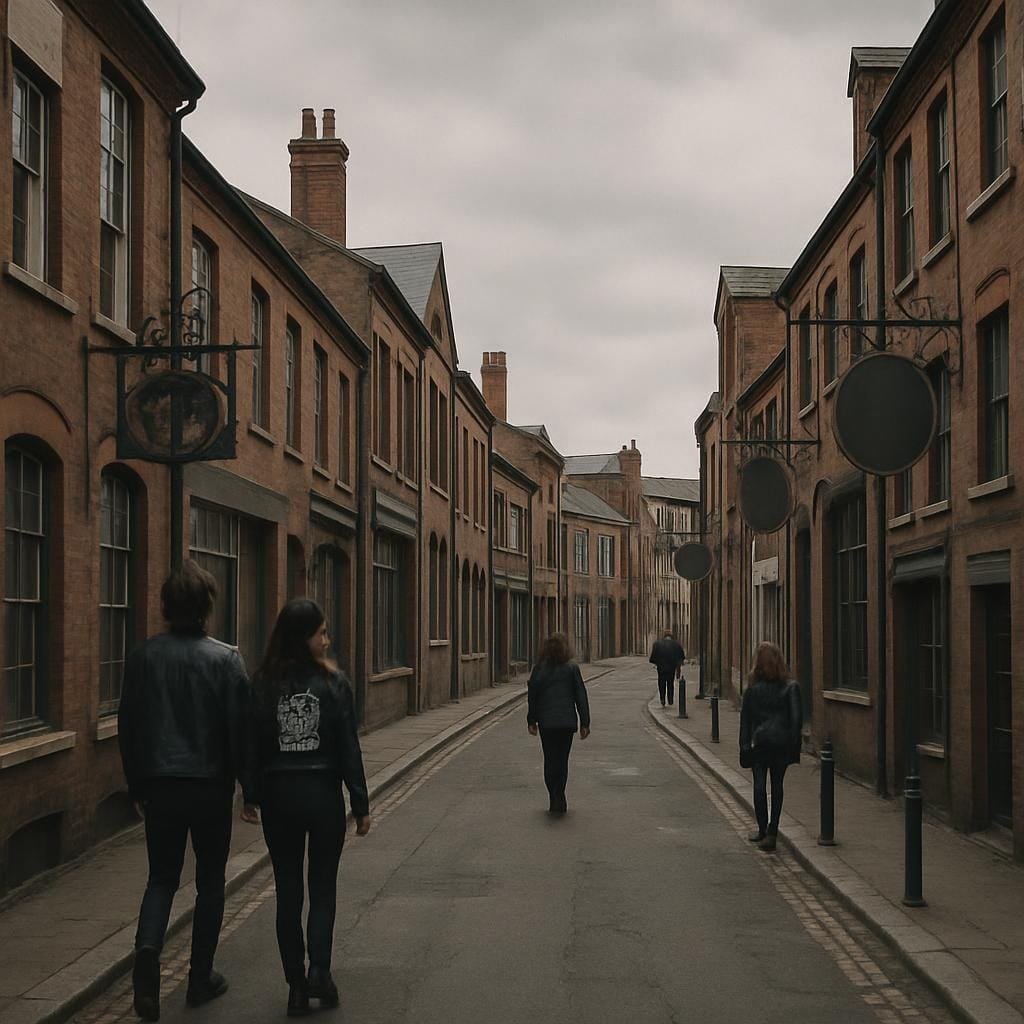
Years later, walking through Digbeth with “Into the Void” in my headphones, it clicked. Those chugging, dragging riffs are basically factory rhythms. If you’ve ever stood near a rolling mill or watched metal getting cut to size, that stop-start, slightly behind-the-beat lurch feels familiar. Listen to the opening of “Iron Man” and then go past the old industrial units around Typhoo Wharf; it’s the same mechanical pulse, just turned into myth.
People like to overcomplicate the birth of heavy metal with long essays about modal scales and occult lyrics. For me the more interesting part is this: Birmingham in the late 60s and early 70s sounded rough. Air full of smoke, night shifts that never ended, machinery that could rip your fingers off. When Tony Iommi, fresh back from losing the tips of his fingers at a sheet metal plant, downtuned his guitar and thickened his sound, he wasn’t trying to invent a genre. He was trying to keep playing despite an injury caused by work. Heavy metal starts, quite literally, as industrial workplace adaptation.
That’s why this music always made sense to me more than the blues rock from London. I grew up around shipyards and old pits. When Sabbath hit those massively slow, clanking chords on “War Pigs”, it sounded like someone had finally written a hymn for people whose hands were always dirty. A Birmingham heavy metal walking tour isn’t about pointing at smokestacks; it’s about hearing that grit every time Bill Ward leans slightly ahead of the beat and pulls the whole band with him.
Here’s where I’ll probably lose a few of you: I think Judas Priest did more for everyday metal fans than Sabbath did. Sabbath wrote the creation myth, yes. Priest gave the average bloke (and later, woman and everyone else) a template for how to live the thing without pretending to be wizards in stone circles.
Listen to “Victim of Changes” from Sad Wings of Destiny (1976). The drama is pure theatre – Rob Halford screaming like the brakes on a freight train – but the core of it is heartbreak and booze, not demons. That’s Birmingham all over: big feelings, plain words. Priest gigged themselves half to death around the Midlands before anyone outside paid attention. The city’s pubs and working men’s clubs hardened those songs long before the leather-and-studs look caught on.
By the late 70s, they’d moved the whole sound away from the swampy doom of Sabbath into something leaner, faster, with twin guitars that sliced rather than loomed. You can draw a straight line from “Exciter” (1978) to every speed metal band that came panting after, but what gets missed is the geography. That precision, that clipped intensity, sounds like a city built on time sheets and clocking-in. If Sabbath were the night shift, Priest were the morning bell – brutal, clear, unavoidable.
I finally saw Priest in 2004 at the NEC (since rebranded several times, but it’ll always be the NEC in my head). They came on to “Electric Eye”, lasers bouncing off every bald head in the arena, and it felt weirdly…proud. Like: here’s a bunch of Brummie lads who took biker culture, homoerotic leather and very Catholic guilt, put it through an industrial shredder and sent it worldwide.
People talk about LA glam metal like it built the visual language of the genre. Rubbish. Without Halford in that leather cap on the British Steel tour in 1980, riding a motorbike onstage, your Mötley Crüe types don’t have a look to steal in the first place. That aesthetic wasn’t Hollywood; it was the sort of thing you’d see behind the doors of certain backstreet bars near the Bullring if you knew where to go. A Birmingham heavy metal walking tour in your head should absolutely include those unspoken corners too, even if they never make the heritage trails.
New Wave of British Heavy Metal gets spoken about like it was all about the North East (and, look, I’ll happily claim Venom for Newcastle till I’m hoarse) but Birmingham’s fingerprints are all over that era’s move towards grit and speed.
Take Diamond Head from Stourbridge, for a start. They never fully broke through at home – no top ten hits, constant management issues – but you wouldn’t have Metallica as you know them without “Am I Evil?” and “The Prince”. I first heard Diamond Head backwards: via Metallica’s covers on Garage Inc. in the late 90s, then working my way back to Lightning to the Nations. When I finally trudged through the Black Country drizzle past where their early rehearsal spaces were, it made more sense. Those riffs feel like ringroads: looping, repetitive, built for movement rather than posing.
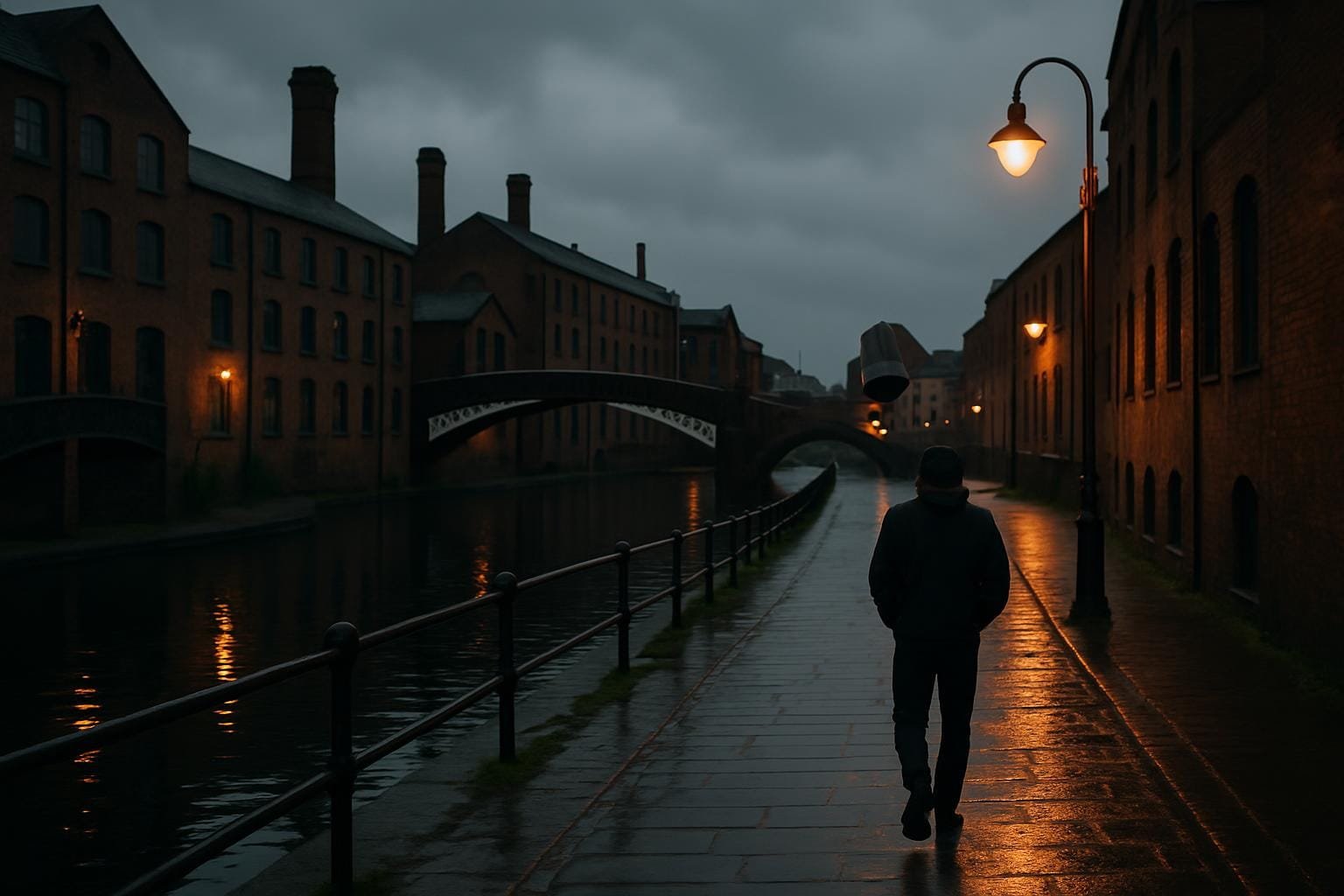
This is the bit I think people understate: Birmingham’s tangle of dual carriageways and canals shapes the tempo. It’s hard music for driving through grey drizzle at 70mph to. Compare that to, say, Iron Maiden’s more galloping, east-London-pub gig feel. Same broad movement, different body language. A Birmingham heavy metal walking tour might take you along the canal from Gas Street Basin out towards more industrial stretches; stick on “Helpless” while you go and it snaps into place. The repetition isn’t lazy; it’s hypnotic, like watching miles of corrugated metal fencing from a bus window.
I’m not going to lie and pretend I was knocking around at Henry’s Blueshouse in 1968, catching Earth before they changed their name to Black Sabbath. My Birmingham gig history starts in the late 90s and early 2000s, which was a strange time to fall in love with metal in the Midlands. Nu metal had turned baggy shorts and bad rapping into arena business, while a lot of the old guard were in what you might politely call their “tax bill” years.
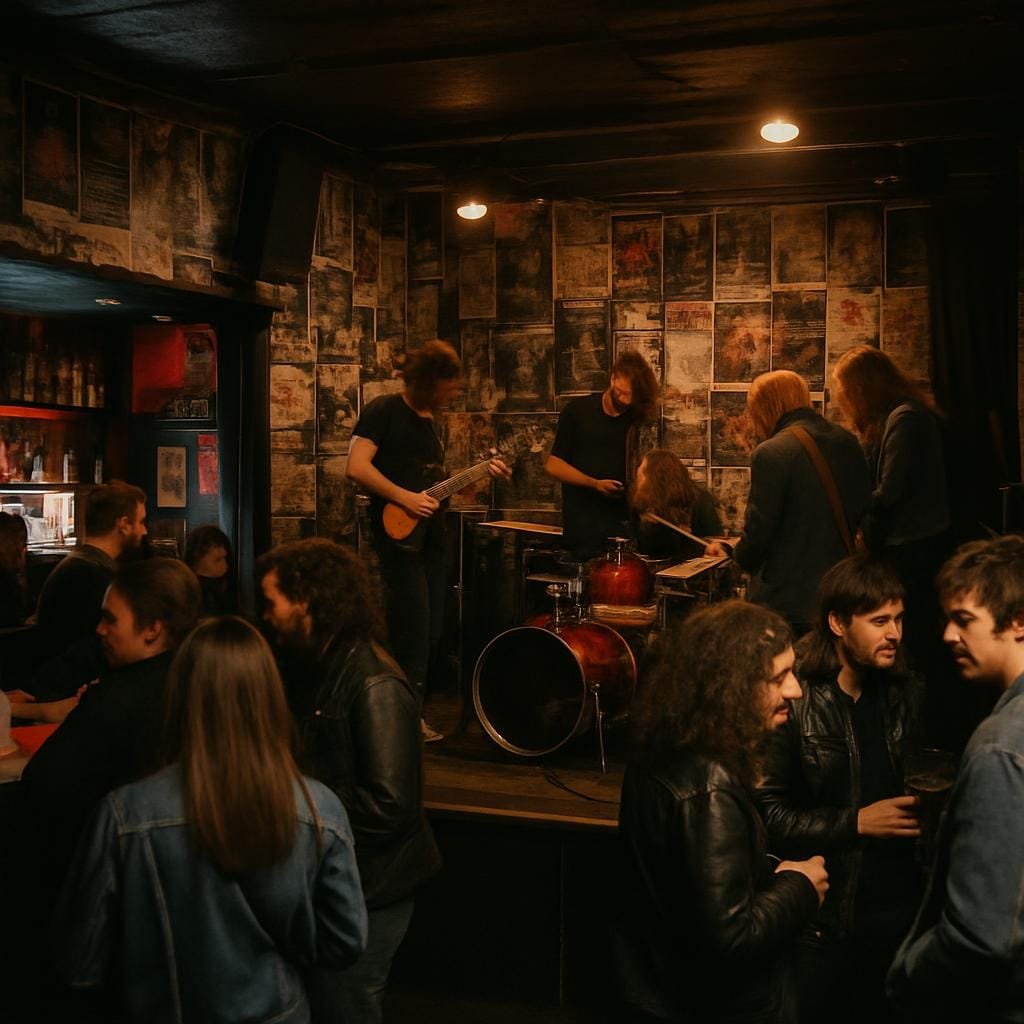
Still, certain nights stick. I saw Cathedral at the old Irish Centre in Digbeth around 2001. Lee Dorrian walked onstage looking like he’d rolled straight out of a curry house, hair everywhere, bass tuned down to the basement. The crowd was a mix of crusties, students and blokes who’d clearly come straight from late shifts. When they launched into “Ride” from The Carnival Bizarre, the floor actually bounced. Doom metal in a big, slightly tired function room might not sound romantic, but it was glorious: you could feel the whole local history of Sabbath running through those riffs, but with a knowing wink and pint-stained humour.
Then there was Godflesh at the Hummingbird (then called the Academy) in the mid-2000s. By then Justin Broadrick’s industrial metal had done loops through ambient, drum & bass, and back. Hearing “Like Rats” live – that horrible, beautiful, programmed drum thud, the riffs like giant rusted girders falling over – you realise Birmingham metal didn’t freeze in 1970. Godflesh sounds like the underside of a flyover near Spaghetti Junction. That’s a compliment.
What I loved most about those gigs wasn’t the mythology; it was the everydayness. Post-show, everyone poured out to grab chips from late-night places around Digbeth, band T-shirts under cheap coats, feedback still buzzing in your ears. That’s the bit people miss when they romanticise scenes. Metal in Birmingham was never only about mystique. It was about having somewhere loud to go after a crap week at work, then eating something deep-fried on a cold pavement.
It annoys me when people talk about Birmingham metal like it ends with Napalm Death and Carcass, as if everything since was just photocopies. That ignores how the city keeps mutating heaviness into new shapes.
Napalm Death’s early grindcore at the Mermaid in Sparkhill gave the world blastbeats and songs shorter than some people’s intros. But push forward and you get bands like Anaal Nathrakh, smashing black metal and industrial noise into something that sounds like the internet having a breakdown. Listen to “Do Not Speak” from Hell Is Empty, and All the Devils Are Here walking through the more polished city centre near New Street and you get this strange disconnect: shiny shops, screaming apocalypse in your ears. Very Birmingham.
Even outside strict metal, you’ve got God Damn doing sludgey noise rock from Wolverhampton, and doom outfits like Alunah who managed to bring psych vibes into the riff without sounding like cosplay. They owe as much to Sabbath as any tribute band, but they’re writing about modern anxieties, not wizards and war.
Here’s another arguable bit: I think Birmingham’s metal today is healthiest at its experimental fringes rather than its traditional core. The classic bands either do the arena circuit or nostalgia festivals; the stuff that still feels genuinely tied to the city’s concrete and steel lives in small venues, on Bandcamp, in rehearsal rooms above shops. If you’re doing your own Birmingham heavy metal walking tour, that probably means checking listings at places like the Hare & Hounds in Kings Heath or the Sunflower Lounge rather than staring mournfully at the outside of the old Odeon.
Because my brain refuses to separate riffs from what I ate before and after them, I can’t talk about Birmingham metal without talking about food. The clichéd move is to make some throwaway joke about “balti-fuelled headbanging”. That misses what’s actually interesting: how local food culture and heavy music cross-pollinate once you get away from the big chains.
I remember, very clearly, wolfing down a plate of meat samosas and chilli chips in Sparkbrook before a Napalm Death-adjacent gig, thinking, “This is better scene infrastructure than any merch table.” Bands need cheap, filling food, late. Fans need somewhere to come down, argue about setlists and compare old T-shirts. In Brum, that’s often curry houses, Turkish grills, or caffs that don’t bat an eyelid if you’re in full denim and patches at midnight.
There’s something very Midland in the way metalheads and aunties in salwar kameez share the same late-night spaces without fuss. It undercuts that lazy tabloid idea that metal is all aggression and menace. Half the Birmingham metalheads I’ve met have been absurdly polite, saying please and thank you to waiting staff while wearing shirts covered in skulls and goats. The city’s music and food scenes both know what it’s like to be slightly misunderstood from outside, and both just get on with it.
If you’re serious about heavy music, you owe Birmingham more than a photo with the Ozzy statue. You owe it repeated listening, across decades: Sabbath’s Vol. 4 with its messy experiments, Priest’s underappreciated Stained Class, Napalm’s shift from chaos to groove around Utopia Banished, Godflesh’s concrete-dirge on Streetcleaner, and all the scrappy new bands putting demo tracks online from small terraced houses.
The city’s contribution isn’t a neat story arc; it’s a series of heavy, awkward, sometimes ridiculous attempts to make sense of living in a place built on work, smoke and cheap rents. That’s why a Birmingham heavy metal walking tour, in your headphones and on your feet, still feels relevant. You don’t need a guide. You need sturdy shoes, open ears, and a tolerance for chips eaten on kerbs.
Walk past the old factories, the ringroads, the venue facades with different names than they had ten years ago. Put on “Children of the Grave”, then “Beyond the Realms of Death”, then “Like Rats”, then some new band you found on a tiny label. You’ll notice the through-line. It’s not nostalgia. It’s weight. Birmingham doesn’t pretend to be something it isn’t, and its metal doesn’t either.
For all the credit LA, New York or even my beloved Newcastle get, heavy metal as an everyday way of life – not just a costume party – is more Birmingham than anything. Argue with me if you like. But listen to that first palm-muted chord under a low, grey sky by the canals, and tell me that city hasn’t stamped its boot-print all over the music you love.