
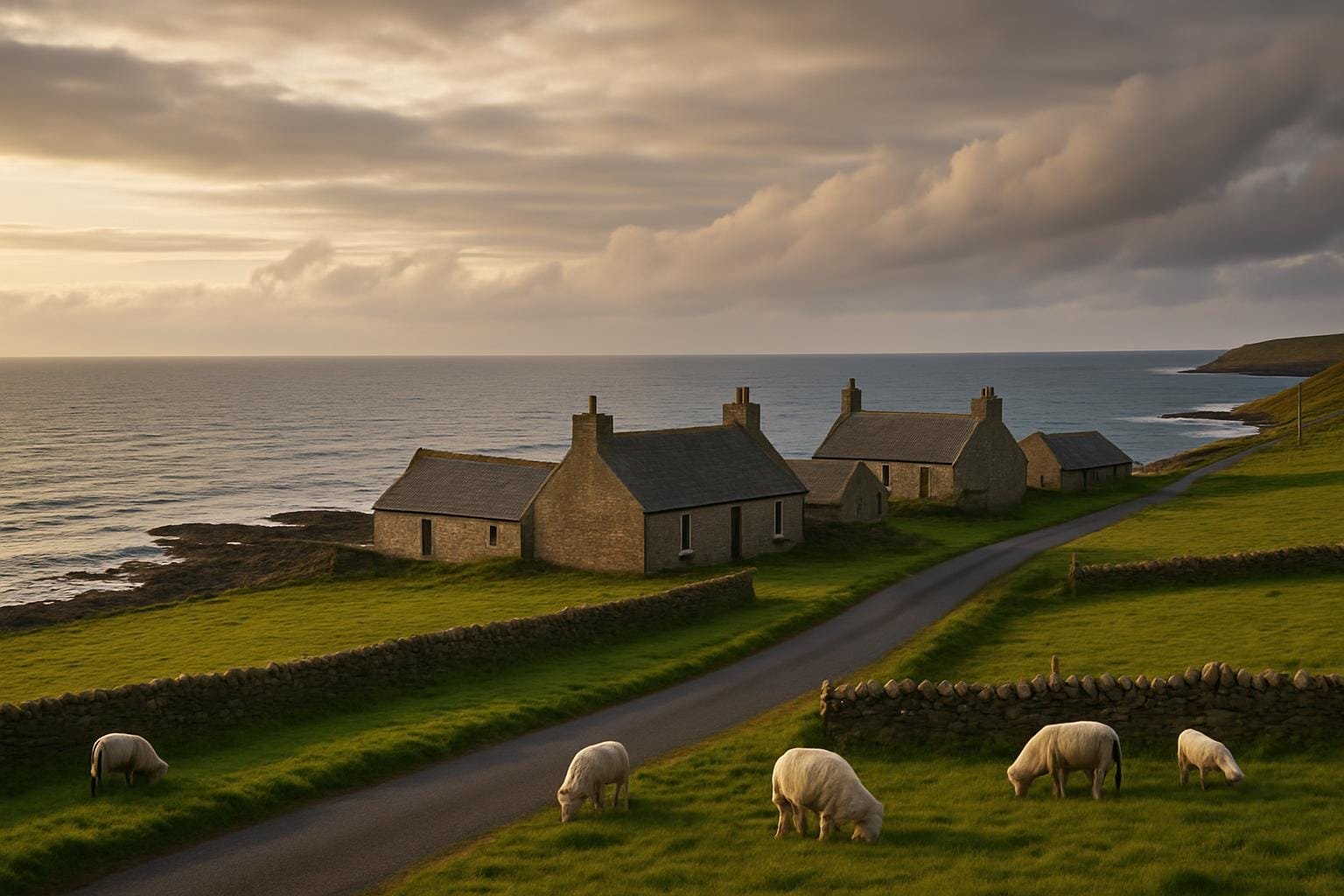
Living with the wind is the price of admission for slow travel Orkney Islands style. You don’t really “visit” these islands so much as let them wear you down gently, like an old jumper that ends up fitting better after a few washes. Come for the headline archaeology if you like, but the bit that sticks is hanging your washing sideways in a gale on a Tuesday on Sanday, or realising the bus driver on Westray already knows where you’re getting off because, frankly, where else would you be going?
I’ve hopped around Orkney’s outer and “everyday” isles a few times now – the ones where people are more interested in the ferry timetable than your big feelings about Neolithic tombs. This is an attempt to put into words what it’s like to slow down there, rather than race from sight to sight.
The first time I came up here – a few years back, after a winter stuck on the M6 – I made the classic mistake: tried to do too much. Mainland Orkney in two days, Skara Brae, Ring of Brodgar, Italian Chapel, then “maybe hop to an island or two”. Idiot. Once you start looking at the Orkney Ferries timetable, you realise the real life of the place runs on those sailings, and they are not designed around your bucket list.
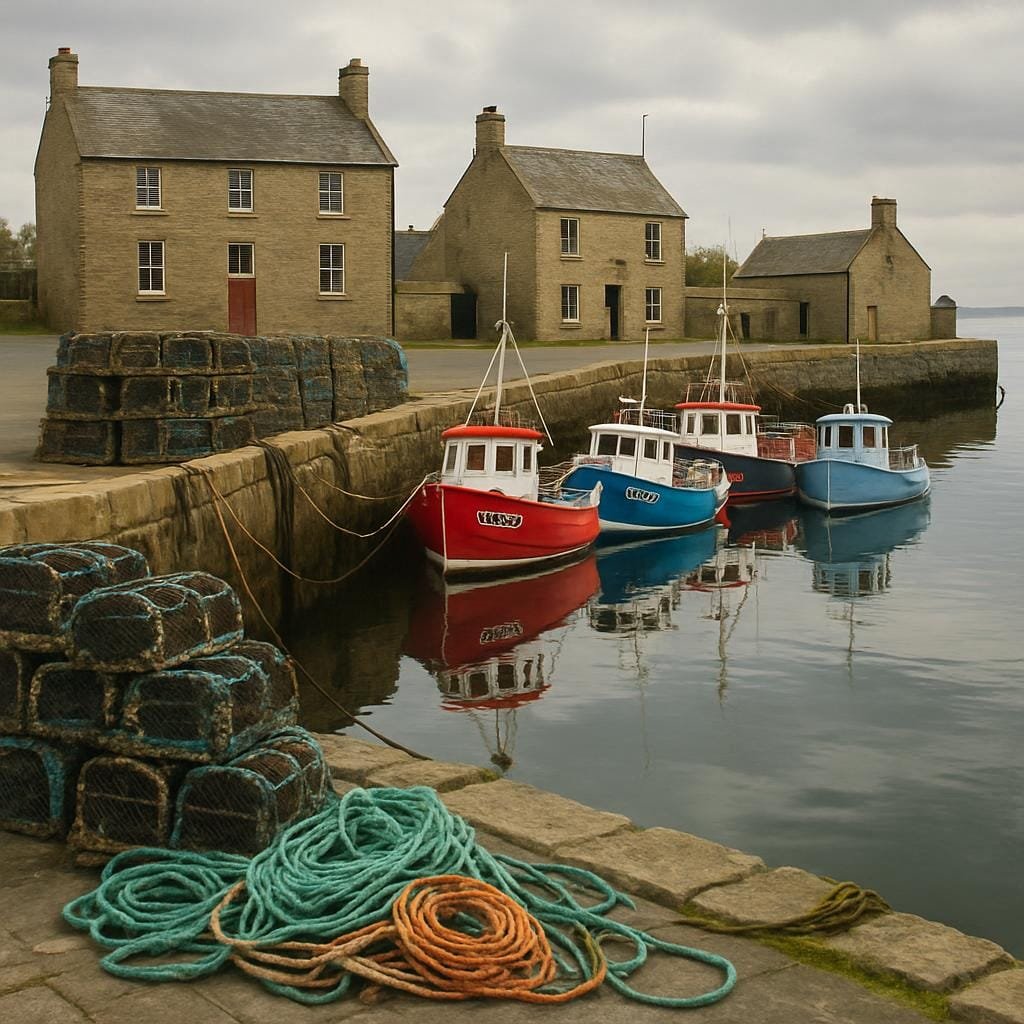
Slow travel Orkney Islands style starts with accepting the timetable. Sometimes it’s a 7:20am ferry or nothing, sometimes the boat back is six hours after you’d ideally like to leave. That gap, it turns out, is where the good stuff hides: the closed tearoom, the bored hour on a windy pier, the chat in a shop where someone’s aunt once lived in Shrewsbury and suddenly you’ve got a friend for life.
Sanday is the island that made me understand why the locals talk about “the longness of it”. You get there on the ferry from Kirkwall – around £9 return on foot last time I went, a bit more with a car – and at some point, the usual mainland panic about “what are we doing today?” just blows away somewhere over Cata Sand.
The beach at Tresness is the big-ticket walk. It’s not complicated: miles of pale sand on one side, rolling dunes on the other, the odd cow that looks at you like you’re trespassing on its day off. The wind shoves the sound of the surf into your ears so hard you can taste it. I watched a crow literally give up flying and walk. That sort of day.
There’s not a lot in the way of standard tourist infrastructure, but that’s the point. You’ll probably end up at Sanday Community Craft Hub near the ferry terminal at some stage, partly because there’s coffee and cake, and partly because everybody else does. The last time I was in, there was a hand-written sign for a talk on local seaweed, and I got gently told off for mispronouncing “kebbuck”. In a nice way.
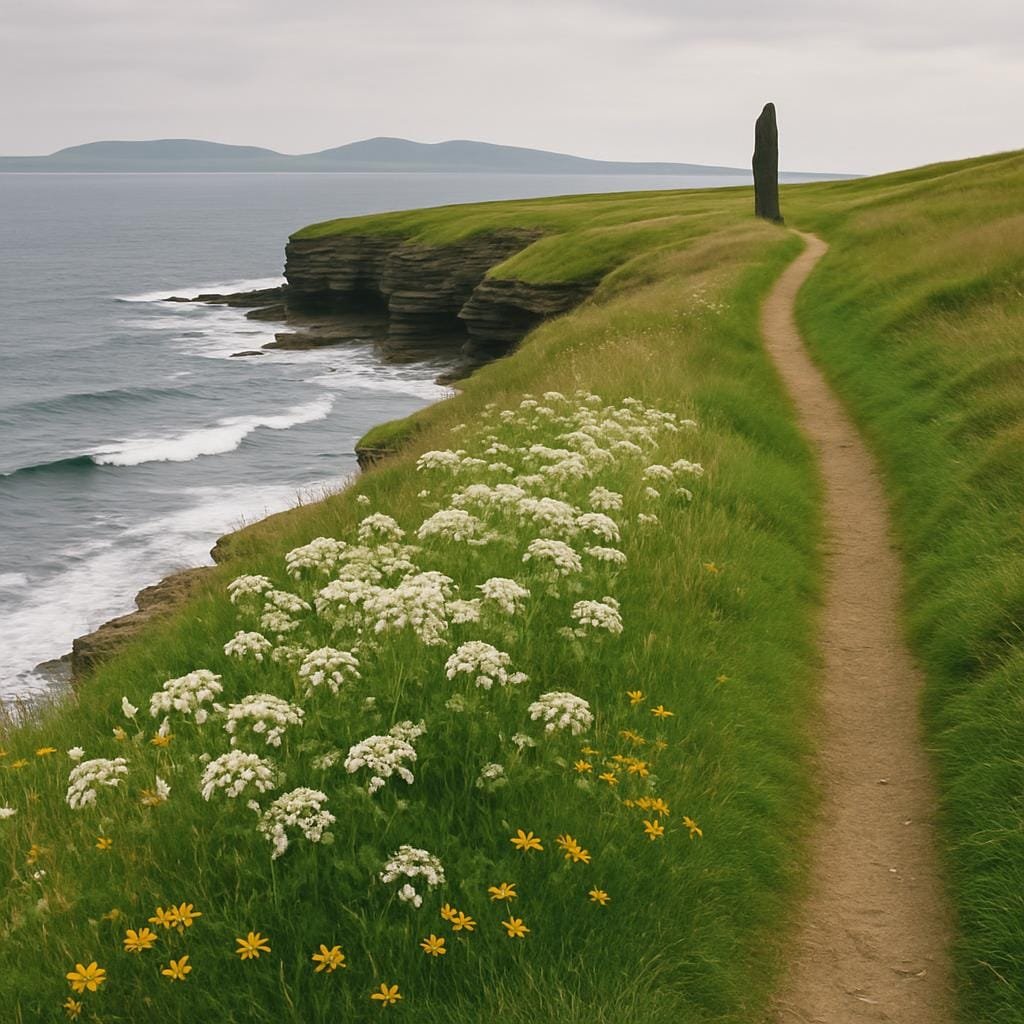
For something more obviously “historic”, there’s Quoyness Chambered Cairn, free to wander into, down a low passage where you have to duck and shuffle. I came out blinking into the daylight and nearly walked into a sheep, which felt like a very Orkney history lesson: old stones, yes, but also livestock and weather and someone’s quad bike rattling by in the distance.
Worth knowing before you go – Sanday
Westray is the island where slow travel Orkney Islands thinking really clicked for me. It’s not big, but it has a feeling of quiet busyness – proper fishing work going on, folk heading in and out of the Westra Shop, vans trundling the short distance between Pierowall and the harbour. I turned up with a daft plan to “see the whole island in a day” on a hired bike.
The good news: the cycling is straightforward and the roads are empty. The less good news: Orkney “flat” is not the same as English Midlands flat, and there was a breeze that felt personally offended by my thighs. I’d still recommend the bike, though – you can pick one up from Westray Cycle Hire for around £20–£25 a day.
Noup Head is the obvious aim: the lighthouse up on the cliffs, guillemots packed onto ledges like they’ve booked the worst seats in a very steep theatre, and, in season, puffins giving you the side-eye. It’s free, and there’s a rough track for the last section where you will, if you’re like me, end up pushing the bike and trying to look like that was always the plan.
Back in Pierowall, the Pierowall Hotel does steady, honest food: local fish, solid chips, the kind of plate you’d be pleased to get anywhere on the A49, never mind an island. There’s a sort of gentle chaos in summer when the place fills with a mix of residents, workers and visitors. I sat at the bar watching a conversation that drifted from the ferry freight schedule to someone’s granddaughter’s exams to the right way to bake a clootie dumpling, and felt like I’d wandered into a village WhatsApp group that didn’t need a smartphone.
There’s also the Westray Heritage Centre, £3-ish entry, small but dense with stories and the famous “Westray Wife” figurine replica, looking quietly unimpressed with all of us.
Worth knowing before you go – Westray
Hoy feels different the moment the ferry pulls into Lyness. The hills rise up in a way that surprises people who think “Orkney = flat”. The Scapa Flow Visitor Centre is right there by the harbour – recently refurbished, free entry, with hangars full of naval history, rusting anchors and a café doing decent soup and scones. It’s easy to lose a few hours inside if the weather’s throwing a tantrum.
The Old Man of Hoy is the obvious celebrity, and I’ll be straight with you – the first time I came, I didn’t see it. The cloud came down halfway up the path from Rackwick, and I ended up curtailed at a fence in the drizzle, listening to the sea but seeing absolutely nothing. It was, in its way, helpful. I noticed the smaller things instead: the peat smell in the wet, the fat midges attacking my ankles, a plastic bucket half-buried in the heather for no good reason.
On a clearer day, that walk is about three hours return from Rackwick, free of charge, with a rough, eroded path and a few boggy bits. The cliffs – when you can see them – are almost vertical and the Old Man looks like someone put a stack of bricks in the wrong place. There’s a fence keeping you back from the edge, but if you’re even slightly twitchy about heights, it still gets the heart going.
Rackwick itself is a kind of cul-de-sac of weathered houses, a bothy run by the Mountain Bothies Association, and an oddly peaceful graveyard. The beach is huge stone boulders at one end, sand at the other, backed by high cliffs. I once sat on a rock there eating a slightly squashed cheese sandwich from the Hoy Kirk Café pop-up (check their Facebook page for opening days) and thought: this is it, this is the whole reason for slow travel Orkney Islands admiration. Nothing dramatic happened. It was just…quiet, and big, and absolutely full of weather.
Worth knowing before you go – Hoy
Shapinsay is almost a commuter island – the ferry from Kirkwall takes about 25 minutes, runs regularly, and you get the sense that a lot of people are using it to go to the dentist, not to have a transcendent experience with sea air. That gives it a different flavour, and it’s one I’m fond of.
The village at Balfour has a short row of buildings, a pier, and the rather grand Balfour Castle further along – now a private residence and exclusive-use hotel, so you can’t just wander in for a nose unless you’re staying or booked for something special. You can, though, walk along the shore and stare up at it, which is what I did, munching a slightly windswept pasty.
The Smithy is the social centre of gravity: part café, part event space, part “we’ll see what we feel like this week”. Last time I was in it was soup, toasties and a very good slice of lemon drizzle. Coffee and cake came to about £6 and I lingered longer than I meant to, half-listening to a conversation about cowsheds.
There’s a coastal walk round to the Balfour Battery, a First World War gun emplacement, and on to the “dish of the mill” – a big, bowl-shaped geological formation on the shore. There’s also the standing stone of Mor Stein inland, which has the smug look of a rock that’s been upright longer than most countries have existed.
Worth knowing before you go – Shapinsay
Rousay is often sold as “Orkney in miniature” because it has hills, farms, and a frankly excessive number of ancient sites. The easy way to see it is the circular road – about 14 miles, up and down, round and round – which you can do by car, bike, or a combination of bus and walking if you’re patient.
The stand-out, for me, is Midhowe Chambered Cairn. It’s maintained by Historic Environment Scotland and free to access. Someone has put an entire hangar-like shelter over the tomb, with wooden walkways so you can peer in without breaking anything. The day I went, the wind was screaming across Eynhallow Sound, the metal cladding was rattling, and I had the distinct sense of being inside a very old, very echoey drum.
Next door is Midhowe Broch, its walls still shoulder-height in places. You stand there, with sheep on the surrounding slopes and the dark lump of Eynhallow island across the water, and it feels quite matter-of-factly lived-in, despite being centuries out of date.
In terms of everyday life details, there’s the Taversoe – the island’s pub/restaurant/guesthouse. It looks fairly modern from the outside but inside it has the familiar pub logic: bar, pool table, chalkboard for specials, slightly too-warm conservatory. I had fish and chips that tasted like someone actually cared about the potatoes, and a pint that went down embarrassingly quickly.
Worth knowing before you go – Rousay
All this sounds quite active written down – walks, hills, cairns, puffins – but the heart of slow travel Orkney Islands life is in the bits in between. Waiting rooms with wipe-clean chairs and noticeboards layered with A4 posters: cattle sales, fish and chip nights at the community hall, the St Magnus Festival programme thumbtacked up even on the outer isles.
On one trip, stuck in Kirkwall ferry terminal due to a last-minute timetable shuffle, I ended up chatting to a woman heading back to Stronsay with three heavy bags and an air of resigned good humour. She explained the quiet skill of ordering click-and-collect from Tesco and timing it with the bus and boat so you don’t end up babysitting a crate of yoghurts for six hours. That’s slow travel too: learning that people here think about weather and distance in a way most of us on the mainland don’t have to.
There’s friction, of course. Cafés shut on the one day you’re free. The museum you wanted to see is now only open Thursdays. The ferry back is at 4pm and you’re done with “sightseeing” by 1. But that dead time by the pier, watching kids crabbing off the steps and the same dog trotting up and down greeting everyone, is the bit you’ll remember when you’re back queuing on the A40.
If you want slick days filled to the brim with attractions and tidy itineraries, the everyday islands might annoy you. Services shut early, buses don’t always connect, and the wind has strong opinions on your hairstyle. But if you’re curious about how people actually live out here – the school runs, the co-op runs, the ferry gossip – slowing down across Sanday, Westray, Hoy, Shapinsay and Rousay is hard to beat.
Take less on. Pick one or two islands, not six. Let the timetables push you into gaps in the day. Say yes when someone suggests tea in a hall you can’t find on Google Maps. That’s slow travel Orkney Islands reality: slightly scruffy, often windy, frequently beautiful in ways that don’t care if you’ve brought a camera.
And if all else fails, there’s always another ferry tomorrow. Probably.