

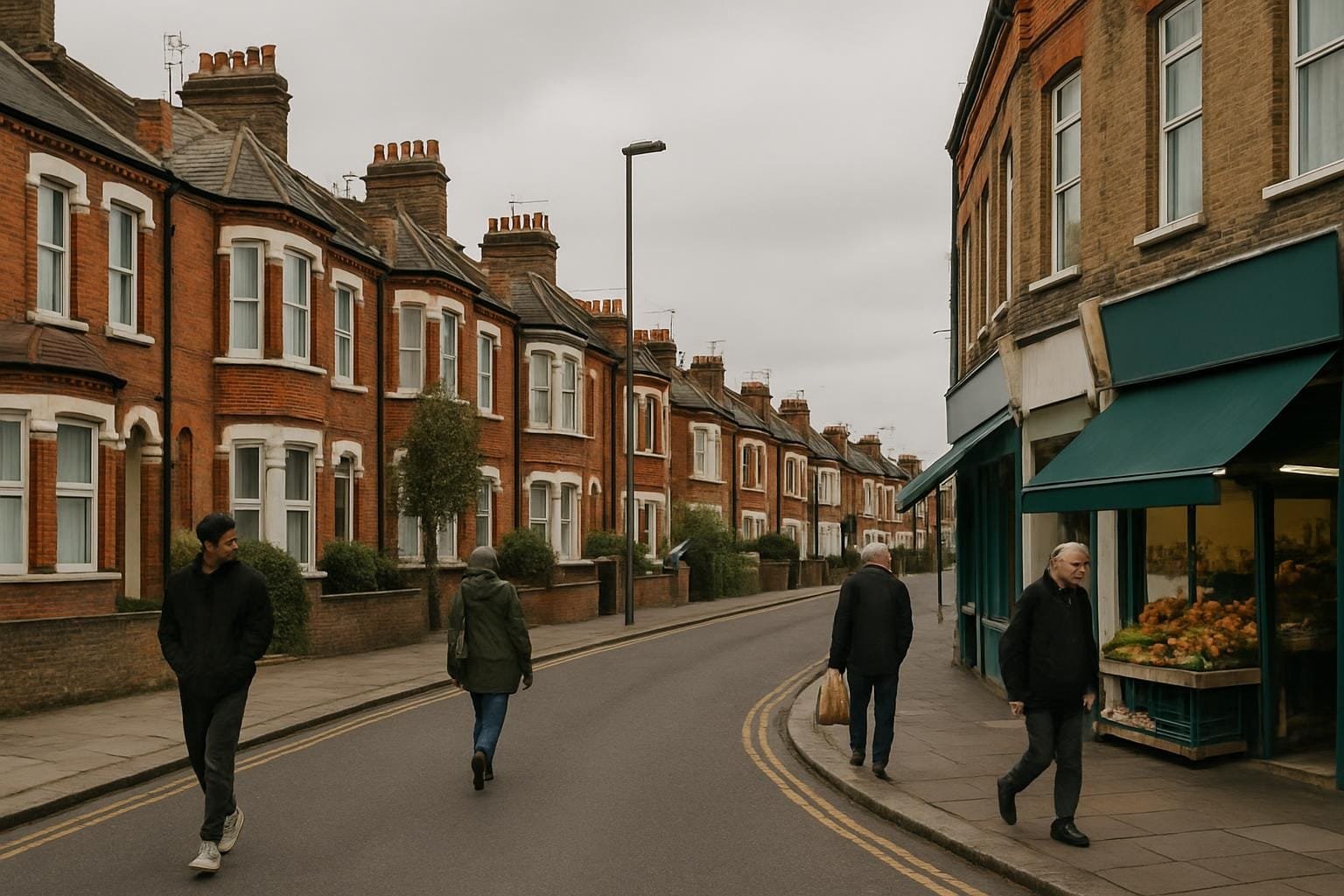
If you’d told teenage me that one day people would pay good money for an “Adele Tottenham walking tour”, I’d have laughed and asked if it came with a free Oyster top-up and a bag of chips. Back then, Tottenham – like the bit of Newcastle I grew up in – wasn’t somewhere outsiders romanticised. It was buses, takeaways, a cracked football court and a lot of families trying to keep it together. Which, if you listen properly, is exactly what Adele’s early records sound like.
I first heard her in late 2007, which dates me immediately. A mate handed me a scratched promo CD of 19 in the staff room of a bar I was working at in town. I remember thinking the cover looked like any other moody girl-with-fringe thing the labels were pushing, borderline Duffy cosplay, and I nearly left it in my locker. Then I put it on at home, washing up after a double shift, and “Hometown Glory” came on. That piano line, and her singing about walking through streets and seeing people “through their eyes” – I could feel the night bus air off the Tyne Bridge in it, never mind the North Circular.
What caught me wasn’t the voice – although obviously, that too – it was the attitude. She sounded like the sort of girl you’d chat to outside a chicken shop at 1am, not some art-school soul project. Tottenham, and North London estates in general, are baked into that attitude. You can’t separate the two without sanding all the character off. So if you’re thinking about an Adele Tottenham walking tour as a fan, forget blue plaques and start with that: the way ordinary streets stamp themselves onto someone’s phrasing.
The dull way to talk about this is “working-class authenticity”. That’s been done to death and usually by people who’ve never queued for a bus in the rain. What I hear in those early songs is something more specific: the rhythm of a kid who’s grown up in a flat where you can hear the neighbours, the telly, the rows, the music bleeding through the walls. There’s a kind of unbothered loudness in her delivery, like she’s always had to sing over something.
Listen to “Chasing Pavements” again – the actual album version on 19, not the radio edit that got rinsed. That chorus doesn’t sound like a woman lost in Paris or New York; it sounds like someone pacing around a London park, texting mates about some useless lad and complaining about the mud on their trainers. The pavement is very specifically British. Wet, grey, slightly miserable. She’s not “searching for herself”, she’s walking past a row of betting shops, trying to decide if the drama’s worth the effort.
Tottenham comes through in the way she refuses to pretty any of it up. There’s no coyness. No “I’m too cool for this emotion” filter. I’ve heard a lot of people bang on about Amy Winehouse being the raw one and Adele being the polished one; I think that’s lazy. Amy had Camden’s doomed romance energy. Adele had North London’s “I’ve got rent to sort and I can’t be doing with your nonsense” energy. It’s a different flavour of brutal.
You can draw a line from the football pitches off the High Road to the chorus of “Rolling in the Deep”. That stomp, that sense of “you think I’m soft but I’ve been watching you this whole time” – it’s estate logic. You clock people early, you learn to read the room, you don’t give second chances you can’t afford.
Of course, she didn’t stay in Tottenham. She went to the BRIT School in Croydon, and this is where some people try to reframe her as an industry product. I’ve heard this in more than one pub: “She’s BRIT School, man, it’s all focus groups.” Nonsense. I saw Jessie J at a festival in 2011 – another BRIT School alumni – and she was all choreography and polish. Adele, on the 21 tour that same year, at the O2 in September, came on in a black dress, told us she’d just had a curry, and swore like a mate. The BRIT School gave her technique; Tottenham gave her the attitude that stopped that technique becoming smug.
The Tottenham part shows in who she’s always stood next to. In that 2007 BBC 2 session with Jo Whiley, she bangs on about The Cure and Etta James in the same breath, but then talks about hanging out in London round her mates’ flats. When she did “Hometown Glory” on Later… with Jools Holland in 2007, she had that slightly awkward, “I’m not used to cameras” stance that you only keep if your friends are ready to rinse you for getting too big for your boots.
The idea that the BRIT School scrubbed Tottenham out of her is wrong. If anything, it sharpened what was already there. She comes from a place where getting up and singing in front of people is impressive, but not sacred. That’s why she can stop a show at the Royal Albert Hall in 2011 to tell off a security guard for bothering a dancing fan and make it feel like she’s in a pub, not a shrine. North London tone, posh venue. The clash is the point.
I’ll say something that gets me in trouble with certain corners of the internet: I think Adele’s Tottenham years made better records than her Vegas years. Not technically better – 30 is sophisticated, and I know some of you cried your eyes out to “To Be Loved” – but more wired into the stuff that gives British music its bite.
19 and 21 feel like flats and buses and back gardens. 25 starts to feel like planes and hotel rooms. By the time you get to the Caesars Palace residency, the music is technically immaculate, her voice is richer, but the stories feel further away from the streets that raised her. When she sings “Hello from the other side”, you can’t quite imagine the other side being Northumberland Park; it sounds more like a luxury suite.
And that’s fine. Artists grow. They’re allowed nicer bedding. But I think Tottenham-era Adele – the 19 girl who uploaded demos to MySpace and ended up signed to XL Recordings after her mate posted her tracks – had something that the striped-jumper Vegas Adele can’t fully replicate: the sense that all this could vanish and she’d be back on the 149 bus with her Oyster in her bra.
I don’t want an Adele Tottenham walking tour in the guided sense. I want her to put out an EP again that sounds like she recorded it between shifts, with that same slightly scruffy acoustic sound you can hear on “Daydreamer”. Less string section, more flatmate boiling pasta in the background.
Back to “Hometown Glory”, because that song has done more tourist marketing for North London than any council brochure. It’s fascinating how specific and vague it is. She’s clearly walking through London – the references are local – but instead of giving you neat shots of landmarks, you get feelings: pride, irritation, stubbornness. It’s anti-postcard.
I grew up in a council house near Byker and, later, a terrace in Gateshead. I didn’t set foot in Tottenham until my mid-twenties, when I went down for a Spurs match with a mate from uni. Wandering around before kick-off, past the chicken shops and market stalls on the High Road, I remember thinking, this is it. This is the energy that’s under “Hometown Glory” – the mix of “this place is rough around the edges” and “if you slag it off I’ll have you”.
That’s what makes the talk of an Adele Tottenham walking tour slightly funny. You don’t need a guide; you need a bus pass and time to loiter. The place is in the song structure: the way verses circle back on themselves like you’re doing laps of the same block, weighing up the same love/hate questions about home. Every British city has an area like that. For Adele, it’s Tottenham. For me, it was the bit of Newcastle where the chippy knew your order before you walked in.
Here’s my arguable take: Adele gets too much credit as a “voice of a generation”, and not enough credit as a very specific North London writer. The big narratives always go global with her – “Adele speaking for heartbroken women everywhere” – and in the process, critics flatten the geography out of her work.
When 21 came out in 2011 and sold something ridiculous like 30 million copies, people talked about it like it belonged to the whole planet. But listen properly to “Take It All” or “He Won’t Go”. The pacing, the bluntness, the mix of hurt and “I really don’t have time for this” – that’s not generic heartbreak. That’s British, London, estate-trained emotional efficiency. You say your piece, you get back to work.
Meanwhile, the actual Tottenham story – the single mum, the early exposure to Sade and Gabrielle through her mum’s CD stack, the kids she went to school with who didn’t get a MySpace miracle – gets reduced to a bullet point in a press bio. It’s easier for the industry to sell Adele as universal than it is to admit that millions of us hear very local, very familiar rhythms in her songs.
If you’re going to bang on about an Adele Tottenham walking tour, put that on the leaflet: this is the sound of bus routes and rented flats, not some floating, placeless emotion.
I’ve seen Adele twice. Once when she still had the early-career hunger, and once when she’d clearly reached the “I can sack this off if I fancy” stage.
The first time was in 2008 at the Carling Academy in Newcastle (before it kept changing sponsor and name). She was supporting Jack Peñate. Most of the crowd were there for him, obviously; this was peak indie shuffle and those kids loved a cardigan. Adele came on with just a guitarist and a mic stand that was slightly too tall. She told a story about getting the Megabus up, sang “Hometown Glory”, “Daydreamer”, and a cover of The Raconteurs’ “Many Shades of Black”. She sounded like someone who’d spent evenings singing along to her mum’s CDs in a living room that smelt of fried onions and damp coats.
The second time was 2016 at the Manchester Arena, on the 25 tour. It was spectacular, no getting around it. Confetti, moving platforms, the lot. When she did “Someone Like You”, the bloke next to me wept into his cider. She was tight, funny, completely in control. But that hungry crackle from 2008 had gone. She was a professional now, not a girl from an estate who might still end up back in Tottenham if things went sideways.
I don’t say that as a criticism. Comfort changes you. Food-wise, it’s the difference between the curry you make on payday and the curry you make on the 27th. Both are good, but one has urgency. Early Adele is end-of-the-month curry: resourceful, sharp with spice, making a lot from a little. Later Adele can afford starters and dessert.
If you grew up outside the M25, it’s easy to treat London boroughs as interchangeable. To most of my Geordie mates, anything north of the Thames is “like, near Arsenal”. But Tottenham has always had its own frequency. It’s in the way people talk – clipped but musical – and in the way they carry themselves, same as you get different attitudes in Heaton, Byker and Jesmond.
That frequency is all over Adele’s first few years. The way she half-laughs in “Best for Last” when she calls herself out. The short, almost spoken lines in “First Love” before the notes open up. There’s a lack of fuss that reminds me of aunties at family parties – the ones who’ll hug you, then tell you you’re being daft and you need to get a grip.
And this is maybe my favourite thing about Adele’s connection to Tottenham: she never turned it into a costume. When she shouted out the area at the BRITs or in interviews, it wasn’t some handled, PR-approved identity marker. It sounded like someone saying, “Look, I know I’m in a fancy room, but my uncle’s watching this on telly in a semi and he’ll rinse me if I pretend I’m anything else.”
That’s what separates her from some of the heritage pop acts that suddenly remember their “roots” whenever a new album cycle starts. Adele’s Tottenham is there even when she’s on stage in Vegas. It slips out in the way she absolutely rinses herself between songs, the self-deprecating humour, the way she talks about her son and her mates. You don’t need an Adele Tottenham walking tour to see it; you can hear it when she corpses on stage because she’s said something too rude and then laughs like someone’s mum at a barbecue.
For me, it’s this: Adele’s Tottenham is proof that British pop doesn’t have to choose between big, global ballads and very local, specific roots. You can sell millions of copies of 21 and still sound like someone who knows the price of a Chicken Cottage meal and has argued with a bus driver about exact change.
I’d love, selfishly, for her to make another proper “Tottenham record” one day – smaller arrangements, more bite, maybe produced by someone like XL’s Rodaidh McDonald or even a North London grime producer, just to bring that estate energy screaming back in. Imagine her voice over a skeletal beat that sounds like it’s echoing off a tower block stairwell. It wouldn’t be “going back”; it would be admitting that the estate never really left the room.
Until then, the next time you put on “Hometown Glory” or “Chasing Pavements”, skip the glossy narratives and listen to the geography. Hear the kebab shops shutting, the buses sighing at traffic lights, the kids legging it through cut-throughs between flats. That’s Adele’s Tottenham – not some curated Adele Tottenham walking tour for superfans, but the stubborn, noisy, ordinary streets that shaped one of the biggest voices on earth, and still echo underneath every perfectly controlled note.