
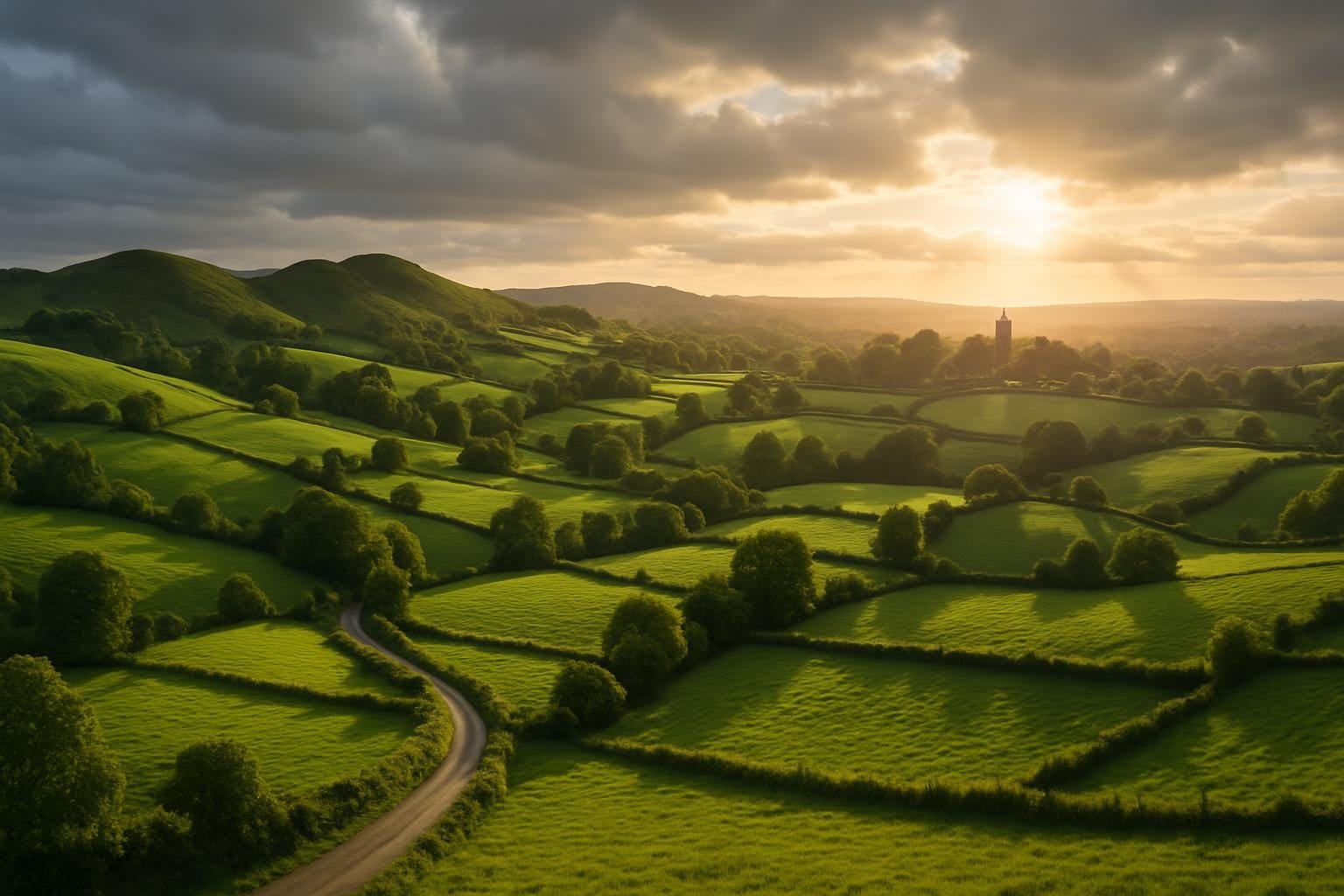
If slow travel Shropshire had a slogan, it would probably be: “We’ll get there when we get there — have you packed the biscuits?” This is not a county that shouts. It sits quietly between Wales and the Midlands, shrugging off motorways and big attractions, and getting on with being low-key spectacular in its own time.
I grew up here, then spent years whizzing past on the A5 in a lorry, swearing at traffic around Telford and wondering why anyone would come here on purpose. Then I started coming back more slowly — by train, on foot, in my increasingly indecisive old car — and it clicked. Shropshire is built for people who like their travel with pauses: lingering over a pint, wasting half an hour in a market hall, taking a footpath just because there’s a slightly curious tree at the end of it.
This isn’t a neat “do this in three days” itinerary. It’s more like a conversation between hills, small towns, and the odd heritage railway — the bits that turn slow travel Shropshire from an idea into an actual way to roam around.
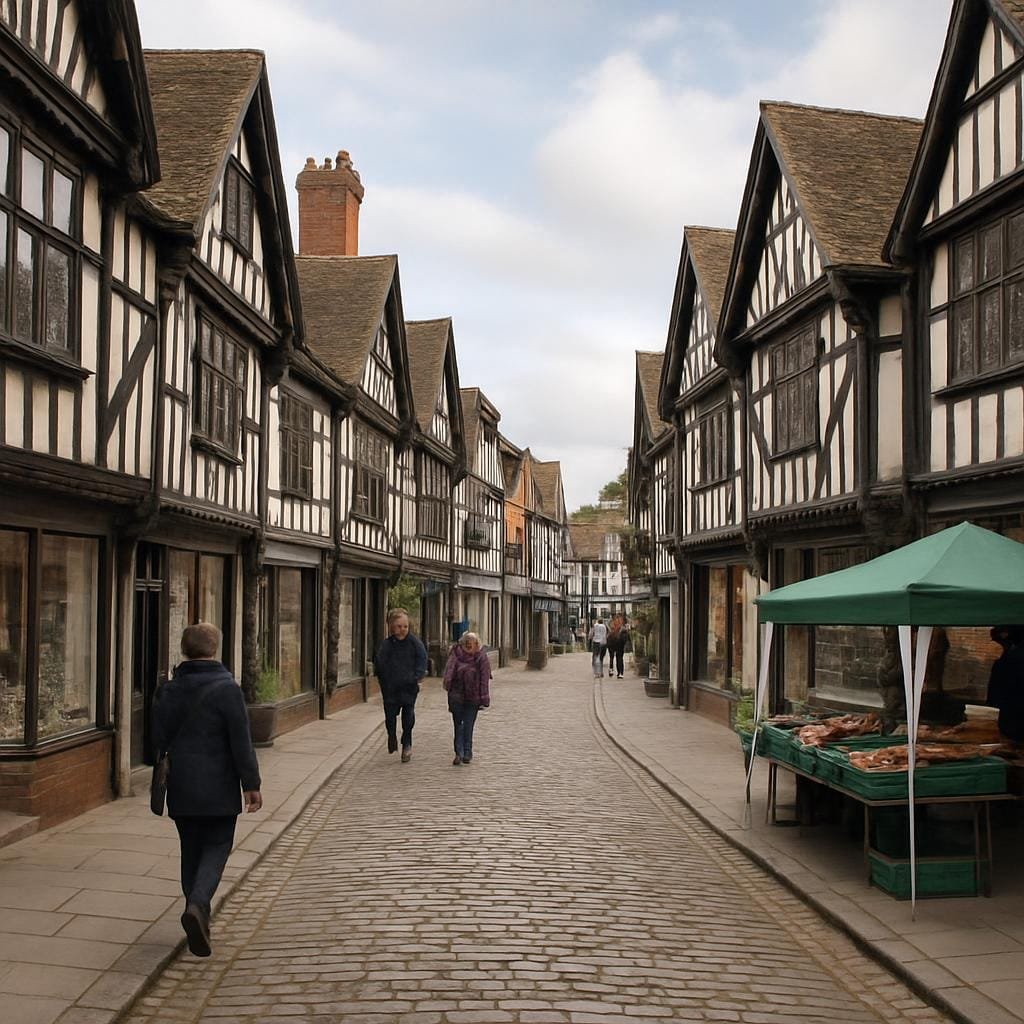
If you’re coming in from the Midlands, Shropshire starts to feel different on the A49 past Craven Arms. The houses thin out, the hills puff up a bit, and suddenly the radio loses signal right in the middle of the traffic report. Glorious.
The Shropshire Hills Area of Outstanding Natural Beauty (AONB) covers about a quarter of the county, and slow travel Shropshire pretty much lives here. You don’t need hardcore hiking skills; you just need shoes you’re not precious about.
The National Trust’s Carding Mill Valley at Church Stretton is where half the county goes when the sun appears and the other half goes when it doesn’t. It’s an easy place to start if you’re hill-shy or with kids, but you can still get proper big-sky views if you trudge far enough.
The walk up to the Lightspout Waterfall is gentle by Shropshire standards: a bit rocky, occasionally muddy, but nothing dramatic. The waterfall itself is… fine. Don’t expect Iceland. The real joy is when you keep going, up onto the Long Mynd plateau, and suddenly you’re up on a whaleback of heather and grass with paragliders hovering like strange, patient seagulls.
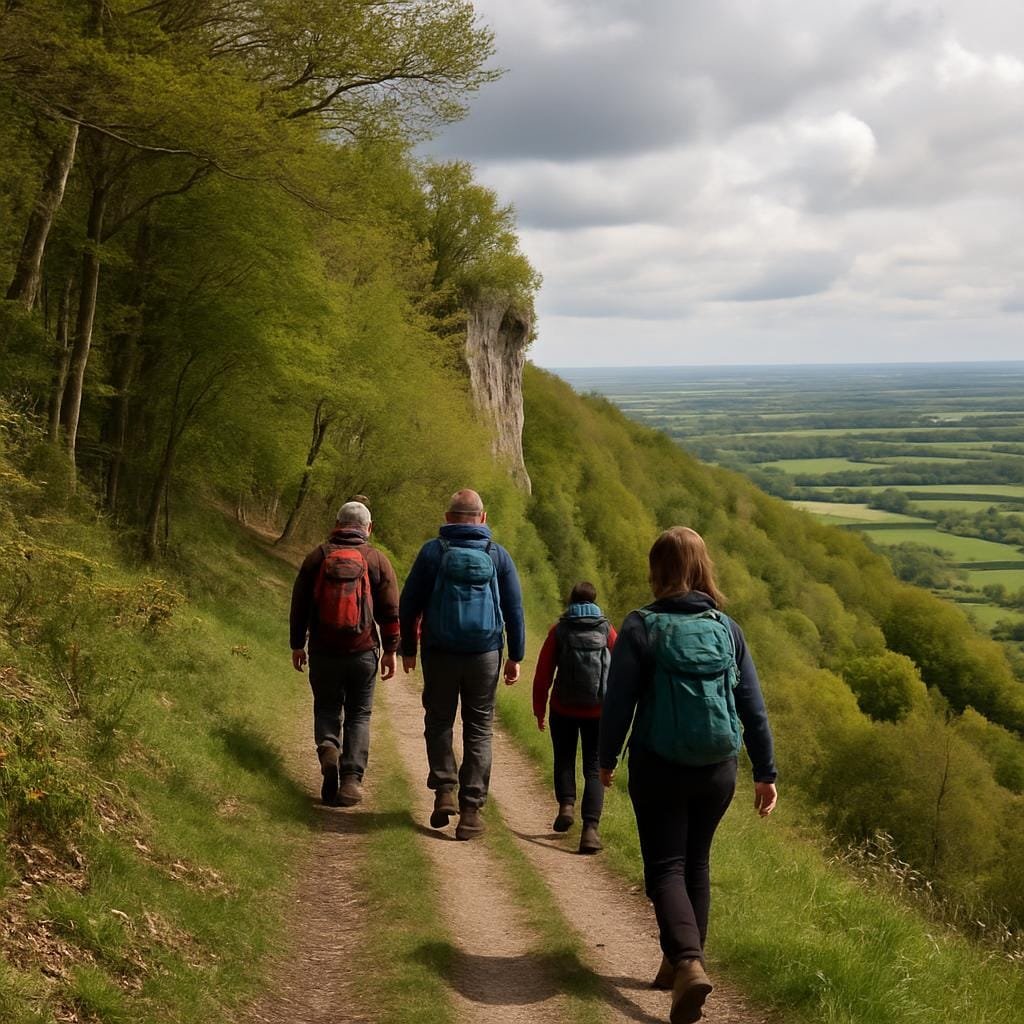
On a clear day you can see across to the Stiperstones and the Wrekin, and on a less clear day you can at least see the cake counter back down at the tea-room. Parking in the main Carding Mill car park is around £5 for up to 4 hours (free for members), and the honesty box in the upper car park still feels like something from another era.
Worth knowing before you go (Carding Mill & Long Mynd):
The Stiperstones are the Long Mynd’s moodier sibling. Less grassy, more jagged. The quartz tors with names like Devil’s Chair and Shepherd’s Rock jut up out of the hill like broken teeth. On foggy days, the place has proper haunted-moor energy, right down to the ravens that hang around, croaking at you.
You can start from the Knolls car park (free, but chuck a couple of quid in the donation box if you can) and do a circular walk along the ridge. The paths are a bit rough in places, all broken rock and ankle-traps, so it’s less “gentle ramble” and more “don’t look at your phone while walking”.
Last time I was there, a full-on hailstorm appeared out of a blue sky in about three minutes flat. I ended up hiding behind the trig point with a group of pensioners who’d clearly dressed for the Arctic and were having the time of their lives. That’s Stiperstones for you — weird, dramatic weather, then ten minutes later you’re in bright sunshine again wondering if you made it up.
Worth knowing before you go (Stiperstones):
Down in the south of the county, Ludlow sits above the River Teme, full of black-and-white buildings and people arguing politely about bread. For years it had a reputation as the food town in England. That’s calmed slightly now — a few big-name restaurants have gone — but the core of it remains: good markets, serious but unfussy cooking, and locals who care about what’s on their plate without needing to shout about it.
The market on Castle Square runs most days, but Saturdays are the ones that make slow travel Shropshire feel very literal. It becomes a sort of open-air chat zone: people clustering around the cheese van, blocking the walkway to debate which sausages they bought last time. There’s usually a stall from Ludlow Farmshop too, if you don’t make it up to the actual shop just outside town on the A49.
I quite like grabbing a coffee from The Sitting Room on Castle Square — deliberately mismatched chairs, very decent cakes, and often a dog or two asleep under the tables — then sauntering over to the castle. Ludlow Castle charges around £9.50 for adults now; it’s not cheap, but you can easily spend a couple of hours in there climbing towers and peering into ruined rooms. If the weather behaves, sit on the grass with a pasty from The Harp Lane Deli and see how long you last before a jackdaw tries to steal your lunch.
Ludlow’s big dates are the Food Festival in September and the Spring Festival in May — both cram the castle and town full of stalls, breweries and people earnestly sniffing salami. I went to the Food Festival a few years back and made the rookie mistake of “having a small sample at every stall”. I didn’t need dinner. Or much dignity.
Worth knowing before you go (Ludlow):
Shrewsbury is wrapped in a big loop of the River Severn, which makes the town centre feel slightly like a medieval theme park someone forgot to tidy up. It’s a mix of Tudor, Georgian, and a bit of “what on earth were they thinking in the 1970s?”, but it works. For slow travel Shropshire, this is your hub: trains, buses, odd little streets, proper independent shops.
If you like markets that still feel like working town centres instead of curated lifestyle experiences, Shrewsbury Market Hall will make you annoyingly happy. You go up the concrete ramp that looks like you’re entering a multistorey car park, and at the top is a chaos of butchers, fishmongers, plant stalls, vinyl, cheese, haberdashery, and cafes squeezed into spare corners.
Grab lunch at Moran’s (if you can get a seat — their seafood chowder is worth hovering awkwardly for) or a coffee from Camden Street Social. Prices are normal-human rather than capital-C Cool — a decent lunch with a drink can still come in around £10–£12. I once went in “just for some mushrooms” and exited 90 minutes later with a plant, a second-hand book and a bag of pork pies. It’s that kind of place.
Shrewsbury Castle is small but sturdy, perched right next to the station. Entry to the Shropshire Regimental Museum inside it is around £5. The views from the walls over the station and out to the Severn are oddly pleasing if you’ve got a thing for railways and rivers, which I grudgingly admit I do.
More atmospheric is the old Shrewsbury Prison. It closed in 2013 and now does guided tours, escape rooms, the works. A self-guided tour is about £22, which made me wince a bit, but wandering round the Victorian wings and empty exercise yards is memorable in a slightly unsettling way.
If all that’s a bit heavy, head to the river. The looped path from the Welsh Bridge to the English Bridge and back is classic slow travel Shropshire: dog walkers, teenagers with skateboards, runners, and people reading on benches so long they must lose sensation in their legs. You can also hop on one of the Sabrina Boat trips for about £13 for a 45-minute cruise. Mildly cheesy commentary, but pleasant.
Worth knowing before you go (Shrewsbury):
A slow travel Shropshire guide has to include Ironbridge, even if you think you’re “not really into industrial history”. Frankly, tough. This is where the whole Industrial Revolution thing got serious, and it shows.
The iron bridge itself — the first of its kind in the world — spans the Severn with a sort of quiet confidence. Walking across it is free; there’s a paid Tollhouse museum at one end with old ledgers and scale models, which is much more interesting than it sounds. The view down the river, with brick buildings stacked up the gorge sides, is one of those “oh right, this is why people go on holiday here” moments.
The wider Ironbridge Gorge Museums spread out along the valley: Blists Hill Victorian Town (with costumed interpreters and proper fish and chips cooked in beef dripping), the Coalbrookdale Museum of Iron, the Tar Tunnel, and a bunch more. A full annual passport ticket is around £35 for adults and gets you into all ten sites; if you’re dawdling around for a couple of days, it’s actually decent value.
Blists Hill is the star for most people. You swap your cash for old pennies and wander past a bank, a printer, a sweet shop, a pub that actually serves beer, and industrial works that smell faintly of oil and coal smoke. I’ll be honest: some of the actors are so chirpy you start wishing the Victorians had invented sarcasm earlier, but the attention to detail is brilliant. The fried fish shop queues can easily hit 30–40 minutes at peak times, but the crisp, slightly greasy result is hard to fault.
Worth knowing before you go (Ironbridge):
Head north-west and Shropshire starts to fray into Wales. Signs are bilingual, accents shift, rugby shirts become more frequent. It’s subtle, but you feel it.
Oswestry doesn’t usually feature high on tourist lists, which is partly why I like it. The centre has the usual chain suspects, but it’s the independent bits that make a slow day here worthwhile.
The Indoor Market off Bailey Head is a classic of its type: butchers, wool, hardware, café. Basil’s café inside does strong tea and fry-ups that keep lorry drivers quiet, which is usually a solid benchmark. Outside on market days (usually Wednesday, Friday, Saturday), you’ll find everything from plants to Ukrainian street food — I once had an excellent plate of varenyky here on a drizzly morning and felt absurdly content.
A short walk away is Old Oswestry Hillfort, one of the best-preserved Iron Age hillforts in the country. Free to wander, and you can walk the concentric earthwork ramparts like a very slow, thoughtful spiral. From the top, the view sweeps out across to the Berwyns and back towards the Shropshire Plain. Kids treat the slopes like an adventure playground; adults often look slightly startled at how big it feels up there.
Worth knowing before you go (Oswestry):
Offa’s Dyke, the old earthwork roughly marking the historic boundary between England and Wales, cuts through this part of Shropshire in long, peaceful stretches. You don’t have to walk the whole national trail to get a feel for it; a short section near Trefonen or around Llanymynech will do nicely.
One of the easier half-day rambles starts from Llanymynech, where there’s a heritage area around the old limeworks. You can pick up the Offa’s Dyke Path here and follow it along the border, occasionally stepping from one country to the other like you’re testing which side has better mud (answer: both sides, equally squelchy after rain).
Worth knowing before you go (Offa’s Dyke near the border):
If there’s a trick to slow travel Shropshire, it’s this: don’t try to cram too much in. Distances look short on the map, but the roads can be winding, tractors appear at exactly the wrong moment, and you’ll keep spotting things you want to stop for — an old church, a pub with hanging baskets that look suspiciously well cared for, a lay-by with a better-than-average view.
Leave slack in your day. Plan one main thing — a hill walk, a market, a museum — and let the rest fill itself in. Have a late breakfast at a transport café, like Longmynd Café in Church Stretton, then admit you’re not going anywhere very fast. Lean into it.
The last time I did a proper meander across the county, I found myself late afternoon at a bus stop in Craven Arms, eating a slightly squashed sausage roll from the Shropshire Hills Discovery Centre shop and watching rain sweep across the Onny valley. No major sights, no big story — just a small, quiet moment that somehow lodged in my head more firmly than the grand castle view from earlier that day.
That’s Shropshire all over. Quietly spectacular, yes, but also deeply ordinary in the best way: markets that service locals first, hills that don’t care if you brought the right jacket, pubs where no one cares how expensive your walking boots were as long as you don’t block the bar.
If you give it time — real time, with gaps and wrong turns and the odd soggy sandwich — the county starts to feel less like “between Wales and the Midlands” and more like its own, slightly stubborn place. And that, in the age of fast everything, is worth going slow for.