
I first met the Domesday Book in a school textbook, somewhere between the Bayeux Tapestry and Magna Carta. It appeared as a tidy fact: “In 1086 William the Conqueror ordered a survey of England, called the Domesday Book.” That was pretty much it. No one mentioned what it felt like to be one of the Domesday Book villages, suddenly finding strangers counting your pigs and judging the value of your bread oven.
Years later, standing in a muddy churchyard in Norfolk, trying to match a modern village to a line of crabbed Latin on the Open Domesday site on my phone, I realised how thin that textbook version had been. Domesday isn’t just a royal accounting exercise; it’s a snapshot of thousands of people whose names we don’t quite get, but whose fields and quarrels and debts are all there if you squint.
This is an attempt to trace those Domesday Book villages from the parchment to the present, not as a heritage trail, but as a way of asking: what did this survey actually do to people’s lives? And what happens when you walk through the places it recorded almost a thousand years later?
The standard line goes like this: in 1085, worried about money and loyalty, William ordered a survey of his new kingdom. Inquisitors toured the shires, asking who owned what, how much it was worth before the Conquest and now, and who paid what to whom. The results were written up in Domesday Book and taken as final – hence the name “Domesday”, echoing Doomsday, the Last Judgement.
That’s the neat version. The messy version starts with the fact that Domesday isn’t actually one book but two (Great Domesday and Little Domesday) and that it doesn’t cover London, Winchester or much of the north. If this was meant to be God’s ledger, it’s oddly patchy.
And it wasn’t neutral. The surveyors didn’t simply “record” England. They defined it. They decided what counted as land, what counted as value, who counted as a “free man” and who had been demoted to “villain” or serf. This had teeth. If your village was written down as owing a particular rent or service in 1086, that entry could – and did – get waved in your face decades later when you tried to argue your case in court.
So yes, Domesday is an extraordinary (I’ll allow myself that once) source. But it’s also an exercise in control, carried out while the memory of conquest was still fresh. If you only hear the tidy institutional story – “William wanted to know what he owned” – you miss the people on the receiving end of those questions.
Imagine you live in a Domesday village in early 1086. Let’s say somewhere like Aelfled’s place in Essex – which the scribes wrote as “Ælflædinge” and which is probably lurking inside some multi-syllable modern parish name. You’ve lived through twenty years of Norman rule. You might remember the elderly Edward the Confessor. You definitely remember the arrival of new lords with accents you couldn’t understand and sharper ideas about rent.
Then one winter, royal agents turn up. They don’t come alone; they bring the local sheriff, knights, sometimes the monks who own your land, plus sworn men from the hundred court. Everybody knows this is serious. According to the Anglo-Saxon Chronicle’s D version, they were to ask:
This isn’t some vague “census vibe”. They ask about your watermill, your fishpond, your bees. If you have a small oven in the village, that’s noted because the right to charge others to use it is worth cash. One entry for the Domesday Book villages around Bury St Edmunds mentions a single salt-pan – someone stood ankle-deep in brine, boiling sea water day after day, now frozen forever in ink because the king wanted to tax it.
You can imagine the local argument: “In King Edward’s time, that meadow was mine.” – “No, my father held it from the abbey.” – “We’re not paying geld on that waste; it’s flooded half the year.” Domesday smooths this down into a terse formula – “There were always 3 ploughs there” – but the resistance and negotiation are hiding behind those words.
One of the things the textbook version usually dodges is how many people lost out. We like lists of Norman castles; we’re less keen on lists of dispossessed English landholders. But Domesday is full of them.
Take the thegns – the local English nobility under Edward the Confessor. Before 1066, a thegn might hold several estates, collect rents, turn up for military service with a few armoured retainers. By 1086, large numbers of them have vanished from Domesday. Their land has been parcelled up among Norman barons like Robert of Mortain or William de Warenne. Occasionally you spot an English name – someone like Wulfric or Leofwine – hanging on to a single manor where once they had five.
That filters down. When I first looked at the Domesday entry for a village near where I grew up in Sussex, I was struck by the little tally of status: “In the time of King Edward, 8 free men. Now, 3 free men and 10 villains.” On paper, you can almost hear the clink of status dropping. Freedom, in this sense, meant you could move, you could sell your land, you weren’t tied to a lord. By 1086, some of those men are villains – unfree tenants – obligated to work the lord’s demesne three days a week.
That isn’t abstract. It’s the difference between:
Domesday doesn’t moan about any of this. It just counts. But if you walk through some of those Domesday Book villages now, you’re often walking over the results of that social shuffling: the enlarged manor at one end of the village, the tighter cluster of cottages down by the stream.
The temptation is to picture a toy village: church, manor, a few scattered hovels. Domesday complicates that. It talks in hides and virgates, not buildings, but the detail is there if you read sideways.
Take a fairly ordinary entry from Gloucestershire. It might say something like: “In demesne 3 ploughs; 10 villains and 4 bordars with 6 ploughs; meadow, woodland, 20 pigs; a mill rendering 10s.” You can unpack a life from this:
So a day in this village might look like: up at dawn, fodder to the animals, then off to the lord’s field to plough or weed. On “your” days, you work your strips – long, thin ridges of soil in the common fields. At some point a child takes a sack of grain to the mill, waits in the queue, comes back with flour and a smaller sack, because part of it stayed with the miller.
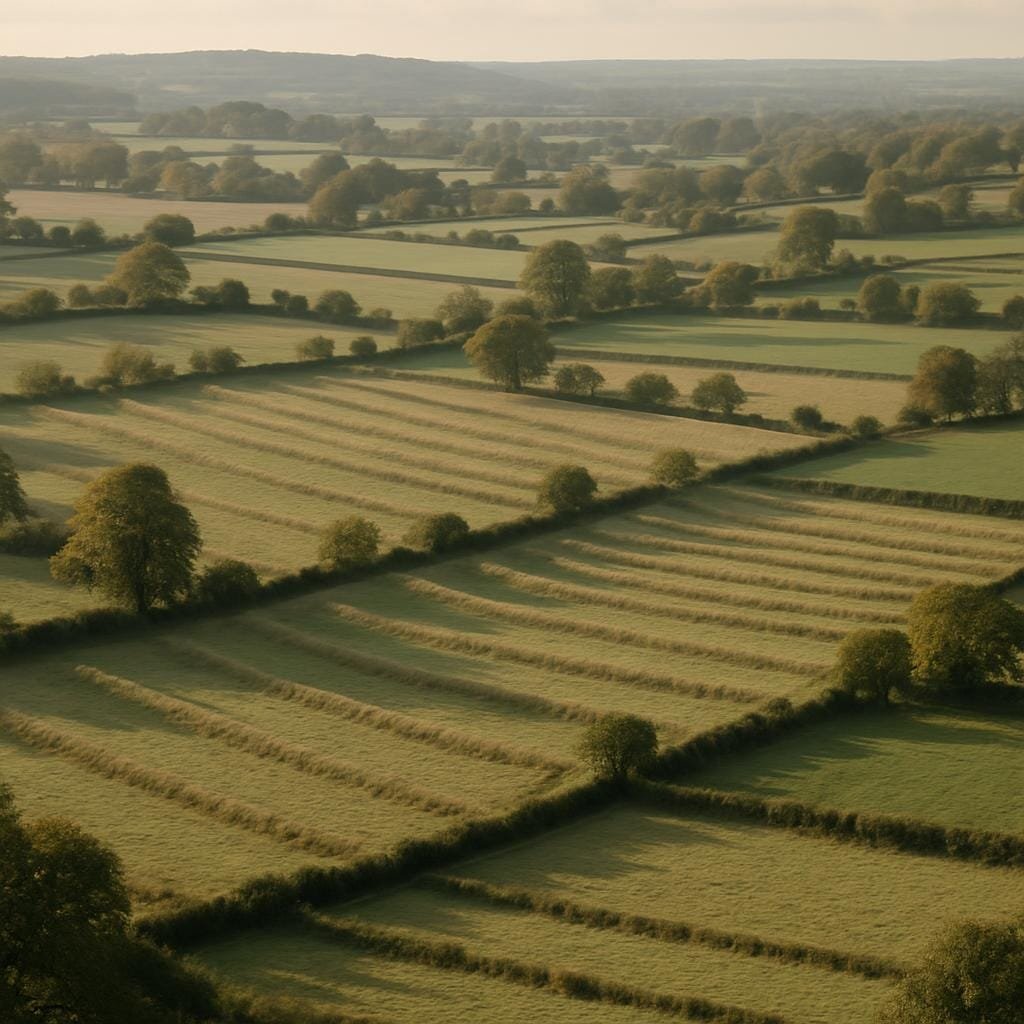
A few summers ago, walking through one of these Domesday Book villages in Northamptonshire, the ridge and furrow from that open-field system was still there, visible in the light as the grass rolled in long waves. Domesday’s 10 villains are long gone, but their ploughing pattern is frozen in the ground.
One thing I used to assume – because school had taught me badly – was that Domesday hardly mentioned women at all. Then I actually read some entries. They are still undercounted, but they’re there, vivid in places.
There’s Edith of Winchester, known as Edith the Fair or Edith Swanneck, who held large estates before the Conquest and still appears in Domesday as a past landholder. There are abbesses who control manors on behalf of nunneries. In some Domesday Book villages in the east, you find widows holding small plots in their own names, often marked as “terra uxoris” – land of the wife.
The survey doesn’t ask about unpaid work, of course. It ignores women spinning in doorways, brewing ale in backyards, patching up thatch. But when you read of a villein with “1 ox” rather than a full team of 8, you know that family is probably hiring themselves out as labourers as well as farming, and that the woman of that cottage is absolutely part of the local economy, however silent the record.
So yes, Domesday muffles women’s lives, but it doesn’t erase them entirely. The standard version of the story – “it records only male landholders” – is lazy. It records the people the king thought were accountable to him. Some of those were women; many more were the unnamed wives, daughters and servants behind the ink.
Here’s where the usual Domesday narrative really frays. People often talk as if it covers the whole of England in a single authoritative sweep. It doesn’t. London and Winchester – the key urban centres – are barely there. Huge chunks of the north appear only as “waste”. Textbooks often say, slightly vaguely, that this “probably reflects devastation from the Harrying of the North.”
“Probably” massively understates it. After northern rebellions in 1069–70, William ordered scorched-earth campaigns across Yorkshire and beyond. The chronicler Orderic Vitalis describes corpses left unburied, famine, people resorting to cannibalism. Decades later, when the Domesday commissioners asked what these manors were worth, the answer was: nothing – they’re still waste. No plough teams, no rent, no tax.
So those blank Domesday patches are not gaps in the data; they’re scars. The phrasing “waste” sounds neutral, but each “waste” entry represents homes torched, fields abandoned, skills dispersed. When modern historians map Domesday Book villages, the northern void isn’t some cartographic quirk; it’s the shadow of state violence.
That also means Domesday is not a full snapshot of everyday life in 1086, even in theory. It’s a snapshot of taxable value where there is taxable value. Londoners are basically invisible, which is odd if you think of 11th‑century England as mostly rural but not entirely. People made shoes, brewed ale for sale, stitched garments in streets that never make it into the text.
The trick, I’ve found, is to read Domesday sideways. Rather than taking its categories at face value, you look for the places where human mess peeks through.
For example, when an entry says: “This manor was and is worth 40 shillings” – that’s stability. When it says: “was worth 60 shillings; now 20” – something serious has gone wrong. Crop failure? A lord who squeezed too hard? People fleeing after violence? Historians argue over particular cases, but the pattern is clear: in some regions, values rise and by 1086 the new order is bedded in; in others, manors have collapsed.
Then there are the oddities. The Domesday Book villages around Ely and the Fens are full of fish-weirs, eels-rents and meres, showing a waterlogged economy we barely think about now. In the south-west you get tin and lead works. In Yorkshire, when the waste label starts to recede, you often see tiny communities of sokemen – semi-free peasants with legal rights – hanging on among the forests and ruins.
My own mental picture of “medieval England” used to be brown: fields, mud, wattle and daub. Domesday adds blue (rivers, fish), silver (mines), and a lot of charcoal grey (miserable tenants cutting wood in the lord’s forest under the eye of a warden with a big stick).
One of the most surreal experiences, if you’re a history nerd with a smartphone, is to look up a village on Open Domesday while physically standing there. You get your contemporary setting – the post office, a primary school, maybe the A‑road humming nearby – and then a neat little summary: “In 1086, this manor had 18 households, 2 lord’s plough teams, 3 men’s plough teams, woodland for 10 pigs.”
Try it in one of the Domesday Book villages that grew into small towns. The gap between the entry and what’s in front of you is sometimes comic. A place with a Tesco Express and a housing estate was once three villains, a priest and “6 salt workers”. But occasionally, bits line up. A line of cottages follows what was probably the edge of a demesne field. A pub stands suspiciously near a documented mill site.
I had this jolt in a village in Hampshire. The Domesday entry mentions “1 mill rendering 20s”. Today there’s a pretty unassuming 18th‑century mill building on the same stream, converted into housing. You could walk past without a thought. But once you’ve seen the 1086 line, every clatter of water through the sluice feels like a sound track running for nearly a thousand years: sacks dragged in, horses stamping, arguments over miller’s toll.
The other thing the textbook doesn’t really admit is that Domesday is addictive. Genealogists use it to chase family names; local historians pore over their own Domesday Book villages; economists model medieval productivity from its figures; lawyers in the later Middle Ages waved entries in court to prove rights to markets or fisheries.
There’s also a long history of reusing its methods. The 19th‑century Booth poverty maps of London, colour‑coding streets by income, are a kind of Domesday of the Victorian city. The BBC’s “Domesday Project” in 1986 tried to create a modern version, asking schools and communities to record their area. The medieval survey haunted both: the urge to measure people, to classify their worth, has not gone away.
Once you see Domesday as a political act as much as a source, modern echoes jump out. Who gets counted and who doesn’t? Who defines the categories? Are you a “free man” or a “villain”, a “key worker” or “unskilled labour”? The language changes; the logic doesn’t entirely.
When I go back now to the Domesday Book itself – the real volume in the British Library, behind glass – I find I’m less interested in the big Norman barons and more drawn to the quieter lines. The “2 cottars”, the “1 smith”, the “priest with half a virgate”. That priest preached in a building which might have left its chancel arch embedded in a current parish church wall. That smith repaired ploughshares you can still see the marks of in ridge and furrow.
Textbooks like Domesday because it’s tidy: a date, a king’s order, a Latin title you can put in bold. The lived reality was anything but. For the Domesday Book villages, the survey meant:
And at the same time, it left doors open for later generations. Tenants appealed to custom; towns used Domesday entries to argue for market rights; historians now use it to pull ordinary lives back into focus. The book that was meant to close arguments “as at the Last Judgement” has instead become a place where the debate never quite ends.
Next time you pass through a village sign that smugly announces “Mentioned in Domesday Book”, you’re looking at the tip of a very complicated iceberg. Underneath the slogan are 1086’s awkward questions: Who owns this? Who owes what? Who used to have more? The answers shaped the fields around you, and in more ways than we like to admit, we’re still living with them.
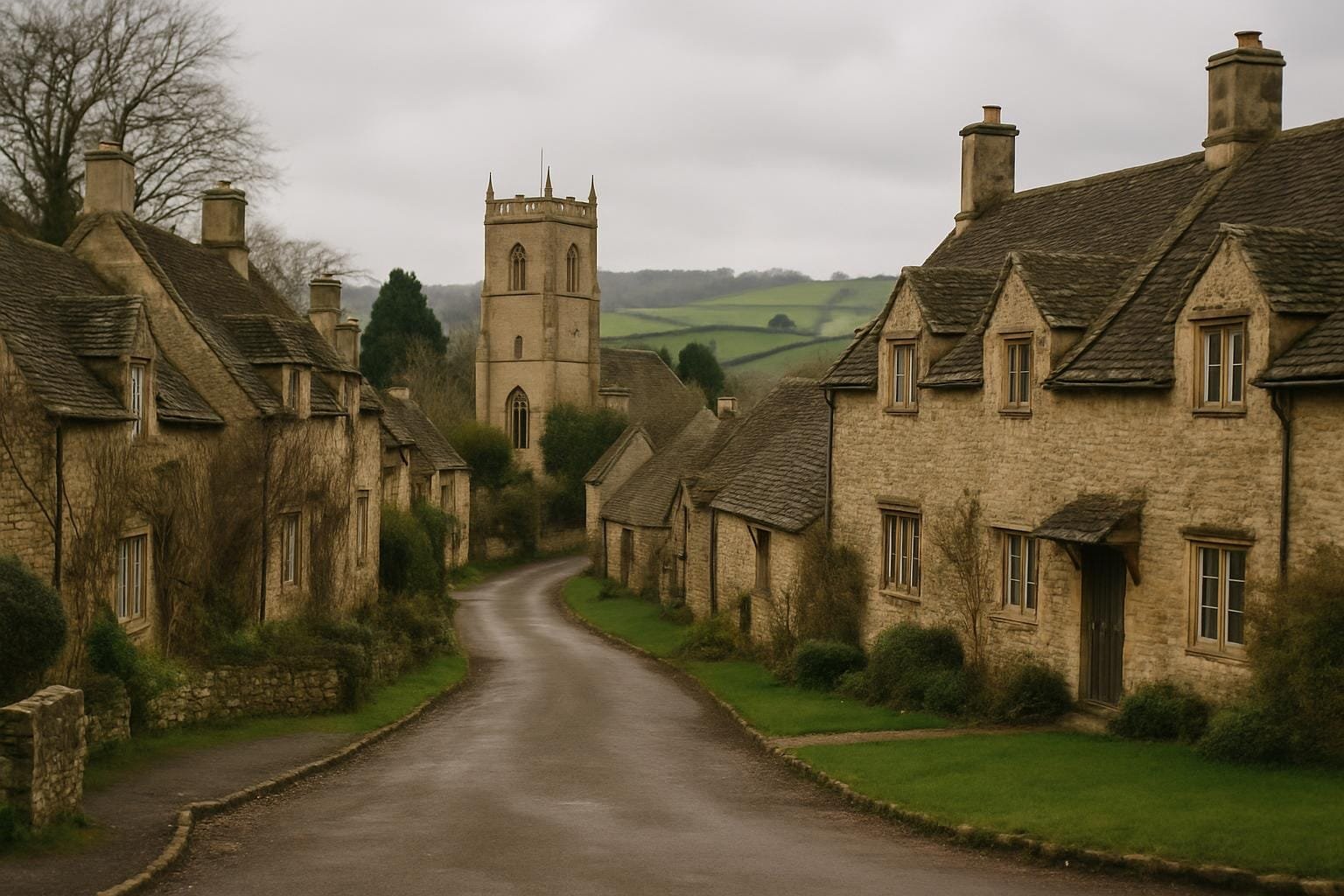
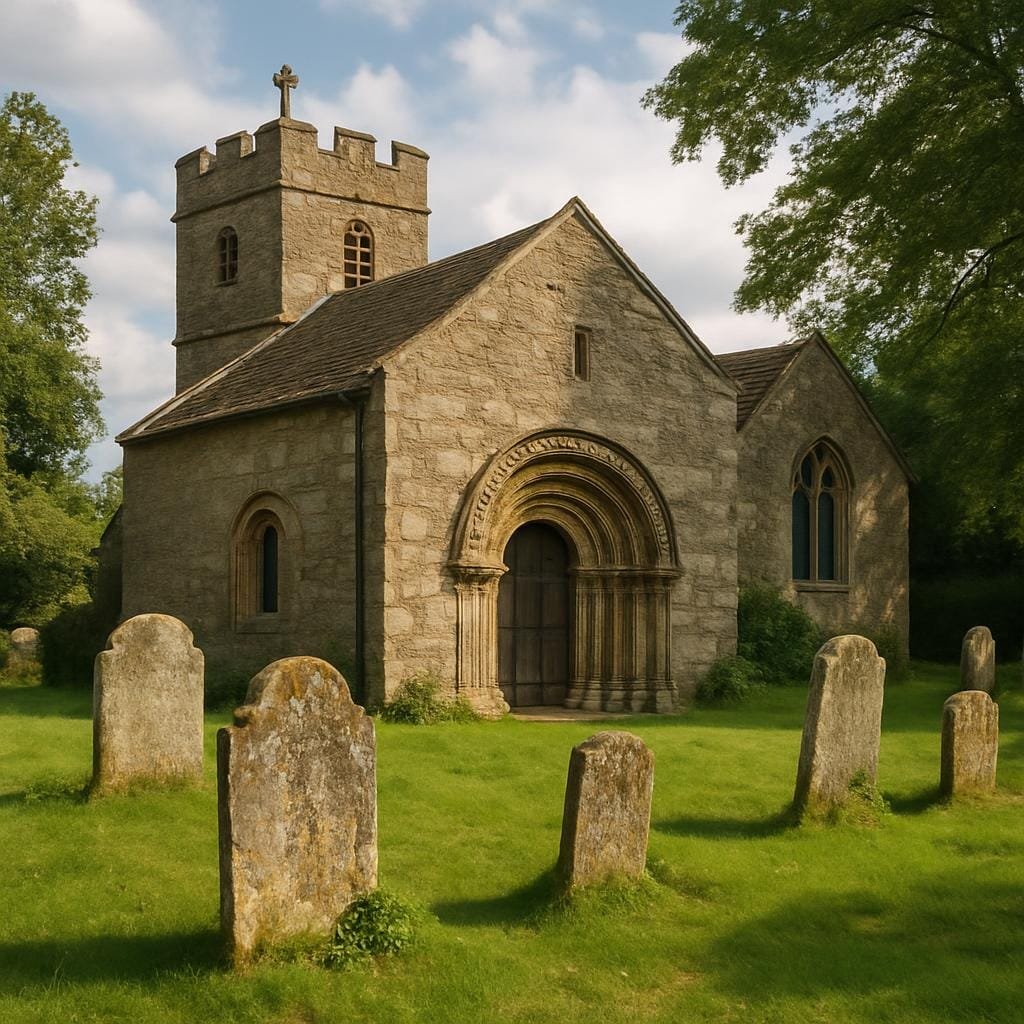
Image suggestion: A photograph of a modern English village street with an ancient parish church tower in the background and open fields beyond, on a cloudy day.
Alt text: Village street leading towards an old stone church tower with fields in the background
Further reading: